Direct Answer
Single use hair removal sachets should be developed as one integrated system: formula, dose, laminate, seal, claims, and shipment conditions. For private-label buyers, the critical decision is not simply choosing a small pouch. A depilatory cream can lose performance if moisture escapes, react with an unsuitable sealant layer, or leak when the sachet is compressed during transit. The right workflow therefore starts with a target user, application area, dose, removal time, and market, then moves through formula sampling, packaging compatibility, storage testing, filling trials, artwork review, and pilot production.
A well-prepared project can target a first sample within seven calendar days, a pilot from 1,000 finished units, and launch readiness in under 30 days when the baseline formula, stock laminate, and artwork are confirmed early. Custom film, unusual shapes, or new claims require more time. Buyers can compare the full hair removal manufacturing process before approving a production schedule.
Key Takeaways for Private Label Buyers
- Define the dose first. The body area, hair density, and application thickness determine sachet fill weight and pack count.
- Approve texture on camera and on skin. Review spread, opacity, dispensing, removal, residue, and visible consistency under the lighting used for content.
- Test the formula inside the final laminate. Bulk stability alone does not confirm pouch compatibility, seal integrity, or odor retention.
- Separate stock and custom packaging decisions. Stock structures support a fast start; custom shapes and printed film can improve impact but add setup, waste, and lead time.
- Lock claims before artwork. Wording affects substantiation, directions, warnings, and market-specific label documents.
- Request one landed-cost view. The quote should separate formula, sachet film, printing, filling, cartons, testing, assembly, and estimated freight.
Buyer Context
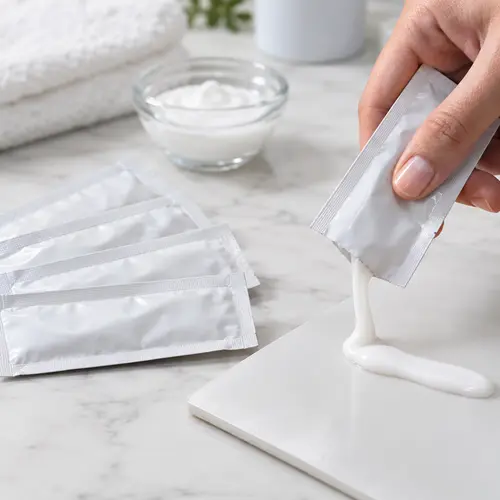
Sachets turn a familiar cream into a controlled, portable format. They work well for creator mailers, travel sets, subscription boxes, first-use samples, and single-area treatments. They also reduce the consumer’s need to estimate a dose from a tube. That makes single use hair removal sachets attractive for fast social launches—but less forgiving in production.
A tube can be opened, inspected, and closed again. A sachet is a sealed dose. If its contents separate, dry out, discolor, develop excess odor, or become difficult to push through the tear opening, the whole unit fails. Underfilling can prevent complete coverage; overfilling can contaminate the seal area or make pouches burst under compression. The buyer must therefore evaluate the finished pack rather than approving formula and packaging as separate components.
Product type changes the brief. An alkaline depilatory cream needs a laminate and inner sealant compatible with the finished formula. Sugar wax requires flow and removal checks across realistic storage temperatures. Aftercare gel needs clean dispensing without stringing or excessive residue. Wax strips are not filled sachets, but similar unit-dose logic applies to adhesion aging, liner release, sealed-envelope integrity, and storage. Related options can be reviewed through custom depilatory cream formulation, custom wax strips and hot wax, and post-depilation care OEM.
For a creator-led brand, this format also shapes content. A neat tear, controlled ribbon of cream, strong visual contrast, and enough product for one demonstrated area can make the use sequence easy to film. Those qualities should be written into the sample scorecard rather than left as subjective feedback.
Technical or Packaging Factors
Formula and Dose
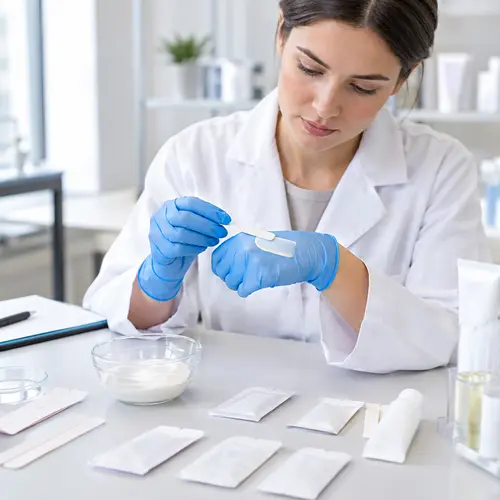
Start with the intended area: face, underarm, bikini line, legs, or a limited body patch. One universal fill weight rarely serves every use case. Ask the ODM to run coverage trials at the intended application thickness and document the usable output remaining after product stays inside the pouch. For sensitive positioning, include an irritation-risk review, clear patch-test directions, maximum contact time, removal instructions, and restrictions for compromised skin. The mild hair removal formula pathway can help structure this brief.
Texture must balance spread and package evacuation. A low-viscosity cream may run after opening. A very dense cream may remain trapped in corners or require excessive pressure. Approve appearance, odor, spread, rinse-off, residue, and performance after storage—not only on the fresh laboratory sample. If aftercare or a post-removal serum is bundled, treat it as a separate formula-pack system through an appropriate after hair removal serum review.
Laminate, Seal, and Opening Experience
The ODM should disclose the proposed film structure, total thickness, barrier rationale, print method, sealant layer, and whether the structure is stock or made to order. Aluminum-based laminates generally offer stronger light, moisture, and odor barriers than simpler films, but actual suitability must be confirmed with the formula. Metallized or clear structures may support a different visual direction while changing barrier performance and recyclability messaging.
Inspect seal width, seal continuity, tear-notch placement, edge quality, print registration, and code legibility. Run leakage checks on upright, inverted, and compressed samples. The opening should tear without tools while avoiding a sudden uncontrolled discharge. Confirm that product does not enter the seal zone during filling, because contamination can weaken the closure even when the pouch initially appears intact.
Storage, Shipment, and Documentation
Compatibility work should include ambient, elevated-temperature, cold-storage, and temperature-cycle conditions selected for the destination and shipping route. Review weight change, swelling, panel distortion, delamination, leakage, color, odor, texture, and removal performance at planned checkpoints. Final acceptance limits should be written into the specification rather than decided after testing.
Claims and market route also require early review. US buyers should use FDA cosmetics information and FDA oversight of cosmetics when planning labels. They should not present cosmetic sachets as FDA-approved. Product classification and intended-use wording should be checked carefully; 21 CFR Part 358 must not be treated as blanket authorization for every depilatory claim. Saudi-bound projects should confirm applicable conformity steps with SASO. A capable partner should connect these label decisions with hair removal OEM ODM services before printed film is ordered.
Decision Framework
| Factor | What to Check | Why It Matters | ODM Buyer Note |
|---|---|---|---|
| Use case | Body area, user profile, contact time, and one-use coverage | Sets the dose, directions, and pack count | Approve coverage with a filled sachet, not a bulk jar |
| Texture | Spread, flow, opacity, residue, odor, and evacuation | Controls performance and camera presentation | Record the approved sample under launch lighting |
| Laminate | Barrier layers, sealant compatibility, thickness, and print route | Protects the formula through storage and shipment | Require the final film code on the specification |
| Seal and opening | Seal continuity, tear notch, compression leakage, and dispensing | Prevents field failures and messy use | Test production-line samples from multiple positions in the run |
| Storage plan | Heat, cold, cycling, orientation, and observation schedule | Reveals separation, drying, swelling, and leakage risks | Match conditions to the actual destination and freight route |
| Commercial scope | MOQ, sample rounds, tooling, print setup, waste, cartons, and freight | Prevents hidden cost and timing surprises | Request a transparent BOM through the hair removal product RFQ |
| Scale path | Pilot line, repeat-run capacity, component reservations, and change control | Protects consistency if demand accelerates | Confirm that scale-up will not require formula rework with the hair removal OEM manufacturer |
ODM Manufacturing Considerations
A private-label hair-removal project should move through documented confirmation points rather than relying on informal messages. Start with a written product brief covering the removal method, target body area, intended user, pack size, fragrance direction, color, application method, and market of sale. A supplier should translate that brief into a sample specification that both sides can review.
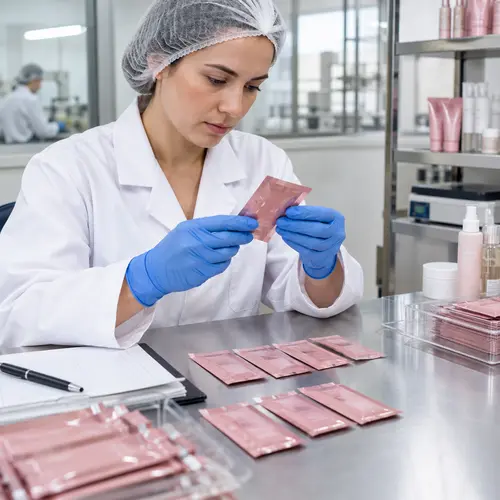
Sample confirmation should cover more than appearance. Record the cream’s spreadability, set time, residue after removal, scent strength, wax flexibility, strip pull behavior, and aftercare feel. For roll-on wax cartridges, confirm the cartridge fit, roller movement, flow rate, and whether the wax returns cleanly after application. Keep an approved reference sample and a signed specification so later production can be compared against an agreed standard. A documented manufacturing process is useful only when it connects to these product-level checks.
Formula customization may involve changing viscosity, fragrance, pigment, wax hardness, cooling behavior, or the skin-feel of an aftercare gel. Each change can affect filling, sealing, removal performance, or consumer perception. Ask the factory to identify which changes are standard adjustments and which require a new feasibility review. Buyers should also request an irritation-risk review based on the intended use area, fragrance load, preservatives, and user instructions. A supplier should not promise that a product is suitable for every skin type.
Packaging compatibility needs its own approval. Check whether the cream softens the sachet inner layer, whether wax adheres to the pouch or strip, and whether the seal remains intact after storage and transport. For cartridges, inspect the cap, roller assembly, and closure after exposure to heat and cold. The final packaging review should include filled samples, not only empty packaging components. Packaging artwork should also be checked against the formula, net quantity, directions, warnings, batch coding area, and destination-market language requirements.
Stability review should represent realistic shipment conditions. Ask for observations at room storage, warm warehouse conditions, cold storage, and repeated temperature changes. Record separation, color shift, odor change, viscosity drift, wax cracking, strip curl, cartridge seepage, and sachet deformation. The buyer should receive the test duration, storage conditions, sample identification, and acceptance criteria. A simple pass or fail statement without these details is difficult to use for release decisions.
MOQ should be separated into sample, pilot, packaging, and finished-goods quantities. Confirm whether custom printed sachets, cartons, wax strips, or cartridge molds create a separate minimum. Ask which costs are refundable, which are one-time, and which apply again when artwork or dimensions change. A clear OEM/ODM service scope should show what is included in formula work, filling, packaging, testing, and documentation.
Labeling documents may include the ingredient declaration, product specification, certificate of analysis, batch records or release information, safety data where applicable, packaging specifications, shelf-life statement, and shipping documents. The exact list depends on the market and product classification. For the United States, review the FDA information on cosmetics and the product’s intended claims before final artwork approval. Destination markets may require additional language, importer, or conformity documents.
Shipment conditions should state carton dimensions, unit count, pallet or case arrangement, temperature limits, orientation requirements, and protection against crushing. Wax and cream products can behave differently during transit, so agree on what happens if a shipment arrives with leakage, softened wax, broken seals, or deformed cartons. Keep freight assumptions separate from product cost, and request a final packed-carton estimate before placing a production order.
Hair-removal product categories can help organize a range into creams, wax strips, sugar wax, roll-on cartridges, and aftercare sets, but each SKU still needs its own approval record.
Common Problems or Failure Cases
Wax brittleness: A hard wax or sugar wax can crack during removal when the hardness, cooling profile, or application thickness is wrong. Review the melting point or working temperature where relevant, then test flexibility after storage and during simulated use. A formula that looks attractive in a container may still fail when spread thinly.
Strip adhesion loss: Wax strips may lose grip when the adhesive or wax surface ages, absorbs moisture, or contacts unsuitable release paper. Check pull performance after storage, inspect the strip edge, and compare adhesion on the intended hair-removal area. Excessive residue can also indicate an incorrect wax-to-strip balance.
Cream separation: Depilatory cream may show oiling, watery leakage, graininess, or a color band after heat exposure. Do not approve a sample solely because it is smooth on the first day. Compare filled units over the planned review period and check that the dose dispenses consistently from every sachet or tube format.
Cartridge leakage: Roll-on wax can escape through the roller head, cap, seam, or closure when pressure changes during shipping. Test upright and inverted cases, inspect the package after compression, and check whether the roller remains clean enough for controlled application. A sealed outer carton does not prove that the cartridge itself is reliable.
Fragrance sensitivity: A strong fragrance may help a product stand out in a social video but create complaints for users who prefer low-scent removal products. Review fragrance concentration, on-pack wording, and the intended use area. Consider a fragrance-free version or a restrained scent option when the product is intended for sensitive-use positioning.
Packaging deformation: Thin sachets can wrinkle, swell, or distort around the seal when the fill temperature, headspace, laminate, or carton pressure is unsuitable. Inspect printed registration, tear behavior, seal width, and filled-pack appearance. Buyers should approve the pack after it has experienced realistic handling rather than approving artwork on a flat mock-up.
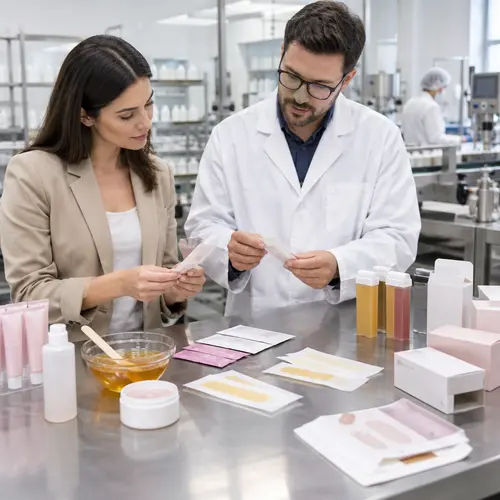
Communication drift: A marketing brief may request a dramatic color or visible texture, while the factory interprets that request as a simple pigment change. Use reference images, measurable texture terms, short videos, and a written list of non-negotiable attributes. Confirm what can be shown in content without creating a misleading product claim.
Supplier Checklist
- Can the supplier provide a written sample specification covering texture, scent, color, dose, removal behavior, and aftercare feel?
- Can it explain which formula changes are available and how each change may affect filling, sealing, shelf life, or use?
- Will the supplier test filled packaging for sachets, wax strips, cartridges, or aftercare sets?
- Are heat, cold, temperature-change, leakage, adhesion, and deformation checks documented with dates and sample codes?
- Can the supplier state the MOQ for samples, custom packaging, pilot quantities, and repeat production separately?
- Will it provide ingredient, specification, batch, shelf-life, labeling, and shipment documents appropriate to the destination market?
- Does the quotation identify formula work, packaging, tooling, testing, freight, and any recurring charges?
- Who owns the approved formula, artwork, molds, and custom packaging design, and are those terms written into the agreement?
- Can the account team understand content requirements such as visual texture, demonstration timing, and claim limitations?
- What capacity reservation, reorder lead time, and escalation process apply if a social campaign creates an unexpected order increase?
FAQ
Could a Chinese OEM/ODM factory take my formula or product idea and sell it to another brand?
Ownership depends on the contract, so do not rely on a verbal promise. Define ownership of custom formulas, artwork, molds, samples, test results, and unused packaging. Add confidentiality, restricted use, approval, and return-or-destruction terms where appropriate. Also ask whether the proposed formula is exclusive, semi-custom, or based on a shared platform.
Can the sample texture and color look dramatic enough for social-media content?
They can be designed for a clear visual result, but the visual brief must be specific. State the desired spread, gloss, color intensity, foam or texture behavior if relevant, and how the product should appear during application. Review filled samples under the intended filming conditions, then ensure that the visual effect does not imply a performance or safety claim the product cannot support.
How can I reduce the risk of a product causing serious customer complaints?
No supplier can promise zero user reactions. Reduce risk through an ingredient and fragrance review, clear directions, patch-test language where appropriate, use-area warnings, controlled batch release, retained samples, and a complaint procedure. Ask how the factory investigates an out-of-specification result and how it links a finished unit to its batch records.
I do not understand ingredients. Can the supplier understand a social-media marketing brief?
A capable partner should convert marketing language into product attributes and identify claim limits. Ask for a short written interpretation of your brief before sampling. It should distinguish appearance, user experience, removal performance, packaging behavior, and claims. A video call with product, packaging, and account personnel together can prevent decisions from being lost between departments.
What happens if a video goes viral and demand rises suddenly?
Discuss capacity before launch. Ask about filling lines, packaging availability, labor shifts, reorder lead time, and how production slots are allocated among customers. A written forecast process and staged order plan can reduce disruption, but buyers should still keep realistic launch quantities and avoid making unsupported delivery promises to customers.
Should I approve a formula before the final sachet or cartridge is selected?
Only for an early feasibility review. Final approval should use the actual contact materials, fill quantity, closure, seal, and printed pack. A formula may be stable in a laboratory container yet soften a laminate, weaken a seal, or leak through a cartridge closure.
References
For United States market review, consult the FDA cosmetics information, including its guidance on cosmetic products, labeling, and manufacturer responsibilities. For products positioned with drug-like claims, review the relevant 21 CFR Part 358 information with qualified regulatory counsel before making claims or approving artwork.