Direct Answer
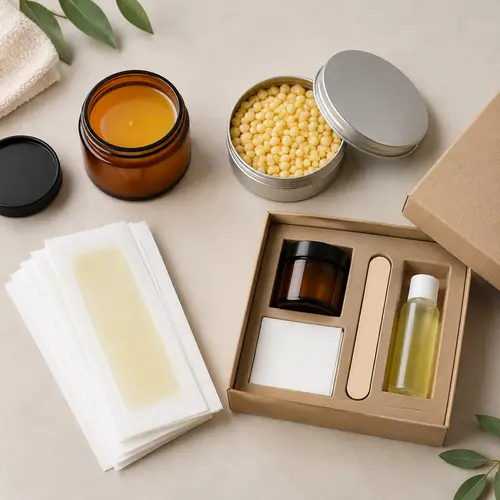
Wax packaging for private label comes down to four formats, and each one is selected by what the wax does at temperature rather than by what looks good in a mockup. Hot wax in jars and tins needs a rigid container that survives a 70–80 °C pour and repeated re-melting in a consumer’s warmer. Wax strips need a film or foil-laminate pouch that keeps adhesive from creeping and paper from curling. Starter kits need a fitted insert so a jar, spatula, and aftercare sachet do not collide in transit. Choose the container against a measured melt point, run leakage and drop testing before you approve artwork, and lock the packaging BOM at sample stage so the mass-production batch matches the one your content was filmed on. Everything after that — labeling, stability, shipment — becomes routine instead of a rescue.
Key Takeaways for Private Label Buyers
- Measure the melt point first. Soft waxes land near 40–45 °C, hard wax beads and film waxes near 55–60 °C, and both are poured hot. The pour temperature, not the finished look, decides jar or tin thickness.
- Treat seal strength as a product spec on wax strips and sachets. Ask for adhesion data on strips aged four weeks at 40 °C / 75% RH before you sign off packaging artwork.
- Kit design is a drop test in disguise. A 1.2 m drop on six faces plus an ISTA 3A parcel run is the cheapest insurance in the project.
- Build one label to the strictest market you plan to enter and reuse it. Ingredient names move slower than brand copy, so verify INCI early and print once.
- Confirm that sampling and mass production run on the same filling line before you commit to a formula, a texture video, or a launch date.
Buyer Context: Why Packaging Decides the Launch
Founder-led hair removal brands rarely fail on the wax itself. They fail at the seam between the formula and the container: a jar that weeps in a warm warehouse, a strip pouch that looks greasy on a shelf, a kit that arrives with the spatula loose and the tin dented. For a creator brand shipping on a 30-day content calendar, a packaging fault is not a line item — it is a video of a leaking jar with your name on it.
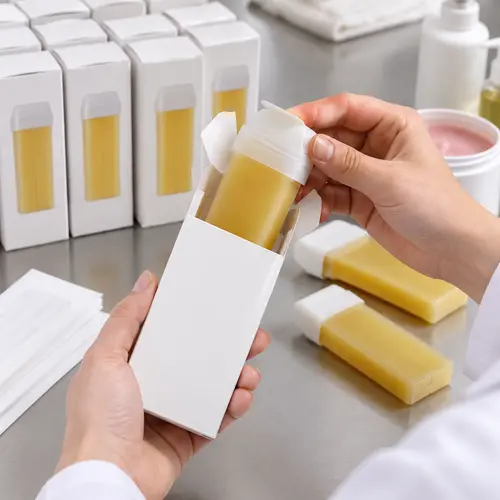
The commercial pressure compounds it. Salons buy hot wax in resealable tins and expect the lid to survive a hot cabinet. DTC brands sell kits into gifting windows where the unboxing is the campaign. Subscription buyers source travel-size jars and roll-on cartridges on fixed monthly cadences, which means a single packaging substitution quietly resets the customer experience. Roll-on wax cartridges are the sharpest example: the head, the collar, and the body have to hold a temperature-tolerant assembly together, and leakage shows up in transit, not in the sample room.
That is why suppliers worth shortlisting will show you texture prototypes and packaging compatibility side by side, then turn a sample around in about a week so it can still land inside your posting schedule. If a factory can only show you a catalogue photo of a tin, you have learned something useful about the factory.
Technical and Packaging Factors That Actually Move
Jars and tins: pour temperature sets the spec
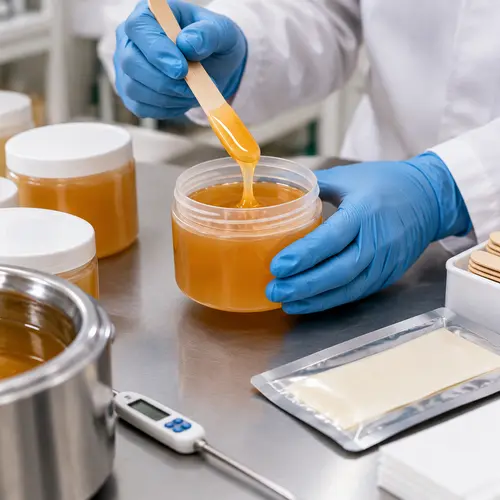
A 250 ml PET jar with a foam-lined screw cap behaves differently from a thin tinplate tin with a slip lid. Tinplate reads more like a salon product and handles heat well, but the lid skirt tolerance decides whether re-melted wax seeps past the rim. Ask for wall thickness, gasket material, and whether retail needs a shrink band. For clear jars, confirm the resin and the label adhesive both tolerate warm storage, since a lifting label is the most photographed defect there is.
Wax strips and sachets: seal strength is the product
Strip packaging fails in two directions — the seal opens, or adhesive migrates into the seal zone and the pouch looks oily. Foil-laminate sachets block light and travel better; clear film shows the strip, which matters when the strip is the hero shot. Either way, request seal strength figures and an adhesion check on aged strips before artwork approval, and confirm the sachet dimension matches the strip cut tolerance rather than the other way around.
Kits and inserts: the unboxing is engineered
Molded pulp or EVA inserts hold the jar, spatula, and aftercare sachet apart. Pair the insert with a 1.2 m six-face drop and an ISTA 3A parcel test, and check that the outer box board weight is not quietly reduced between pilot and mass production. A kit that survives the sample courier is not evidence; a kit that survives a parcel network is.
Labeling and market entry
Label copy is fixed by market, not by taste. The FDA Cosmetics Labeling Guide sets U.S. expectations for statement of identity, net quantity, and ingredient declaration, and MoCRA adds facility registration, product listing, and an adverse event contact on the label. For Europe, verify INCI names in the European Commission’s CosIng ingredient database before a CPNP notification goes in. Gulf launches bring their own document sets — the UAE MoIAT (formerly ESMA) industrial standards and the Saudi FDA cosmetic registration framework — and both reward having artwork finished before the shipment is booked.
Stability, storage, and shipment
Run 12-week accelerated stability at 40 °C / 75% RH and three freeze-thaw cycles from −10 °C to 45 °C on the finished unit, not on the wax alone. Packaging is part of the test: caps loosen, films blush, and print scuffs at temperature. Then check shipment conditions against the destination — a summer pallet in Dubai is a different spec from a winter pallet in Toronto. Request the packaging compatibility report together with the batch record so the two can be read against each other. Buyers who want the wider workflow can review the cosmetic filling and packaging process before the first call.

Decision Framework: Four Checks Before You Approve Packaging
| Factor | What to Check | Why It Matters | ODM Buyer Note |
|---|---|---|---|
| Melt point and pour temperature | Soft wax 40–45 °C, hard wax 55–60 °C, pour at 70–80 °C | Sets the container wall, gasket, and fill head | Ask for the measured value, not the range on a spec sheet |
| Leakage resistance | 7-day inverted hold at 45 °C on filled jars and cartridges | Predicts the warehouse complaint, not the sample review | Photograph the test; a pass without images is a claim |
| Strip seal and adhesion | Seal strength plus adhesion after 4 weeks at 40 °C / 75% RH | A greasy pouch reads as a defective product on shelf | Test the exact strip cut you plan to sell |
| Kit durability | 1.2 m six-face drop and ISTA 3A parcel test | Unboxing is the campaign; a dented tin ends it | Confirm board weight holds from pilot to mass run |
| Labeling documents | INCI verification, MoCRA listing, CPNP, Gulf submissions | Reprinting a label costs more than designing it correctly once | Build to the strictest market and reuse the artwork |
Packaging decisions are cheap to change on a sample table and expensive to change on a pallet. Start with melt point, move to leakage and drop testing, and settle labeling before the first production batch is scheduled. Buyers comparing formats across jars, tins, strips, and kits can review custom wax strips and hot wax options, or read the wider waxing and depilatory guides before opening a sample brief.
ODM Manufacturing Considerations
Once the packaging route is approved, the OEM/ODM side becomes a chain of written confirmations rather than a single purchase order. What separates a workable partner from a frustrating one is rarely capability; it is whether each step is documented before the next one starts. A buyer’s first sampling round usually answers this. Ask for a dated sampling schedule tied to your content calendar, because a first prototype in seven days is realistic for a factory already running depilatory wax daily, and it matters when a product drop is pinned to a publish date. If a first sample takes six weeks and the reply is always soon, the production run will behave the same way.
Sample confirmation is a record, not a courtesy
Approve a retained sample, not a photograph. The signed-off unit should carry the batch code, the fill weight, the color reference, and the fragrance code, and both sides keep a sealed copy. Ask who owns the reference sample and how a production batch is compared against it: visually, by texture by hand, or by a hardness reading. Protecting your idea runs through the same paperwork. Exclusivity and confidentiality terms should name the wax, the strip adhesive, and the packaging specification, and should cover tooling, artwork files, and the formula record. A supplier who can point to where that is written answers the trust question faster than any reassurance.
Formula customization stays inside a cost envelope
Texture work is usually adjustment, not invention. A wax that snaps cleanly instead of tearing, or a sugar paste that pulls without stringing, is typically a matter of resin-to-oil balance and cooling discipline. Each change moves cost and behavior together: more tackifier improves grip and raises skin adhesion, which in turn raises the irritation question, so a lower-fragrance or fragrance-free control in the same base is worth requesting at the same time. Compare two variants on the same skin area on the same day rather than six variants across a month.
Compatibility and stability review
Compatibility is a pairwise question: this wax against this tin coating, this adhesive against this film. Ask the factory to document cap torque, liner material, and whether the container has actually been run with the hot fill rather than a water trial. The stability review should include an ambient hold at roughly 25 °C, a warm storage condition, and a seal check after transport simulation, plus a note on whether the label adhesive survives a hot warehouse or lifts at the edge. A simple written summary of what was tested and what failed is more useful than a pass certificate with no method behind it.
MOQ, labeling documents, and shipment conditions
Minimum order quantities split by component. The wax fill, the jar, the carton, and the printed label each carry a separate break point, so a 1,000-unit run may be workable for the wax but not for a custom-printed tin. Ask for MOQ broken out per component and per color before you commit to a design. On documents, expect the ingredient list in descending order with the destination market’s allergen callouts, net weight, batch and best-by coding, and manufacturer identification. The European Commission’s CosIng database is the practical reference for ingredient naming, while the UAE MoIAT (formerly ESMA) industrial standards and the Saudi FDA cosmetic registration framework define what must appear before goods clear in those markets. For US-bound shipments, the FDA Cosmetics Labeling Guide covers the declaration format. Finally, ask for the pallet pattern, the loading plan, and the temperature range the factory recommends printing on the carton; hot-poured wax is a temperature-sensitive cargo and should be described that way on the shipping documents, not only in an email.

Common Problems and Failure Cases
Most launch problems are not dramatic. They are small drifts that surface two weeks after arrival, when the first customer opens a jar.
Wax brittleness
The strip cracks across its width instead of lifting hair cleanly. This is usually a cooling-rate or resin-level issue, but it is also a storage story: a batch that behaved in the lab and shatters after a month in a warm stockroom was stored above its softening point. Check both before blaming the formula.
Strip adhesion loss
Adhesive migrates into the film or the pouch breathes. Inspect the pouch seal integrity and the adhesive coat weight, and keep a control strip from the same batch sealed in a second pouch for comparison.
Depilatory cream separation
Water and oil phases split after a warm transit, leaving a thin layer at the tube shoulder. A 48-hour ambient hold with a visual check before shipment catches most of it.
Roll-on cartridge leakage
Wax appears at the ball seat or along the cap thread. Verify ball retention force and confirm the carton holds the applicator head off the base during stacking.
Fragrance sensitivity
The fragrance is often the variable, not the wax base. Keep a fragrance-free control in the line so complaints can be traced to a cause rather than guessed at.
Packaging deformation
Tin dents at the seam, jar panels ovalizing under vacuum, labels wrinkling at the curve. When a customer sends a photo of a bruised tin, the answer should be a packaging spec, not an apology.
Supplier Checklist
- Written confidentiality and exclusivity terms covering formula, artwork, and tooling
- Dated sampling schedule with a named contact and a retained reference sample
- Component-level MOQ and a transparent cost breakdown with no unexplained line items
- Compatibility record for each wax-and-container pairing, run with the actual hot fill
- Stability and transport summary stating what was tested, at what condition, and what failed
- Labeling file checked against the strictest destination market, with ingredient names verified
- Documented capacity headroom and a stated policy for peak-season scheduling conflicts
- Carton temperature guidance and a loading plan issued before the first shipment
- A contact who discusses launch timing and content deadlines, not only tonnage
Frequently Asked Questions
Will the factory reuse my formula or packaging design for another client?
Not if exclusivity is written and the tooling and artwork files are contractually yours. Ask to see the clause, confirm that the formulation record is held under the same agreement, and check whether the factory runs a comparable product for a competing brand before you sign. A supplier who hesitates on that question has given you your answer.
How do I know the quality system will hold when orders scale?
Look at the records rather than the certificate. Ask for a batch record from a previous run, the in-process checkpoints, and the retained sample log. If those exist and can be shown, the system is real; if the answer is a tour of the packing line, it is a presentation.
What happens if a video goes viral and I need ten times the volume?
Ask for capacity headroom in units per week and for the factory’s stated policy when a large account competes for the same line time. A supplier that can name its monthly ceiling and its scheduling rule is easier to plan around than one that promises anything.
Can the factory match a texture I describe in marketing terms rather than technical ones?
Usually yes, if you show reference footage and a physical sample. Describe behavior: how it breaks, how it pulls, how it photographs under ring light. A partner who asks about camera angle and background before asking about hardness is thinking about your launch, not only your order.
Which documents should arrive with the first shipment?
Batch record reference, ingredient declaration, safety data sheet, certificate of analysis where applicable, and a packing list with carton weights and dimensions. Missing paperwork at customs costs more than any unit-price difference.
How much should I budget for tooling and print setup?
Ask for it as a separate line so it stays visible. Setup costs for labels and custom tins are one-time and should not be folded into the per-unit price, where they quietly inflate every reorder.