Direct Answer
The best hair removal products for sensitive skin are not defined by a single soothing ingredient or a mild claim. For private-label buyers, the stronger choice is a complete product system: predictable removal performance, controlled contact time, low-friction application, compatible packaging, clear directions, and aftercare that supports the skin after use.
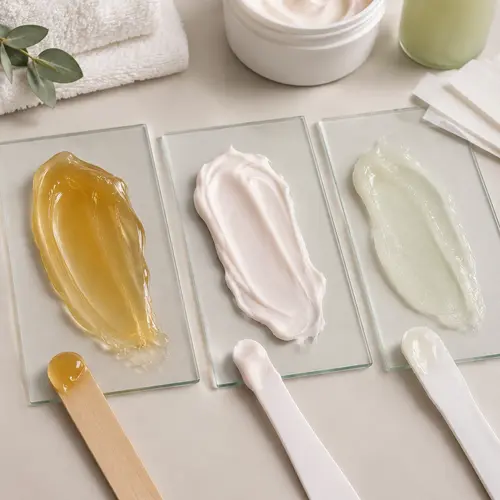
Start with the format. Depilatory cream offers high visual impact and easy home use but requires careful review of pH, odor, contact time, and tube compatibility. Wax strips simplify application but depend on adhesive consistency and clean release. Sugar wax and roll-on wax need stable texture across storage and use temperatures. Every option should move through the same sampling workflow: benchmark selection, formula review, camera test, controlled user assessment, packaging fit, stability screening, and approval against a signed reference sample. A specialized mild hair removal formula is the starting point—not the final proof.
Key Takeaways for Private Label Buyers
- Choose the format before customizing the story. Cream, wax strips, sugar wax, and aftercare solve different use cases and carry different irritation risks.
- Approve measurable sample criteria. Record texture, odor, spread, removal time, residue, redness observations, and rinse behavior.
- Test the actual pack. Formula performance can change when paired with a tube, jar, strip pouch, roll-on cartridge, or cap liner.
- Review storage and shipment early. Heat, cold, vibration, leakage, and wax migration can undermine an otherwise strong formula.
- Keep sample and production specifications aligned. The approved benchmark should control bulk appearance, fill, packaging, and finished-product release.
- Build the launch around evidence, not claims. Directions, warnings, labeling files, and market-specific documents should be planned alongside content production.
Buyer Context
Sensitive-skin positioning raises the cost of ambiguity. A creator-led brand may demonstrate a depilatory cream on camera in seconds, while the customer experiences the product through contact time, odor, scraping pressure, rinsing, and aftercare. A visually impressive reveal cannot compensate for unclear directions or variable removal.
The risks also differ by category. A cream must weaken hair effectively without encouraging consumers to exceed the stated exposure time. Wax strips require balanced adhesion: too little leaves hair behind; too much can increase pulling and residue. Sugar wax must remain workable without becoming runny in warm storage or overly firm in cold conditions. Roll-on cartridges need consistent flow and seals that resist leakage. A soothing gel after hair removal can improve the routine, but it should never be used to disguise an overly aggressive core product.
Editorial guidance from NBC News on hair removal cream safety reinforces the importance of following contact-time instructions and patch-test directions. Product comparisons such as Byrdie’s review of hair removal creams also show how consumers evaluate scent, ease of use, removal quality, and skin feel together. Buyers should translate those market expectations into an approval scorecard rather than relying on a single claim.
For a fast launch, request two or three controlled variants—not a large collection of loosely defined formulas. One can prioritize gentler sensory performance, another faster removal, and a third richer texture for face or body positioning. PZIK can target an initial sample round in seven days, support pilots from 1,000 units, and run product development and labeling work in parallel. The broader custom hair removal product development scope should clarify what is included in samples, packaging sourcing, testing, artwork review, and shipment preparation.

Technical and Packaging Factors
Formula Performance
Depilatory cream review should begin with spread and contact behavior. The cream should cover hair evenly, stay in place on the intended body area, and rinse without persistent film. Ask the labs to define an acceptable viscosity window, pH specification, active-content specification, and contact-time range for the approved formula. Do not approve a sample based only on hand feel. Evaluate it on the intended hair type and application area under controlled instructions.
For wax, request the working-temperature range, softening behavior, pickup, pull consistency, residue, and post-removal skin observations. Wax strips also need adhesion-aging checks because fabric, nonwoven material, wax coat weight, and pouch barrier all influence performance. Buyers comparing formats can review custom wax strips and hot wax alongside a custom depilatory cream formulation.
Irritation-Risk Review
Sensitive-skin positioning requires disciplined directions and conservative claims. Review intended use area, exclusion zones, contact time, repeat-use interval, patch-test language, removal method, and aftercare instructions. Assess redness, stinging, dryness, residue, and fragrance perception during controlled sample review. Ingredient background can be checked through established sources such as the Journal of Cosmetic Dermatology, but finished-product decisions still require formula-specific evaluation.
If the launch includes a routine, pair the main SKU with a simple aftercare product or an after hair removal serum. Keep each benefit distinct so customers understand what removes hair and what supports post-removal comfort.
Packaging Compatibility and Storage
Use the final packaging components during testing. Depilatory creams can challenge tube layers, seals, printing, caps, and liners. Wax can migrate into pouch seals or leak from jars and roll-on cartridges when exposed to heat. Sugar wax can become difficult to dispense after cold storage. Review upright, inverted, and side-storage conditions, then inspect leakage, swelling, staining, odor transfer, weight change, and dispensing behavior.
A practical screen can include storage at 4°C, 25°C, and 40°C, three freeze-thaw cycles where appropriate, and a 12-week accelerated review. These conditions do not replace real-time monitoring; they help identify early incompatibility. Follow the documented hair removal product quality control sequence from bulk review through filling and pack inspection.
Shipment classification should also be confirmed before launch, especially when format, ingredients, or distribution route may trigger special handling. Amazon sellers can consult Amazon’s dangerous-goods classification rules for cosmetics. Request the relevant safety data, carton configuration, storage limits, and transport notes before finalizing fulfillment costs.
Decision Framework
| Factor | What to Check | Why It Matters | ODM Buyer Note |
|---|---|---|---|
| Removal performance | Coverage, contact time, clean release, residue | Controls customer results and demonstration quality | Approve against one signed reference sample |
| Skin experience | Stinging, redness, dryness, fragrance, scraping or pulling | Supports credible sensitive-skin positioning | Define intended area and user directions |
| Texture | Viscosity, spread, wax pickup, temperature response | Affects use, filling, and camera appearance | Set a measurable batch acceptance range |
| Packaging | Seal integrity, leakage, dispensing, print contact | Prevents failures during storage and shipment | Test production-equivalent components |
| Launch scope | MOQ, sample rounds, BOM, artwork, documents | Protects budget and content timing | Use a written scope before customization |
Before approving production, compare the plan with relevant depilatory product development solutions, review additional hair removal product guides, and submit a structured hair removal product RFQ. Include target market, format, use area, desired texture, sample quantity, packaging concept, launch date, and required documents.

ODM Manufacturing Considerations
For buyers developing the best hair removal products for sensitive skin, sample approval should confirm more than whether the product removes hair. The buyer and manufacturer should agree on the intended body area, target hair type, application thickness, removal time, rinse or cleanup behavior, fragrance level, and expected after-feel. Each sample should be assessed against written acceptance points so feedback such as ‘make it gentler’ or ‘make it more visual’ becomes measurable manufacturing direction.
Customization may include adjusting a depilatory cream’s spread, reducing fragrance intensity, changing wax flexibility, modifying sugar wax handling, or selecting a color that remains consistent under studio lighting. A social-first brand should send the lab reference videos showing the desired scoop, stretch, shine, drip, or peel effect. The supplier can then explain which visual qualities are realistic without weakening removal performance or increasing residue. If iron oxide pigments are proposed for a camera-visible color, buyers can consult the CIR safety profile of iron oxide pigments while remembering that CIR reviews ingredients rather than finished products. ([cir-safety.org](https://www.cir-safety.org/ingredients?title=iron+oxides))
Packaging selection should happen alongside formula work. Confirm closure fit, seal integrity, dispensing force, label adhesion, print resistance, and container shape after exposure to expected warehouse and delivery conditions. For wax strips, review pouch seals and liner release. For creams, confirm controlled dispensing without uncontrolled flow or product drying around the opening. For roll-on cartridges, inspect cap retention, roller movement, seam strength, and deformation after heat exposure.
Stability review should track appearance, odor, texture, separation, color movement, fill-weight change, package distortion, and application performance over time. Ask for a written sample report and define what would trigger reformulation or a packaging change. The manufacturer should also provide the proposed INCI list, directions, warnings, net-content details, lot-coding format, artwork dimensions, and any documents needed by the destination market or sales platform.
MOQ discussions should separate stock formulas, customized formulas, printed components, and custom molds. Request an itemized BOM, tooling charges if any, sampling fees, estimated freight, and likely reorder lead time. Shipment planning should confirm carton configuration, temperature exposure risks, carrier restrictions, and whether the finished goods require additional review under marketplace rules such as Amazon’s dangerous goods classification rules for cosmetics. Buyers can compare available formats through the hair-removal product categories and review the supplier’s OEM and ODM service scope before locking specifications.

Common Problems or Failure Cases
Wax brittleness: Hard wax or sugar wax may crack, crumble, or lose flexibility when the softening range is poorly matched to storage and salon use. Compare samples after conditioning in both cooler and warmer environments, then record break behavior during application and removal.
Strip adhesion loss: Wax strips can lose grip when adhesive distribution is uneven, liners release poorly, or pouch seals allow gradual changes. Test several strips from different sample packs rather than judging one ideal unit.
Cream separation: A depilatory cream may develop watery pockets, uneven color, or inconsistent dispensing. Separation can alter application thickness and create variable results. Reject samples that recover only after aggressive shaking unless the directions clearly require mixing and the pack supports it.
Cartridge leakage: Roll-on wax may escape around the roller or seam during transit, particularly if the cartridge softens or internal pressure changes. Inspect the cap, roller housing, weld line, carton staining, and fill-weight loss.
Fragrance sensitivity: A strong scent may mask raw-material odor but create another concern for sensitive-skin users. NBC’s dermatologist-guided overview notes that fragrance can contribute to irritation and emphasizes following product directions and conducting a patch test before broader use. ([nbcnews.com](https://www.nbcnews.com/select/shopping/is-hair-removal-cream-safe-rcna591210))
Packaging deformation: Tubes, jars, pouches, or cartridges may panel, swell, crease, or lose print quality. Cosmetic appearance matters for DTC unboxing and salon display, but deformation can also affect seals and dispensing accuracy.

Supplier Checklist
- Sample scope: Does the quote state formula version, color, fragrance, pack type, fill weight, accessories, and sample quantity?
- Performance criteria: Are removal time, application area, hair type, cleanup, residue, and after-feel defined?
- Sensitive-skin review: Will the supplier support a lower-fragrance option, clear use directions, patch-test language, and an irritation-risk assessment?
- Visual execution: Can the lab reproduce the required texture, shine, spread, peel, or color on camera without sacrificing function?
- Packaging fit: Are seals, closures, rollers, liners, labels, cartons, and dispensing behavior evaluated with the actual formula?
- Quality records: Can the supplier provide batch specifications, inspection points, retain-sample practices, lot traceability, and deviation handling?
- Commercial clarity: Are formula cost, components, decoration, cartons, testing, tooling, freight assumptions, and payment stages itemized?
- Scale readiness: Are reorder timing, reserved capacity options, backup component sources, and surge-order limits stated in writing?
- Documentation: Are the ingredient list, directions, warnings, artwork file requirements, and shipping documents available before production?
- Communication: Is there one accountable contact who can translate content goals into clear lab and manufacturing actions?
Buyers should also review the supplier’s manufacturing process and use the RFQ contact page to submit a complete brief rather than requesting a generic catalog quote.
FAQ
How can I prevent a Chinese OEM from copying my idea or formula?
Use a mutual confidentiality agreement, identify which information is buyer-owned, restrict use of artwork and brand assets, and include non-use and non-sale terms in the manufacturing contract. Ask who can access project files and how samples, specifications, and digital records are controlled. No document removes all risk, so choose a supplier with traceable project handling and a willingness to define ownership in writing.
Can the sample look dramatic enough on camera?
Usually, but the target must be demonstrated visually. Send reference clips under your normal lighting and specify the desired color intensity, gloss, stretch, scoop, or peel. Request a filmed prototype demonstration before approving the sample, then test it with your own camera, background, and styling setup. A visually bold sample still needs consistent removal, cleanup, and packaging behavior.
Can quality control guarantee that followers will never experience irritation?
No responsible supplier can promise zero reactions. Risk can be reduced through appropriate ingredient selection, controlled manufacturing, clear directions, defined contact time, patch-test language, and consistent batch inspection. The brand should also avoid overstated sensitive-skin claims and maintain a process for reviewing complaints, lot numbers, photos, and usage details.
What if I do not understand technical ingredient language?
Ask the account contact to translate each decision into user experience: how the cream spreads, how quickly the wax softens, what the fragrance feels like, how residue is removed, and what viewers will see on camera. A capable ODM team should connect lab choices to brand positioning, content production, and consumer instructions without expecting the buyer to speak like a chemist.
What happens if a video goes viral and demand spikes?
Discuss surge capacity before launch. Ask for monthly output ranges, component lead times, production-slot reservation options, and the order quantity that would require a revised schedule. Confirm whether smaller brands retain their agreed position when larger orders arrive. A realistic capacity plan is more useful than an unlimited-output promise.
How do I compare quotes without hidden costs?
Request the same specification from every supplier and require separate lines for bulk product, primary packaging, printing, cartons, accessories, testing, tooling, freight assumptions, and taxes or destination charges. Confirm what changes after sample approval and what triggers a new fee. Transparent costing makes it easier to compare contract labs on equivalent scope.
References
- Cosmetic Ingredient Review: Iron Oxides Search — ingredient-level reference for pigment review.
- NBC Selected: Is Hair Removal Cream Safe? — dermatologist commentary on use directions, patch testing, and fragrance concerns. ([nbcnews.com](https://www.nbcnews.com/select/shopping/is-hair-removal-cream-safe-rcna591210))
- Amazon Seller Central: Dangerous Goods Classification — marketplace reference for shipment review.