Direct Answer
A successful private label depilatory cream project starts with a controlled formula brief, not a fragrance choice or packaging mood board. Before sampling, the buyer and ODM should define the treatment area, target hair type, removal time, skin-sensitivity position, texture, odor expectations, claims, sales markets, and package format. These decisions shape the alkaline system, emulsion stability, irritation-risk review, instructions, and compatibility tests.
The most dependable workflow moves formula screening, packaging selection, and compliance preparation in parallel. A capable partner should be able to provide a representative lab sample, preliminary ingredient list, packaging options, test plan, and document checklist before the buyer commits to a launch quantity. This approach prevents a common late-stage failure: approving a cream that performs well in a lab jar but changes viscosity, leaks, discolors, or becomes difficult to dispense in the final package. Buyers can review the broader custom depilatory cream formulation pathway before preparing their brief.

Key Takeaways for Private Label Buyers
- Define performance precisely: State the body area, hair profile, target contact time, application thickness, removal method, and acceptable post-use skin feel.
- Evaluate the complete system: Formula approval should cover odor, spreadability, rinse behavior, hair removal, and irritation risk rather than appearance alone.
- Select packaging early: Tubes, airless pumps, sachets, and jars expose an alkaline cream to different materials, headspace, sealing, and dispensing conditions.
- Test the commercial configuration: Stability and compatibility work should use the intended formula, package, closure, fill weight, and label construction.
- Build compliance alongside development: Confirm the responsible person, ingredient naming, warning copy, safety substantiation, and market-specific files before artwork approval.
- Keep the pilot scalable: Ask whether the same ingredients, mixing sequence, filling method, and QC specifications will apply when demand increases.
Buyer Context
Hair-removal products are unusually sensitive to the relationship between chemistry, application behavior, and consumer instructions. A depilatory cream must weaken hair efficiently while remaining tolerable under its stated conditions of use. Wax strips need consistent coating weight and adhesion. Sugar wax depends on a narrow handling texture. Roll-on cartridges must heat evenly without leaking. Aftercare products need to complement the removal routine without introducing confusing claims.
For a DTC founder, these are also commercial issues. A texture that drags across the skin can undermine demonstration videos. A strong residual odor can increase returns even when removal performance is acceptable. A tube that looks clean in a studio shoot may crease, panel, or seep after warm storage. Reviews and social-media views turn such details into visible brand evidence.
This is why a buyer should treat a depilatory SKU as an integrated product system. Begin with the intended consumer journey, then translate it into measurable specifications through a hair removal formulation service. If the positioning centers on comfort, compare options through a structured mild hair removal formula review rather than relying on vague language such as ‘gentle’ or ‘clean.’
Regulatory responsibility also remains with the company placing the cosmetic on the market. The FDA notes that cosmetics must be safe under labeled or customary use and properly labeled; it does not preapprove most cosmetic products or ingredients. MoCRA may require facility registration and product listing, subject to applicable exemptions, and the responsible person must maintain adequate safety substantiation. ([fda.gov](https://www.fda.gov/cosmetics/industry/small-businesses-homemade-cosmetics-fact-sheet?utm_source=openai)) These requirements make transparent documentation a sourcing criterion, not an administrative task after launch.
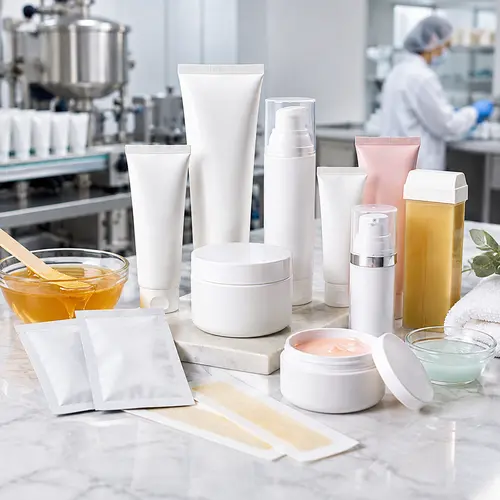
Technical and Packaging Factors
Formula Architecture and Sensory Performance
Most cream depilatories rely on a strongly alkaline environment and thioglycolate-based chemistry to disrupt hair structure. The formulation challenge is to produce repeatable removal without uncontrolled thinning, separation, excessive odor, or an avoidable irritation profile. The CIR safety conclusion for thioglycolic acid in depilatories is conditional on products being formulated to be non-irritating under recommended conditions of use. ([cir-safety.org](https://cir-safety.org/sites/default/files/sq-fix_2.pdf?utm_source=openai))
For development, ask the lab to record a target pH range, viscosity specification, appearance, odor, density, and removal result on an agreed test substrate. A typical screening brief might evaluate removal at 5, 7, and 10 minutes, but these checkpoints are development parameters rather than universal claims. The final timing must follow the validated formula and safety assessment.
Texture should be assessed at dispensing, spreading, dwell time, and removal. A cream can appear stable in its container yet become runny when spread onto warm skin. Another may hold its shape but require excessive rubbing to remove. Buyers should review samples on the intended treatment area and request a documented irritation-risk review. For broader format comparisons, the depilatory product development solutions hub can help distinguish cream, wax, strip, and aftercare requirements.
Packaging Compatibility
Do not approve packaging from dimensions and decoration alone. Depilatory formulations can interact with tube layers, pump components, closure liners, adhesives, inks, and metallic decorative elements. Compatibility screening should monitor leakage, swelling, discoloration, odor migration, closure torque, dispensing force, paneling, and weight loss.
Tubes are familiar and efficient, but the laminate structure and seal quality must suit the formulation. Airless pumps provide controlled dosing and a refined experience, yet alkaline compatibility and pump recovery require verification. Sachets support sampling or travel-size launches, but seal integrity and tear behavior become critical. Jars allow easy access but increase repeated consumer exposure and demand clear application hygiene instructions.
If inventory will enter fulfillment networks, secondary packaging should also survive handling without accidental opening or leakage. Amazon describes secure preparation, correct labeling, scannability, and fulfillment readiness as core FBA requirements. ([sell.amazon.com](https://sell.amazon.com/blog/fba-packaging-prep-labeling?utm_source=openai)) Review the current Amazon FBA fulfillment program guidelines alongside channel-specific rules before finalizing the shipper.
Stability, Storage, and Safety Files
A practical screening plan commonly includes room-temperature storage, 5°C cold storage, 40°C accelerated storage, and at least three freeze-thaw cycles. The program should evaluate the filled commercial package, not only a glass lab container. A 12-week accelerated study can support an early development decision, but it does not automatically establish the finished shelf life; real-time monitoring should continue according to the assessor’s protocol and target market.
The ODM should define acceptance criteria before testing begins. These may include no phase separation, controlled viscosity movement, stable color and odor, acceptable pH movement, functional dispensing, no leakage, and no meaningful package deformation. Review the proposed hair removal product quality control checkpoints from sample preparation through filling and packing.
For U.S. launch preparation, request the INCI list, formula specification, finished-product specification, batch records, stability plan, compatibility results, microbiological controls, safety substantiation support, and draft label review. FDA guidance emphasizes truthful labeling, appropriate warnings, and the marketer’s responsibility for safety and compliance. ([fda.gov](https://www.fda.gov/cosmetics/industry/small-businesses-homemade-cosmetics-fact-sheet?utm_source=openai)) A credible partner should also explain which MoCRA activities belong to the facility and which remain with the responsible person.
Finally, consider the product family rather than a single SKU. A depilatory cream can be paired with soothing gel after hair removal or an after hair removal serum, provided each product has its own clear function, evidence, and compliant claims. This creates a more complete routine without forcing the core cream to carry unsupported benefits.

Decision Framework
| Factor | What to Check | Why It Matters | ODM Buyer Note |
|---|---|---|---|
| Use case | Body area, hair type, consumer profile, treatment time | Sets the performance and irritation-risk boundaries | Do not reuse one brief across face and body products |
| Formula control | pH, viscosity, odor, spread, removal, rinse behavior | Converts subjective sample feedback into QC specifications | Approve measurable ranges, not only a reference sample |
| Packaging | Material compatibility, seal, dispensing, decoration | Prevents leakage, deformation, and poor consumer use | Test the final package with the actual cream |
| Stability | Cold, room, accelerated, freeze-thaw, real-time review | Shows how formula and package respond to storage stress | Agree on acceptance criteria before testing |
| Compliance | INCI, warnings, claims, safety file, market notifications | Reduces listing delays and avoidable enforcement risk | Assign facility and responsible-person tasks in writing |
| Launch readiness | Pilot scope, filling method, carton, case pack, shipment test | Keeps the approved sample aligned with the sellable SKU | Use a documented hair removal OEM manufacturer workflow |
ODM Manufacturing Considerations
For a private label depilatory cream, production readiness depends on more than approving a pleasant sample. The confirmed sample should become a controlled reference linked to a written specification, approved ingredient list, target appearance, odor, spreadability, removal performance, fill weight, and use instructions. Buyers should keep a sealed reference sample and ensure that pilot output is compared with it before the first commercial release.
Formula customization should begin with the intended user and application area. A body-removal cream, a face-specific product, hard wax, sugar wax, and wax strips require different performance limits and consumer instructions. Custom work may involve fragrance intensity, color, texture, rinse feel, botanical ingredients, or a market-positioning requirement such as vegan or organic-sourced materials. Each change should be assessed against performance and safety rather than treated as a simple marketing substitution. Buyers seeking a distinctive ingredient story should also request origin records, supplier documentation, and continuity plans for any imported plant oil or specialty material.
Packaging approval requires a representative filling trial using the actual formula and production components. Check dispensing force, closure fit, fill accuracy, panel distortion, print resistance, and residue around the opening. For roll-on wax cartridges, inspect roller movement, wiper fit, cap retention, and leakage after the filled unit has been stored in multiple orientations. The supplier should explain how its manufacturing process controls filling temperature and component handling.
The stability review should monitor formula appearance, odor, texture, removal performance, package function, and net-weight change over the planned shelf-life program. Results should be assessed in the intended retail package, not only in laboratory containers. Confirm how out-of-specification findings are investigated and whether a revised formula or component triggers additional review.
MOQ discussions should separate formula batch minimums, printed-component minimums, decoration setup, testing costs, and excess packaging inventory. A low finished-unit commitment may still require the buyer to fund a larger quantity of printed tubes, cartons, or cartridge components. Compare landed cost and expected contribution margin against CAC rather than looking only at the unit price.
Before artwork approval, request the ingredient declaration, directions, warnings, net-content format, lot-code location, shelf-life basis, and available safety documentation. Market-specific files for MoCRA or CPNP support should be listed by document name and responsible party. Shipment planning should cover carton strength, pallet pattern, temperature exposure, container loading, and fulfillment rules. Brands using FBA should compare the packed unit and case configuration with the Amazon FBA fulfillment program guidelines.

Common Problems or Failure Cases
Wax brittleness: Hard wax may fracture during removal when its resin balance, application thickness, or working-temperature window is unsuitable. Confirm that the sample performs across realistic salon handling conditions rather than only under tightly controlled lab conditions.
Strip adhesion loss: Wax strips can lose grip because of wax migration, unsuitable release liners, humidity exposure, or insufficient pressure during application. Evaluate unopened packs after storage and check whether the strip still separates cleanly without transferring wax to the wrong surface.
Cream separation: A depilatory cream may develop visible liquid, graininess, or uneven texture after filling. Potential causes include processing variation, ingredient interaction, or package contact. Do not approve a corrective remix without understanding whether removal performance and consumer exposure remain consistent.
Cartridge leakage: Roll-on wax can escape around the roller or closure when component tolerances, filling conditions, or hot transit conditions are poorly matched. Inspect inner packs and shipping cartons for residue because a small primary-pack leak can contaminate an entire case.
Fragrance sensitivity: A stronger masking fragrance may improve first impressions but increase discomfort for sensitive users. Review fragrance level, allergen disclosure requirements, and unscented options without assuming that a natural fragrance is automatically gentler.
Packaging deformation: Tubes, cartridges, and closures can soften, swell, collapse, or lose print quality during storage and transport. Buyers should investigate root cause before changing carton dimensions or adding protective material that only hides the primary-package weakness.

Supplier Checklist
- Confirm the facility scope covers the required cream, wax, strip, cartridge, or aftercare format.
- Review current quality certificates, audit scope, issuing body, site address, and expiration dates.
- Request a written development brief showing sample rounds, customization boundaries, testing scope, and ownership of approved specifications.
- Compare the signed reference sample with pilot output for texture, odor, application, removal, residue, and package operation.
- Verify component drawings, material declarations, decoration method, fill tolerances, closure controls, and traceability.
- Separate finished-product MOQ from formula, component, printing, and carton commitments.
- Review ingredient records, claims support, labeling documents, lot coding, complaint handling, and change-control procedures.
- Confirm shipment configuration, temperature precautions, case markings, pallet requirements, and leakage inspection criteria.
- Ask how the supplier handles an urgent transfer when a previous facility has a capacity interruption or quality failure.
- Review relevant hair-removal product categories and custom development options to confirm that the supplier’s actual capabilities match the brief.
FAQ
Can an Asian facility genuinely meet Western Clean Beauty and cruelty-free expectations?
Location alone proves neither compliance nor noncompliance. Request a written restricted-material standard, complete ingredient declarations, supplier statements, an animal-testing policy, claim-review procedures, and evidence tied to the specific facility and formula. Clean Beauty should be translated into measurable acceptance criteria because it does not have one universal regulatory definition.
Will a low MOQ make the unit cost too high to support our CAC?
It can, especially when custom decoration, testing, and component minimums are spread across fewer units. Model landed cost, fulfillment fees, expected returns, promotional allowances, and CAC together. A higher initial unit cost may still be workable if the launch reduces obsolete inventory and validates demand before a larger commitment.
Will a turnkey base make our product identical to competing brands?
Not necessarily, but changing only the logo creates limited differentiation. Ask which elements can be modified without destabilizing performance: sensory profile, fragrance, color, application area, ingredient story, package format, instructions, and kit configuration. Require the final approved specification to document these distinctions.
Which labeling documents should be available before artwork is released?
At minimum, review the ingredient list, directions, warnings, net contents, manufacturer or responsible-party information, lot-code location, country-of-origin requirements, and support for visible claims. The buyer should confirm the target market’s rules rather than assuming one label works globally.
Can a replacement supplier accelerate an urgent transfer?
Yes, if the buyer can provide a structured technical-transfer package. Useful materials include the current ingredient list, reference sample, package drawings, performance specification, known complaints, target cost, and required launch market. Speed should not eliminate sample confirmation, documentation review, or package testing.
How should shipment leakage and deformation risk be controlled?
Use filled production-equivalent packs, realistic case quantities, orientation checks, carton-compression review, and transport-condition assessment. Define an acceptance limit for stained cartons, loose closures, distorted packs, and net-weight loss before approving the shipping configuration.
References
- FDA Small Businesses and Homemade Cosmetics Fact Sheet — regulatory context for cosmetic safety responsibility, labeling, facility listing, testing, and natural or organic claims.
- Amazon FBA fulfillment program guidelines — current reference for fulfillment preparation and shipment planning.