Direct Answer
The best hair removal products for sensitive skin are not defined by format alone. For private-label buyers, the right choice depends on where the product will be used, how consumers apply it, how quickly results appear on camera, and how much application error the format permits.
Depilatory cream offers broad, painless-looking coverage and strong short-form video potential, but its alkaline formula requires careful exposure-time instructions, packaging compatibility, and irritation-risk review. Wax strips create an immediate, visible result with simple unit-dose packaging, yet adhesion and removal technique can affect comfort. Aftercare does not remove hair; it completes the system by supporting a calmer post-removal experience.
A practical launch architecture is one hero removal SKU plus one aftercare SKU. Compare samples using the same hair type, body area, storage conditions, and camera setup. Do not select from an ingredient list or a single hand sample alone.
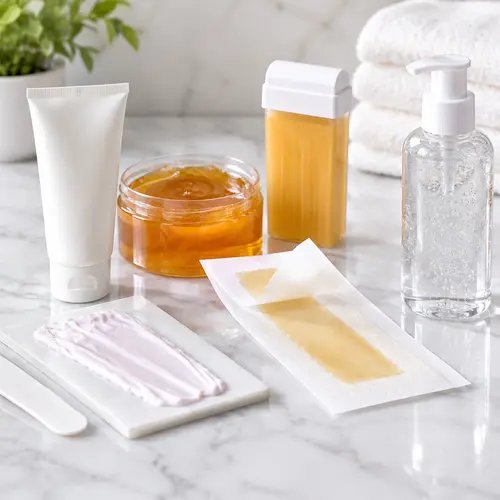
Key Takeaways for Private Label Buyers
- Choose by use case. Cream suits larger body areas; wax strips suit fast, portable removal; aftercare supports either format.
- Define sensitive-skin positioning precisely. Specify body area, exposure time, fragrance direction, target user, and required warnings before requesting samples.
- Test the complete pack. Review cream dispensing, strip separation, sachet seals, cap leakage, label durability, and aftercare pump output.
- Approve measurable references. Record texture, odor, color, pH where relevant, viscosity, strip adhesion, residue, removal time, and fill weight.
- Build content during sampling. A seven-day first-sample target is useful only when texture, pack, claims, and camera behavior are evaluated together.
- Plan the launch as a system. A hero remover paired with a soothing gel can simplify education, raise perceived value, and create a stronger demonstration sequence.
Buyer Context
Hair removal is unusually sensitive to execution. Consumers judge the result within minutes, while discomfort, odor, residue, missed hair, or a leaking pack can become equally visible in creator content. A formula that looks acceptable in a laboratory cup may spread unevenly on a leg, disappear against skin on camera, or dispense poorly from the selected tube.
For creator-led brands, format is therefore both a product decision and a content decision. Depilatory cream produces a clear spread-wait-wipe sequence. Wax strips produce a high-contrast peel moment. Sugar wax adds tactile texture but asks more from consumer technique. Roll-on wax cartridges offer controlled application for salon or advanced home use, while creating extra requirements around heating, roller movement, cap fit, and shipment leakage.
Start with the consumer promise. Is the brand selling speed, simplicity, portability, reduced mess, or a gentler-feeling routine? Then map that promise to a suitable format through hair removal product solutions. Buyers comparing mild cream concepts should review sensitive skin hair removal products and the available scope for a custom depilatory cream formulation. Buyers prioritizing visible pull performance should compare custom wax strips and hot wax.
Sensitive-skin positioning must remain disciplined. It is not a guarantee that every user will avoid irritation. Hair condition, body area, previous exfoliation, exposure time, removal technique, and individual response all matter. Consumer-facing education from dermatologist commentary on hair removal cream safety illustrates why directions and patch-test language deserve attention. Buyers should also review current FDA cosmetics oversight information for the intended US market. Editorial comparisons such as consumer hair removal cream evaluations can help identify expected sensory attributes, but they do not replace product-specific testing.
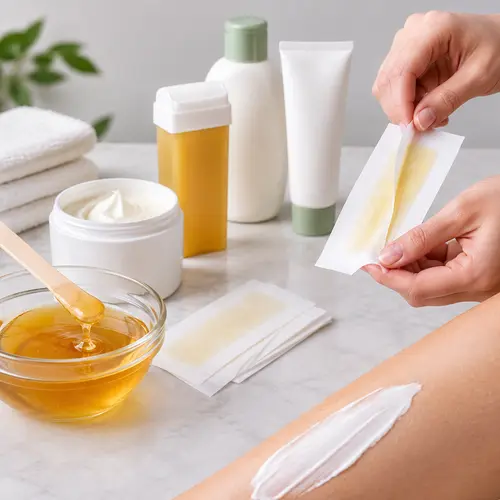
Technical and Packaging Factors
Depilatory Cream
Review spreadability, dwell behavior, odor, wipe-off, hair removal consistency, and skin feel after rinsing. The cream should remain where applied rather than running, drying too quickly, or separating during storage. Ask the manufacturer to document pH and viscosity at release and through planned heat, cold, and room-temperature checks.
Packaging must protect the formula and preserve dosing. Compare tube laminate, shoulder and cap compatibility, seal integrity, orifice size, and decoration resistance. Run filled-pack storage rather than testing bulk formula alone. A camera-ready cream also needs controlled opacity and a clean wipe reveal without staining props or leaving excessive residue.
Wax Strips and Wax Formats
For strips, evaluate adhesive coating uniformity, backing flexibility, strip separation, grip area, hair pickup, residue, and performance after aging. Test at the lower and upper ends of expected storage and shipment conditions. Excess heat may change adhesion or cause migration; cold may make the wax feel less workable. Individual sachets can improve portability, but seal quality and strip alignment need inspection.
Hot wax, sugar wax, and roll-on cartridges require format-specific controls. Confirm the supplier-defined working temperature or melting range, reheating behavior, viscosity during application, and cleanup. For cartridges, inspect roller rotation, wax flow, cap retention, housing distortion, and leakage after upright, inverted, and side storage. These checks belong within the documented hair removal manufacturing process, not as an informal review after filling.
Aftercare
Aftercare should be designed around the removal format. A light gel may suit warm-weather or creator-led kits because it spreads visibly and absorbs quickly. A lotion may support richer sensory positioning. Evaluate tack, sting potential, fragrance load, residue, and compatibility with pumps, tubes, or sachets. Buyers can compare soothing gel after hair removal or consider an after hair removal serum for a broader regimen concept.
Decision Framework
| Factor | What to Check | Why It Matters | ODM Buyer Note |
|---|---|---|---|
| Primary use | Body area, hair type, user skill, desired removal speed | Prevents a mismatch between format and consumer routine | Approve separate directions for face and body when applicable |
| Formula performance | Cream spread and wipe-off; wax grip and residue; aftercare absorption | Controls visible results and repeat-use experience | Set an approved sample as the mass-production reference |
| Irritation-risk review | Exposure time, fragrance, directions, warnings, patch-test language | Sensitive-skin claims increase buyer and consumer scrutiny | Request an ingredient review and market-specific label file |
| Packaging fit | Tube seals, sachet integrity, strip alignment, cartridge leakage, pump output | Pack failure can alter performance before first use | Test the exact decorated components with filled formula |
| Storage and shipment | Heat, cold, room-temperature, orientation, and recovery checks | Wax and cream behavior may shift across distribution conditions | Align test conditions with destination and freight route |
| Launch readiness | MOQ, sample scope, BOM, documentation, filling plan, freight estimate | Connects creative approval to a realistic content calendar | Ask whether a 1,000-unit pilot can scale without formula changes |

For a turnkey brief, provide target market, hero format, pack size, fragrance direction, claim boundaries, reference visuals, launch date, and forecast range. A supplier offering hair removal OEM ODM services should return a clear sample scope, itemized BOM, test plan, labeling-document list, production assumptions, and shipment conditions. Buyers can first assess a specialized hair removal OEM manufacturer, then discuss your hair removal formula with the same texture and packaging criteria used for final approval.
For speed-sensitive launches, a useful planning target is a seven-day first sample, a pilot MOQ from 1,000 units, and a formulation-to-shelf path under 30 days when the baseline formula, components, artwork, testing scope, and market documents are aligned early. ISO 22716 production controls and MoCRA, CPNP, or FDA-aligned files should be confirmed in writing for the relevant destination rather than assumed from a sales presentation.
ODM Manufacturing Considerations
ODM planning should begin with a written product brief covering the treatment area, hair type, intended removal time, skin-positioning claims, fragrance level, color, texture, pack size, and target market. A face cream, body depilatory cream, sugar wax, and roll-on wax cartridge require different performance limits. The brief should also identify whether the supplier is modifying an existing formula or developing a more distinctive product from its formulation library.
Sample approval should be based on measurable and sensory criteria rather than a general email saying the product looks good. Establish a signed reference sample and confirmation sheet that records color tolerance, odor, fill weight, cream viscosity range, wax softening or melting window, spreading behavior, residue, strip dimensions, and removal performance. For a product intended to look distinctive in social content, film the sample under the brand’s actual lighting, background, and application method before approval. A visually dramatic prototype may behave differently when filled at production scale.
Customization can affect more than appearance. Increasing fragrance, changing colorants, adjusting a cream’s thickness, or making wax feel more natural may alter skin feel, processing behavior, removal efficiency, or pack interaction. Ask the manufacturer to identify which requested changes require another stability review or a renewed irritation-risk assessment. The agreed formula version should be locked through a controlled specification so that later revisions cannot be substituted without written approval.
Packaging confirmation should evaluate the product-contact material, closure fit, cap torque, tube crimp, dispenser dose, cartridge dimensions, strip backing, and sachet material. Decorative choices also matter: coatings may scuff, printed areas may transfer, and thin plastic components may distort during distribution. Buyers comparing formats can review available options through the supplier’s hair-removal product categories and then document the exact component codes selected for the final SKU.
Stability work should reflect the anticipated shelf life and destination climate. Review changes in odor, color, viscosity, separation, wax consistency, strip performance, package appearance, and net weight over defined intervals. Shipment planning should separately cover carton strength, internal dividers, pallet pattern, container conditions, lot traceability, and any transport documents required for the formula. A transport simulation is especially useful for roll-on cartridges and soft wax packs that may experience extended warm-weather transit.
MOQ must be confirmed at the SKU, fragrance, shade, fill size, and packaging-component level. Printed tubes, sachet film, cartons, and custom cartridge parts may each have a different minimum. Ask whether excess components will be stored, invoiced, discarded, or reserved for repeat manufacturing. The commercial quotation should distinguish formula, filling, primary pack, secondary pack, testing, tooling, and shipment preparation.
Before production, request the ingredient declaration, product specification, safety data sheet where applicable, batch coding format, artwork requirements, directions, warnings, and destination-specific labeling support. The brand remains responsible for confirming that claims and labels are suitable for its sales market. The FDA cosmetics information portal provides an official starting point for brands selling cosmetics in the United States. A supplier’s OEM and ODM service scope should state which documents are standard and which require additional review.

Common Problems or Failure Cases
- Wax becomes brittle: Hard or sugar wax may crack instead of flexing if its composition, cooling behavior, or storage exposure is unsuitable. Confirm the working range and test removal on the intended body areas rather than judging appearance in the jar.
- Strip adhesion declines: Pre-coated strips can lose effective grip because of wax migration, unsuitable backing material, contamination, or prolonged exposure to elevated distribution temperatures. Compare aged samples with the approved reference and record peel consistency and residue.
- Cream separates: Visible liquid, graininess, or uneven color can indicate that the emulsion is no longer uniform. Check whether the issue appears before filling, after transport simulation, or only in a particular tube or closure combination.
- Cartridges leak: Leakage may come from roller fit, dimensional variation, closure pressure, or wax flow at higher temperatures. Examine individual components and filled units from several production positions rather than relying on one display sample.
- Fragrance creates avoidable sensitivity concerns: A strong scent may support social-media positioning but can narrow the audience for a sensitive-skin product. Evaluate an unscented or low-fragrance option and make sure the final fragrance level matches the approved sample.
- Packaging deforms: Tubes, trays, or cartridge bodies may dent, warp, or become difficult to use after stacked shipment. Assess both functional damage and shelf appearance after carton compression and distribution simulation.
A failure investigation should identify whether the cause is the formula, component, filling setting, storage exposure, or user directions. Corrective samples should be compared against the original signed reference. The supplier’s documented manufacturing process can help buyers identify where checks occur and what records can be supplied.

Supplier Checklist
- Define the intended removal area, hair type, use time, sensitive-skin positioning, fragrance target, pack size, and sales countries.
- Request samples in the proposed formula and final-contact packaging, not only in generic lab containers.
- Approve written limits for viscosity or wax working range, color, odor, fill weight, strip size, residue, and removal performance.
- Confirm stability intervals, climate conditions, transport simulation, and acceptance criteria.
- Review irritation-risk screening, use directions, warnings, and the process for handling consumer complaints.
- Verify component specifications for tubes, caps, rollers, sachets, strip backing, cartons, and applicators.
- Confirm MOQ by SKU and component, including responsibility for unused printed materials.
- Request ingredient, specification, batch, safety, artwork, and shipment documents before placing the production order.
- Ask how approved formulas, artwork, prototypes, and commercial information are access-controlled.
- Clarify production reservation, repeat-order lead time, surge-capacity limits, and notice required for a volume increase.
- Require pre-shipment inspection criteria and an agreed procedure for deviations, rework, replacement, or credit.
FAQ
How can a brand reduce the risk of an OEM using its idea or formula elsewhere?
Use a mutual confidentiality agreement, define ownership of custom work in the manufacturing contract, and identify which elements are supplier-owned bases versus brand-funded developments. Limit file access, apply version control, and prohibit unauthorized sale of branded artwork, custom specifications, and unique prototypes. No document removes every risk, so review the supplier’s access practices and commercial history.
Can the sample’s texture and color be made to look dramatic on camera?
Often yes, but the target should be tested under the creator’s real lighting, lens, background, and application amount. Ask for several controlled variants when necessary. Approve visual performance together with removal function, pack dispensing, residue, and skin feel so appearance does not become the only criterion.
Can quality controls guarantee that no follower will experience irritation?
No manufacturer can promise zero reactions. Risk can be reduced through appropriate ingredient review, controlled manufacturing, defined specifications, stability work, clear directions, warnings, traceable lots, and user patch-test guidance where suitable. The brand also needs a complaint and adverse-event escalation process. Dermatologist commentary summarized by NBC News on hair-removal cream safety reinforces the importance of following timing and usage instructions.
Should a buyer choose a custom formula or a ready base?
A ready base can simplify sampling and lower development complexity, while a custom formula offers greater differentiation but requires more confirmation work. The decision should reflect the claim strategy, launch schedule, expected volume, budget, and whether the desired performance can be achieved with limited modifications.
What usually determines the real MOQ?
The limiting factor is often a printed or molded component rather than the bulk cream or wax. Confirm minimums for each fragrance, shade, tube, sachet, strip format, carton, and cartridge. Also ask whether a mixed-format aftercare kit creates separate assembly minimums.
What should be checked before a shipment is released?
Review batch records, inspection results, lot codes, fill-weight results, package appearance, functional checks, carton markings, quantities, pallet details, and required shipping paperwork. Retain production samples from each lot and define who authorizes release when a result is near its acceptance limit.