Direct Answer
The right private label depilatory cream should be selected by positioning first and format second. Decide whether the product is intended for sensitive skin, fast body-hair removal, facial use, travel, or a premium at-home ritual. That decision determines the formula strength, contact-time instructions, fragrance strategy, applicator, fill volume, and testing scope.
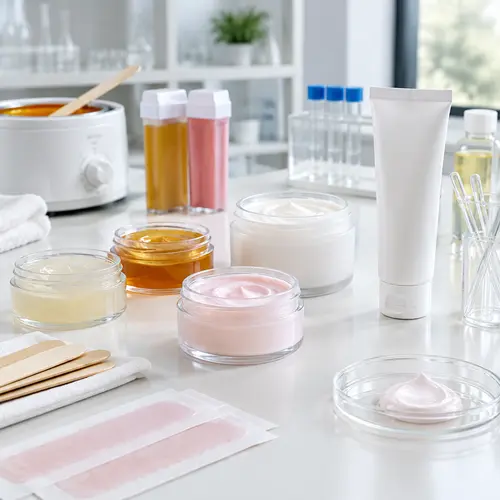
For most DTC launches, a barrier-protective tube is the lowest-risk starting format because it supports controlled dispensing and limits repeated formula exposure. Pumps can create a more premium experience but require stricter compatibility testing with high-alkaline cream. Sachets work well for sampling and subscription boxes, while jars need a strong hygiene rationale. Before approving any format, review viscosity specifications, package interaction, accelerated and cold-storage stability, leakage, label documents, and irritation-risk controls. PZIK supports suitable library-based projects from 1,000 units, with formulation-to-shelf pathways under 30 days when packaging and compliance requirements are confirmed early.
Key Takeaways for Private Label Buyers
- Position before customizing: Define the body area, user profile, contact time, sensory story, and sales channel before changing fragrance, color, or active ingredients.
- Treat packaging as part of the formula: High-pH depilatory creams can interact with pumps, liners, seals, inks, and laminated tube structures.
- Request measurable specifications: Approve a target pH, viscosity range, appearance, odor profile, fill weight, and removal-performance method rather than relying only on a visual sample.
- Test the final commercial pack: Stability in a laboratory jar does not establish compatibility in the selected tube, sachet, pump, or closure.
- Build compliance in parallel: Ingredient review, safety substantiation, artwork, MoCRA preparation, and CPNP documentation should progress alongside sampling.
- Start with a controlled pilot: A smaller launch can validate reviews, repeat purchase, leakage rates, and customer tolerance before inventory is expanded.
Buyer Context
Hair-removal products sit in an unusually narrow performance window. A cream must weaken hair effectively within the labeled contact time, yet remain cosmetically acceptable on skin. If performance is too mild, users leave it on longer or reapply. If the formula is too aggressive, complaints may include stinging, redness, dryness, odor, or uneven results. This makes positioning more than a marketing exercise: it changes the risk profile of the formulation.
A face cream, for example, should not simply be a body formula placed in a smaller tube. Facial positioning requires a specific irritation review, clear use exclusions, controlled dispensing, and substantiation for the intended area. Buyers developing this segment should examine documented mild hair removal formula options rather than relying on vague natural or gentle language.
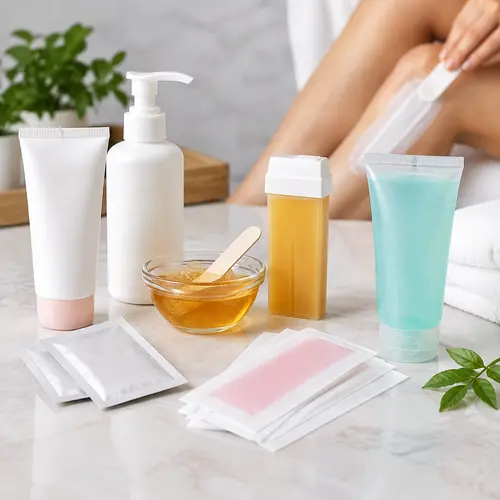
Format also shapes commercial performance. Tubes fit Shopify and retail fulfillment efficiently. Sachets reduce trial friction but provide little room for complete instructions unless paired with a carton. Pumps improve shelf presence but add component complexity. A removal kit combining cream with a spatula and soothing gel after hair removal can raise perceived value, although every added component affects BOM, assembly, transit testing, and artwork control.
Brands comparing cream with sugar wax, strips, or roll-on cartridges should use a channel-specific framework. The broader hair removal product solutions portfolio and private label waxing products overview help clarify whether a chemical depilatory or mechanical removal format better matches the audience. PZIK’s agile model is designed to keep sampling, compliance, and packaging decisions moving together, avoiding formula re-engineering between an approved pilot and subsequent scale-up.
Technical or Packaging Factors
Formula Architecture and Sensory Performance
Most depilatory creams use a thioglycolate-based system under alkaline conditions. The exact composition, pH target, and buffering approach must be controlled as a complete system. Botanical extracts, oils, and fragrance can improve the sensory story, but they do not make an inherently alkaline formula organic or irritation-free. Clean Beauty positioning should therefore be translated into a defined restricted-substance standard rather than an undefined front-label claim.
Ask the development team to provide a specification covering pH, viscosity, color, odor, spreadability, rinse behavior, and hair-removal performance. Viscosity should be reported with the test temperature, spindle, and speed because a number without the method cannot be compared across batches. The cream should remain where applied without becoming difficult to spread or remove. For relevant baseline choices, review the custom depilatory cream formulation pathway and confirm which modifications require renewed stability or safety assessment.
Packaging Compatibility and Storage
A tube should be evaluated for panel distortion, seam integrity, cap leakage, formula discoloration, odor migration, and print durability. Pumps require additional checks for spring, gasket, dip-tube, and actuator compatibility. Sachets need seal-strength and edge-leakage review, particularly after heat exposure and transit vibration. Jars expose more product during use and should include clear handling instructions.
A useful stability plan may include ambient storage, 40°C accelerated storage, 40°C at 75% relative humidity where appropriate, 4°C cold storage, and three freeze-thaw cycles. These are planning examples rather than universal pass criteria; the protocol must reflect the formula, pack, destination market, and expected shipment conditions. Review the documented hair removal manufacturing process to verify when bulk, filled-pack, leakage, and release checks occur.
Safety, Claims, and Market Documentation
US buyers should understand that cosmetic responsibility remains with the responsible person; the FDA guidance for small cosmetic businesses is a useful starting point. For Europe, screen ingredient status through the European Commission’s CosIng ingredient database, then complete the required safety and product-information work rather than treating database presence as final approval.
Vegan, cruelty-free, and halal positioning also require supplier evidence. If Middle East access is planned, compare certification routes and recognition through the MUI World Halal Council mutual-recognition guide. Your hair removal formulation service brief should identify target markets at the start so documentation, label language, and ingredient sourcing do not become late-stage blockers.
Decision Framework Table
| Factor | What to Check | Why It Matters | ODM Buyer Note |
|---|---|---|---|
| Positioning | Body area, skin profile, contact time, claims, channel | Defines formula strength, instructions, and safety scope | Approve a written product brief before sampling |
| Formula | pH, viscosity method, odor, spreadability, rinse behavior | Controls consistency and user experience | Keep approved limits in the quality agreement |
| Primary pack | Tube barrier, seals, pump materials, sachet seams | Reduces leakage and formula interaction | Test the decorated commercial components |
| Stability | Heat, cold, freeze-thaw, appearance, odor, viscosity | Reveals changes before distribution | Request time-point results, not only a pass statement |
| Compliance | INCI, safety support, claims, warnings, market files | Limits customs, platform, and recall exposure | Map MoCRA and CPNP responsibilities in the contract |
| Pilot scope | Sample rounds, fill quantity, component lead time, QC plan | Prevents schedule drift and hidden scope changes | Use get a private label sample requirements that include formula and packaging details |
For additional technical due diligence, the hair removal product guides provide supporting context on formulations, formats, and buyer-side quality review.
ODM Manufacturing Considerations
A private label depilatory cream project should move from a benchmark brief to controlled sample approval rather than directly from a catalog choice to a purchase commitment. The brief should identify the target body area, expected removal time, desired texture, fragrance limits, afterfeel, pack size, retail market, and target landed cost. Face creams, body creams, and products intended for coarse hair should not share assumptions about exposure time or irritation risk.
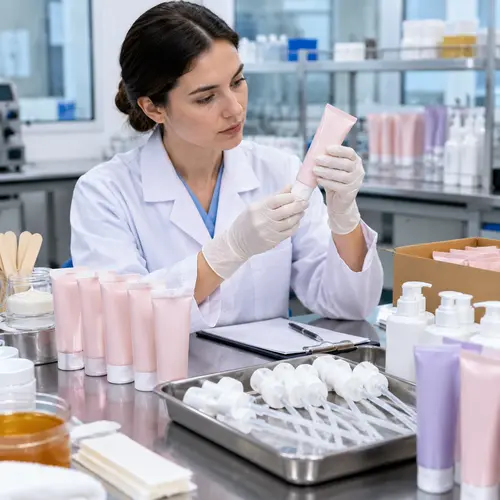
For sample confirmation, request at least one coded laboratory sample with its draft specification. Record appearance, odor, spreadability, rinse-off behavior, hair-removal performance, and skin feel at the stated use time. The approved sample should become the signed reference standard, supported by measurable acceptance limits for characteristics such as viscosity, fill weight, and active-system parameters. Any later ingredient, fragrance, color, or component change should trigger documented review rather than an informal substitution.
Customization can extend beyond adding a fragrance to an existing formula. Buyers can adjust texture, odor-masking strategy, application area, use instructions, botanical story, and aftercare pairing. However, natural or organic positioning must not obscure the functional depilatory chemistry. If a distinctive imported oil or botanical supports the brand story, verify supplier identity, country of origin, specification, availability, and whether an alternate source could change color, odor, or performance.
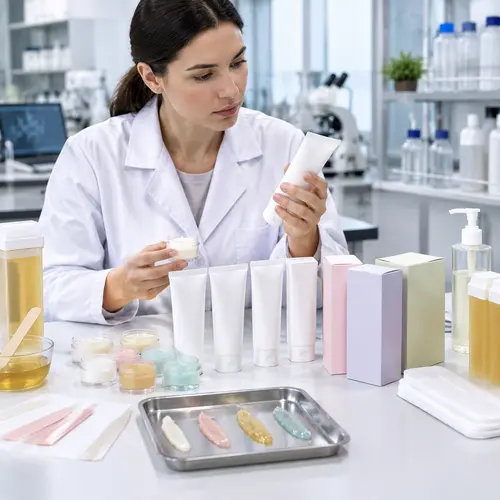
Packaging should be assessed with filled samples before artwork is locked. Confirm dispensing control, closure cleanliness, panel deformation, decoration resistance, and leakage after handling. For wax formats, document the intended melting-point or working-temperature range. For roll-on cartridges, confirm roller movement and flow after storage and transport simulation. Buyers can compare format options through the hair-removal product categories and align approval gates with the manufacturing process.
The commercial review should define the minimum run by formula, shade or fragrance, component, and printed artwork. Also request the sample scope, setup charges, lead-time assumptions, labeling documents, ingredient declaration, batch coding format, safety support, and market-specific files. Shipment instructions should state carton configuration, pallet requirements, temperature precautions, dangerous-goods status if relevant, and responsibility for damage inspection upon arrival.
Common Problems or Failure Cases
Wax brittleness: Hard wax may crack instead of flexing when its resin balance, working temperature, or cooling behavior does not match salon use. Approve samples across the intended application thickness and ambient conditions.
Strip adhesion loss: Wax strips can lose grip through adhesive migration, incompatible release liners, prolonged warmth, or surface contamination. Buyers should check peel behavior at the start and end of the proposed shelf life.
Cream separation: A depilatory cream may release liquid, become grainy, or lose uniformity when the emulsion is insufficiently robust or a fragrance modification disrupts it. Do not approve solely from a fresh laboratory sample; require aged-product review against written limits.
Cartridge leakage: Roll-on wax can escape around the roller housing or cap when fit tolerances, filling temperature, or transport orientation are unsuitable. Inspect filled cartridges after conditioning and simulated shipment.
Fragrance sensitivity: Strong masking fragrance may improve first impressions while increasing discomfort for some users. Include low-fragrance or fragrance-free views in consumer evaluation, especially for face products.
Packaging deformation: Warm warehouses or unsuitable product-contact materials can cause paneling, swelling, label lifting, or poor closure fit. Confirm the complete decorated pack, not only an undecorated component.

Supplier Checklist
- Confirm hair-removal manufacturing capabilities by format: depilatory cream, sugar wax, hard wax, strips, roll-on cartridges, and aftercare.
- Request current ISO 22716 or equivalent quality documentation and verify certificate issuer, scope, site address, and expiry date.
- Define the signed reference sample and measurable formula acceptance ranges.
- Review irritation-risk assessment, intended-use instructions, warnings, and support for face versus body positioning.
- Ask which formula, fragrance, color, component, and artwork changes require renewed testing.
- Inspect filled and decorated packaging for dispensing, deformation, leakage, label durability, and shipment resistance.
- Separate formula MOQ from packaging and printing minimums; identify excess-component ownership.
- Request INCI data, specifications, certificates of analysis, safety documentation, claim support, and market labeling review.
- Confirm batch traceability, deviation handling, complaint investigation, retention samples, and change-control procedures.
- Record shipment conditions, carton specifications, inspection window, and remedies for nonconforming goods in the contract.
FAQ
Can an Asian manufacturer genuinely meet Western clean beauty and cruelty-free expectations?
Geography does not prove or disprove compliance. Ask for a retailer-specific prohibited-ingredient review, raw-material declarations, animal-testing policy, supplier attestations, and evidence supporting each logo or claim. Verify ISO 22716 or GMPC credentials independently. BSCI may support social-compliance review, but it is not a formula-quality certification.
Will a low MOQ make the unit cost too high to cover customer acquisition cost?
It can raise conversion, component, and testing costs per unit, but the correct measure is contribution margin after freight, duties, fulfillment, returns, and CAC. Compare a smaller launch that limits inventory exposure with the price break from a larger run. Also check whether printed packaging minimums exceed the formula run.
Will a turnkey base make the product indistinguishable from competing brands?
Not necessarily. Differentiation can come from texture, fragrance strategy, target hair type, application time, pack format, aftercare, instructions, and substantiated ingredient sourcing. Ask which elements are exclusive, shared, or easily copied. Meaningful formula changes may require additional evaluation and a new approval sample.
What should be approved before commercial manufacturing begins?
Approve the coded formula sample, written specification, final component set, artwork, ingredient list, instructions, warnings, batch-code location, and testing plan. The agreement should also explain how minor deviations are handled and who authorizes substitutions.
Which labeling documents are needed for the United States and European Union?
Requirements depend on product classification, claims, and responsible-party arrangements. The FDA notes that small cosmetic businesses remain responsible for legal compliance. For EU ingredient screening, CosIng provides ingredient names, functions, and regulatory references, but a database listing should not be treated as product approval.
How should a halal claim be evaluated for hair-removal products?
Confirm the certifier, certification scope, ingredient documentation, manufacturing controls, and acceptance in the destination market. Mutual recognition matters because one certificate may not be accepted by every authority or distributor. Review the current recognition framework before printing a halal mark.