Direct Answer
A faster hair removal OEM process begins with a brief that removes avoidable decisions before the laboratory starts. Specify the product method, target user, application area, benchmark texture, performance expectations, ingredient exclusions, pack format, market, target cost, and first-run quantity. For depilatory cream, define removal time, odor tolerance, rinse behavior, and skin-feel goals. For wax, document working temperature, pull characteristics, residue limits, and whether the format is a jar, strip, bead, sugar wax, or roll-on cartridge.
Attach reference products, packaging drawings, required claims, and destination-market information. Then ask the ODM to confirm which requirements can be met through an existing validated formula platform and which require custom development. This distinction determines whether a 3-5 day first sample is realistic. It also helps compliance, compatibility, and stability work begin in parallel, making a sub-30-day development target more credible without changing the approved formula before the commercial run.

Key Takeaways for Private Label Buyers
- Brief the complete product system: formula, applicator, primary pack, closure, label, carton, and shipment conditions.
- Separate non-negotiable requirements from preferences so the formulator can resolve conflicts quickly.
- Use measurable sample criteria for texture, spread, removal performance, residue, odor, and post-use skin feel.
- Confirm target markets early; MoCRA, CPNP, claims, warnings, and responsible-party needs affect the development path.
- Approve a testing plan before visual packaging choices are locked, especially for heated wax and reactive depilatory formulas.
- Request a written change log for every sample round to prevent unnoticed formula drift.
Buyer Context
Hair-removal products are unusually sensitive to vague briefs because performance depends on the interaction among chemistry, application method, dwell time, hair type, skin area, and packaging. A request for a gentle cream with fast action and no noticeable odor may contain competing goals. Likewise, a roll-on wax can have an attractive texture in a beaker yet fail when the cartridge cools during use or leaks during warm transport.
The brief should therefore explain the commercial context, not only the ingredient wish list. Identify whether the product is intended for first-time users, experienced waxing customers, salons, travel kits, or subscription shipments. State the intended body areas and exclusions. If the concept includes sensitive-skin positioning, align the claims and review route with the supplier’s mild hair removal formula options rather than adding a claim after formulation.
Speed also depends on choosing the correct starting architecture. Buyers can compare a cream project through the custom depilatory cream formulation pathway, or evaluate strips, beads, and heated formats through custom wax strips and hot wax. A broader kit may combine removal with after wax care products, but each formula and package still needs its own acceptance criteria.
Low MOQ planning belongs in the same document. Include the target pilot quantity, expected reorder scenario, pack-size alternatives, and acceptable component substitutions. A 1,000-unit pilot under ISO 22716 controls can reduce inventory exposure, but uncommon pumps, decorated cartridges, or custom tooling may carry separate component minimums. The formula MOQ and packaging MOQ are not always the same.
Technical and Packaging Factors
Formula Performance
Describe what the user should observe from application to rinse-off or removal. For a cream, record the desired viscosity, spread thickness, maximum intended dwell time, odor profile, rinse speed, visible hair-removal result, and after-feel. Ask the formulator to explain how alkalinity, reducing agents, emollients, and fragrance affect performance and irritation risk. Ingredient names should follow recognized INCI terminology; the INCI ingredient nomenclature database is useful for reviewing names, although it does not replace a regulatory assessment.
For hot wax, sugar wax, or roll-on wax, define the usable temperature window, flow behavior, grip on hair, brittleness after cooling, residue, and removal method. Do not approve from appearance alone. Evaluate the sample on the intended application area, with an agreed protocol and an irritation-risk review. The supplier’s hair removal product quality control workflow should show how laboratory criteria transfer to filling and repeat batches.
Packaging Compatibility
Primary packaging is part of the formula system. Depilatory creams may challenge certain liners, seals, printed surfaces, and dispensing components. Heated wax can deform unsuitable jars, while roll-on cartridges can leak around the roller or cap after temperature cycling. Wax strips require review of substrate, wax coating weight, liner release, pouch seal integrity, and adhesion aging.
Request compatibility checks using the final pack, not a generic laboratory container. The protocol should cover upright and inverted storage, dispensing consistency, closure torque where relevant, label adhesion, odor transfer, discoloration, paneling, and leakage. Heat and cold conditions should reflect the planned shipping lanes. Typical screening points may include 4°C, 25°C, and 40°C, but the ODM should justify the actual conditions and duration for the formula, package, and market.

Safety, Claims, and Documentation
List every proposed front-of-pack and digital claim in the brief, including vegan, cruelty-free, sensitive-skin, fast-acting, dermatologist-tested, or reduced-regrowth language. The evidence route must be agreed before artwork. For broader testing support, buyers can review Intertek’s regulatory testing and certification services. Products should also carry clear application-area restrictions; eye-area boundaries should be considered against the FDA’s eye-area cosmetic safety framework.
Ask for the draft INCI list, specifications, safety documentation, batch records, stability plan, compatibility plan, and labeling inputs at defined milestones. Destination markets should be declared at kickoff so MoCRA and CPNP work can proceed alongside sampling. The available custom hair removal product development scope and depilatory product development solutions can help buyers identify what belongs in the first brief. Once the scope is stable, submit a structured hair removal product RFQ with benchmark files and target dates attached.
Decision Framework
| Factor | What to Check | Why It Matters | ODM Buyer Note |
|---|---|---|---|
| Product method | Cream, strip, hot wax, sugar wax, roll-on wax, or aftercare | Each format requires different performance and filling controls | Do not combine unlike formats in one sample specification |
| Formula target | Texture, working time, removal result, residue, odor, and skin feel | Measurable criteria reduce subjective revision cycles | Rank requirements as required, preferred, or optional |
| Pack system | Material, fill size, closure, applicator, liner, label, and carton | Formula-pack interaction can alter stability and usability | Provide final-pack samples as early as possible |
| Storage and shipment | Heat, cold, orientation, leakage, seal, and label adhesion | Cross-border transport can expose hidden pack failures | Share destination countries and shipping method |
| Compliance scope | Markets, claims, warnings, INCI, and required files | Late regulatory changes delay artwork and launch | Assign responsibility for each document at kickoff |
| Scale plan | Sample scope, pilot quantity, component minimums, and reorder forecast | Early alignment prevents formula or pack substitutions later | Confirm that the approved sample is the commercial formula |
ODM Manufacturing Considerations
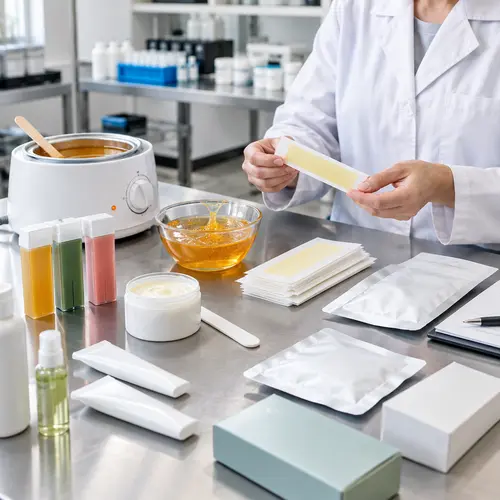
A disciplined hair removal OEM process treats the approved sample as a controlled commercial reference, not an informal indication of what production might resemble. Buyers should confirm the sample code, formula revision, color, fragrance, texture, application method, removal performance, fill weight, and primary packaging. Approval records should include dated photographs and measurable acceptance criteria so procurement, quality, and production teams are evaluating the same specification.
Formula customization should begin with a written differentiation strategy. A turnkey base can still support a distinct product when the manufacturer can adjust sensory profile, fragrance, color, selected supporting ingredients, format, and usage experience without compromising the core removal mechanism. For depilatory creams, every adjustment should be reviewed for irritation risk and performance consistency. For wax and sugar wax, the buyer should define the expected climate, user technique, body area, and salon or home-use context. Ingredient names can be checked against the INCI ingredient nomenclature database, but regulatory and safety conclusions require qualified review rather than reliance on a consumer database alone.
Packaging approval should cover the complete component set: container, closure, seal, applicator, label stock, carton, and any accessories. The supplier should document whether the selected formula changes panel shape, closure fit, print quality, seal integrity, dispensing behavior, or net-content accuracy over time. When a buyer supplies components, responsibilities for dimensional drawings, incoming inspection, rejected parts, replacement lead time, and line trials should be assigned before purchase commitments are made.
Stability review must reflect the final formula and intended pack. Ask what observations are recorded, how often they are recorded, and what constitutes failure. Relevant checks may include appearance, odor, color, texture, pH where applicable, weight loss, seal condition, container distortion, and application performance. A stability summary should identify the sample batch, packaging lot, review period, deviations, and approval authority.
MOQ discussions should separate formula batch requirements from packaging-component minimums. A low finished-goods quantity may still require the buyer to fund excess printed cartons, labels, cartridges, or containers. Request a cost model showing sample fees, setup charges, testing, component inventory, expected waste, and reorder assumptions. This makes it easier to compare unit economics against customer acquisition cost without treating the first run as if it had mature-volume efficiency.
Before artwork approval, obtain the available labeling documents, including the ingredient list, product specification, directions, warnings, lot-coding format, shelf-life basis, and responsible-party details. Market-specific files may also be required. Independent organizations such as Intertek’s regulatory testing and certification services can support testing or conformity work, but the buyer should confirm the precise scope and issuing entity for every report.
Shipment conditions should be agreed before final approval. Define carton configuration, pallet requirements, acceptable transit exposure, inspection method on arrival, and responsibility for damage claims. Brands replacing a failed supplier or responding to a capacity shortage should also verify raw-material availability, packaging lead times, and whether approved alternatives are documented. Relevant background pages may include the supplier’s hair removal product range, OEM/ODM development capabilities, and manufacturing process.

Common Problems or Failure Cases
Wax becomes brittle: A wax that cracks during removal may have an unsuitable composition for the expected working environment or may have changed during storage. Compare retained samples, confirm raw-material lots, and review the specified melting behavior and application thickness before changing the formula.
Wax strips lose adhesion: Poor removal can result from coating variation, incompatible backing material, contamination, or aging. Buyers should compare adhesion across the strip, confirm coating-weight tolerances, and inspect sealed packs from more than one production location within the batch.
Depilatory cream separates: Visible liquid, graininess, or uneven texture can indicate formula instability, processing inconsistency, or component interaction. Quarantine affected units, compare batch records and retained samples, and require an investigation that addresses both formulation and filling conditions.
Roll-on cartridges leak: Leakage may originate at the roller fit, cap, seam, or fill level. The investigation should identify the leak path and distinguish component variation from filling-line setup. Approval should be based on the final sourced cartridge rather than an unprinted substitute.
Fragrance causes sensitivity complaints: A pleasant sample fragrance does not establish suitability for every market or body area. Review fragrance documentation, concentration, allergen-labeling implications, and complaint patterns. Consider a fragrance-free option when the target audience prioritizes minimal formulations.
Packaging deforms: Distortion can affect shelf appearance, closure function, dispensing, or leakage. Confirm resin and component specifications, compare unused components with filled samples, and assess whether transit or warehouse exposure exceeded agreed conditions.
Supplier Checklist
- Confirm the legal manufacturer, production site, quality-system scope, audit status, and current certifications.
- Request sample codes, formula revision control, acceptance criteria, and retained-sample procedures.
- Verify texture, relevant viscosity or melting range, application consistency, removal performance, and irritation-risk review.
- Review ingredient traceability, especially for imported botanical oils or other ingredients supporting brand claims.
- Require compatibility and stability evidence using the intended formula, closure, applicator, label, and carton.
- Check leakage, seal integrity, package deformation, print durability, and shipment-carton performance.
- Separate finished-product MOQ from formula, fragrance, label, carton, and container minimums.
- List all sample, testing, setup, tooling, artwork, and excess-component costs.
- Confirm available specifications, ingredient documentation, safety support, label review, lot coding, and market files.
- Define change-control rules for formulas, raw materials, packaging suppliers, test methods, and production sites.
- Review capacity, component lead times, contingency plans, and approved substitutions.
- Establish confidentiality terms, ownership of custom work, complaint handling, and recall responsibilities.
FAQ
Can an Asian manufacturer meet Western Clean Beauty and cruelty-free requirements?
Location alone does not prove or disprove compliance. Define the exact retailer or brand standard, prohibited-ingredient list, animal-testing policy, and required declarations. Then verify supplier questionnaires, raw-material statements, audit evidence, and certification scope. Terms such as Clean Beauty are not universal regulatory standards, so contractual definitions matter.
Will a low MOQ make the unit cost commercially unworkable?
It can, particularly when custom printed components have higher minimums than the finished product. Compare landed cost at several quantities and include testing, setup, freight, duties, storage, unused components, and expected waste. Evaluate contribution margin against CAC rather than comparing only the quoted unit price.
Will a turnkey formula make our product indistinguishable from competing brands?
Not necessarily. Differentiation can come from verified performance targets, sensory profile, fragrance strategy, ingredient sourcing, packaging format, instructions, and aftercare assortment. Ask which formula elements are adjustable, which are locked for stability, and whether similar versions are supplied to direct competitors.
Can we sign a strict NDA before sharing our product plan?
Yes, confidentiality terms can be completed before detailed disclosure. The agreement should define confidential information, permitted recipients, security expectations, exclusions, duration, return or destruction of materials, and remedies. An NDA does not replace clear provisions covering formula ownership and exclusivity.
How can we verify environmental packaging claims?
Request material specifications, chain-of-custody evidence where relevant, recycled-content methodology, supplier declarations, and certificates traceable to the issuing organization. Ensure claims describe the actual component and market. Avoid broad terms such as eco-friendly when the evidence only supports one limited attribute.
What should be approved before the first commercial order?
Approve the coded formula sample, complete packaging set, artwork, product specification, quality limits, test plan, labeling documents, lot-code position, carton configuration, shipment conditions, commercial terms, and change-control procedure. Open deviations should have named owners and written closure criteria.