Direct Answer
A useful cosmetic product sampling process turns subjective reactions into production decisions. Give every reviewer the same hair-removal sample, intended use case, instructions, and scorecard. Ask them to assess removal performance, texture, application control, odor, residue, skin feel, packaging function, and camera appearance. Record the sample code, test conditions, body area, hair type, and any visible or sensory response.
Feedback should end in one of three outcomes: approve, revise, or retest. Comments such as ‘make it better’ are not actionable. Comments such as ‘the depilatory cream slides on vertical areas’ or ‘the roll-on cartridge leaks after warm storage’ tell the ODM what to change. Lock the approved sample, packaging components, specification, and labeling brief before ordering a pilot batch. This creates a clear reference for the hair removal manufacturing process and reduces differences between the reviewed sample and commercial production.

Key Takeaways for Private Label Buyers
- Source against a written brief. Define product type, target user, application area, desired finish, content concept, market, packaging format, and target launch week before sampling begins.
- Evaluate performance in context. Depilatory cream, sugar wax, wax strips, hot wax, roll-on wax, and aftercare require different scorecards and acceptance criteria.
- Test the intended pack. Formula approval alone does not confirm pump delivery, tube sealing, cartridge movement, strip release, leakage resistance, or label durability.
- Separate preference from failure. A reviewer may dislike a fragrance, but incomplete hair pickup, excessive residue, pack leakage, or unexpected irritation requires technical review.
- Approve a controlled model. Keep a coded retention sample and signed specification so the pilot batch can be compared with the exact version selected.
Buyer Context
Hair-removal products are unusually sensitive to use conditions. A wax that performs well in a controlled room may become too fluid during warm storage. A strip can look premium on camera yet release poorly from its liner. A depilatory cream may spread evenly on an arm but slide when applied to a leg. Aftercare can feel soothing initially while leaving a tacky finish that performs poorly in close-up content.
Creator-led brands face an additional constraint: the product must work for the customer and communicate its value within seconds on TikTok, Instagram, or YouTube. Texture visibility, controlled application, clean removal, and packaging ergonomics influence both conversion and repeat use. A short video can reveal stringing wax, uneven cream coverage, torn strips, or a leaking cap immediately.
Start by selecting the correct development route. Review hair removal product solutions and the available hair removal OEM ODM services before requesting samples. Product-specific baselines also matter: compare cream concepts through a custom depilatory cream formulation, waxing formats through custom wax strips and hot wax, and recovery concepts through post-depilation care OEM.
A target such as a 7-day first-sample turnaround can support a content calendar, but speed should not collapse the review stage. The better approach is parallel work: evaluate the formula, shortlist packaging, prepare market documentation, and reserve content production while revisions are still underway. A clear hair removal product RFQ should state what is included in the sampling fee, how many variants will be supplied, which packaging is available, and what triggers additional cost.
Technical or Packaging Factors
Build a Product-Specific Scorecard
For depilatory cream, check dispensing, spreadability, coverage, adherence on the intended body area, odor during use, removal completeness within the labeled directions, rinse behavior, residue, and afterfeel. Reviewers should never extend contact time beyond the supplied instructions to force a better result. If mild positioning is important, use a separate review path for low irritation hair removal products and document any stinging, persistent redness, or discomfort for supplier assessment.
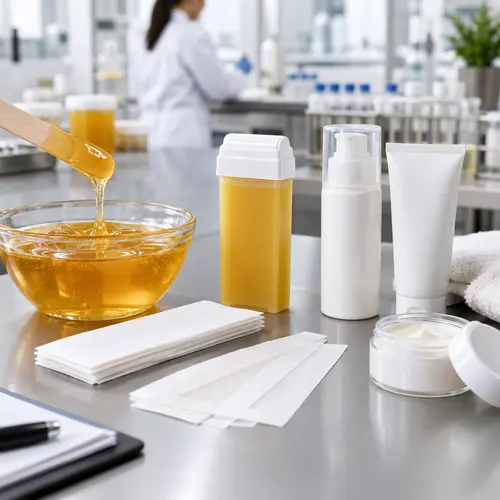
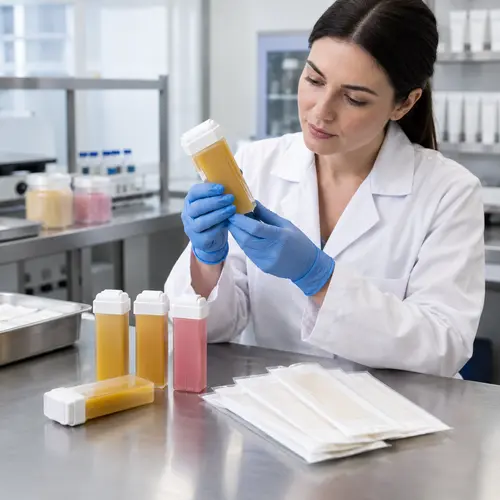
For hot wax and sugar wax, record consistency at the supplier-defined working condition, application control, stringing, hair pickup, breakage, residue, and removal comfort. For wax strips, check liner release, strip separation, adhesion consistency, flexibility, removal in one pull, residue, and performance after storage. For roll-on wax cartridges, assess roller movement, output uniformity, cap retention, and leakage while upright, inverted, warm, and cold.
Use a simple 1-to-5 score for comparable attributes, followed by one factual comment. Add short standardized video clips under consistent lighting for texture and removal review. This lets the ODM distinguish a formula issue from an application technique issue and supports faster revisions without relying on long email threads.
Review Formula and Pack Together
The production-intent pack should enter testing as early as possible. Cream viscosity affects pump output and tube dispensing. Wax temperature behavior affects cartridge flow. Oils, fragrances, and aftercare ingredients can interact with seals, liners, labels, or printed decoration. Check closure fit, crimp or seal integrity, roller movement, panel deformation, label lifting, print smearing, and product loss around the neck or cap.
Ask the supplier to identify which components are stock, which require customization, and whether the sample was hand-filled or produced on representative filling equipment. That distinction matters because hand-filled samples may not expose air entrapment, fill-weight variation, sealing behavior, or line-speed constraints. The approved unit should connect directly to the documented cosmetic filling and packaging process.
Include Storage, Shipment, and Market Checks
Keep sealed retention samples and compare them at agreed checkpoints under room, heat, cold, and transport conditions defined for the project. Look for separation, viscosity drift, wax sweating, brittle strips, odor change, discoloration, leakage, cap loosening, label damage, and reduced removal performance. The ODM should explain the test conditions, observations, and limits rather than provide an unexplained pass result.
Market review should begin during sampling. For the United States, verify ingredient presentation, warnings, responsible-party details, and other applicable requirements against FDA cosmetics guidance and U.S. cosmetics law. Products routed through Amazon may also need screening under Amazon dangerous goods classification rules for cosmetics. UAE projects should confirm applicable requirements with the UAE MoIAT industrial standards authority. Request the ingredient list, product specification, batch identification format, stability summary, packaging details, label files, and shipment conditions before final approval.

Decision Framework Table
| Factor | What to Check | Why It Matters | ODM Buyer Note |
|---|---|---|---|
| Removal performance | Coverage, hair pickup, residue, and result within labeled directions | Confirms the core product promise | Test on defined hair types and body areas |
| Texture and visual impact | Spread, flow, stringing, finish, and appearance under consistent lighting | Affects use control and short-form content | Send standardized clips with the sample code |
| Skin response | Stinging, discomfort, redness, and afterfeel | Flags risk before broader testing | Stop use when an adverse response appears |
| Packaging compatibility | Dispensing, sealing, leakage, liner release, roller action, and label condition | Prevents failures that formula-only review misses | Confirm whether the sample was hand-filled |
| Storage and shipment | Heat, cold, orientation, transport effects, and changes over time | Shows whether performance survives distribution | Agree on conditions and acceptance limits in writing |
| Production decision | Approved sample code, final pack, specification, documents, and open deviations | Creates a controlled reference for scale-up | Use a hair removal OEM manufacturer that preserves the approved model through the pilot batch |
ODM Manufacturing Considerations
In the cosmetic product sampling process, sample confirmation should create a controlled reference for production rather than a casual approval by email. The buyer and supplier should record the confirmed product code, formula version, fragrance, color, fill weight, container, closure, label material, and any agreed performance ranges. Photographs and signed specifications are useful, but the physical reference should also remain traceable to the final purchase order.
Formula customization needs measurable boundaries. A request for softer wax, faster cream action, stronger fragrance, or a more visible sugar-wax color can affect application behavior, consumer comfort, storage performance, and cost. Ask the ODM team to translate each marketing request into testable specifications such as viscosity, melting range, application thickness, removal time, fragrance level, and acceptable color tolerance. Buyers can review relevant starting formats through the hair-removal product categories before deciding whether an existing base or a custom formula is appropriate.
Packaging must be assessed against the actual fill and intended distribution route. Confirm whether the selected jar, tube, sachet, strip pouch, or cartridge remains functional after filling, storage, handling, and repeated use. A stability review should track appearance, odor, consistency, weight change, seal integrity, and pack deformation at defined intervals. Any accelerated observation should be supported by real-time monitoring because short tests cannot predict every long-term change.
Clarify MOQ by formula, fragrance, pack component, decoration method, and finished SKU. A low finished-goods MOQ may still require the buyer to fund excess printed film, labels, cartons, or custom-colored parts. Request an itemized BOM showing product fill, primary pack, printed materials, assembly, testing, freight preparation, and expected surplus components. The supplier should also identify which changes trigger another sampling stage.
Before production, agree on the labeling documents required for the destination market, including the ingredient declaration, net contents, batch identification, usage directions, cautions, responsible-party details, and available safety support. Shipment planning should state carton count, pallet method, temperature exposure assumptions, transport mode, and any marketplace review. Amazon sellers should check Amazon dangerous-goods classification requirements because product composition and transport information may affect listing or fulfillment review.

Common Problems or Failure Cases
Wax becomes brittle: A hard-wax sample may perform well when fresh but crack after storage or when used in a cooler salon. Record the conditioning temperature, melting range, application thickness, and break pattern. Do not approve based only on a warm sample prepared by the supplier.
Strip adhesion declines: Pre-coated strips can lose grip when adhesive mass shifts, the pouch seal is weak, or prolonged heat changes the wax layer. Compare unopened units from different storage conditions and check whether the strips separate cleanly, apply evenly, and remove hair without excessive residue.
Depilatory cream separates: Oil release, watery layers, graininess, or odor drift can indicate that the sample is not robust enough for the proposed shelf life or shipment route. Review filled units at several time points and confirm that dispensing, spreading, and removal remain consistent.
Roll-on cartridges leak: Leakage may originate at the cap, roller fit, neck, or seam, especially after temperature changes or vibration. Inspect the cartridge upright, inverted, and after transit simulation. Also confirm that the roller turns consistently without releasing an uncontrolled amount of wax.
Fragrance creates avoidable sensitivity concerns: Strong fragrance can support a brand concept but may reduce suitability for consumers using hair-removal products on sensitive areas. Ask for the fragrance level, allergen-related labeling information where applicable, and an unscented or lower-fragrance comparison sample.
Packaging deforms: Jars, tubes, pouches, or caps can soften, panel, discolor, or lose seal strength during storage. Treat visible distortion as a functional issue, not merely a cosmetic defect, because it may affect dosing, leakage, or customer confidence.
Supplier Checklist
- Confirm the supplier has documented experience with depilatory wax, wax strips, creams, sugar wax, roll-on cartridges, and aftercare products relevant to the proposed SKU.
- Request a written sampling brief with formula version, target texture, color, fragrance, performance ranges, fill quantity, pack components, and evaluation dates.
- Ask which attributes are standard, which are customizable, and which changes require new tooling, materials, testing, or MOQ commitments.
- Review irritation-risk controls, ingredient restrictions, usage cautions, traceability records, and the procedure for investigating adverse consumer feedback.
- Check evidence for viscosity or melting range where relevant, seal integrity, leakage resistance, storage observations, and shipment-condition assessment.
- Confirm that production specifications will match the approved reference and that deviations require documented buyer acceptance.
- Obtain MOQ and lead-time details separately for bulk product, primary packaging, labels, cartons, and finished units.
- Request a transparent BOM estimate plus assumptions for decoration, assembly, quality checks, freight preparation, and unused printed components.
- Verify available labeling files, ingredient documentation, batch records, test summaries, and destination-market support.
- Assess whether the account contact can convert social-media goals into measurable product requirements and explain tradeoffs without relying on unexplained technical language.
- Review the supplier’s scale-up plan, reserved capacity rules, component replenishment times, and communication process for forecast changes.
- Compare these answers with the supplier’s OEM and ODM services and manufacturing process, then include unresolved points in the RFQ brief.
FAQ
How can I prevent a factory from reusing my concept or formula?
Use a mutual confidentiality agreement, define ownership of buyer-funded formulas and artwork, and restrict use of samples, briefs, and launch materials. Ask whether the formula is an exclusive development or a modified supplier base. Contract terms should identify permitted use, access controls, subcontractors, and what happens to files and unused components after the project ends.
Can a supplier understand a visual social-media concept without technical terminology?
A capable contact should convert references such as dramatic wax pull, vivid color, clean strip separation, or controlled cream removal into measurable sample targets. Provide reference videos, intended application conditions, prohibited outcomes, and priority order. The supplier should return a written brief that distinguishes visual goals from product performance and consumer-use limits.
Can quality controls guarantee that no customer will have a bad reaction?
No supplier can guarantee zero reactions. Risk can be reduced through ingredient review, appropriate testing, clear directions, warnings, batch controls, and documented complaint handling. Buyers should avoid absolute safety claims and should confirm their responsibilities in each sales market. The FDA explains that cosmetics are regulated but generally are not approved before sale in the United States.
How do I know whether the approved sample will match the production batch?
Link approval to a version-controlled specification covering the formula, key performance ranges, fragrance, color tolerance, fill, and packaging components. Require production checks against that reference and define escalation rules for out-of-range results. Pre-shipment documentation should identify the produced lot and inspection status.
What should I ask if a video campaign could cause sudden demand?
Request realistic output by SKU, normal and peak lead times, component constraints, minimum reorder quantities, and capacity-reservation terms. Ask what forecast notice is required and whether smaller repeat batches can be scheduled. Confirm whether larger customers receive contractual priority that could displace your planned production window.
Which shipment details should be agreed before placing an order?
Document pack-out, carton strength, palletization, orientation, expected temperature range, transit duration, freight mode, and handling restrictions. Clarify who supplies transport documents and who reviews marketplace requirements. For hot routes, include extra checks for wax movement, strip performance, cartridge sealing, and container deformation.