Direct Answer
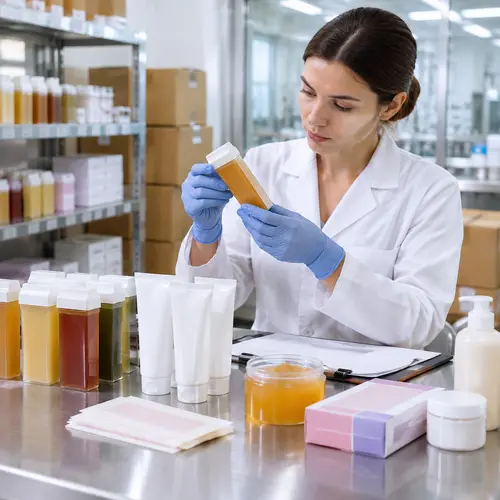
The cosmetic product sampling process for a hair-removal product should be treated as a controlled approval path, not a one-time request for a free sample. Start with a focused brief covering product type, target market, skin-use claims, visual texture, pack format, expected order volume, and launch date. The ODM then prepares a first sample, records the formula and material specifications, and moves through structured rounds for texture, performance, packaging compatibility, storage, and labeling review. Approval should happen only after the final sample matches the agreed benchmark and the same formula, components, and process are confirmed for the pilot batch. For a creator-led brand, this workflow protects the launch window while reducing the risk of a cream separating on camera, wax leaking in transit, or a finished product changing between sample and production. A clear sample record gives buyers a practical decision trail from creative brief to production release.
Key Takeaways for Private Label Buyers
- Send a product brief with the intended hair-removal area, texture, scent, color, application method, target market, and launch deadline.
- Judge the sample on both consumer experience and manufacturing repeatability: spread, grip, removal, residue, rinse-off, and after-feel.
- Review packaging compatibility early. Tubes, jars, sachets, wax strips, roll-on cartridges, and aftercare bottles can behave differently during storage and shipment.
- Ask for a written sample record covering the formula version, raw material changes, batch code approach, test scope, and approved components.
- Confirm the pilot quantity, sample scope, production lead time, labeling documents, and shipment conditions before giving final approval.
- Do not approve from a single visual impression. Use a small buyer panel and repeat the application under realistic use and storage conditions.
Buyer Context
Hair-removal products are unusually sensitive to the gap between a creative idea and a repeatable manufacturing result. A founder may describe a soft, elastic sugar wax that looks premium in a short video, a depilatory cream that spreads in one smooth pass, or a roll-on wax that delivers a clean line without dripping. The ODM must translate that brief into measurable product behavior and a pack that can survive filling, storage, shipping, and consumer handling.
The first sample is therefore a commercial decision point. It reveals whether the product concept fits the selected material, filling method, production equipment, and target cost. It also shows where the brief needs refinement. A wax strip may have attractive artwork but insufficient adhesion after aging. A depilatory cream may feel elegant in a lab container but react with the final tube. An aftercare gel may look clear in a sample bottle but become cloudy after heat and cold storage. These are not reasons to abandon a concept; they are signals to resolve before a batch is released.
For private-label buyers, the process also creates ownership clarity. The approved sample should identify the product version, packaging components, artwork file, label copy, and acceptance criteria. This is especially important when a creator-led brand is coordinating content production, retailer deadlines, and a first shipment at the same time. Buyers can also review the hair removal OEM manufacturer page for product categories, or compare options through the hair removal product solutions hub.
A practical sample project usually runs in stages: brief, feasibility review, first sample, buyer testing, revision, packaging check, final approval, pilot batch, and production release. A fast supplier may provide an initial sample in seven days, but speed only creates value when the sample record and revision decisions remain clear.
Hair removal product guides can help buyers prepare questions before the first meeting. For a complete project, the hair removal OEM ODM services page is useful when the requirement includes formulation, packaging, documentation, filling, and shipment coordination.
FDA cosmetics and U.S. law guidance should be checked for the target market, especially claims, labeling, responsible-party duties, and product records. If the product uses color, buyers should also review the FDA color additive permitted-use database. Brands making cruelty-free positioning can assess the Leaping Bunny cruelty-free certification standard before finalizing supplier declarations.
Technical or Packaging Factors
Formula behavior. For depilatory cream, record spreadability, contact feel, rinse-off, odor, residue, and the agreed use area. The supplier should explain the irritation-risk review and provide the intended directions and warning language for buyer review. Do not judge only by fragrance or color. A sample that feels strong or fast may be less suitable for sensitive-skin positioning. For related positioning, buyers can review sensitive skin hair removal products and compare the expected mildness, use instructions, and testing scope.
For wax, check the melting point or softening behavior, working temperature, pull strength, stringing, setting time, residue, and removal performance. These properties should be assessed in the final pack rather than only in a beaker. Sugar wax, hot wax, and roll-on wax each need a clear application method. A buyer exploring wax strips OEM options should request adhesion review after storage, while a roll-on project should include cartridge flow, roller movement, cap fit, and leakage checks.
Packaging compatibility. Confirm that the formula does not soften, swell, stain, crack, or cause odor transfer in the selected tube, jar, pouch, strip backing, cartridge, or bottle. Check the closure after filling and after heat and cold storage. For creams and aftercare, inspect squeeze force, seal integrity, label adhesion, and leakage during simulated shipment. For wax cartridges, check whether the product flows consistently and whether the cap remains secure after handling. The hair removal manufacturing process page gives buyers a useful reference for sampling, filling, packaging, quality review, and shipment stages.
Performance and storage. Establish acceptance criteria before testing begins. Examples include uniform color, no separation, stable scent, consistent viscosity, intact seals, clean dispensing, and no unacceptable leakage. Store samples in realistic conditions that reflect the destination market and shipping route. Compare the appearance and application result before and after storage. A sample approval should cover the final formula and final packaging together, because changing either one can change the user experience.
Documentation and scale-up. Ask for the ingredient list, specification sheet, packaging material details, artwork requirements, batch identification method, test summary, and shipment conditions. Confirm whether the approved sample can move directly into a pilot batch or whether a production trial is required. For post-treatment products, the post-depilation care OEM page can support a matching aftercare kit. For a longer-term product line, review the hair inhibitor serum OEM option only when it fits the intended post-hair-removal use case.
Decision Framework
| Factor | What to Check | Why It Matters | ODM Buyer Note |
|---|---|---|---|
| Formula texture | Spread, grip, stringing, residue, rinse-off, and scent | Determines consumer perception and on-camera performance | Approve against a retained reference sample |
| Wax behavior | Melting point or softening behavior, working temperature, setting, and removal | Affects safety, application control, and salon or home use | Test in the final jar, strip, or cartridge |
| Packaging fit | Seal, closure, dispensing, material reaction, and label adhesion | Prevents leakage, contamination, and presentation failures | Require compatibility review before artwork release |
| Storage stability | Heat and cold exposure, separation, odor change, color change, and viscosity shift | Shows whether the product can withstand real distribution conditions | Match storage conditions to the destination market |
| Production readiness | Formula version, component list, pilot quantity, documents, and shipment plan | Prevents unapproved substitutions or timing surprises | Release production only after written sign-off |



ODM Manufacturing Considerations
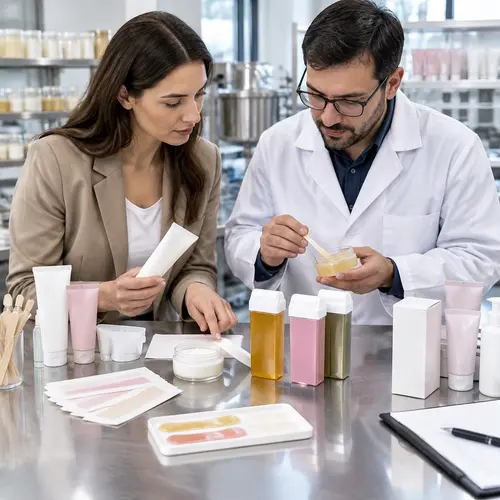
Sample approval should be treated as a controlled confirmation step, not a general expression of preference. The buyer should approve a written sample record covering product name, intended use, target user, fragrance level, color, texture, package format, net weight, application method, and acceptable variation. For a depilatory cream, record spreadability, removal time, residue, and skin-feel observations. For sugar wax or hot wax, record melting behavior, working temperature, stringiness, pickup, and removal from the skin. A wax strip brief should identify strip material, wax coat weight, adhesion, tear resistance, and the expected hair length for effective use.
Customization works best when the buyer separates essential requirements from optional preferences. Essential requirements may include a low-fragrance formula, a specific wax texture, a defined viscosity range, or compatibility with a chosen tube, jar, pouch, or cartridge. Optional preferences may include a color adjustment, scent variation, or aftercare insert. Ask the supplier to identify which changes affect cost, minimum order quantity, testing scope, or lead time before approving the next sample. This makes the OEM/ODM service process easier to manage and reduces repeated revisions.
Packaging compatibility must be reviewed with the actual component, not only with a photograph or supplier specification sheet. Check whether depilatory cream causes tube swelling, cap stress, seal damage, or discoloration. For roll-on wax cartridges, inspect the roller head, plug, seam, and cap after storage and transport simulation. For wax strips, check whether the release liner remains easy to remove while preserving adhesion. Also confirm fill level, closure torque, label adhesion, barcode readability, and the condition of cartons after packing.
A stability review should compare samples before and after defined heat, room-temperature, and cold exposure. Buyers should document changes in odor, color, phase separation, viscosity, wax hardness, strip adhesion, leakage, and package deformation. The supplier should explain the review conditions and provide dated records rather than simply stating that the product is stable. For a launch tied to social content, align the review schedule with the planned release date and reserve enough time for corrective work.
MOQ should be quoted separately for formula development, printed packaging, finished goods, and replacement components. A low sample quantity does not necessarily mean a low production MOQ, especially when custom labels, cartons, or molded components are involved. Request a transparent BOM quote that identifies formula, filling, packaging, artwork setup, testing, storage, and freight assumptions. A buyer comparing suppliers should also ask whether unused printed materials belong to the buyer and how excess components are handled.
Labeling documents should be collected before final artwork approval. Depending on the destination market, the file may need the ingredient declaration, net contents, batch identification method, shelf-life or period-after-opening information, directions, warnings, responsible-party details, and packaging material information. Claims such as cruelty-free, natural, gentle, or suitable for sensitive skin should be supported by the supplier’s documentation and reviewed for the intended market. The FDA explains that cosmetics are regulated in the United States even though most cosmetics are not preapproved by the agency; buyers should therefore review the relevant FDA cosmetics requirements before release.
Shipment conditions should be agreed in writing. Specify carton dimensions, pallet or parcel configuration, temperature exposure limits, protection from direct sunlight, orientation for liquid products, and the required shipping documents. Wax may soften during a hot delivery route, while cream tubes or cartridges may deform under compression. Ask for a retained sample from the shipped batch and a packing photo or inspection record before dispatch. These details create a practical handoff between manufacturing approval and receiving inspection.
Reviewing the manufacturing process with the supplier can also reveal whether the proposed product is suited to the factory’s filling, sealing, labeling, and packing equipment. An attractive sample is not enough if the same texture cannot be filled consistently or if the selected container cannot tolerate normal shipment conditions.
Common Problems or Failure Cases
Wax brittleness often appears when a formula is too hard for the intended working temperature or when the product loses flexibility during storage. The buyer should compare a retained sample with a shipment sample, record breakage during application, and check whether the wax pulls cleanly or leaves fragments. A corrective revision may involve changing the wax balance, container protection, or storage instructions.
Wax strip adhesion can decline when the wax coat weight is inconsistent, the release liner is unsuitable, or the strips are exposed to excessive heat. Check several units from different cartons, including the first and last units packed from a run. Test opening force, hair pickup, residue, and strip tearing. A strip that performs well in a supplier sample but fails after transport indicates that aging and shipment conditions were not adequately represented.
Depilatory cream separation may show as oil at the surface, a watery layer, graininess, or an altered odor. Record the appearance at receipt and after storage, then compare units from different batch locations. Buyers should not approve a visually attractive sample without confirming that the filled package maintains the same consistency through the agreed review period.
Roll-on cartridge leakage can originate at the roller head, plug, cap, seam, or filling level. Inspect cartridges upright and on their side, then check cartons for staining or softened labels. A cartridge that leaks only after vibration or pressure during shipment needs a packaging or closure correction, not merely an instruction to keep it upright.
Fragrance sensitivity is another common commercial risk. A scent that seems mild during a brief sample review may be too strong when used over a larger area. Request a fragrance-free or low-fragrance comparison where the brand positioning requires it, and make sure the label directions and warnings match the approved product. Packaging deformation, including swollen tubes, warped lids, and softened pouches, should be investigated together with formula compatibility and transport exposure.
Supplier Checklist
- Can the supplier provide a dated sample record with formula version, package version, and revision history?
- Does the brief define texture, viscosity or melting behavior where relevant, fragrance level, color, application method, and removal performance?
- Will the supplier test the actual tube, jar, pouch, wax strip, or roll-on cartridge selected for production?
- Are heat, room-temperature, and cold review conditions documented with observations and sample dates?
- Does the quotation separate development fees, MOQ, packaging setup, finished goods, testing, storage, and freight?
- Can the supplier provide ingredient, label, batch, warning, and destination-market documentation before artwork approval?
- Are shipment conditions clear for temperature exposure, carton packing, orientation, and damage inspection?
- Is there a named contact who can translate a social-media product brief into measurable product requirements?
- Can the factory explain how capacity is reserved when a product receives an unexpected demand increase?
- Does the contract address ownership of custom artwork, formula work, samples, tooling, and confidential project information?
FAQ
How can I reduce the risk that a factory will reuse my idea or formula?
Use a confidentiality and ownership agreement before sharing the complete brief, and identify the formula version, artwork, packaging design, and custom performance targets as project information. Ask how access is controlled internally and whether the supplier will confirm that custom work is not offered to another customer. Keep dated approvals and written change records. These steps do not replace legal advice, but they create clearer evidence of ownership and confidentiality expectations.
Can the sample achieve a strong visual effect on camera?
It can, but the target must be described in measurable terms. Specify the desired color, gloss, foam appearance, stretch, drip behavior, or wax pickup, then review it under the lighting and background used for content. Ask for sample video under consistent conditions and approve the formula only after checking that the visual effect does not compromise removal performance, comfort, or package stability.
Is a supplier quality system enough to protect my customers from a bad reaction?
No process can guarantee zero consumer reactions. A responsible supplier should provide ingredient and warning documentation, controlled batch records, defined release checks, and a process for handling complaints and retained samples. Buyers should review irritation risk for the intended use, avoid unsupported sensitive-skin claims, and ensure that directions include a suitable patch-test recommendation where appropriate.
What if I do not understand cosmetic ingredients or manufacturing terms?
Ask the supplier to convert the brand brief into a plain-language specification with measurable acceptance criteria. The contact should explain why a requested scent, texture, color, or package may affect cost or performance. A useful supplier can discuss marketing intent while still documenting the technical limits of the product.
Can the factory handle a sudden increase after a video performs well?
Ask for current production capacity, material reservation rules, normal reorder timing, and the conditions for prioritizing an urgent order. Confirm whether the factory can use the approved sample and packaging specification without reopening development. Capacity should be discussed before launch, because a supplier may have room for small replenishment orders but limited filling or packing availability during peak periods.
Which records should I keep after approving the sample?
Keep the final formula or product specification, packaging specification, signed sample approval, label artwork, ingredient declaration, review records, batch identification method, packing requirements, shipment conditions, and agreed acceptance limits. These records give buyers a reference for receiving inspection and future change control.
References
For United States cosmetic labeling and product obligations, consult the FDA Cosmetics and U.S. Law guidance. For color use questions, review the FDA color additive permitted-use database. Brands making a cruelty-free claim can also review the Leaping Bunny certification standard.