Direct Answer
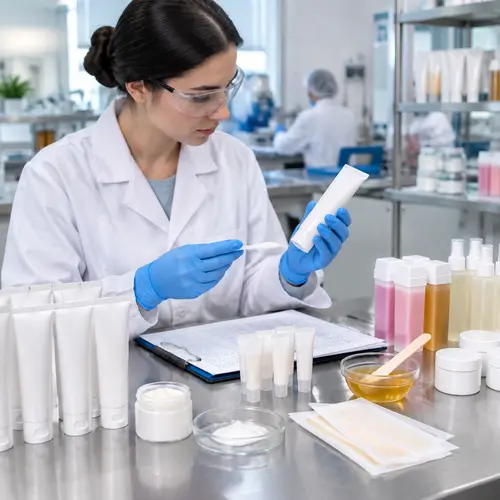
Hair removal product quality control should be managed as a documented release gate, not as a final visual inspection. Before approving shipment, the buyer should confirm formula identity, batch conformity, hair-removal performance, irritation-risk controls, microbiological status, packaging compatibility, label accuracy, transport resilience, and traceable approval records. The review must be specific to the format: depilatory cream requires active-content, pH, viscosity, and dispensing checks; wax and sugar wax require temperature-dependent texture and removal-performance controls; wax strips require adhesion-aging assessment; roll-on cartridges require flow and leakage testing; and aftercare products require preservation and packaging compatibility review.
Release authority should remain independent from production scheduling. A launch deadline, constrained capacity, or inventory shortage should never override an unresolved out-of-specification result. The governing package should include approved specifications, certificates of analysis, batch records, test reports, artwork approvals, deviation records, retained-sample identification, and written QA disposition.
Key Takeaways for Private Label Buyers
- Define acceptance criteria before sampling. The specification should cover appearance, odor, pH where relevant, viscosity or softening behavior, fill weight, functional performance, packaging, and microbiological limits.
- Do not qualify the formula separately from its final pack. Compatibility testing should use the intended tube, jar, sachet, wax strip pouch, or roll-on cartridge, including production-grade closures and decoration.
- Review risk by product format. A depilatory cream failure may involve chemical stability or dispensing, while a wax strip failure may arise from adhesive migration, liner release, or heat exposure.
- Require objective release evidence. A certificate of analysis should map to the approved specification and batch number rather than provide generic pass statements.
- Separate launch approval from claim approval. Product performance, sensitive-skin positioning, and regrowth-related claims require evidence proportionate to the wording and target market.
- Link shipment release to storage and transit conditions. Passing factory inspection does not demonstrate that a product will tolerate container loading, seasonal heat, cold storage, or last-mile handling.
Buyer Context
Hair-removal products combine formula sensitivity, high consumer expectations, and format-specific packaging risks. A cream may remain visually acceptable while its active system, pH, or viscosity moves outside the approved range. Hot wax can become brittle or excessively fluid after temperature cycling. Sugar wax may crystallize or lose water. Wax strips can transfer adhesive to the liner, lose grip, or become difficult to separate. Roll-on wax cartridges may leak around the roller assembly or deliver an inconsistent film.
These failure modes become material when a brand is qualifying replacement capacity after an incumbent quality incident, responding to serious findings from a third-party factory audit, or creating a dual-source plan following an unexpected capacity interruption. Under those conditions, procurement pressure can compress review time precisely when technical governance should become more rigorous. The buyer should therefore connect supplier qualification, sample approval, pilot manufacture, and commercial release through one controlled hair removal manufacturing process.
Product scope also changes the evidence required. Buyers assessing a custom depilatory cream formulation should scrutinize chemical assay, pH, odor development, viscosity, and tube compatibility. Teams sourcing custom wax strips and hot wax should focus on adhesion, residue, melting or softening behavior, pouch seals, and thermal aging. A post-depilation care OEM program adds preservation, soothing-claim substantiation, and pump or tube dispensing controls.
Regulatory status must be confirmed market by market. In the United States, cosmetics generally are not preapproved, but they remain regulated under the framework explained in the FDA guidance on authority over cosmetics. Marketing teams should align efficacy and safety language with the FTC advertising substantiation guidelines. For Saudi market access, the responsible team should verify applicable product and shipment requirements through the SABER conformity certification platform.
Technical and Packaging Factors
Formula Conformity and Functional Performance
The master specification should distinguish release tests from longer-term stability indicators. For depilatory cream, buyers should review active-content testing, pH, viscosity, emulsion uniformity, odor, color, application spread, removal time under the approved method, and rinse behavior. Sensitive-use positioning requires a documented irritation-risk review, controlled instructions, and evidence supporting any claim; the formulation rationale can be evaluated alongside mild hair removal formula development.
Wax controls should reflect actual use temperature. The supplier should define an approved softening, melting, or application window and demonstrate consistent pickup, spread, hair capture, removal, and residue. Sugar wax requires particular attention to water balance, crystallization, and container closure. Wax strips should be assessed after aging for liner release, adhesive distribution, strip separation, grip, residue, and removal consistency.
Packaging Compatibility and Line Controls
Packaging approval should use production-intent components rather than visually similar samples. For tubes and jars, review seal integrity, closure fit, dispensing force, panel distortion, decoration resistance, and formula contact effects. Roll-on cartridges require leakage checks in multiple orientations, roller rotation assessment, controlled output, closure retention, and inspection after heat exposure. Pouches for wax strips should be reviewed for seal continuity, puncture resistance, and adhesive or oil migration.
Line records should reconcile bulk quantity, issued components, filled units, rejects, and retained samples. Fill-weight controls, coding legibility, label placement, and barcode verification should be defined in the approved cosmetic filling and packaging process. Any change in resin, liner, adhesive, tube laminate, closure, ink, or component supplier should trigger documented change control rather than silent substitution.

Stability, Storage, and Shipment
A practical protocol may include ambient storage, accelerated exposure at 40°C, cold exposure at 4°C, and three freeze-thaw cycles, subject to formula and market requirements. These conditions are screening tools, not universal shelf-life proof. The review should track appearance, odor, separation, crystallization, viscosity, pH where applicable, package deformation, leakage, label lifting, and dispensing performance at defined intervals.
Shipment release should also consider pallet configuration, case strength, orientation, container conditions, and seasonal lanes. A cartridge that passes upright warehouse storage may still leak during vibration or prolonged side-loading. Procurement teams should align these requirements during hair removal OEM ODM services scoping rather than after commercial inventory has been produced.
Documentation and Change Governance
The final file should connect the approved sample to the commercial batch without unexplained formulation re-engineering. Required records typically include formula version, raw-material traceability, batch manufacturing record, in-process results, finished-product certificate, microbiological report, packaging inspection, artwork approval, stability status, deviations, and QA release signature. For kits containing an after hair removal serum, each component and the assembled kit require separate compatibility and labeling review.
Sample scope, pilot quantity, commercial MOQ, test ownership, and reapproval triggers should be written into the quality agreement and contract. Buyers comparing depilatory product development solutions should require the same critical quality attributes across laboratory samples, pilot units, and scale production.
Decision Framework Table
| Factor | What to Check | Why It Matters | ODM Buyer Note |
|---|---|---|---|
| Formula identity | Approved version, raw materials, active content, pH, viscosity, odor, and appearance | Prevents unapproved drift between sample and mass production | Require version-controlled specifications and change approval |
| Hair-removal performance | Application, removal, hair capture, residue, rinse behavior, and use time | Confirms that laboratory conformity translates into consumer function | Approve a repeatable test method and reference sample |
| Pack compatibility | Leakage, seals, closures, dispensing, migration, decoration, and deformation | Packaging failures can create recalls despite acceptable bulk | Test the final component set from nominated suppliers |
| Stability and transport | Heat, cold, cycling, orientation, vibration, case strength, and pallet pattern | Factory release does not represent global distribution exposure | Match testing to destination climate and shipment lane |
| Label and claims | Ingredient list, warnings, directions, batch code, responsible party, and evidence file | Incorrect text can block customs clearance or create enforcement risk | Use market-specific legal and regulatory approval |
| Release governance | COA, deviations, retained samples, reconciliation, and independent QA signature | Provides traceability and prevents schedule-driven release | Define rejection, investigation, and rework authority in the contract |
Before supplier nomination, procurement should consolidate these requirements into a controlled RFQ and quality annex. The review can be structured through a formal hair removal product RFQ, with separate fields for formula specification, sample stage, MOQ, packaging source, destination markets, testing responsibility, shipment conditions, and release documentation.
ODM Manufacturing Considerations
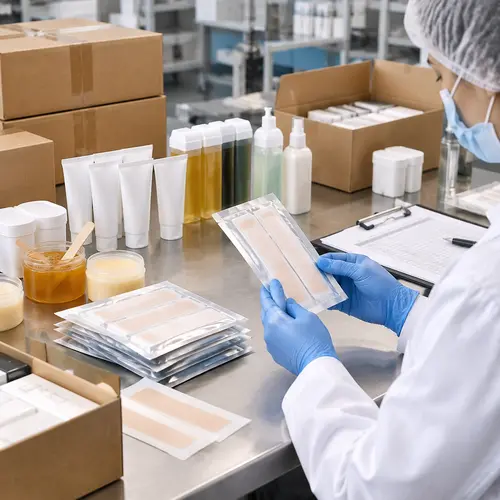
Hair removal product quality control should move from an approved sample to a written commercial specification. The buyer should identify which sample is authoritative, record its batch number, and retain sealed reference units. Approval should cover appearance, odor, texture, application behavior, removal performance, residue, and the expected condition after storage. A laboratory sample alone is not sufficient if the commercial batch will use different mixing equipment, filling speeds, or component suppliers.
Formula customization should begin with the intended use. A body depilatory cream, face cream, salon wax, sugar wax, wax strip, roll-on cartridge, and aftercare serum have different performance and irritation-risk profiles. Buyers should define permitted fragrance levels, color targets, application time, residue expectations, and excluded ingredients before development begins. Any request for clean-positioning language or sensitive-skin claims should be translated into measurable formulation and claim-support requirements rather than subjective marketing terms.
Packaging review should cover the complete pack rather than an empty component. Filled units should be examined for closure security, seal integrity, paneling, staining, odor transfer, label lifting, print abrasion, and changes in dispensing. Roll-on cartridges require particular attention around the roller housing and cap. Wax strip pouches need consistent seals and protection from air exposure. Cream packs must dispense without uncontrolled surging or blocked openings.
The stability plan should reflect the formula, expected shelf life, sales regions, and distribution route. Procurement teams should agree on review intervals, acceptance limits, retained-sample quantities, and responsibility for investigating changes. Shipment planning should also define pallet configuration, carton strength, warehouse temperature expectations, container loading, and handling of temperature excursions. These details matter when a brand is replacing a supplier after a quality incident or adding manufacturing capacity in China for supply-chain resilience.
MOQ discussions should separate the formula batch minimum from minimum quantities for tubes, cartridges, pouches, cartons, liners, and custom printing. Ask whether pilot filling is available and which components can be sourced in smaller quantities for validation. The approved labeling file should include the ingredient declaration, net contents, directions, warnings, responsible-party details, batch coding, shelf-life marking, and market-specific language. Buyers can review related development stages through the OEM/ODM services overview and the manufacturing process.

Common Problems or Failure Cases
- Wax becomes brittle: The product cracks during removal or breaks when flexed. Investigate raw-material variation, cooling profile, storage history, and whether the approved flexibility range was included in the release specification.
- Wax strip adhesion declines: The strip may lift poorly, leave excess residue, or show uneven coating. Review coating weight, pouch sealing, liner condition, and the age of both bulk adhesive and finished stock.
- Depilatory cream separates: Free liquid, graininess, or inconsistent texture may indicate an emulsion problem, inappropriate processing, or interaction with the pack. Quarantine affected lots and compare top, middle, and bottom samples before release.
- Roll-on cartridges leak: Leakage around the roller or neck can result from dimensional variation, poor assembly, fill temperature, or closure stress. Inspect filled units across the run rather than relying on empty-component measurements.
- Fragrance causes sensitivity complaints: A fragrance accepted for odor may still increase consumer discomfort, especially in products used on sensitive areas. Review fragrance concentration, allergen disclosure, intended-use warnings, and complaint patterns by batch.
- Packaging deforms: Cartridges, tubes, or pouches may swell, collapse, or lose seal strength in distribution. Confirm whether the failure is related to formula contact, trapped air, carton compression, or exposure outside agreed shipment conditions.
A recurring defect should trigger documented root-cause analysis, affected-lot traceability, corrective action, and confirmation that the correction works. Reworking or relabeling stock without an approved procedure can create additional variability.
Supplier Checklist
- Confirm manufacturing capabilities for the exact hair-removal format and intended fill size.
- Request the commercial specification, test methods, acceptance ranges, and approved reference sample.
- Check formula texture, viscosity or wax handling range, odor, application behavior, residue, and removal performance.
- Review ingredient restrictions, fragrance documentation, irritation-risk assessment, and claim-support files.
- Inspect component drawings, seals, closure controls, coding location, and filled-pack inspection criteria.
- Verify the stability protocol, review schedule, retained samples, shelf-life rationale, and excursion procedure.
- Separate formula MOQ from printed-component MOQ and document pilot-sample scope and charges.
- Review batch records, deviation handling, complaint escalation, traceability, and product recall procedures.
- Confirm label responsibility, ingredient-list review, warnings, language versions, and market-entry documents.
- Agree on carton configuration, shipment conditions, release records, and change-notification periods.
- Assess business continuity, alternate raw-material controls, labor compliance, and environmental reporting.

FAQ
How should a buyer confirm that the final batch matches the approved sample?
Use a signed specification and sealed reference units linked to a batch number. Compare measurable criteria and application performance, not appearance alone. Pre-shipment samples should come from the actual commercial run.
Can a factory guarantee that a core formula will never be disclosed?
No supplier can credibly promise absolute protection. Buyers should assess access permissions, segmented formula records, physical document control, confidentiality agreements, employee access logs, backup security, and controls over subcontractors. The contract should define ownership, permitted use, breach notification, and remedies.
How can strategic supply be protected during a raw-material shortage?
Use a written allocation plan covering forecasts, safety stock, reserved capacity, lead-time alerts, and approved alternate sources. Priority status should be contractually defined rather than assumed. Any substitute material should pass documented technical review before use.
What evidence helps identify labor-compliance risks?
Review worker-age verification, payroll records, working-hour records, overtime consent, grievance channels, and recent independent audit findings. Procurement teams should also examine corrective-action closure instead of accepting an audit certificate without supporting evidence.
What should be included in an OEM/ODM sample request?
Specify product format, target texture, fragrance, fill size, pack type, intended market, claim direction, and required quantity. State whether samples are laboratory-made, pilot-filled, or drawn from a normal production run, because each supports a different decision.
Who is responsible for label compliance?
Responsibility should be assigned in the quality agreement, but the brand owner should independently verify final artwork and claims. In the United States, cosmetics generally do not receive FDA premarket approval, apart from applicable color-additive requirements, and advertising claims still require appropriate substantiation.
References
- FDA authority over cosmetics and premarket approval
- FTC advertising substantiation guidelines
- SABER conformity certification platform for checking applicable Saudi conformity workflows.