Direct Answer
A practical hair removal product sourcing checklist should evaluate more than formula price or catalog breadth. For a private-label buyer, the right supplier must show that the product can move from sample to repeatable batch while maintaining texture, performance, packaging integrity, and market-specific compliance. Start by defining the product format, target user, launch market, expected shelf life, packaging system, and first batch volume. Then request samples made from the same or equivalent formula base, ask for ingredient and labeling documentation, and test the product under realistic transport and storage conditions. Compare suppliers using documented evidence rather than polished presentations: viscosity or wax flow, melting behavior, strip adhesion, skin feel, irritation-risk review, leakage resistance, and batch consistency. A capable ODM partner should also explain how sampling, stability testing, packaging compatibility, and compliance support run together. This matters especially when a DTC brand must respond to a short social-commerce trend without creating a quality or regulatory problem later.
Key Takeaways for Private Label Buyers
- Shortlist suppliers by technical fit, documentation quality, sample responsiveness, and ability to support your target market, not by price alone.
- Request a sample brief that defines formula texture, application area, fragrance position, removal performance, and clean, vegan, or cruelty-free requirements.
- Review packaging compatibility early. Creams, waxes, oils, and post-depilation gels can interact differently with tubes, jars, sachets, cartridges, seals, and labels.
- Ask for stability, microbiological, compatibility, and transport evidence before approving artwork or placing a first batch.
- Keep the approved sample, formula version, packaging specification, and acceptance criteria in one controlled record.
- Choose a manufacturing partner that can scale the same validated product from a pilot run into regular production without re-engineering.
Buyer Context
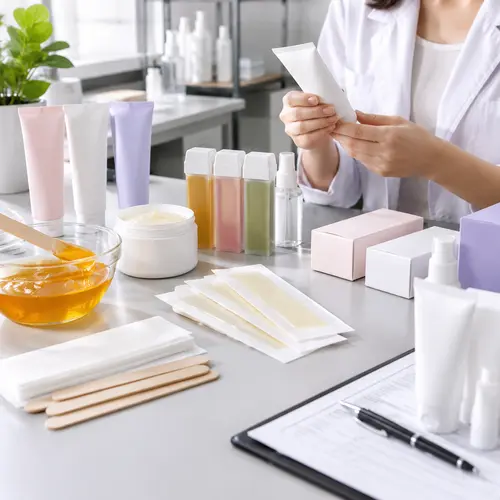
Hair removal products look simple on a product page, but each format carries a different sourcing risk. Depilatory cream must balance effective removal with a controlled irritation profile, uniform application, and a package that protects the emulsion during storage. Wax strips depend on the interaction between wax load, nonwoven substrate, adhesive behavior, and release liner. Sugar wax may require careful control of firmness and moisture because a small shift in texture changes spreading, pickup, and cleanup. Roll-on wax cartridges add a mechanical and leakage dimension: the roller must turn smoothly, the cartridge must dispense consistently, and the closure must survive shipment.
Aftercare products introduce a second opportunity and a second review. A soothing gel, calming lotion, or post-hair-removal serum should complement the removal format without leaving an unpleasant film or creating a confusing claim structure. A brand launching a complete kit can use post-depilation care OEM planning to align the recovery product with the main formula, packaging, and instructions.
The issue is particularly important for DTC operators selling through Shopify, Amazon, or TikTok Shop. A product can gain attention quickly, while a delayed sample cycle, inconsistent batch, or incomplete label file can interrupt the launch. Buyers should therefore assess the entire hair removal manufacturing process, including formulation review, sampling, filling, packaging, quality control, and shipment preparation. For brands selling into Europe, product information and notification planning should be discussed alongside the formula. For United States launches, ask how the supplier supports documentation aligned with current FDA expectations and MoCRA responsibilities. Regional requirements may also affect market entry in the Middle East or Southeast Asia; buyers can review the Dubai Municipality Montaji registration system at https://www.dm.gov.ae and the JAKIM Halal certification framework at https://www.halal.gov.my when those markets are relevant.
Technical or Packaging Factors
Formula behavior and user experience
Ask the supplier to describe the intended application window, removal method, and expected texture in measurable or observable terms. For cream, review viscosity, spreadability, odor profile, color stability, and whether the product separates after heat and cold exposure. The sample should be tested on the intended body area using consistent application thickness and timing. Do not approve an effective formula if the skin feel, rinsing behavior, or fragrance conflicts with the brand position.
For wax and sugar wax, evaluate melting point or working temperature where relevant, flow during application, pickup on the strip, stringing, brittleness, and residue. A formula that performs well in a warm laboratory may become difficult to spread in a cool bathroom or during winter shipment. Roll-on systems require an additional check of roller torque, dispensing rate, cap seal, and compatibility between the wax and cartridge components. For wax strips, compare adhesion before and after aging, inspect the substrate for fiber shedding, and check whether the two strip surfaces separate cleanly.
Packaging compatibility and shipment conditions
Packaging should be reviewed with the formula, not after it. A depilatory cream may require a tube and shoulder design that limits air ingress and supports clean dispensing. Wax in a jar needs a closure that resists seepage when warmed. Roll-on cartridges should be evaluated in an upright and inverted position, including during vibration and temperature changes. Aftercare gels and lotions need a pump, tube, or bottle that delivers the intended dose without clogging or excessive residual product.
Request component specifications, material declarations, closure details, seal information, artwork dimensions, and compatibility results. Ask how filled samples are stored and shipped, including protection from heat, cold, pressure, and prolonged transit. A packaging trial should check leakage, deformation, label adhesion, scuffing, and cap integrity. These checks are especially important when fulfillment crosses borders or when products may sit in a warehouse before reaching the consumer.

Testing and documentation
A useful supplier review includes stability testing, microbiological testing where applicable, packaging compatibility, and a clear change-control process. Ask what happens if an ingredient source, package component, fragrance, or production line changes. The approved sample should be traceable to a formula version and a packaging version. For a clean beauty or vegan positioning, request the supporting ingredient declarations and supplier statements needed to substantiate the claim. For cruelty-free positioning, clarify the documentation standard rather than relying on a marketing label.
Buyers should also request draft ingredient lists, usage directions, warnings, batch coding logic, shelf-life information, and shipment documents early. The supplier does not replace the brand’s legal responsibility in each market, but a reliable partner can make the review more structured. A specialized hair removal OEM ODM services workflow should connect formulation, samples, packaging, and compliance records rather than treating them as separate conversations. For additional technical context, review hair removal product guides and current FDA guidance resources at https://www.fda.gov/regulatory-information/search-fda-guidance-documents.
Decision Framework Table
| Factor | What to Check | Why It Matters | ODM Buyer Note |
|---|---|---|---|
| Formula performance | Texture, spread, odor, removal result, residue, and irritation-risk review | Consumer complaints often begin with inconsistent application or uncomfortable skin feel | Use a written sample scorecard and approve one controlled formula version |
| Wax or cream stability | Heat and cold storage, separation, melting or viscosity behavior, and color change | Transit and warehouse conditions can change performance before delivery | Ask for the planned stability matrix and define acceptable observations |
| Packaging compatibility | Seal integrity, leakage, dispensing, label adhesion, and component material | Packaging failure can create returns, contamination concerns, and brand damage | Test filled components, not empty packaging samples alone |
| Sampling scope | Sample lead time, revision policy, sample quantity, and formula-to-batch traceability | Repeated uncontrolled revisions create delays and approval confusion | Confirm whether the pilot can use the same production route as scale-up |
| Compliance file | Ingredient list, warnings, claims support, batch coding, and market documentation | Incomplete files can delay listings, customs clearance, or market notification | Review the file before final artwork and confirm responsibilities by market |
| Production flexibility | First batch volume, ISO 22716 controls, capacity, and change control | Low-volume testing is useful only if successful demand can be supported consistently | Ask whether pilot runs from 1,000 units can scale without reformulation |

For the next step, prepare a concise request covering product format, target market, preferred package, claims, first batch estimate, and required documents. Buyers comparing private label hair removal products can also review category-specific options such as private label depilatory cream, wax strips OEM, and sensitive skin hair removal products. Once the sample criteria and documentation list are clear, submit the brief through the hair removal product RFQ page so each supplier is evaluated against the same commercial and technical assumptions.
ODM Manufacturing Considerations
ODM sourcing works best when the buyer treats sampling as a controlled confirmation process rather than a single approval event. Start with a written product brief covering hair-removal area, target user, application method, fragrance preference, skin-feel expectations, pack size, target market, and acceptable cost range. For depilatory cream, record appearance, spreadability, removal performance, rinse-off behavior, and post-use feel. For wax and sugar wax, record firmness, pickup, melting behavior, working temperature, stringiness, and residue. Each sample should have a version number so the approved formula and packaging combination can be traced during later batches.
Formula customization can range from a small fragrance adjustment to a meaningful change in wax composition, cream texture, or sugar concentration. Ask the supplier to state which elements are proprietary, which are standard base components, and which changes may affect performance or stability. A customized formula should be compared against the original sample under the same application conditions. This helps distinguish a real performance improvement from a difference caused by application thickness, heating time, strip pressure, or storage history.
Packaging compatibility requires more than checking whether a component looks suitable. Review contact compatibility between the formula and jar, tube, sachet, strip pouch, cartridge, cap, seal, and adhesive. Check fill weight, dispensing force, closure fit, label adhesion, and visual changes after storage. Roll-on wax cartridges require particular attention to roller movement, seal integrity, and leakage when placed horizontally or exposed to elevated temperatures. Wax strips should be checked for adhesive transfer, liner separation, and edge lifting after aging.
A stability review should use documented observations at defined intervals. The buyer should receive records for color, odor, texture, separation, viscosity where relevant, wax firmness, cartridge function, and package condition. Include both warm and cold exposure because shipping routes may pass through very different climates. Ask whether the product is evaluated in its final commercial package, since a formula can remain acceptable in a laboratory container while the finished tube, pouch, or cartridge deforms or leaks.
MOQ should be evaluated together with unit economics. A lower starting quantity may carry higher component, filling, testing, and setup costs. Request a cost breakdown by formula, primary package, secondary package, filling, labels, testing, and freight preparation. Compare the full landed cost with the planned retail price, expected returns, sampling expense, and customer acquisition cost. This gives a more realistic view than comparing the product price alone.
Before approval, collect labeling and shipment documents appropriate to the destination market. These may include the ingredient declaration, product specifications, batch coding format, net contents, usage directions, warnings, shelf-life or period-after-opening information, fragrance allergen information where required, packaging material details, and safety or transport declarations. For products entering the Middle East, verify the destination authority requirements early; Dubai Municipality publishes information relevant to the Montaji registration system at https://www.dm.gov.ae. Where halal positioning is part of the product brief, review ingredient origin and supporting certification against the JAKIM Halal certification framework or the applicable local standard.
Shipment conditions should be written into the purchase specification. Define acceptable temperature exposure, carton orientation, pallet or case configuration, sealing requirements, protection against crushing, and inspection timing after arrival. A sample that performs well in the lab but arrives with softened wax, separated cream, damaged sachets, or leaking cartridges is not a confirmed commercial solution.

Common Problems or Failure Cases
Wax brittleness: Hard wax or sugar wax may crack during application when the formula loses moisture, the composition is poorly balanced, or the product is stored too cold. Ask for a working-temperature range and test removal from the container through actual spreading, cooling, and pull-off steps. Record whether the wax breaks into fragments or removes cleanly.
Strip adhesion loss: Wax strips can lose pickup because of unsuitable backing material, excess powder, aging adhesive, or heat exposure in transit. Test several lots after storage and inspect the strip surface for uneven wax transfer. The buyer should also confirm that the liner separates without lifting the active layer.
Cream separation: Depilatory cream may show oiling, watery leakage, graininess, odor change, or inconsistent viscosity. Review fill conditions, mixing uniformity, preservative documentation, and the interaction between the cream and tube or sachet. Do not approve a sample solely because its first-day appearance is acceptable.
Cartridge leakage: Leakage may originate from the roller assembly, cap, seal, weld, or filling level. Test cartridges upright and horizontal, inspect them after vibration or carton handling, and examine the applicator for excess buildup. Packaging approval should include both function and shipment simulation.
Fragrance sensitivity: A pleasant fragrance can still create complaints if it is too strong or if the formula contains undisclosed fragrance allergens for the target market. Request the fragrance composition and allergen information, then evaluate an unscented or lower-fragrance version when the intended audience includes sensitive users.
Package deformation: Tubes, pouches, jars, and cartridge components may soften, warp, discolor, or lose their seal under heat. Compare filled and empty components after storage. Inspect label adhesion and print legibility as well as the formula itself.
Supplier Checklist
- Confirm the supplier can provide numbered samples, a written formula brief, and a clear change log between sample versions.
- Verify formula scope: depilatory cream, wax, sugar wax, strips, roll-on cartridges, or aftercare, with the intended application method defined.
- Request formula specifications covering appearance, odor, texture, viscosity or firmness where relevant, usage conditions, and expected tolerances.
- Review irritation-risk controls, ingredient origin, fragrance allergen information, and the evidence supporting product claims.
- Check compatibility with the final tube, jar, sachet, strip pouch, cartridge, cap, seal, liner, and label adhesive.
- Require stability observations in the final package, including warm and cold storage, leakage checks, separation checks, and visual inspection.
- Clarify MOQ by formula, package component, label version, and color or size variation, rather than treating one total quantity as the full requirement.
- Request labeling documents, ingredient declarations, batch coding rules, warnings, usage instructions, shelf-life support, and market-specific registration inputs.
- Define shipment conditions, carton orientation, protection requirements, arrival inspection timing, and the process for handling damaged or nonconforming samples.
- Use an NDA that covers formulas, product briefs, packaging artwork, pricing assumptions, target markets, and proposed launch schedules.
- Review manufacturing capacity, quality records, audit access, responsible technical contacts, and response times during sampling and corrective action.
FAQ
Can an Asian supplier meet strict clean beauty and cruelty-free requirements?
Yes, but the claim must be supported by documentation rather than location or marketing language. Ask for ingredient-origin records, animal-testing statements, supplier declarations, fragrance information, and a written review of the finished formula. Define the exact standard your brand uses because clean beauty and cruelty-free do not have one universal legal definition.
Will a low MOQ make the unit cost too high for customer acquisition economics?
It can. Low quantities may spread setup, testing, component, and filling costs across fewer units. Request a cost model at the first run and at the next realistic volume tier. Then compare landed cost, expected returns, sampling, advertising, and fulfillment costs before choosing the package or formula.
Will a turnkey or existing base formula make the product look identical to competing brands?
It may if the buyer accepts the base without a defined point of difference. Differentiation can come from texture, fragrance profile, removal performance, pack format, strip dimensions, aftercare pairing, or a documented ingredient story. Ask which formula variables can be changed without weakening stability, and validate each change through comparative samples.
Can an NDA protect our formula and launch plan?
An NDA can establish confidentiality duties, permitted use, disclosure limits, ownership language, and remedies, but it cannot replace operational controls. Limit access to the brief, mark confidential files, identify who owns custom development work, and confirm how samples, artwork, and records are stored and destroyed.
How can we verify that environmental packaging claims are not greenwashing?
Ask for the material specification, recycled-content or recyclability evidence, chain-of-custody information where applicable, and the exact market in which the claim is valid. Check whether the entire package, including cap, liner, adhesive, and label, meets the stated claim. Use precise wording when the evidence supports only one component.
What should we do when a supplier cannot provide complete sample or compliance records?
Pause commercial approval and request a corrective document list with owners and dates. Missing records may be resolved, but unexplained gaps in formula identity, labeling, storage history, or package testing should be treated as supplier risk until independently verified.
References
- Dubai Municipality provides official information for products and registration processes relevant to the Dubai market.
- JAKIM Halal provides information on the Malaysian halal certification framework and related requirements.
- Mintel global beauty market reports can support market and consumer research when evaluating product positioning.