Direct Answer
Hair removal product quality control should operate as a documented release system, not as a final inspection event. Before approving a commercial batch, the buyer should confirm that the approved formula, raw-material lots, manufacturing parameters, in-process results, packaging components, finished-product specifications, deviations, and disposition decisions are traceable within one batch record. The release standard should cover both product safety and market performance: depilatory cream pH and viscosity, wax melting behavior, strip adhesion, roll-on cartridge leakage, fill-weight control, packaging compatibility, storage stability, labeling status, and shipment conditions.
For procurement and QA teams, the decisive question is not whether a sample passed once. It is whether the ODM can reproduce the approved sample at commercial scale, document every critical step, investigate exceptions, and prevent release until authorized QA personnel have reviewed the evidence. This control model is especially important when qualifying replacement capacity after a supplier quality incident, capacity disruption, or expansion into an unfamiliar hair-removal format.

Key Takeaways for Private Label Buyers
- Translate the approved sample into signed formula, process, packaging, and finished-product specifications before issuing a purchase order.
- Require complete batch records showing material lot numbers, actual quantities, equipment identity, process times, temperatures, yields, in-process checks, and operator verification.
- Test the formula and package as one system; bulk stability alone does not establish cartridge, tube, sachet, jar, liner, or closure compatibility.
- Define release authority, deviation handling, out-of-specification investigation, retained-sample rules, and change control in the quality agreement.
- Link launch approval to market-specific labeling and regulatory documents rather than treating documentation as a post-production task.
- Confirm shipment controls for heat, cold, compression, vibration, leakage, and pallet configuration before distribution.
Buyer Context
Hair-removal formats concentrate several risks that may not be visible in a presentation sample. A thioglycolate-based cream may drift in viscosity, odor, pH, or active performance during storage. Hot wax and sugar wax can show unacceptable changes in melting profile, stringing, brittleness, crystallization, or residue. Wax strips can lose adhesion or transfer unevenly after aging. A roll-on wax cartridge may perform correctly in the laboratory yet leak after warm storage or transport vibration. Aftercare products add their own pump, tube, preservative, and labeling requirements.
These failure modes become material at multinational scale. A minor texture deviation can trigger inconsistent consumer use, elevated complaint rates, retailer returns, or a multi-market investigation. Procurement therefore needs evidence beyond a certificate of analysis. The supplier should connect the commercial batch to the approved development history, relevant hair removal OEM ODM services, and a controlled hair removal manufacturing process. Buyers assessing cream or wax capabilities should also review format-specific controls for custom depilatory cream formulation and custom wax strips and hot wax.
The regulatory file must follow the destination market and cosmetic classification. The Saudi FDA cosmetic registration framework, FDA cosmetics guidance documents, and European Commission cosmetics legislation illustrate why one global label or document package should not be assumed sufficient. ISO 22716 alignment should likewise be verified through audit evidence, procedures, and batch execution rather than accepted as a standalone certificate.

Technical and Packaging Factors
Formula and Process Specifications
The specification should identify attributes that govern safety, application, and removal performance. For cream products, this normally includes appearance, odor, pH, viscosity with the stated instrument and method, density where needed, microbiological limits, and assay or identity controls appropriate to the depilatory system. An irritation-risk review should assess intended body area, exposure time, directions, warnings, foreseeable misuse, and the evidence supporting sensitive-skin positioning. Development teams can use the same framework when evaluating mild hair removal formula options.
Wax specifications should define the relevant softening or melting range, application temperature, spreadability, strip interaction, hair pickup, residue, and removal behavior. Sugar wax requires controls for solids balance, water activity where applicable, crystallization, color, and consistency. Acceptance ranges must come from validated development work; generic supplier limits should not replace product-specific data.
The batch record should capture actual processing conditions, not merely confirm that instructions were followed. Buyers should expect raw-material lot traceability, weighed quantities, addition sequence, mixing speed, mixing duration, heating and cooling records, hold times, bulk yield, filling yield, line clearance, component reconciliation, and signatures or secure electronic approvals. Any departure from the master instruction should have a deviation number, impact assessment, investigation, and QA disposition.
Packaging Compatibility and Stability
Compatibility testing should use production-intent components, including the resin, laminate, liner, gasket, applicator, adhesive, ink, and closure configuration. For depilatory cream, review paneling, swelling, discoloration, seal integrity, formula loss, odor migration, and dispensing behavior. For roll-on wax, inspect cartridge seams, roller fit, cap retention, controlled flow after heating, and leakage in upright, inverted, and horizontal orientations. Wax-strip aging should assess adhesive transfer, backing integrity, peel consistency, and pouch seal performance.
A stability program may include real-time storage, accelerated conditions such as 40 degrees Celsius and 75 percent relative humidity, cold storage, three freeze-thaw cycles, and transport simulation when justified by the distribution route. These are protocol examples, not universal release criteria. Accelerated results do not replace real-time shelf-life monitoring. The buyer should predefine test intervals, sample orientation, acceptance limits, statistical treatment, and the action required when a result trends toward failure.
Packaging review should extend to after wax care products when the SKU is sold as a kit. Component interaction, secondary-pack fit, label adhesion, lot-code readability, and kit reconciliation should be tested together. Broader depilatory product development solutions can support format comparison, but customization decisions should remain subordinate to validated manufacturability and change control.
Release Governance
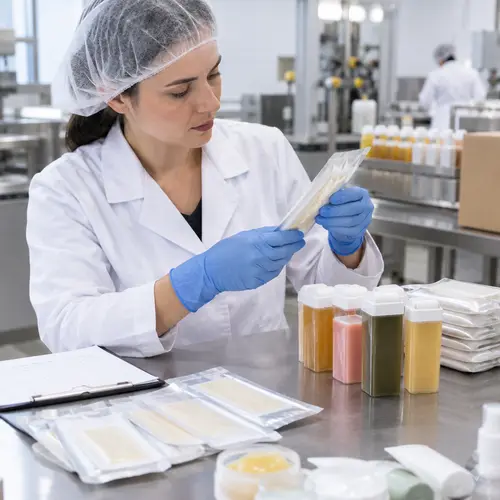
QA release should be independent from production and sales scheduling. The release package should include the completed batch record, approved results, packaging inspection, microbiological status where applicable, deviation closure, label verification, and confirmation that regulatory documents match the destination market. A certificate of analysis should report actual results where meaningful, not only pass statements.
Before supplier approval, request a representative redacted batch record, deviation example, change-control procedure, retained-sample policy, and mock traceability exercise. Compare these records with the supplier’s stated hair removal OEM manufacturer capabilities and technical resources in its depilatory product development articles. A formal hair removal product RFQ should specify sample scope, packaging source, test protocol, documentation set, forecast scale, and required shipment lanes.

Decision Framework
| Factor | What to Check | Why It Matters | ODM Buyer Note |
|---|---|---|---|
| Approved specification | Signed formula, test methods, ranges, packaging BOM, and artwork version | Prevents sample-to-production drift | Freeze the baseline before the pilot batch |
| Batch execution | Material lots, actual additions, equipment, time, temperature, yield, and approvals | Establishes reproducibility and traceability | Review a redacted completed record during qualification |
| Performance | Cream application and removal, wax pickup, residue, strip peel, and cartridge flow | Connects laboratory conformity with consumer use | Use agreed methods and reference samples |
| Package compatibility | Seal integrity, leakage, swelling, label adhesion, dispensing, and code readability | Reduces transport and shelf failures | Test production-intent components from nominated suppliers |
| Stability | Real-time, accelerated, cold, cycling, orientation, and trend data | Supports shelf life and distribution decisions | Do not treat accelerated testing as a substitute for real-time evidence |
| Release governance | QA independence, deviation closure, out-of-specification controls, and change approval | Prevents schedule pressure from overriding quality | Define authority and escalation in the quality agreement |
| Shipment readiness | Case pack, pallet pattern, temperature exposure, vibration, compression, and leakage checks | Protects product through global distribution | Align simulation with actual routes and seasonal conditions |
ODM Manufacturing Considerations
ODM development should begin with a written sample brief rather than a loosely defined request for a custom hair removal product. The brief should identify the intended removal performance, application area, formula texture, fragrance direction, target fill weight, pack format, claims, destination markets, and expected sales volume. Buyers comparing OEM/ODM services should also define which characteristics may change after the first sample and which are commercially fixed.
Sample confirmation should use an approved reference retained by both parties. Record its sample code, preparation date, color, odor, spread, pickup, removal behavior, residue, and after-use skin feel. For wax, document the acceptable application behavior at the stated working temperature. For cream, record flow, dispensing, coverage, and rinse-off behavior. Approval based only on photographs or a courier sample without written acceptance criteria creates avoidable disputes during scale-up.
Formula customization can affect more than the requested feature. A fragrance change may alter skin-comfort feedback or formula stability. Adjusting wax flexibility may influence residue and removal force. Changing a cream’s flow profile can affect fill accuracy and the amount dispensed by a tube or pump. Each revision should receive a new sample code and change summary so the buyer can identify exactly what was approved.
Packaging compatibility should cover the complete commercial pack, including closure, liner, roller fitment, seal, label stock, adhesive, printing, and any applicator supplied with the product. Review staining, swelling, stress cracking, seal lifting, print transfer, dispensing consistency, and pack deformation after hot and cold storage. Stability review should define test duration, storage environments, inspection intervals, acceptance limits, and responsibility for investigating deviations.
MOQ discussions should separate formula batch minimum, packaging purchase minimum, decoration minimum, and finished-goods order quantity. A low finished-goods quantity can still leave the buyer responsible for unused printed components. The quotation should state sample scope, pilot requirements, testing charges, excess-component ownership, and whether future orders must use the same formula and pack combination.
Before production, request the ingredient list, specification sheet, safety documentation, claim-support file, artwork checklist, batch coding format, and market-specific labeling inputs. For Saudi distribution, the buyer should compare the submission package with the Saudi FDA cosmetic registration framework. Claims must also remain consistent with the product category. The FDA OHT product classification illustrates why light-based hair-removal equipment is regulated separately and should not be treated as equivalent to a cosmetic cream, wax, or strip.
Shipment instructions should state acceptable temperature exposure, carton orientation, pallet pattern, container loading expectations, and action required after a delay or temperature excursion. These conditions should match the evidence generated during development, especially for waxes and roll-on formats that can become difficult to use or begin seeping after prolonged heat exposure.

Common Problems or Failure Cases
Wax becomes brittle or cracks. This may appear only after storage or during removal from the jar. Possible contributors include formula imbalance, temperature history, or an unsuitable working-temperature instruction. Buyers should compare the failed unit with the retained approval sample and review whether the defect occurs across multiple cartons or only one shipping lane.
Strips lose effective adhesion. A strip may look normal but fail to pick up hair consistently, leave excessive residue, or release unevenly. Investigation should include strip backing, wax coat uniformity, pouch seal condition, storage history, and the interval between opening and use. User-panel instructions must be controlled so application pressure and removal technique do not obscure a product defect.
Cream separates or dispenses unevenly. Warning signs include watery discharge before the main cream, oiling around the closure, visible lumps, or a large change in spread. Do not resolve this by accepting a shaken sample if the consumer directions do not require shaking. Review bulk hold time, filling conditions, storage exposure, and whether the commercial pack interacts with the formula.
Roll-on cartridges seep around the fitment. Leakage can arise from dimensional variation, poor assembly, heat exposure, or closure damage. Inspect units from the top, middle, and bottom of shipping cartons and record net-weight loss, staining, and roller movement. A visually clean outer carton does not prove that the cartridge remained sealed.
Fragrance causes unacceptable sensitivity feedback. A fragrance that passed odor approval may still increase complaints when applied after removal. The supplier should review fragrance level, allergen declarations, intended application area, directions, and irritation-risk assessment. Complaint patterns should be evaluated by batch and market instead of being dismissed as subjective preference.
Packaging deforms or labels detach. Distorted jars, softened closures, wrinkled labels, and lifted seals can affect both use and tamper evidence. Check whether the issue follows heat exposure, product contact, decoration method, or carton loading. Corrective action must identify the mechanism and confirm the revised pack before another production run.
Supplier Checklist
- Define separate specifications for bulk formula, filled product, primary pack, printed components, and finished case.
- Confirm how approved samples are coded, retained, compared, and replaced after customization.
- Review actual manufacturing capabilities for cream, wax, strips, sugar wax, roll-on cartridges, and aftercare items relevant to the project.
- Ask for documented limits covering appearance, odor, texture, fill quantity, dispensing, removal performance, and microbiological status where applicable.
- Verify that stability protocols match the formula, pack, destination climate, and expected shelf life.
- Check MOQ by formula, component, decoration process, and finished SKU rather than relying on one headline number.
- Request labeling documents and determine who approves ingredients, warnings, directions, claims, language versions, and regulatory artwork.
- Review deviation, complaint, investigation, corrective-action, and product-release records with identifying commercial information redacted where necessary.
- Confirm shipment temperature limits, loading instructions, excursion reporting, and retained samples for each dispatched batch.
- For supplier replacement after an incumbent fails an audit, require a controlled transfer plan rather than immediate full-scale production.
- When headquarters requires carbon-neutral core suppliers by 2030, verify the reporting boundary, source records, reduction plan, and independent assurance status.
These checks can be incorporated into a broader review of the supplier’s manufacturing process and the specific hair removal product categories under consideration.
FAQ
How should a buyer approve an ODM sample before scale production?
Approve a coded physical sample together with a signed specification and evaluation record. Include formula appearance, texture, odor, application, removal result, residue, pack function, and agreed tolerances. Require written approval for any later material, formula, process, or component change.
Can a factory guarantee that a core formula will never be leaked?
No credible supplier can promise absolute zero risk. Buyers should instead verify role-based system access, separate customer folders, controlled formula printing, restricted weighing-room access, visitor rules, confidentiality agreements, access logs, backup controls, and procedures for investigating unauthorized access. Contract terms should identify ownership of custom work and remedies for disclosure.
How can a strategic customer secure priority during a raw-material shortage?
Ask for a written allocation model, rolling forecast requirements, reserved-capacity terms, approved alternate-source rules, and escalation contacts. Priority language is meaningful only when supported by purchase commitments, safety-stock ownership, supplier forecasts, and evidence that substitutions cannot occur without buyer approval.
Can environmental discharge and carbon records be independently traced?
They should be traceable to permits, meter readings, waste manifests, treatment logs, energy invoices, calculation methods, and the organizational boundary used for reporting. Buyers should retain contractual audit rights and check whether third-party assurance covers the same facility and reporting period supplying their products.
Which labeling documents should be ready before artwork approval?
Request the final ingredient declaration, net-content format, directions, warnings, responsible-party details, country-of-origin treatment, batch-code location, shelf-life marking, and substantiation for visible claims. The destination-market regulatory reviewer should approve the artwork before printed packaging is ordered.
What should happen when a shipment experiences excessive heat or delay?
Quarantine the affected stock and document route, duration, available temperature records, carton condition, leakage, deformation, texture, odor, and dispensing behavior. Release should follow a documented assessment against established acceptance criteria, not a visual check of a few convenient cartons.