Direct Answer
A successful DTC hair removal product line starts with a tightly defined launch system, not a long catalog. Select one primary removal format, one aftercare product, and packaging that can survive storage, fulfillment, and customer use without leakage or texture drift. Your brief should specify the treatment area, skin profile, application time, sensory target, claims boundary, target cost, channel, and launch market before sampling begins.
For a first launch, the practical goal is to confirm three things quickly: the formula performs consistently, the package works with the formula, and the documentation supports the intended markets. A vertically specialized ODM can use an established formulation platform to target samples within 3 to 5 business days and an under-30-day development path when components, testing requirements, and claims are aligned early. A pilot run from 1,000 units can then validate demand without changing the formula between sampling and scale-up.
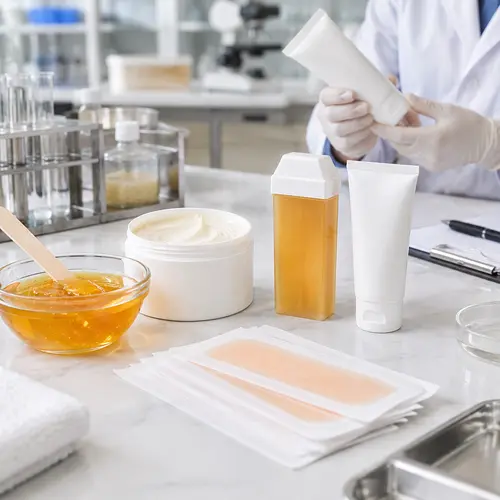
Key Takeaways for Private Label Buyers
- Start with a narrow product architecture: Choose a hero format such as depilatory cream, wax strips, sugar wax, or roll-on wax, then add aftercare only where it improves the routine.
- Write measurable sample criteria: Define texture, spread, removal efficiency, residue, fragrance, rinse behavior, visible redness review, and package usability before approving a formula.
- Test formula and packaging together: A stable product can still fail commercially if a cap leaks, a cartridge deforms, or a strip loses adhesion during storage.
- Separate evidence from marketing language: Ingredient stories, vegan positioning, and performance claims need different supporting documents and should be reviewed market by market.
- Approve the production version: Confirm that the signed sample uses the same formula architecture, raw-material specifications, process controls, and primary package planned for the pilot run.
- Design for fulfillment: Unit dimensions, protective packing, closure security, and temperature exposure should align with the Amazon FBA fulfillment program guidelines or the requirements of your chosen logistics channel.
Buyer Context: Why the Launch Brief Matters
Hair-removal products look simple on a product page, but each format creates a different development and operational problem. A depilatory cream depends on controlled application, even spreading, odor management, removal timing, and an irritation-risk review. Wax strips depend on backing material, adhesive consistency, peel behavior, storage aging, and clean separation. Sugar wax and hot wax require a defined working texture across realistic room temperatures. Roll-on wax adds cartridge flow, roller movement, closure integrity, and leakage risk. Aftercare must soothe without leaving an unpleasant film or conflicting with the removal routine.
This is why a broad brief such as ‘clean, gentle, premium hair removal’ is not enough. A useful brief explains whether the product is for legs, body, underarms, bikini line, or face; whether the consumer is experienced or new to at-home removal; and which result matters most. Faster removal, low residue, mild sensory feel, travel suitability, and highly visual texture can require different formulation choices.
Channel also changes the brief. A TikTok Shop launch may prioritize a satisfying peel, spread, or wipe-off moment. A subscription box may need compact packaging and intuitive directions. An Amazon launch may need stronger protection against transit stress and customer misuse. The buyer should connect these requirements to the relevant hair removal product solutions before requesting samples.
Compliance planning should begin at the same time as formulation. Ask which party supplies ingredient lists, specifications, safety support, stability records, packaging declarations, label review inputs, and market notification files. For products containing colorants, verify permitted uses through the FDA color additive permitted-use database. For evidence planning and realistic cosmetic endpoints, peer-reviewed work in the International Journal of Cosmetic Science can help teams distinguish measurable performance from unsupported language.
Before development starts, review the supplier’s custom hair removal product development model and hair removal manufacturing process. The objective is not simply speed. It is speed without a hidden handoff between the approved sample, compliance file, and pilot batch.
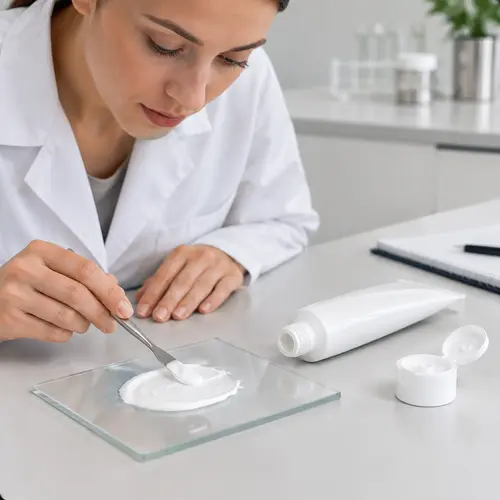
Technical and Packaging Factors
Formula behavior comes first. For custom depilatory cream formulation, document the target viscosity range, dispensing force, spreadability, application thickness, removal method, odor profile, and acceptable residue. Evaluate performance at the minimum and maximum stated application times rather than at one ideal point. For face or sensitive-area positioning, use a deliberately cautious irritation-risk review and clear directions; the product should not rely on vague terms such as gentle without a defined evaluation plan. Buyers developing this positioning should compare options within sensitive skin hair removal products.
Wax systems need temperature-aware specifications. Sugar wax, hot wax, and roll-on cartridges can change in flow and grip as storage or room conditions shift. Agree on the working texture, heating instructions, removal technique, residue expectation, and any melting or flow range relevant to the format. For wax strips, inspect adhesion aging, strip separation, backing flexibility, hair pickup, skin residue, and pouch sealing. These checks should be part of the sample scope for custom wax strips and hot wax, not deferred until the launch batch.
Packaging compatibility is a product requirement. Run upright, inverted, and side-storage checks where relevant. Examine seals, caps, liners, cartridge rollers, crimp areas, label adhesion, panel distortion, and fragrance interaction. Heat and cold storage should be followed by a return-to-room-condition review because temporary thickening or softening may conceal lasting package damage. Secondary packaging should also protect instructions and prevent movement during shipment.
Aftercare should complete the routine. A calming gel or lotion needs compatible sensory behavior: rapid spread, low tack, controlled fragrance, and no visible pilling over residual product. Buyers can review post-depilation care ODM options or consider an after hair removal serum when the positioning and available evidence support the intended cosmetic story.
The final sample request should identify the exact variants, fill sizes, package options, decoration method, sample quantity, evaluation deadline, target pilot quantity, and required documents. A 24-hour brief review is useful because missing decisions can be flagged before lab work begins. Use a structured hair removal product RFQ to keep formula, packaging, testing, and commercial assumptions in one record.
Decision Framework for Sampling and Launch
| Factor | What to Check | Why It Matters | ODM Buyer Note |
|---|---|---|---|
| Product format | Treatment area, consumer skill, removal method, application time | Defines formula mechanics, instructions, and testing scope | Launch one hero format before extending the range |
| Formula performance | Texture, viscosity or flow, removal efficiency, residue, odor, visible skin response | Prevents subjective sample approval and late reformulation | Use a written scorecard for every sample round |
| Primary packaging | Material compatibility, seal integrity, dispensing, roller movement, leakage | Protects the formula through storage, shipment, and use | Test the intended package rather than a temporary lab container |
| Storage and shipment | Heat, cold, orientation, recovery at room conditions, secondary-pack protection | Reveals texture drift, deformation, separation, and closure weakness | Match conditions to sales channels and destination markets |
| Claims and documents | Ingredient list, specifications, safety support, stability records, label inputs | Reduces relabeling, customs delays, and unsupported claims | Map each claim to evidence before artwork approval |
| Pilot readiness | Approved master sample, component availability, process controls, QC limits | Keeps the commercial product aligned with the signed sample | Confirm the 1,000-unit pilot uses the approved production setup |
For additional preparation, use these hair removal product guides to refine the brief before sample submission.

ODM Manufacturing Considerations
For a DTC hair removal product line, development should move from an approved brief to controlled sample confirmation, documented specifications, and release criteria. Buyers should avoid approving a sample based only on appearance or a single use. The confirmed sample should establish measurable expectations for texture, color, fragrance, application behavior, removal performance, skin feel, net content, and packaging function.
Formula customization should begin with the intended user and application area. A face cream may require a different sensory profile and irritation-risk approach than a formula intended for legs or underarms. For wax, customization may involve working temperature, spreadability, hair-gripping behavior, and flexibility after cooling. Sugar wax can be adjusted for hand technique, room conditions, and rinse-off expectations. Every custom change should be recorded in a revision log so the buyer knows which sample becomes the approved formula standard.
Packaging must be assessed as part of the product system rather than as a separate purchasing decision. Depilatory cream formulas can interact with closures, seals, printed decoration, and dispensing components. Roll-on wax cartridges need reliable fit between the container, roller head, cap, and any heating equipment specified for consumer use. Wax-strip pouches should protect the strips from temperature fluctuations and prevent unwanted transfer between layers. Buyers can review related formats through the hair removal product categories and compare development paths on the OEM/ODM manufacturing page.
Stability review should cover the intended shelf-life claim and realistic distribution environment. The protocol should define evaluation intervals, storage temperatures, acceptance limits, and the person responsible for approving deviations. Useful observations include cream uniformity, wax flexibility, fragrance change, color shift, seal integrity, roller performance, and visible container distortion. If a formula contains a regulated color additive for the US market, permitted uses and restrictions should be verified against the FDA color additive permitted-use database.
MOQ should be evaluated against component sourcing, decoration method, formula batch requirements, and launch economics. A lower quantity may carry a higher unit cost because printing plates, custom colors, cartons, testing, and line setup are spread across fewer units. The correct comparison is not unit price alone. Buyers should model landed cost, expected conversion rate, customer acquisition cost, fulfillment fees, damage allowance, and the number of units needed for a meaningful market test.
Before release, request the applicable ingredient list, specification sheet, safety data documentation where relevant, batch coding format, packaging material declaration, test summaries, and label-review inputs. Shipment conditions should state carton configuration, pallet requirements, temperature precautions, lot traceability, inspection approach, and responsibility for transit damage. Brands using marketplace fulfillment should also compare carton and preparation requirements with the Amazon FBA fulfillment program guidelines.
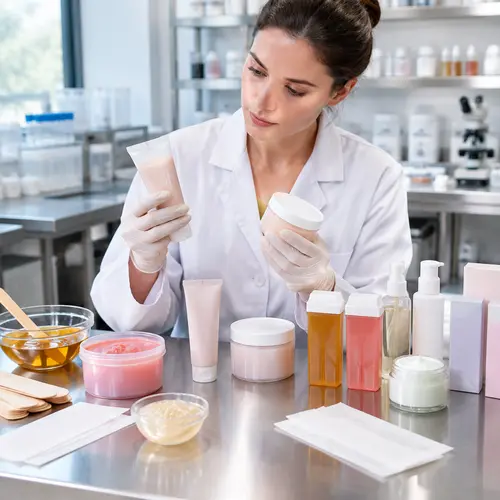
Common Problems or Failure Cases
Hair-removal launches often fail because a product passes an attractive sample review but lacks defined acceptance limits. Wax may become brittle after storage, cracking during application or leaving fragments on the skin. This can result from an unsuitable resin balance, temperature exposure, or a mismatch between the formula and the chosen container.
Wax strips can lose adhesion when the wax migrates, the protective layers release poorly, or the pouch provides insufficient environmental protection. A buyer should compare peel behavior and hair pickup across retained samples, not only freshly prepared strips. Excessively flexible backing can also make placement difficult, while overly rigid backing may reduce contact on curved areas.
Depilatory cream separation may appear as liquid pooling, uneven color, graininess, or inconsistent dispensing. Even if the cream can be mixed back visually, separation can indicate that the formula or filling process is not sufficiently controlled. Buyers should define whether any visible phase change is acceptable and how viscosity will be measured during batch release.
Cartridge leakage can develop around the roller, neck, cap, or container seam. Problems may appear only after transport vibration or prolonged storage. Packaging deformation can also alter roller alignment and dispensing. Fragrance sensitivity is another recurring issue: a scent selected to mask raw-material odor may become overpowering during use or increase discomfort for sensitive consumers. Fragrance level, allergen disclosure, and unscented options should therefore be reviewed early.

Supplier Checklist
- Confirm that the supplier has specific experience with depilatory cream, hard or soft wax, sugar wax, wax strips, roll-on cartridges, and aftercare products relevant to the planned range.
- Request a written sampling scope covering formula version, packaging components, fill weight, test quantity, revision limits, and sample approval method.
- Define measurable specifications for cream viscosity, wax working range, strip peel behavior, cartridge dispensing, fragrance intensity, color, and finished-product appearance.
- Review how custom development is separated from standard base formulas, including ownership terms, change control, and approved-sample retention.
- Check evidence supporting ISO 22716, GMPC, BSCI, cruelty-free procedures, ingredient restrictions, and market-specific cosmetics requirements rather than relying on logo images.
- Ask for the stability protocol, packaging compatibility plan, batch-release checks, deviation process, and retained-sample policy.
- Compare MOQ by formula, component, print method, and color variant; then calculate landed unit economics against projected CAC and fulfillment costs.
- Verify ingredient nomenclature, warning statements, usage directions, lot coding, country-of-origin requirements, and supporting labeling documents.
- Confirm shipment configuration, temperature limits, export documentation, inspection timing, and procedures for damaged or leaking goods.
- Use a written NDA and manufacturing agreement that address confidential briefs, formula access, tooling, artwork, test data, and restrictions on unauthorized disclosure.
FAQ
Can an Asian manufacturing partner follow Western clean beauty and cruelty-free standards?
Yes, but location is not proof of compliance. Request the brand’s restricted-substance list, ingredient origin records, animal-testing policy, supplier declarations, quality certifications, and market-specific review process. Define what clean beauty means for your brand because retailer and consumer definitions differ. Audit evidence should support each claim made on the label.
Will a low MOQ make the unit cost too high to support customer acquisition costs?
It can, especially when custom decoration, multiple fragrances, or unique components are divided across a small run. Build a contribution-margin model using landed cost, fulfillment, returns, promotional allowance, and CAC. A slightly larger order may improve economics, but only if demand confidence and shelf-life support the additional inventory.
Will a turnkey or existing formula make the brand indistinguishable from competitors?
Not necessarily. Differentiation can come from fragrance strategy, sensory profile, application format, imported botanical oils, aftercare pairing, instructions, pack size, and positioning. Ask which formula elements can be adjusted and which remain standard. Meaningful customization should still pass stability and packaging review rather than being added only for marketing language.
What should be approved before placing the first commercial purchase order?
Approve the final formula sample, component set, artwork, label text, specifications, test plan, batch code format, carton details, inspection criteria, and shipping instructions. The purchase order should reference the approved versions so that later substitutions require written authorization.
How should a buyer assess an urgent replacement supplier?
Start with formula and component feasibility, available capacity, documentation gaps, and compatibility with existing artwork or molds. Provide the previous product specification and known failure history without assuming it can be copied exactly. A controlled comparison helps the new partner identify critical differences before committing to launch timing.
What evidence supports a defensible performance claim?
Use documented test methods that match the claim, product directions, application area, and target user. Internal evaluations may support development decisions, while stronger public claims may require independent testing. Research published through the International Journal of Cosmetic Science can help buyers understand suitable cosmetic study design without replacing product-specific evidence.