Direct Answer: Should Your Brand Launch Depilatory Cream or Wax?
In the depilatory cream vs wax decision, cream is usually the better entry point for brands promising fast, low-skill hair removal at home, while wax is stronger for brands built around longer-lasting smoothness, visible application rituals, and salon-inspired results. Neither format is inherently superior. The right choice depends on your audience, claims, content strategy, packaging tolerance, and operational risk.
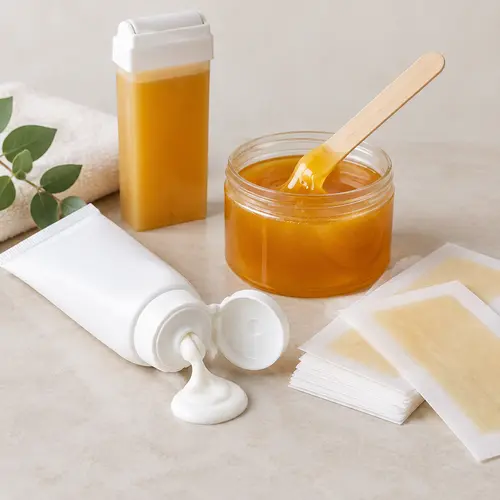
Depilatory cream requires careful control of alkalinity, odor, viscosity, contact time, and packaging compatibility. Wax avoids the same chemical depilation mechanism but introduces temperature, adhesion, residue, technique, and pain-perception considerations. Wax strips offer simpler use than hot or roll-on wax, although strip adhesion can change during storage.
For an early-stage private label brand, choose the format whose failure modes you can test and explain clearly. A focused cream SKU may suit convenience-led positioning; a wax and aftercare system may create a more demonstrable, higher-perceived-value routine.
Key Takeaways for Private Label Buyers
- Match format to user behavior: Cream supports quick, tool-free removal; wax requires more technique but can deliver longer-lasting results because hair is removed from the root.
- Review the complete formulation: For cream, assess pH, thioglycolate system, odor, viscosity, and skin-feel. For wax, evaluate melting behavior, pull strength, brittleness, residue, and working time.
- Treat packaging as part of performance: Depilatory formulas need chemically compatible tubes or pumps. Roll-on cartridges require leakage and roller-flow checks, while wax strips need liner-release and adhesion-aging review.
- Test realistic logistics: Include elevated-temperature storage, cold exposure, freeze-thaw screening where relevant, transit vibration, seal integrity, and final-pack compatibility.
- Start with a controlled pilot: A 1,000-unit run under ISO 22716 controls can reveal filling, labeling, and user-experience issues before scale-up without changing the approved formulation.
- Build compliance in parallel: Ingredient review, claims language, safety substantiation, label files, and market notification should progress alongside sampling rather than after the formula is locked.
Buyer Context: Why This Choice Shapes More Than One SKU
Hair removal products sit at the intersection of cosmetics, technique, and expectation management. A customer may judge depilatory cream within minutes based on odor, spreadability, removal completeness, and post-use feel. Wax is judged through a different sequence: heating or warming, application, grip, pull, residue, and visible smoothness. That difference affects customer support, creator demonstrations, returns, and review language.
The market channel matters as well. Cream translates easily into a convenience message for Shopify, Amazon, and subscription formats. Wax beads, sugar wax, and roll-on cartridges offer richer visual content, but every demonstration must represent safe, repeatable use. Pre-coated strips occupy the middle ground: portable and easy to merchandise, yet sensitive to coating uniformity, backing material, and storage history.
Portfolio planning should therefore begin with a use case, not a fashionable ingredient. Buyers can compare category routes through hair removal product solutions, then examine the operational differences between custom depilatory cream formulation and custom wax strips and hot wax. Brands targeting reactive-feeling skin should also review how mild hair removal formulas are positioned without implying that irritation is impossible.
User concerns are not theoretical. A published literature review of hair-removal practices describes adverse effects across multiple removal methods. Formulation teams can also monitor research published by the International Journal of Cosmetic Science, while brands entering Canada should screen ingredients and label plans against Health Canada cosmetic requirements.

Technical and Packaging Factors
Depilatory Cream: Chemistry Must Remain Consistent Through Use
Most depilatory cream systems use thioglycolate chemistry in a strongly alkaline background to weaken hair keratin. A working pH often falls roughly between 11.5 and 12.5, but the acceptable specification must be formula-specific and reviewed for each destination market. Buyers should request the target pH range, viscosity specification, active assay approach, microbiological limits, and instructions for monitoring change during stability testing.
Texture is more than an aesthetic preference. A formula that is too thin can migrate beyond the intended application area; one that is too dense may spread unevenly and reduce contact consistency. Review the sample on a vertical skin-simulating screen or comparable substrate, then assess dispensing force, coating uniformity, rinse-off, odor, and residue. The approved sample should be tied to a signed specification so the commercial batch does not quietly become a re-engineered version.
Packaging contact is especially important at high alkalinity. Test the final formula in the intended tube, pump, cap, liner, ink, and label construction. Look for paneling, swelling, discoloration, seal weakening, clogging, print migration, and loss of closure torque. The hair removal manufacturing process should show where compatibility, filling, coding, inspection, and release decisions occur.
Wax: Thermal Behavior and Adhesion Define the Experience
For hot wax, ask for softening or melting behavior rather than relying on a single generic temperature. Confirm the recommended heating range, application window, setting time, flexibility, pull strength, and residue profile. A wax that looks elegant in a jar can still become brittle in a cool bathroom or excessively fluid after hot-weather transport.
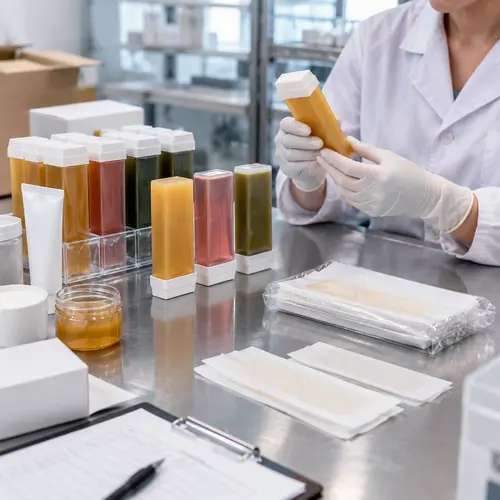
Roll-on wax cartridges require separate review of formula flow and component geometry. Test roller rotation, cap fit, seam integrity, upright and inverted storage, leakage after heating, and residue around the roller head. For wax strips, assess coating weight consistency, liner release, strip flexibility, grip, and adhesion after aging. Sugar wax also needs water-loss and crystallization monitoring because texture can shift even when the ingredient list remains unchanged.
Accelerated screening at 40°C and 75% relative humidity for 12 weeks is a common development tool, supported by room-temperature controls and at least three freeze-thaw cycles where the formula and pack justify them. These conditions are not universal shelf-life proof. The protocol should reflect destination climate, shipment route, packaging, and known formulation risks.
Aftercare can reduce friction in the overall routine and improve kit value. Consider a compatible soothing gel after hair removal, but keep cosmetic claims measured and supportable.
Decision Framework for Private Label Buyers
| Factor | What to Check | Why It Matters | ODM Buyer Note |
|---|---|---|---|
| User promise | Speed, skill level, discomfort expectations, and result duration | Determines positioning and customer education | Test the complete routine, not only the base formula |
| Formula control | Cream pH and viscosity; wax melting, flexibility, and adhesion | Small shifts can change safety and performance | Approve measurable release specifications |
| Packaging | Tube compatibility, cartridge leakage, strip liner release, and seal integrity | The pack directly controls usability and shelf stability | Test decorated final packs, not neutral lab containers |
| Storage and transit | Heat, cold, cycling, vibration, orientation, and closure torque | Cross-border logistics can expose hidden weaknesses | Align test conditions with the intended shipment lane |
| Compliance | Ingredient restrictions, claims, warnings, label files, and safety records | Requirements differ by destination market | Use parallel formulation and documentation tracks |
| Launch model | Sample scope, pilot quantity, lead time, and scale-up controls | Protects trend timing and working capital | Ask whether launch can move from sampling to shelf in under 30 days |
A capable partner should connect these checks through documented hair removal OEM ODM services rather than treating formulation, packaging, and compliance as separate handoffs. Buyers evaluating the broader supply setup can also review a specialist hair removal product supplier before defining the sample brief.
ODM Manufacturing Considerations
The approved sample should function as the commercial reference, not merely as an attractive demonstration. Confirm color, odor, texture, application behavior, removal performance, residue, and after-feel in writing. For wax, record the accepted melting range, working consistency, cooling behavior, and hair pickup on the intended body area. For depilatory cream, define an acceptable viscosity range, dispensing pattern, coverage, removal time, and rinse-off profile. Retain signed samples from each approval stage so that later production can be compared against a traceable standard.
Formula customization should begin with a clear distinction between meaningful differentiation and unnecessary complexity. A private brand can customize fragrance, color, botanical background ingredients, wax blend, cream texture, or aftercare pairing. However, each adjustment can affect processing, performance, claims, and testing scope. Specialty inputs, such as an imported plant oil with documented origin, may support a credible brand story, but procurement should verify supplier continuity, specification limits, allergen information, and lead time before featuring that ingredient on packaging.
Packaging compatibility should be evaluated with the exact container components proposed for launch. Cream buyers should examine product contact with liners, cap materials, seals, and printed surfaces. Wax buyers should inspect tray rigidity, strip release liners, cartridge fit, and closure performance after exposure to expected storage temperatures. Evaluate dispensing force, paneling, seam weakness, label lifting, odor transfer, and staining. A visually suitable cosmetic pack is not automatically suitable for a chemically active cream or a heat-sensitive wax format.
A stability review should cover the formula in its intended container under normal, elevated, and low-temperature storage. Agree in advance on observation points and pass criteria for appearance, odor, texture, weight change, dispensing, and functional performance. Any failure should result in a documented investigation rather than an informal reformulation. Buyers can review related hair-removal product categories and the manufacturing process when defining the required sample and validation scope.
MOQ discussions should separate formula batch minimums from packaging minimums. A container supplier may require more units than the filling run, while a custom fragrance or printed component may create another threshold. Request a landed unit-cost model that includes testing, setup, excess components, cartons, freight, duties, and likely write-offs. This gives a more realistic comparison with customer acquisition cost than the filling price alone.
Before production approval, collect the ingredient list in INCI format, formula specifications, safety assessment inputs, batch identification rules, certificate-of-analysis format, claim support, and label review responsibilities. For launches in multiple markets, clarify who prepares MoCRA facility and product information, EU or UK notification files, and market-specific warnings. Transparent regulatory workflows are particularly important when a brand needs to replace a failed supplier without inheriting incomplete records.
Shipment planning should define carton strength, pallet pattern, temperature exposure expectations, container orientation, lot coding, and handling instructions. Wax can change texture after excessive heat or cold, while creams and cartridges can become unsalable if seals or containers are stressed. For sensitive routes, consider temperature logging and pre-shipment inspection rather than assuming standard freight conditions are adequate.

Common Problems or Failure Cases
Wax Becomes Brittle or Loses Working Flexibility
A wax that performs well during sampling may crack when storage conditions, raw-material variation, or application thickness changes. Investigate the wax blend, accepted thermal range, cooling rate, and production records. Compare the complaint sample with the signed reference before changing the formula.
Wax Strips Lose Adhesion
Loss of hair pickup can result from wax migration, liner interaction, pressure variation during converting, or prolonged warm storage. Buyers should assess peel consistency, adhesive transfer, strip dimensions, and performance after storage rather than approving strips on appearance alone.
Depilatory Cream Separates
Visible liquid release, graininess, or uneven texture may indicate emulsion weakness, raw-material variation, or unsuitable storage. A separated cream should not be corrected only by increasing thickness. Review mixing records, component specifications, fill temperature, and retained samples to identify the cause.
Roll-On Cartridges Leak
Leakage may originate at the roller fit, neck, cap, or body seam. It can also appear only when cartridges are stored sideways or exposed to transport heat. Testing should reproduce the intended shipment orientation and use the actual formula because viscosity directly affects leakage behavior.
Fragrance or Packaging Creates Consumer Complaints
Fragrance sensitivity can turn an otherwise effective hair-removal product into a high-return SKU. Offer a low-fragrance or fragrance-free screen where appropriate and review fragrance allergens for the target market. Packaging deformation, label lift, or surface staining should also be treated as product failures because they affect safe handling and consumer confidence.

Supplier Checklist
- Hair-removal experience: Request recent examples involving depilatory cream, wax strips, sugar wax, or roll-on cartridges rather than general cosmetics alone.
- Sample controls: Confirm sample versions, acceptance criteria, retained references, and the process for authorizing formula or packaging changes.
- Formula specification: Review texture, viscosity or melting range, odor, color, functional performance, and relevant irritation-risk assessment.
- Raw-material traceability: Check supplier specifications, lot records, origin documentation for featured ingredients, and contingency sources.
- Packaging review: Verify contact materials, seals, liners, dispensing performance, storage orientation, and resistance to expected heat and cold.
- Quality system: Examine audit scope, deviation handling, complaint investigation, batch release, and change-control records instead of relying on certificate logos.
- MOQ transparency: Separate minimums for formula, filling, printed components, and custom ingredients. Identify ownership and storage terms for unused packaging.
- Labeling documents: Confirm INCI data, warnings, directions, lot coding, shelf-life basis, claim evidence, and responsibilities for each target market.
- Shipment controls: Define inspection criteria, cartons, palletization, route conditions, and action limits for damaged or temperature-affected goods.
- Continuity planning: Ask how quickly the supplier can reproduce an approved specification if an incumbent producer faces a capacity or compliance problem.
FAQ
Can an Asian manufacturer genuinely meet Western clean beauty and cruelty-free requirements?
Yes, but the buyer should define those terms contractually because clean beauty has no single universal standard. Require a restricted-substance matrix, ingredient declarations, animal-testing policy, supplier statements, traceability records, and market-specific compliance review. Verify audit scope and evidence rather than accepting broad marketing language.
Will a low MOQ make the unit price incompatible with our CAC?
It can, especially when custom printed components, testing, and setup costs are spread across few units. Model contribution margin using landed cost, fulfillment, returns, and acquisition spending. A simpler package or shared component can preserve differentiation while reducing early-stage cost exposure.
Will a turnkey or existing formula make our product indistinguishable from competing brands?
Not necessarily. Differentiation can come from fragrance strategy, texture, application format, sourced ingredients, instructions, aftercare, packaging, and audience positioning. Ask which formula elements are customizable and whether the same combination is offered to other brands in your target market.
Can we require a strict NDA before sharing our launch plan?
Yes. The NDA should identify confidential formula work, packaging files, forecasts, market plans, and permitted subcontractor access. It should also define ownership of custom development and post-termination handling of records. Confidentiality does not replace a separate manufacturing agreement with clear intellectual-property terms.
Which product is easier to launch quickly: depilatory cream or wax?
An established wax strip or validated cream base may shorten development, but speed depends on packaging availability, documentation, target-market review, and the degree of customization. Confirm the critical path in writing before committing to a launch date.
What should we request before approving shipment?
Request batch release results, lot numbers, quantity reconciliation, appearance and performance checks, packaging inspection records, carton details, and shipment conditions. For temperature-sensitive wax formats, review route risk and any available logger data.
References
- Hair Removal Practices: A Literature Review, PubMed — background on hair-removal methods and reported adverse effects.
- Health Canada cosmetics guidance and Cosmetic Ingredient Hotlist — Canadian cosmetic compliance and ingredient restrictions.
- International Journal of Cosmetic Science — peer-reviewed research relevant to cosmetic formulation, evaluation, and product performance.