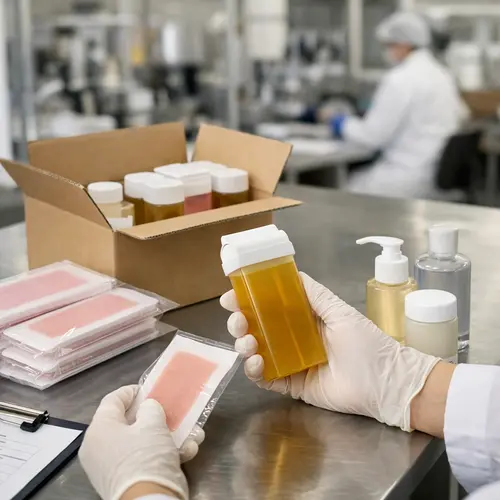
Direct Answer
For most private-label launches, single use hair removal sachets are the stronger starting format when the goal is trial, travel convenience, subscription-box placement, or rapid social-media testing. Tubes are usually better when the product is intended for repeat home use, larger body areas, or a more established shelf position. The right decision depends less on the cream alone than on dose control, opening behavior, package compatibility, shipping conditions, and the brand experience shown on camera.
A sachet can reduce the commitment for a first-time buyer and make a depilatory cream sample easy to include in creator seeding. A tube can support better value perception and more flexible application across multiple sessions. For an operator moving quickly, the practical route is to test both formats against the same approved formula, then confirm filling accuracy, seal integrity, storage behavior, and market labeling before scaling. PZIK can support that comparison through its hair removal OEM ODM services.
Key Takeaways for Private Label Buyers
- Choose sachets for sampling, travel, subscription boxes, single-use campaigns, and controlled portions.
- Choose tubes for repeat use, larger applications, stronger shelf presence, and lower packaging waste per use.
- Review viscosity and spread before selecting the filling format; a thick cream may need a wider sachet seal or a larger tube orifice.
- Test the filled pack through heat, cold, compression, leakage, and transport checks before approving mass production.
- Ask for a complete sample scope: formula, pack component, fill weight, artwork mockup, labeling documents, and shipment carton.
- Use a pilot run to validate the launch concept without forcing a high opening order. PZIK supports pilot production from 1,000 units and can scale the same SKU to 500,000+ units.
SGS cosmetic compliance and stability testing services can provide useful third-party context when defining the evidence and package checks required for a target market.
Buyer Context
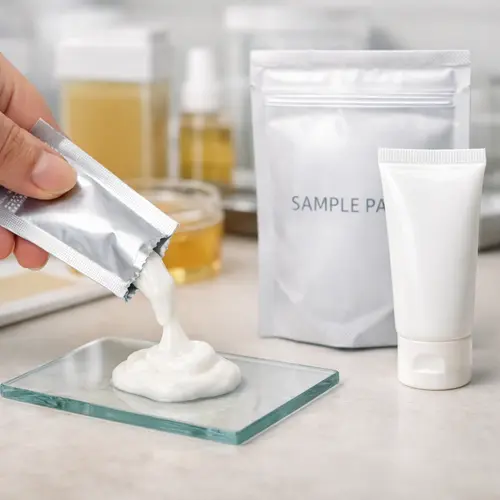
The sachet-versus-tube decision affects more than packaging cost. It shapes how a customer discovers the product, how much cream is applied, how long the product remains usable after opening, and how easily the brand can create a repeat purchase habit. For a creator-led brand, these details become visible content. A clean tear, a controlled ribbon of cream, and a compact travel format can create a clear demonstration in a short video. A tube, by contrast, communicates an ongoing routine and can support tutorials showing multiple applications.
The decision also changes the economics of sampling. Sachets are efficient for influencer mailers, hotel or salon partnerships, and subscription-box programs where each unit is intended for one occasion. They can help a brand test a new formula or fragrance without committing to a full-size pack. Tubes are more suitable when the customer needs enough product for legs, arms, or repeated touch-ups and expects the package to remain in a bathroom or travel bag.
The same logic applies across adjacent hair-removal categories. Wax strips need adhesive aging and pouch protection. Sugar wax and soft wax need a container that tolerates their texture and storage conditions. Roll-on wax cartridges require particular attention to cap fit, roller movement, and leakage during shipment. Aftercare products need dispensing that protects the texture while keeping the kit easy to use. A private-label buyer should therefore define the use case before requesting a package price.
For a creator brand, the most useful supplier conversation starts with the content concept: single-leg demonstration, travel kit, full-body routine, salon backbar, or monthly subscription inclusion. That brief lets the ODM team match the cream, pack geometry, filling method, and carton configuration. PZIK maintains a focused set of hair removal product solutions for these different buyer applications.
Technical or Packaging Factors
Formula behavior and dose control
Depilatory cream must remain consistent from the first unit to the last unit in a production batch. Buyers should review viscosity, spread, odor, color, and rinse-off behavior using retained samples from the actual filling run. A sachet controls the intended portion well, but it gives the user less flexibility if the application area is larger than expected. A tube allows the user to dispense more or less product, although that flexibility can produce under-application and inconsistent results.
Texture should be tested through the selected opening. A cream that spreads smoothly from a tube may resist a narrow sachet outlet. A very fluid formula may migrate toward the seal, creating messy tears or leakage. Ask the supplier to compare the finished product in the final package, not only in a laboratory jar. Request a sample review that covers application, removal, rinse-off, skin feel, and visible residue.
Material compatibility and seal performance
Packaging materials can affect odor retention, color stability, seal strength, and product appearance. For sachets, inspect the seal width, tear notch, laminate construction, and fill location. The cream should not contaminate the sealing area. For tubes, inspect the shoulder, cap, orifice, closure torque, and recovery after squeezing. A compatibility review should include the filled pack under warm and cool storage, followed by a check for swelling, separation, odor change, discoloration, cracking, and leakage.
The package should also survive real shipment conditions. Ask for carton dimensions, unit orientation, protective dividers where needed, and a leakage review after compression and handling. The hair removal manufacturing process should show where filling, sealing, inspection, and packing checks occur. For documentation, confirm that the supplier can provide ingredient information, artwork review inputs, batch identification, shelf-life support, and market-specific product files. The FDA cosmetics information is a useful reference for US-facing labeling and product responsibilities, while FDA guidance on how cosmetics are regulated can help clarify what product claims should be reviewed before launch.
Storage, handling, and user experience
Heat and cold exposure can change a cream’s flow, separation tendency, and dispensing behavior. Review samples after warehouse-style storage and after a simulated shipping period. For sachets, check whether the film remains flexible and whether seals stay closed. For tubes, check whether the cap traps product, whether the orifice dries, and whether the tube leaks when stored on its side. The final decision should reflect the destination market, shipping season, fulfillment route, and expected time in inventory.
Decision Framework Table
| Factor | What to Check | Why It Matters | ODM Buyer Note |
|---|---|---|---|
| Use occasion | Single treatment, travel, sampling, or repeated home use | Determines portion flexibility and repurchase behavior | Brief the supplier around the customer journey, not only the pack size |
| Formula texture | Viscosity, spread, odor, rinse-off, and residue in the final pack | Opening geometry can change the application experience | Approve filled samples rather than jar-only samples |
| Package integrity | Sachet seals, tear notch, tube closure, orifice, and leakage | Prevents damaged shipments and poor first impressions | Request heat, cold, compression, and transport checks |
| Launch economics | Fill weight, component cost, carton efficiency, and sampling needs | Changes landed cost and the cost of customer acquisition | Compare pilot and scale pricing using the same formula |
| Market readiness | Ingredient list, claims review, batch coding, and required product files | Reduces late artwork and listing changes | Run labeling review in parallel with sample approval |

ODM Manufacturing Considerations
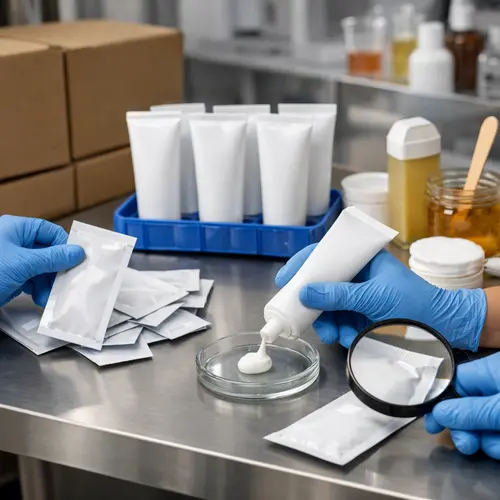
An efficient private-label program should keep the formula and package decisions connected. Start with one approved cream, then request a sachet and tube sample using comparable fill quantities. Review the samples on camera and in normal use, record the amount dispensed, and note any tearing, dripping, residue, or awkward handling. This makes the final choice measurable and gives the manufacturer clear revision points.
Ask for a transparent BOM covering the cream, filling, primary pack, carton, printing, testing, and freight assumptions. Confirm whether the same production line can move from pilot to mass production without changing the formula or package supplier. PZIK’s depilatory cream OEM program is structured around formula, packaging, samples, and private-label production as one project.
For a broader launch, a sachet can serve as the discovery unit while a tube becomes the repeat-purchase SKU. That two-step range can also support creator seeding, subscription inclusion, and retail conversion without forcing one package to solve every use case. Buyers can review related sensitive skin hair removal products and request a private label sample with target market, formula preference, pack format, fill weight, and launch timing.
ODM Manufacturing Considerations
For a private-label hair-removal program, sample approval should be treated as a controlled product decision rather than a simple visual sign-off. The approved sample should identify the formula version, fragrance, color, net fill, package format, label artwork, and intended use time. A buyer should retain a signed or otherwise traceable reference sample so that the first production filling can be compared against the same standard.
Formula customization may involve changes to cream body, spreading behavior, fragrance intensity, color, contact time, or skin-feel after rinsing. Wax programs require similar control over hardness, melting behavior, stringiness, and pickup from the strip or cartridge. Ask the manufacturer to state the target viscosity or working range where relevant, along with the test temperature and measurement method. A cream that performs well in a cool sample room may spread differently after shipment to a warm market.
Packaging compatibility must be reviewed with the actual formula and final components. For depilatory cream, confirm that the sachet film, tube body, cap, orifice, and seals remain intact after exposure to the filled product. For wax strips, review adhesive contact, backing separation, and resistance to heat during storage. For sugar wax and roll-on wax cartridges, check container compatibility, roller movement, cap fit, and the condition of the product after repeated opening and closing. The package should remain practical for the intended user, whether that is a salon professional, a DTC customer, or a traveler using a single-use sachet.
A stability review should include appearance, odor, color, texture, separation, pH where applicable, viscosity, and package condition at agreed storage conditions. Include both heat and cold exposure because cream separation, wax brittleness, adhesive loss, and packaging deformation can appear at opposite ends of the shipping environment. The supplier should explain what changes are acceptable and what results require formula or package adjustment. Independent services such as SGS cosmetic compliance and stability testing services can provide additional testing support when the product will enter several markets.
Confirm MOQ and sample scope before approving development work. The quotation should separate formula development, filling, components, artwork preparation, testing, and freight. It should also identify whether a revised sample creates a new charge or whether a defined number of sample rounds is included. Ask for a complete ingredient list, batch or lot identification approach, product specification, safety and handling documents, certificate of analysis expectations, shelf-life basis, and labeling information needed for the destination market. The buyer remains responsible for making sure final claims and labels are suitable for the markets where the product will be sold.
Shipment conditions deserve the same attention as filling. Confirm carton configuration, pallet requirements, temperature exposure limits, protection from crushing, and whether wax strips or cream packs require special routing during hot or cold seasons. A shipment plan should state how finished goods are identified, how damaged cartons are handled, and which documents travel with the order. This is especially important when a social-media launch creates demand for fast replenishment and the product must move through more than one distribution channel.
For related product scope, buyers can compare requirements through the supplier’s OEM and ODM services, review the documented manufacturing process, and use the RFQ and contact page to request a package-specific quotation.
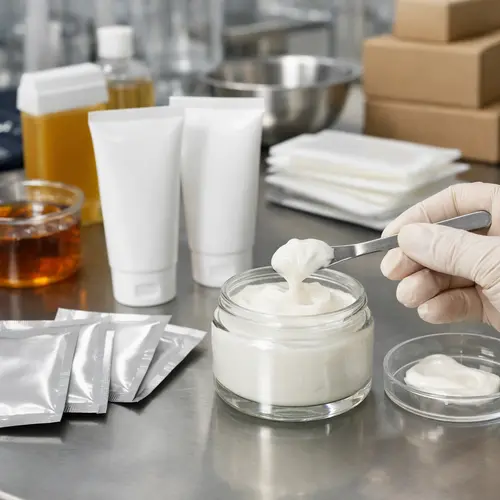
Common Problems or Failure Cases
Wax brittleness: A hard wax or sugar wax may crack, crumble, or lose workable flexibility after cold exposure. The issue can make removal uncomfortable and may leave residue on the skin. Request a temperature-conditioned sample and record the working behavior, melting point or softening range where relevant, and removal performance before approving the formula.
Strip adhesion loss: Wax strips can lose pickup strength when adhesive contact is affected by heat, humidity, aging, or an incompatible backing material. Test the finished strip package after storage, then check whether the strip separates cleanly and removes the intended hair without excessive residue. Adhesion should be evaluated using the actual production materials, not only a substitute roll.
Cream separation: A depilatory cream can show liquid release, uneven color, graininess, or a change in spread after temperature stress. A sample that looks acceptable immediately after filling may not remain uniform through shipment. Compare the treated sample with the retained approval sample and review both formula and container compatibility before release.
Cartridge leakage: Roll-on wax may leak around the roller, cap, neck, or seam when the cartridge is stored sideways, compressed, or exposed to heat. Inspect filled cartridges in their shipping orientation and after transport simulation. Verify that the cap closes consistently and that the roller still turns smoothly without forcing product into the package closure.
Fragrance sensitivity: A strong scent can create negative reactions even when the cream or wax performs as intended. Ask for fragrance-free and lower-fragrance options where appropriate, and review every fragrance ingredient against the target market’s labeling needs. Avoid promising universal suitability; instead, define clear instructions, warnings, patch-test language where appropriate, and an escalation process for consumer complaints.
Packaging deformation: A tube may dent, a sachet seal may wrinkle, or a carton may collapse under heat, stacking, or compression. These failures affect appearance and may also compromise product protection. Approve the final component set with filled samples, then verify seal integrity, closure fit, carton strength, and shipment conditions before committing to a large run.
Supplier Checklist
- Can the supplier provide a traceable formula and packaging sample approval record?
- Does the specification state target texture, color, odor, net fill, viscosity or working range, and intended contact time?
- Can the supplier customize cream, wax, fragrance, color, strip material, tube, sachet, or roll-on cartridge without losing process control?
- Will compatibility be checked using the actual filled package and final components?
- Are heat, cold, appearance, separation, leakage, adhesion, and deformation checks defined before shipment?
- Does the quotation show formula work, components, filling, testing, artwork, freight, and any sample-round charges separately?
- Are MOQ, lead-time assumptions, reorder capacity, and allocation rules documented for a sudden increase in demand?
- Can the supplier provide ingredient, batch, shelf-life, safety, labeling, and shipment documents for the destination market?
- Is there a named contact who can translate visual or social-media requirements into measurable product targets?
- Does the quality process include retained samples, lot identification, complaint handling, and a documented release decision?
A supplier that cannot answer these questions clearly may still offer an attractive sample, but the buyer has limited protection when the formula, package, or delivery conditions change during scale-up.
FAQ
How can I protect my formula and product concept from being sold to another brand?
Use a written confidentiality and ownership agreement before sharing detailed specifications. Define who owns the custom formula, artwork, testing results, molds or tooling where applicable, and approved product name. Ask the supplier to identify which ingredients, base formulas, and package components are standard versus exclusive. Contractual protection is stronger when the formula version, permitted customers, territory, and consequences of unauthorized use are specific.
Can the sample have the dramatic texture and color needed for social-media content?
Often, yes, but the visual target must be described in measurable terms. Provide reference images, desired opacity, color range, foam or spread behavior where relevant, and the camera lighting conditions. Then approve both a presentation sample and a production-equivalent sample. A striking appearance is useful only if the formula remains uniform, stable, easy to apply, and suitable for the intended hair-removal use.
Can a factory guarantee that no customer will experience a serious skin reaction?
No responsible supplier can promise zero reactions. The practical control is a documented ingredient review, appropriate safety information, clear use instructions, warnings, lot traceability, retained samples, and a complaint investigation process. Review claims and labeling with qualified market support, and avoid marketing language that suggests the product is risk-free or suitable for every person.
What if I do not understand cosmetic ingredients or manufacturing terms?
Require the supplier to convert your marketing brief into a written product specification. That document should connect phrases such as fast spreading, rich cream, clean removal, or camera-visible color to testable characteristics such as viscosity, working time, residue, odor, and appearance. A capable project contact should explain tradeoffs in plain English and confirm decisions in writing after each sample round.
Can the supplier keep up if a video causes a sudden order increase?
Ask for an output estimate by product format, current scheduling assumptions, component availability, and a written allocation policy before launch. Clarify whether repeat orders receive a reserved production window and what happens when demand exceeds the forecast. A realistic contingency may include staged component purchasing, safety stock of approved packaging, or a second qualified filling option.
Should I choose sachets or tubes for the first private-label launch?
Choose sachets when single-use dosing, sampling, travel convenience, or controlled promotional distribution is central. Choose tubes when customers need repeated use, a familiar bathroom format, and a larger net fill. Compare the complete delivered cost, filling requirements, package protection, opening experience, leakage risk, and expected reorder behavior rather than comparing unit prices alone.
References
For market-facing cosmetic responsibilities and product information, consult the FDA cosmetics resource. For independent support with cosmetic product evaluation, package compatibility, and stability services, see SGS cosmetic compliance and stability testing services.