Direct Answer: One Base, Not One Universal Formula
For buyers sourcing bikini hair removal products private label, one formula should not automatically be positioned for the face, bikini line, underarms, and legs. A shared formulation platform can sometimes support several body-area variants, but each intended use needs its own review of skin sensitivity, hair characteristics, exposure time, texture, packaging, directions, and safety evidence.
This distinction matters most with depilatory cream. A cream designed to remove coarse leg hair may create an unacceptable irritation profile on the face or external bikini line. Wax, sugar wax, and strips present a different problem: the base may remain similar, while working temperature, pull strength, flexibility, residue, and strip adhesion require adjustment by application area.
The efficient strategy is therefore not to develop every SKU from zero. It is to select a validated base, define the permitted body areas early, and create controlled variants only where testing shows a meaningful performance or safety difference. That preserves launch speed without forcing one formula into claims it was not designed to support.

Key Takeaways for Private Label Buyers
- Define the use area before sampling. Face, external bikini line, underarm, and body claims can change the formula brief, evaluation protocol, label text, and packaging format.
- Treat a shared base as a platform. An ODM may use the same core emulsion or wax architecture while adjusting active concentration, rheology, fragrance, soothing components, or working properties.
- Review the complete product-pack system. A stable removal formula can still fail if a tube leaks, a cartridge roller sticks, a jar deforms in heat, or wax strips lose adhesion during storage.
- Request area-specific evidence. Safety substantiation, controlled-use evaluation, stability results, packaging compatibility, and directions should match the body areas named on the label.
- Keep launch architecture simple. A body SKU plus a sensitive-area SKU is often more defensible than several visually different products built on poorly differentiated claims.
- Lock the tested version. Confirm that the approved sample, ingredient specification, packaging components, and commercial manufacturing record remain aligned.
Buyer Context: Why Body-Area Positioning Changes the Project
Hair removal buyers often begin with a merchandising question: can one product cover more use occasions and reduce SKU complexity? The answer depends on the removal mechanism. A chemical cream, pre-coated strip, hot wax, sugar wax, roll-on cartridge, and post-depilation product interact with skin and hair in different ways.
Depilatory cream is particularly area-sensitive because performance depends on the balance between hair breakdown and tolerable skin exposure. A formula that works quickly on dense body hair may not be appropriate for facial skin or the external bikini area. Buyers evaluating a custom depilatory cream formulation should therefore brief the intended area, hair type, application thickness, removal method, fragrance direction, and desired shower experience before requesting samples.
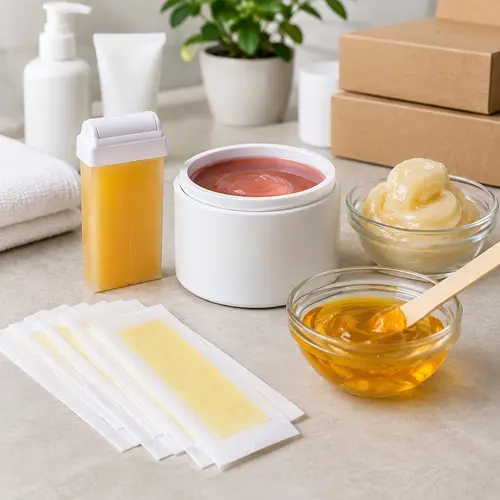
Waxing products require another set of decisions. Hot wax for coarse bikini hair may need different grip, elasticity, and working behavior than a facial wax intended for smaller, more precise sections. Pre-coated strips must balance adhesion to hair with manageable pull on skin. The backing, wax coat, release liner, and storage conditions operate as one system, which is why reviewing custom wax strips and hot wax is more useful than comparing ingredient lists alone.
Aftercare can sometimes support broader positioning, but it still needs a clear role. A lightweight calming gel may suit multiple areas, while a richer lotion may feel occlusive on the face. Brands planning a kit should evaluate the removal step and soothing gel after hair removal together rather than treating aftercare as a decorative add-on.
This is also a compliance decision. Under the Modernization of Cosmetics Regulation Act of 2022, the responsible person must maintain adequate safety substantiation records, while facility registration, product listing, and adverse-event obligations may also apply. ([fda.gov](https://www.fda.gov/cosmetics/cosmetics-laws-regulations/modernization-cosmetics-regulation-act-2022-mocra)) The FDA Cosmetics Labeling Guide further connects intended use with directions, warnings, ingredient declaration, and prominent label information. ([fda.gov](https://www.fda.gov/cosmetics/cosmetics-labeling-regulations/cosmetics-labeling-guide)) For EU launches, the formula, label, responsible person, safety report, and notification strategy should be mapped against the EU Cosmetics Regulation and the Cosmetic Product Notification Portal. ([single-market-economy.ec.europa.eu](https://single-market-economy.ec.europa.eu/sectors/cosmetics/cosmetic-product-notification-portal_en))
Technical and Packaging Factors to Evaluate
Formula Strength and Irritation Risk
For depilatory cream, ask the formulation team how the active system, alkalinity, contact time, emollient phase, and fragrance load were selected for the target area. Do not accept a sensitive claim based only on added botanical extracts. The more useful evidence is a documented irritation-risk review supported by the finished formula, its directions, and its intended exposure pattern. A mild hair removal formula should still demonstrate effective removal under realistic use conditions.
Texture, Spread, and Removal Behavior
Texture affects both consumer experience and dose control. A cream that runs in the shower can migrate beyond the intended area. One that is too dense may spread unevenly, leaving inconsistent removal. Sugar wax must retain workable tack without becoming excessively fluid in warm storage. Hot wax needs a controlled melting and application window, while roll-on wax must move through the cartridge evenly without clogging or leaking.
Ask for specification ranges rather than subjective descriptions such as creamy or salon quality. The relevant controls may include viscosity, appearance, odor, fill weight, wax softening behavior, strip coat consistency, or cartridge flow. The final values should come from the selected formula and packaging combination, not from a generic category sheet.
Packaging Compatibility and Distribution Stress
Packaging is part of the formulation decision. Depilatory cream can interact with tube layers, closures, liners, or decoration. Roll-on wax cartridges need checks for roller movement, seal integrity, upright and inverted leakage, and residue around the cap. Wax strips need aging review because temperature cycling may change adhesion, liner release, or wax migration.
Request heat, cold, and ambient storage observations in the final pack. Shipment conditions should reflect the destination market and fulfillment route, especially when parcels may remain in warm vehicles or uncontrolled warehouses. The hair removal manufacturing process should connect compatibility testing with filling settings, seal checks, batch inspection, and retained samples.
SKU Architecture and Sampling
A practical sampling plan compares the smallest number of meaningful variants. For example, test a body cream and a lower-intensity sensitive-area cream in the intended tubes, or compare one wax base with two working-property adjustments. This is faster and more informative than requesting many fragrances before the functional system is approved.
Buyers can use custom hair removal product development to align formula, packaging, claims, and documentation in parallel. Broader depilatory product development solutions can help determine whether the launch needs one multi-area SKU, separate face and body products, or a removal-and-aftercare kit. Once the brief is stable, document the approved sample through a formal hair removal product RFQ covering formula code, pack components, artwork market, sample scope, and shipment testing.

Decision Framework for a Multi-Area Hair Removal Formula
| Factor | What to Check | Why It Matters | ODM Buyer Note |
|---|---|---|---|
| Intended area | Exact face, external bikini line, underarm, leg, or body positioning | Changes exposure assumptions, directions, warnings, and test scope | Approve the use-area statement before formula sampling |
| Hair profile | Hair coarseness, density, length, and removal expectations | A system effective on fine facial hair may underperform on coarse body hair | Provide realistic consumer use scenarios, not only marketing claims |
| Formula behavior | Spread, contact control, grip, flexibility, residue, and rinse or removal quality | Performance must remain consistent across the intended application area | Compare coded samples under the same evaluation method |
| Skin tolerance | Finished-product safety review, controlled-use evidence, directions, and warnings | A shared ingredient list does not prove equal suitability for every area | Request records tied to the final commercial formula |
| Packaging fit | Tube compatibility, seal integrity, cartridge flow, jar closure, or strip aging | Pack failure can change dose, texture, hygiene, and customer experience | Test decorated commercial components whenever possible |
| Storage and shipment | Heat, cold, cycling, orientation, leakage, and appearance changes | Hair removal textures can shift during cross-border distribution | Match testing to the destination and fulfillment channel |
| Regulatory file | Ingredient list, specifications, safety support, label copy, and market notification inputs | The claim and intended use must agree across the technical and commercial record | Build documentation while samples and packaging are being finalized |
The core sourcing principle is simple: use one formula only where the evidence supports one formula. A modular base can reduce development time and preserve consistency, but body-area claims should follow testing rather than lead it. For additional category planning, review hair removal product guides and the available private label hair removal products before finalizing the SKU brief.
ODM Manufacturing Considerations
For bikini hair removal products private label projects, the approved sample must represent more than an acceptable texture or fragrance. It should confirm the intended body area, application method, removal performance, consumer instructions, pack format, and commercial positioning. Buyers should define whether the SKU is a depilatory cream, sugar wax, hard or soft wax, strips, roll-on cartridge, or aftercare item before evaluating the sample.
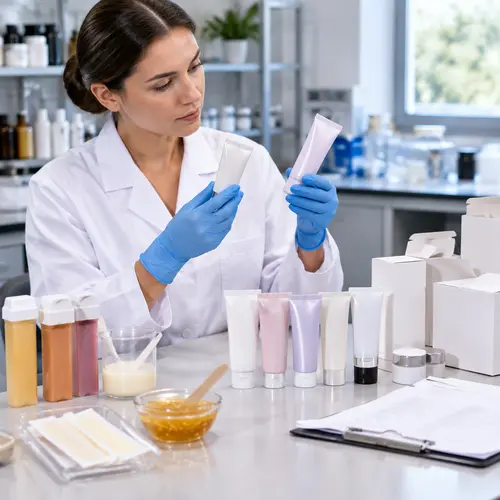
Sample confirmation should use a written approval record. Document appearance, color, odor, spread, pickup, residue, removal behavior, and any agreed performance boundaries. For cream, confirm that it dispenses consistently and remains easy to distribute in a controlled layer. For wax, review handling at the specified use temperature and the way it sets or remains workable. For strips, assess grip, flexibility, liner release, and residue. Retain sealed reference samples from the approved version so later production can be compared against an agreed standard.
Formula customization should focus on commercially meaningful differences. Options may include fragrance level, botanical ingredients with traceable documentation, color, texture, application time, wax flexibility, residue profile, or aftercare pairing. A turnkey formulation can shorten development, but buyers should ask which elements can be adjusted without restarting the entire validation program. Brands facing a sudden capacity problem or a failed previous supplier should also separate urgent launch requirements from enhancements that can wait for a later version.
Packaging should be tested with the filled product rather than approved from an empty component alone. Cream may interact with a tube, cap, seal, or printed surface. Wax can expose jars, liners, cartridges, and applicator heads to elevated temperatures. Strips may lose performance if the pouch barrier or liner system is unsuitable. Confirm component dimensions, fill weight, dispensing behavior, closure security, coding space, and carton fit before approving artwork.
Stability review should reflect the formula, pack, sales region, and distribution route. The review plan should track appearance, odor, texture, separation, pack distortion, seepage, seal condition, and dispensing performance. Shipment conditions also matter: cartons should protect products from compression, uncontrolled movement, prolonged heat, and cold exposure. Ask how pallet configuration, inner cartons, case markings, and container loading are controlled for the final destination.
MOQ should be reviewed by component, formula, fragrance, artwork, and finished SKU rather than as one headline number. A low finished-product quantity may still require larger purchases of custom-printed tubes, pouches, liners, or cartons. Request a cost breakdown covering formulation changes, tooling, printing, testing, samples, and unused component exposure. This makes it easier to compare unit economics with expected customer acquisition cost and repeat-purchase potential.
Labeling documents should be prepared early enough to prevent packaging delays. The document set may include an ingredient declaration, product specifications, batch coding format, directions, cautions, responsible-party details, net contents, and supporting records for permitted claims. For the United States, buyers should review the FDA Cosmetics Labeling Guide and determine their responsibilities under the Modernization of Cosmetics Regulation Act of 2022. MoCRA includes requirements involving facility registration, product listing, adverse-event reporting, and safety substantiation records, subject to applicable provisions and exemptions. ([fda.gov](https://www.fda.gov/cosmetics/cosmetics-laws-regulations/modernization-cosmetics-regulation-act-2022-mocra)) Related project pathways can be organized through the hair-removal product categories, custom development capabilities, and manufacturing process pages.
Common Problems and Failure Cases
Wax becomes brittle or cracks. The product may have an unsuitable flexibility profile, may be applied outside its intended working conditions, or may have changed during storage. Buyers should compare the failed unit with the retained approval sample and review batch records, raw-material lots, storage history, and use instructions.
Wax strips lose adhesion. Common symptoms include weak hair pickup, uneven grip, premature liner release, or excessive residue. Investigation should cover wax coating consistency, pouch integrity, liner properties, aging conditions, and exposure during shipping.
Depilatory cream separates or dispenses unevenly. Separation, watery discharge, graininess, or inconsistent spread can indicate formula instability or a pack interaction. Check whether the issue appears only after heat exposure, only near the end of the tube, or across unopened samples from the same batch.
Roll-on cartridges leak or stop flowing. Leakage may occur around the roller head, neck, or cap, while restricted flow can result from product thickening or component tolerances. Evaluate filled cartridges in multiple orientations and confirm that the housing does not deform under expected storage and transport conditions.
Fragrance creates avoidable sensitivity complaints. A fragrance that performs acceptably in a leg wax may not suit a face or bikini-positioned SKU. Review the fragrance concentration, declared allergens where applicable, intended-use wording, and whether an unscented or lower-fragrance option is more appropriate for sensitive positioning.
Packaging deforms or artwork deteriorates. Warping, paneling, cracked closures, label lifting, ink transfer, and scuffed cartons can undermine an otherwise acceptable formulation. Determine whether the cause is product contact, heat, case compression, or insufficient secondary protection before changing the formula.

Supplier Checklist
- Confirm experience with the exact product format: cream, wax, sugar wax, strips, roll-on cartridges, or aftercare.
- Request formula specifications, ingredient documentation, batch criteria, and traceability records relevant to the target market.
- Define sample rounds, customization limits, approval responsibility, retained samples, and change-control procedures in writing.
- Review filled-product packaging evidence, including dispensing, sealing, orientation, carton fit, and transit-related observations.
- Ask for a stability plan that matches the formula, final pack, destination climate, and expected shipment route.
- Separate MOQs for formula preparation, components, printing, cartons, and each finished SKU.
- Verify labeling support, ingredient naming, warnings, directions, claims documentation, and market-specific file formats.
- Review quality certifications through current certificates, scope statements, issuing bodies, and audit dates rather than relying on logos.
- Confirm confidentiality terms, ownership of custom work, access to project files, and controls on sharing brand information.
- Document lead times for samples, components, testing, production scheduling, and shipment release, especially when replacing a disrupted supplier.
FAQ
Can one approved formula be labeled for the face, body, and bikini area?
Only when its safety review, directions, performance, and claims support every stated area. Many buyers use a shared development platform but adjust strength, fragrance, texture, instructions, or pack size for sensitive-area positioning.
Can an Asian manufacturing site follow European or U.S. clean beauty and cruelty-free requirements?
Location alone does not prove or disprove compliance. Define the restricted-substance policy and cruelty-free standard contractually, then verify ingredient declarations, supplier statements, quality systems, testing policy, traceability, and current audit evidence. Avoid treating broad terms such as organic or clean as substitutes for a documented standard.
Will a low MOQ make the unit cost too high for our CAC model?
It can, particularly when printed components or specialized applicators have higher minimums than the filled product. Compare landed cost at several volumes and include setup, samples, testing, freight, duties, fulfillment, expected repeat rate, and leftover packaging exposure.
Will a turnkey base make our product identical to competing brands?
Not necessarily, but differentiation must be planned. Buyers can distinguish a product through texture, fragrance strategy, traceable featured ingredients, format, aftercare pairing, pack design, directions, and a substantiated use experience. Ask which changes remain exclusive and which base elements may be shared.
How quickly should samples be expected?
Timing depends on raw-material availability, customization depth, component sourcing, and the number of formats. A supplier promising a three-to-five-day sample should clarify whether it is a stock-base prototype, a fully customized lab batch, or a filled sample in the intended pack.
What documents should be reviewed before artwork approval?
Review the ingredient list, specifications, directions, cautions, net contents, responsible-party information, claims support, batch-code location, component drawings, and required market documents. Artwork should not be finalized while the formula name or ingredient declaration remains provisional.
References
- U.S. Food and Drug Administration: Modernization of Cosmetics Regulation Act of 2022. ([fda.gov](https://www.fda.gov/cosmetics/cosmetics-laws-regulations/modernization-cosmetics-regulation-act-2022-mocra))
- U.S. Food and Drug Administration: Cosmetics Labeling Guide. ([fda.gov](https://www.fda.gov/cosmetics/cosmetics-labeling-regulations/cosmetics-labeling-guide))