Direct Answer
To understand how to choose a hair removal OEM manufacturer, evaluate the operating system behind the sample, not simply the sample itself. A qualified partner should connect formula performance, packaging compatibility, claim support, quality controls, and market documentation in one traceable development process. Ask for product-specific evidence: viscosity or melting-point specifications where relevant, stability and compatibility protocols, irritation-risk review, batch records, packaging leakage tests, and labeling files for each target market.
The practical test is whether the manufacturer can reproduce the approved formula at your launch volume without changing ingredients, processing conditions, or packaging components. For an emerging DTC brand, flexibility also matters. Confirm the pilot MOQ, what customization is included, how quickly samples can be revised, and whether compliance work proceeds alongside development. A low initial quantity creates little value if the product later requires reformulation, new testing, or a different filling line.
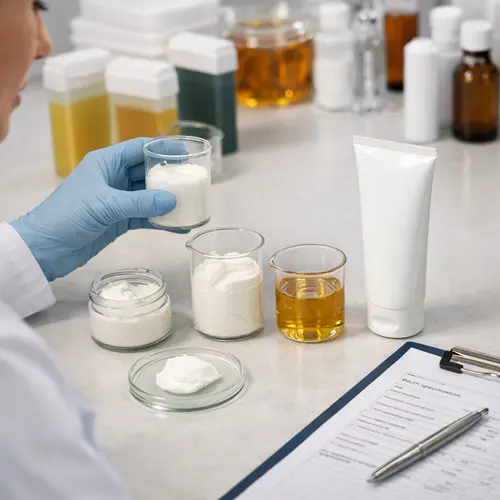
Key Takeaways for Private Label Buyers
- Source the system, not the catalog. Review formulation, filling, packaging, QC, documentation, and shipment controls as one connected workflow.
- Define the product brief before sampling. Specify hair type, application area, texture, removal time, fragrance limits, after-feel, target claims, pack format, and intended markets.
- Test the formula inside the final package. A stable cream in a laboratory jar may discolor, leak, separate, or lose viscosity in the selected tube or pump.
- Separate marketing language from supportable claims. Clean, vegan, cruelty-free, sensitive-skin, and slow-regrowth positioning each requires a defined substantiation and supplier-document trail.
- Approve measurable specifications. Color, odor, viscosity, fill weight, wax adhesion, melting behavior, and packaging torque should not depend on subjective sample matching.
- Plan the commercial scale-up before launch. Confirm that pilot and larger runs use the same formula, critical ingredients, equipment logic, and quality acceptance criteria.
Buyer Context
Hair-removal products are unusually sensitive to the interaction between chemistry, application behavior, and packaging. A depilatory cream must spread evenly and remain in place long enough to work, yet rinse cleanly without creating an unnecessarily harsh skin experience. Wax strips depend on adhesive coating consistency, backing material, release liner, and storage temperature. Sugar wax and hot wax require controlled texture and melting behavior. Roll-on wax cartridges add another variable: the package must dispense smoothly when heated without leaking during storage or transit.
This makes a visually polished sample only the beginning of the evaluation. Buyers should ask how the supplier converts sensory feedback such as ‘too runny’ or ‘pulls too aggressively’ into controlled specifications. A useful hair removal manufacturing process should show where raw-material checks, compounding, filling, in-process inspection, finished-product testing, and shipment release occur. The same questions should carry into the broader custom hair removal product development scope.
For DTC operators, the risk continues after the product performs correctly. Claims and documentation must fit the destination market and sales channel. Ingredient names should align with the applicable INCI convention, and EU-bound ingredient reviews can reference the European Commission’s CosIng ingredient database. If a product is positioned for halal-conscious markets, ask which certification body and recognition pathway apply; the MUI World Halal Council mutual-recognition guide offers useful context, but it does not replace market-specific confirmation.
Skin tone and post-removal response also influence responsible positioning. Irritation can contribute to visible darkening in susceptible users, so instructions, patch-test language, contact time, and aftercare should be reviewed together. The AAD treatment standards for hyperpigmentation provide clinical context for why brands should avoid casual promises around pigmentation. A coordinated soothing gel after hair removal can support the routine, but cosmetic aftercare claims still need appropriate boundaries.
Technical and Packaging Factors
Formula Performance and Repeatability
Start with the parameters that determine consumer use. For cream removal, request an approved viscosity range, pH specification, spreadability standard, contact-time instructions, and a method for evaluating odor and rinse-off. Review the custom depilatory cream formulation pathway to determine which changes require renewed stability or compatibility work. For wax, document softening or melting range, application temperature, pickup, residue, brittleness after aging, and hair-grip performance. For pre-coated strips, compare adhesion after heat and cold storage rather than judging only fresh samples.
Sensitive-skin positioning deserves a structured irritation-risk review, not simply the removal of fragrance. Examine the complete ingredients list, exposure time, intended body area, directions, warnings, and available safety assessment. A mild hair removal formula may still require conservative instructions and user patch testing. Ask which evidence supports any gentleness claim and whether the test product exactly matches the commercial formula.
Package Compatibility and Distribution Stress
The final pack should enter testing early. Depilatory formulas can interact with tube layers, caps, liners, pumps, inks, or metallic components. Watch for paneling, swelling, corrosion, odor migration, color change, blocked dispensing, seal failure, and loss of label adhesion. Roll-on cartridges should be checked upright, inverted, heated, cooled, and subjected to realistic transit orientation. Wax jars need closure and liner evaluation at expected filling temperature, while strip sachets need reliable seals and barrier performance.
Ask for both controlled stability and practical shipment simulation. Heat and cold exposure should reflect the distribution lanes you expect to use, followed by room-temperature recovery and documented inspection. The protocol should identify test conditions, checkpoints, package configuration, acceptance criteria, and responsibility for investigating failures. This is particularly important when a brand selects lower-impact packaging, because recycled content, mono-material structures, and reduced component weight can alter barrier or mechanical performance.
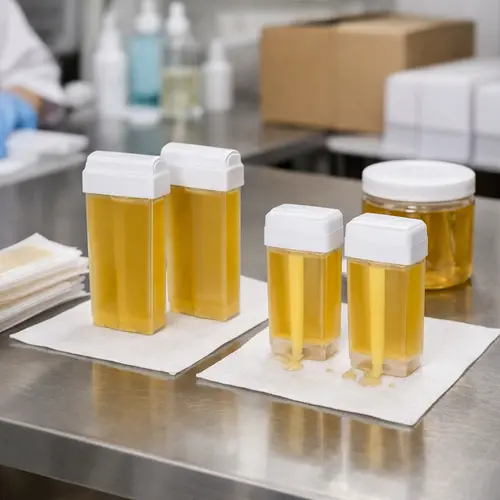
Claims, Samples, and Launch Control
Create a claim matrix before artwork approval. Map each front-panel or product-page statement to its evidence, owner, and market limitation. Supplier declarations may support ingredient-origin or animal-testing policies, while performance language may require consumer, instrumental, or laboratory data. Terms such as vegan and cruelty-free should be backed by traceable policies across relevant raw materials rather than inferred from the visible formula.
Sampling should be equally explicit. Record which base formula was used, every customization, the package tested, sample batch code, and unresolved decisions. A credible sampling plan explains what can be delivered in the first round, what requires additional validation, and whether a three-to-five-day sample uses the intended ingredients and process. Before approving a depilatory product development solution, compare the sample specification with the eventual batch specification line by line.
Decision Framework
| Factor | What to Check | Why It Matters | ODM Buyer Note |
|---|---|---|---|
| Formula control | Approved pH, viscosity or melting range, color, odor, and performance method | Turns sensory approval into reproducible manufacturing criteria | Confirm tolerances appear in the signed specification |
| Packaging fit | Formula compatibility, leakage, seal integrity, dispensing, decoration, and label adhesion | Prevents failures that are invisible in an unpackaged sample | Test the exact commercial components and suppliers |
| Stability | Heat, cold, room-temperature, orientation, and recovery observations | Reveals separation, brittleness, odor shift, and pack deformation | Request the protocol, checkpoints, results, and deviation handling |
| Safety review | Intended area, exposure, warnings, patch-test language, and irritation-risk assessment | Hair-removal use conditions directly affect tolerability | Match the safety file to the final formula and directions |
| Claim support | Evidence type, tested formula, market scope, and raw-material declarations | Reduces artwork changes and unsupported online claims | Do not treat an ingredient brochure as finished-product proof |
| Scale-up | Pilot MOQ, equipment path, critical process controls, and change notification | Protects consistency when demand accelerates | Ask whether scale changes trigger bridging tests |
| Market files | INCI, specifications, safety data, test reports, batch traceability, and label review inputs | Supports marketplace, importer, and regulatory review | Define document ownership and delivery dates in the contract |
A buyer can use this framework during an initial audit, then verify the answers through a controlled sample project. Broader hair removal OEM insights can help refine the brief, while the hair removal OEM manufacturer overview provides context on available product formats. The goal is a launch file in which the formula, package, claims, tests, and commercial run all describe the same product.

ODM Manufacturing Considerations
ODM evaluation should begin with a written sample-confirmation process. The approved sample should be identified by formula code, revision number, fragrance, color, package components, fill weight, and approval date. Buyers should retain sealed reference units from the same submission. A verbal approval or an unlabeled jar is not a reliable standard for later comparison.
Formula customization must be defined more precisely than selecting a fragrance or changing the label. For depilatory cream, discuss application feel, spreading behavior, removal time window, rinse-off characteristics, odor control, and the intended hair type. For sugar wax or salon wax, document working temperature, pickup, residue, flexibility, and performance across the expected room-temperature range. If an existing formula model is used, ask which ingredients, sensory properties, or performance parameters can be changed without restarting the full validation program.
Packaging should be assessed with the actual commercial components, decorations, and fill quantity. Confirm whether the formula affects printed areas, adhesives, caps, dispensing parts, or internal surfaces over time. Samples filled into undecorated substitute packaging cannot establish that the final pack will remain functional. Buyers can review related formats through the hair-removal product categories and compare the supplier workflow with its documented manufacturing process.
A stability review should have a written protocol, scheduled observations, acceptance limits, and a conclusion tied to the intended shelf life. Relevant observations may include appearance, odor, weight change, dispensing behavior, package shape, and measurable formula properties. Accelerated work can identify risks, but it does not guarantee real-time shelf life. Ask how the manufacturer handles an out-of-limit result and whether a changed fragrance, colorant, package, or ingredient source requires additional evaluation.
MOQ discussions should separate formula batch size, component purchasing minimums, printed-material minimums, and filling-line constraints. A low finished-unit quantity may still require the buyer to fund excess tubes, labels, cartons, or roll-on components. Request unit economics at more than one volume, including setup charges, testing, freight assumptions, storage of unused materials, and the disposal terms for obsolete inventory. This shows whether a smaller launch can support customer acquisition cost without creating hidden commitments.
Before approving production, request the available ingredient declaration, specification sheet, safety data where applicable, batch documentation format, test summaries, country-of-origin information, and packaging material declarations. Label support should distinguish between document preparation and legal approval in the destination market. A transparent MoCRA or CPNP assistance workflow is useful, but the responsible brand still needs qualified regulatory review for its exact formula, claims, warnings, and market role.
Shipment conditions should cover pallet configuration, carton strength, temperature exposure, transit duration, handling of wax products during warm seasons, and the inspection window after delivery. For an urgent supplier replacement, confirm available line capacity, component lead times, change-control responsibilities, and whether an approved transfer sample can be matched without relying on incomplete specifications.
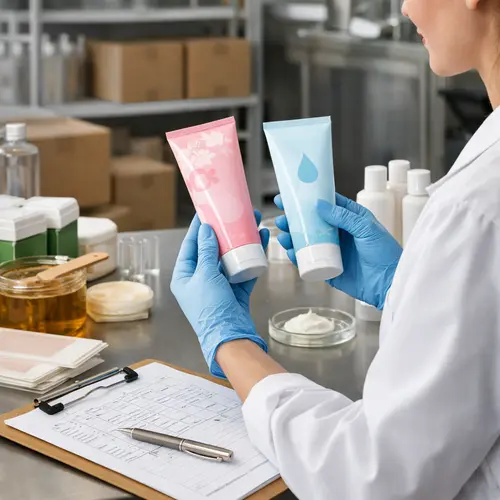
Common Problems or Failure Cases
Wax becomes brittle: A wax that performs during sampling may crack after transport or seasonal storage. Possible causes include an unsuitable composition, fragrance interaction, or a working-temperature assumption that does not match the sales region. Compare retained units from different lots and define flexibility or fracture criteria before launch.
Strip adhesion declines: Wax strips can lose pickup strength or transfer wax unevenly after aging. Release-film variation, coating weight, substrate changes, and storage humidity may contribute. Buyers should inspect peel consistency, wax transfer, hair pickup, and residue using final packed units from representative lots.
Cream separates or dispenses unevenly: Visible liquid, graininess, odor change, or inconsistent flow can indicate formula instability or package interaction. Do not accept mixing instructions as a routine remedy for a product intended to remain uniform. Require an investigation, affected-lot boundaries, and documented corrective action.
Cartridges leak in distribution: Leakage can arise from dimensional variation, poor fit, fill temperature, seal damage, or excessive headspace pressure. Carton staining and unreadable labels create additional commercial loss even when the product remains usable. Transit simulation should reflect the actual shipper case and distribution route.
Fragrance causes sensitivity complaints: A stronger scent may improve odor masking while increasing consumer discomfort or limiting positioning for sensitive users. Review fragrance concentration, allergen documentation, complaint handling, and whether an unscented or lower-fragrance option changes removal performance.
Packaging deforms: Wax jars, cream tubes, or caps may panel, swell, warp, or become difficult to open after storage or transport. Investigate resin specification, wall thickness, closure torque, fill process, and formula contact rather than treating deformation as cosmetic only.

Supplier Checklist
- Confirm the legal manufacturing entity, site address, audit scope, and current quality certifications.
- Request a formula code, revision history, sample record, and signed approval standard.
- Define texture, working behavior, removal performance, odor, residue, and measurable acceptance limits.
- Review irritation-risk controls, restricted-ingredient screening, fragrance documents, and complaint procedures.
- Test the final formula in the final decorated package, including dispensing, sealing, and transit performance.
- Obtain the stability protocol, observation schedule, acceptance criteria, deviations, and final conclusion.
- Break down MOQ by formula, filling run, primary package, label, carton, and unused-component liability.
- Verify ingredient naming, warnings, directions, batch coding, shelf-life basis, and destination-market documents.
- Confirm ingredient and component change notification, traceability, retained samples, and recall readiness.
- Document shipment configuration, seasonal temperature controls, delivery inspection, and defect-resolution terms.
- Review customization boundaries, ownership of buyer-funded work, exclusivity terms, and confidentiality obligations.
- Assess response capacity for supply disruption, including alternate materials and realistic transfer timing.
FAQ
Can an Asian manufacturer meet European or US clean beauty and cruelty-free expectations?
Location alone does not establish compliance. Define the prohibited-ingredient policy and cruelty-free standard in the contract, then verify supplier declarations, raw-material records, testing policies, traceability, and audit evidence. Because clean beauty has no single universal definition, the buyer must provide a market-specific standard rather than rely on a logo or broad claim.
Will a low MOQ make the unit cost commercially unworkable?
It can, especially when printed packaging, testing, setup, and freight are spread across fewer units. Compare landed cost and gross margin at several volumes, include expected CAC and returns, and identify leftover-component exposure. A higher unit cost may still be rational for validation if the inventory risk is materially lower.
Will a turnkey formula make the brand indistinguishable from competitors?
Not necessarily, but a label-only change offers limited differentiation. Ask for a clear customization map covering scent, color, sensory profile, working behavior, ingredient story, aftercare pairing, and package format. If a distinctive imported botanical oil or other featured ingredient supports the brand story, verify source continuity, documentation, and its functional relevance.
Can we require a strict NDA before sharing the launch plan?
Yes. The agreement should identify confidential materials, permitted recipients, security duties, exclusions, duration, return or destruction requirements, and remedies. Separately define ownership of formulas, artwork, test results, molds, and buyer-funded customization; an NDA alone does not create exclusivity.
How can buyers verify environmental packaging claims?
Request material specifications, recycled-content evidence, chain-of-custody documents where relevant, certification scope, and the exact entity named on each certificate. Confirm whether the claim applies to the component, package, supplier, or facility. Avoid broad terms such as sustainable unless the substantiation matches the consumer-facing statement.
What labeling support should an ODM manufacturer provide?
Expect an ingredient list, usage directions, warnings, responsible-party fields, net-content data, lot coding approach, shelf-life basis, and available compliance records. The manufacturer can organize source documents, but destination-market counsel or a qualified responsible person should approve final claims and label text.
References
- The European Commission’s CosIng ingredient database supports ingredient-name and regulatory-status research for cosmetics marketed in the European Union.
- The MUI World Halal Council mutual-recognition guide provides a reference point when assessing recognition pathways for halal documentation.