Direct Answer
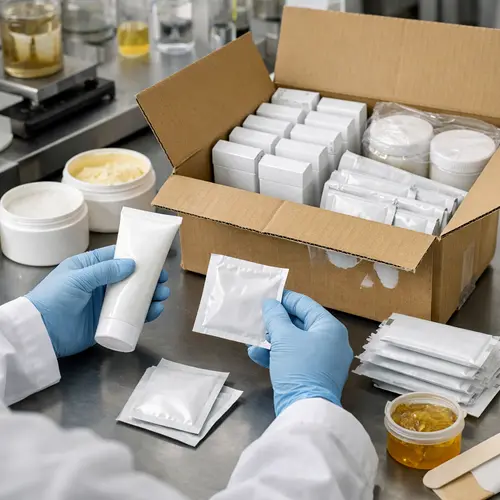
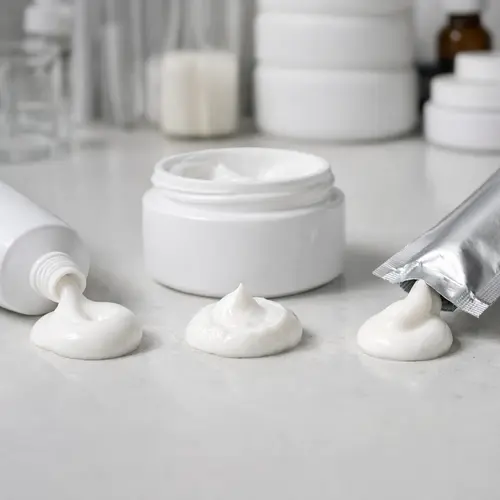
For most private-label depilatory cream launches, a tube is the strongest default: it protects the cream from repeated hand contact, supports clean dosing, travels well, and gives a brand enough surface area for instructions, warnings, and a distinctive logo. A jar can create a premium, salon-oriented presentation, but it exposes the product to more air and contact during use. A sachet is efficient for trial kits, subscription boxes, travel formats, and campaign sampling, yet it gives the buyer less room for usage directions and makes the opening experience less convenient.
The right choice in depilatory cream packaging depends on the formula viscosity, intended body area, use frequency, market, filling equipment, and launch format. A creator-led brand may use a tube for its hero SKU and sachets for social sampling. A salon buyer may prefer a larger tube or jar for controlled back-bar use. The decision should be made after reviewing a filled sample, checking seal integrity, and testing the final pack with the actual formula.
For private-label buyers, the practical path is to compare a depilatory cream OEM sample in all three formats before approving artwork or tooling.
Key Takeaways for Private Label Buyers
- Choose the tube when hygiene, portability, controlled dispensing, and broad retail use are the priority.
- Use the jar when the product is positioned for professional, high-volume, or shared-use environments and the opening experience supports that positioning.
- Use sachets for low-cost trials, subscription inserts, travel kits, event sampling, or a limited social campaign rather than assuming they should replace the main SKU.
- Review formula flow before choosing the pack. A thick cream may require a wider orifice, while a thinner cream can leak through an unsuitable closure.
- Test filled packaging through heat, cold, transport vibration, inversion, and repeated opening. Empty-pack approval is not enough.
- Lock the pack, label copy, sample approval, and production route together so the approved texture is not changed during scale-up.
Buyer Context
Packaging is part of the product experience in hair removal. Consumers judge whether the cream looks clean, easy to control, and suitable for the intended area before they read the full label. For a creator-led brand, that first impression also appears in unboxing clips, application videos, bathroom-counter shots, and short-form demonstrations. The pack must therefore support both practical use and clear visual presentation.
The decision also changes by product family. Depilatory wax and sugar wax need containers that tolerate their working temperature and prevent contamination. Wax strips need a pouch or carton that protects adhesion during storage and shipment. Roll-on wax cartridges need a reliable seal and a closure that limits leakage during transport. Aftercare products may accept more flexible packaging because they are applied after removal and usually have different viscosity and usage patterns.
Depilatory cream has a particularly important packaging relationship because the cream remains in contact with the container for its full shelf life. Its alkaline ingredients, fragrance, colorants, oils, and conditioning materials can affect the tube laminate, jar liner, cap, shoulder, or sachet film. A pack that looks attractive in a catalog may soften, swell, discolor, crack, or leak after extended storage.
For buyers without an internal technical team, the supplier should translate the brand brief into observable checks: target body area, application thickness, wipe-off behavior, odor direction, skin-feel expectation, pack size, opening method, and shipment destination. The hair removal OEM ODM services process should connect those commercial decisions with sample preparation, filling, inspection, and documentation.
Technical or Packaging Factors
Formula flow and dispensing
Viscosity determines how the consumer experiences the first squeeze or scoop. A cream that is too thick for a narrow tube opening may require excessive force, causing sudden discharge or uneven application. A thin cream in a wide-mouth jar may spread easily but can shift during transport. The supplier should assess flow at normal room conditions and after heat and cold exposure, then match the opening, cap, liner, and filling settings to the result.
Application performance matters more than a laboratory number alone. Ask to review a filled sample on the intended area, including the time needed to spread a consistent layer, the way the cream remains in place, and the ease of removal with a damp cloth or spatula. The same formula can feel more controlled in a tube than in a jar because the dispensing action limits how much product reaches the hand.
Tube considerations
Tubes are usually the most balanced choice for a retail depilatory cream. They allow one-handed dispensing, reduce direct contact with unused product, and work well in travel or subscription formats. Plastic laminate and multilayer structures can be evaluated for barrier performance, flex-crack resistance, print quality, and cap retention. The supplier should confirm whether the formula is compatible with the tube shoulder, inner layer, seal, and closure.
Tube design still requires practical testing. Check whether the cream separates near the shoulder, whether the cap traps residue, whether the tube can stand upright, and whether repeated squeezing creates pinholes or split lines. For a visually distinctive launch, review the actual filled tube under bright lighting rather than relying only on a digital hair removal manufacturing process image or rendering.
Jar considerations
Jars can communicate a larger-use, salon, or premium positioning. They are useful when the buyer wants a wide opening for a spatula or when the cream is dispensed in controlled portions by a professional. However, the jar exposes more surface area to air and user contact. The lid, inner seal, and neck need inspection for residue, cross-threading, and leakage after inversion.
A jar should be reviewed with the intended user in mind. If the product is used in a shared salon environment, the brand may need a clear dispensing method and hygienic operating instructions. If the product is sold for home use, a jar may feel less convenient than a tube and may create more mess around the closure. The supplier should also test whether the cream sticks to the wall or settles unevenly after storage.
Sachet considerations
Sachets offer a compact route to trial units and campaign distribution. They can reduce material volume per sample and fit naturally into subscription boxes, influencer mailers, and travel kits. Their limitations are equally clear: opening can be messy, the pack may be difficult to reseal, and the small print area can make directions and warnings harder to read.
Film selection is central. The supplier should verify seal strength, puncture resistance, print rub, barrier performance, and compatibility with the cream. Test sachets after heat exposure, cold exposure, compression, and shipment vibration. A sachet that passes a tabletop squeeze check may still develop a weak seal when packed tightly in a carton. Use a sensitive skin hair removal products review when the campaign targets first-time users, and make sure the usage directions remain legible at the final size.
Claims, labels, and shipment
Packaging must leave enough space for product identity, net contents, directions, warnings, ingredient naming, responsible-party information, batch identification, and market-specific language. The FDA cosmetics labeling requirements summary is a useful starting point for United States label review. The FDA also explains how cosmetics are regulated, which helps buyers avoid unsupported approval language.
If the brand uses cruelty-free or vegan positioning, request the supporting supplier declarations and review whether the pack copy matches the available records. Buyers may also consult the Leaping Bunny cruelty-free certification standard when planning a certification route. Claims should be settled before mass printing because a late label change can affect artwork, packaging inventory, and launch timing.
Shipment planning is part of the pack decision. Confirm carton dimensions, cap protection, pallet orientation, temperature exposure, and leakage acceptance criteria. The same cream may need different secondary packaging for air freight, ocean freight, or direct-to-consumer fulfillment. A supplier offering custom depilatory cream formulation should document the selected pack and formula as one approved combination.
Decision Framework Table
| Factor | What to Check | Why It Matters | ODM Buyer Note |
|---|---|---|---|
| Dispensing | Squeeze force, flow, opening size, residue | Controls application precision and consumer mess | Approve a filled sample at the intended viscosity |
| Formula contact | Tube layer, jar liner, sachet film, closure seal | Reduces swelling, odor change, discoloration, and leakage risk | Request compatibility observations after storage testing |
| Use environment | Home, salon, travel, subscription, sampling | Determines convenience, hygiene, and pack durability | Match the primary pack to the actual usage occasion |
| Label space | Directions, warnings, ingredients, batch details | Supports responsible market placement and user safety | Check final-size artwork before print approval |
| Shipment | Inversion, compression, vibration, temperature exposure | Reveals leakage and seal failures before launch | Test the packed carton, not only the individual unit |
| Launch format | Hero SKU, sample, travel kit, bundle | Prevents one pack from carrying incompatible goals | Consider a tube for sale and sachet for trial conversion |
ODM Manufacturing Considerations
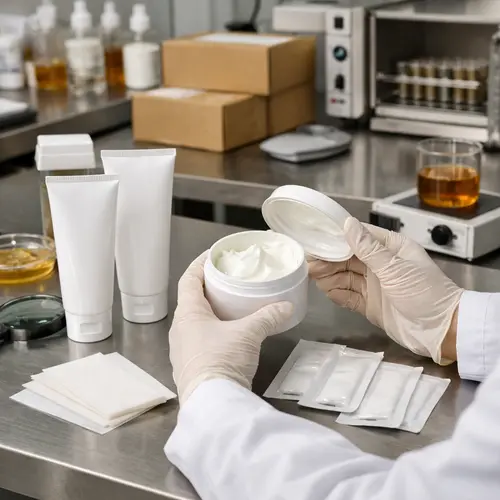
A capable ODM should show how the selected packaging moves from sample to production: formula confirmation, pack compatibility review, filling trial, seal inspection, label verification, carton packing, and shipment release. Ask whether the same approved formula, filling line, and packaging suppliers will be used for the pilot and the larger run. This reduces the risk that the sample looks smooth on camera but behaves differently after scale-up.
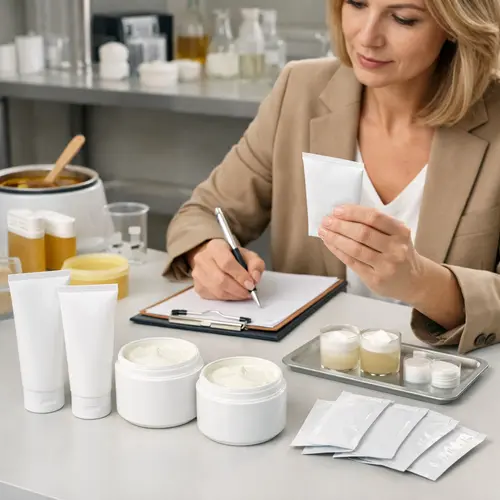
For a creator-led launch, request three physical options with the same formula: tube, jar, and sachet. Compare squeeze force, spread, residue, closure cleanliness, and on-camera appearance. Review a seven-day sample schedule only as a development target, and confirm what is included in that sample scope. The request a hair removal product quote process should clearly separate sample costs, mold or plate charges, packaging minimums, testing charges, and freight estimates.
Also ask for the available hair removal product quality control records, including batch coding, fill-weight checks, seal checks, retained samples, and release documentation. For a broader launch system, hair removal product solutions can connect the cream with wax strips, aftercare, or a post-removal kit without forcing the brand to change its core visual identity.
Supplier Checklist
- Provide the intended body area, market, pack size, use frequency, and target retail format.
- Request tube, jar, and sachet samples filled with the same approved cream.
- Verify viscosity behavior, separation, odor, color, wipe-off, and residue after storage exposure.
- Inspect seals, caps, liners, film edges, tube shoulders, and leakage after inversion and transport simulation.
- Confirm label documents, ingredient naming, warnings, batch coding, and responsible-party details.
- Ask for MOQ by component, pilot quantity, lead time, carton configuration, shipment conditions, and replenishment capacity.
- Approve one signed sample standard before artwork release and mass filling.
ODM Manufacturing Considerations
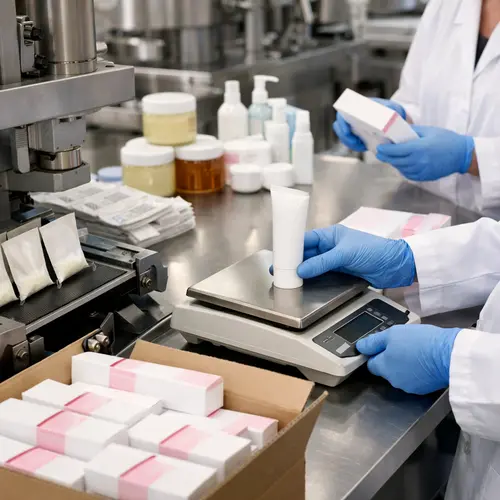
For private-label buyers, the most reliable depilatory cream packaging decision begins with a controlled sample-confirmation process. Approve the formula, filled pack, closure, artwork, and shipping carton as one commercial sample set. A cream that looks correct in a laboratory vessel may dispense poorly from a narrow tube, leave residue around a jar opening, or spread unevenly from a sachet. The approved sample should therefore record color, odor, texture, spread, removal performance, fill weight, package dimensions, and the intended use area, such as legs, underarms, or face.
Formula customization should be tied to a written product brief rather than informal messages. State the target removal time, cream body, fragrance level, color, rinse behavior, skin-feel expectations, and market position. If a camera-facing product needs a bright color or distinctive texture, ask the supplier to confirm which visual features remain stable after filling and storage. A custom formula should also receive an irritation-risk review appropriate to the intended body area, with clear directions for a small-area user test and warnings where needed.
Packaging compatibility covers more than whether a container can hold the cream. Ask for confirmation of the barrier material, inner coating, cap fit, seal or liner construction, and interaction with fragrance or active ingredients. Review whether the cream can be squeezed consistently near the end of the tube, whether a jar remains clean after repeated opening, and whether a sachet can be opened without uncontrolled splashing. For a spray or roll-on wax product, check that the product format is actually suitable for the selected dispensing component before artwork is finalized.
Stability review should reflect the markets and transport routes where the product will be sold. Request observations after warm and cool storage, including separation, color shift, odor change, viscosity drift, cap distortion, seal failure, and label lifting. For wax strips and sugar wax, examine brittleness, surface tack, and adhesion after storage. For roll-on wax cartridges, inspect roller movement, housing fit, and leakage after inversion. The supplier should explain the test duration, storage conditions, acceptance criteria, and what happens when a result falls outside the agreed range.
MOQ should be evaluated together with sample scope and packaging economics. Ask whether the minimum applies separately to formula, container, color, fragrance, size, and printed artwork. Confirm which charges are included in the BOM quotation, including molds, plates, proof samples, cartons, inserts, testing, and freight estimates. A transparent quote makes it easier to compare a custom cream, wax strip, or aftercare bundle without underestimating the landed cost.
Before production, obtain the labeling documents required for the destination market. These may include the full ingredient declaration, net contents, batch coding format, shelf-life or period-after-opening guidance where applicable, directions, warnings, responsible-party details, packaging material information, and supporting claims documents. For cruelty-free positioning, buyers can review the Leaping Bunny cruelty-free certification standard. For cosmetic labeling and product claims intended for the United States, consult the FDA Summary of Cosmetics Labeling Requirements and its information on how cosmetics are regulated.
Shipment conditions deserve a written agreement. Define acceptable temperature exposure, carton stacking, pallet requirements, inner protection, carton markings, and inspection timing. Ask for a retained production sample and a photo record of packed cartons. A shipment that arrives with softened wax, cracked sachets, cream leakage, or deformed tubes can create customer complaints even when the original filled product passed an in-house review.
Review the OEM/ODM service process alongside the depilatory cream product range before requesting a final quotation.
Common Problems or Failure Cases
Wax brittleness: A wax strip or sugar wax may become hard and crack when exposed to cool storage or an unsuitable film. Request a comparison of strip flexibility, wax tack, and removal performance after the expected transport conditions. The specification should define whether the strip must remain foldable and how much adhesion variation is acceptable.
Loss of strip adhesion: Excessive heat, poor coating control, dust, or an unsuitable backing material can reduce pickup. Check adhesion on the intended hair length and body area, not only on a clean test surface. Review how the supplier protects strips from heat and compression inside the carton.
Cream separation: A depilatory cream can show liquid release, graininess, color change, or uneven spread after storage. Confirm the target viscosity range and inspect samples from the beginning, middle, and end of a filling run. Packaging should be tested with the actual formula because a container may affect odor, color, or dispensing behavior over time.
Cartridge leakage: Roll-on wax may escape around the roller, cap, or housing during inversion and shipment. Check the closure after repeated opening, transport vibration, and storage on its side. Require a clear reject standard for visible leakage and product contamination on the outer package.
Fragrance sensitivity: A strong fragrance can create complaints even when removal performance is acceptable. Ask for fragrance allergen information, an unscented option, and a review of the intended use area. Directions should tell consumers to stop use if discomfort occurs and to follow the small-area test instruction.
Packaging deformation: Tubes, jars, sachets, and cartons can warp under heat, pressure, or unsuitable stacking. Inspect the filled package after storage in its final carton, not as an empty component. Confirm that the logo, ingredient text, batch code, and opening instructions remain readable after handling.
Supplier Checklist
- Can the supplier provide a signed sample specification covering texture, color, odor, spread, removal time, fill weight, and package format?
- Can the formula be customized for the intended body area, fragrance preference, visual design, and target market?
- Has the actual filled product been checked for tube, jar, sachet, strip, or cartridge compatibility?
- Are viscosity, wax tack, flexibility, leakage, separation, and color-change acceptance limits documented?
- Does the storage review include the temperature and transport conditions of the destination market?
- Are MOQ, sample charges, artwork charges, packaging tooling, testing fees, and freight estimates itemized?
- Are ingredient, label, batch, shelf-life, warning, and claims documents available before purchase approval?
- Can the supplier explain batch traceability, retained samples, release inspection, and handling of nonconforming units?
- Will the supplier protect confidential briefs, custom artwork, and formula information through a written confidentiality and ownership agreement?
- Can production capacity, reserved scheduling, and escalation contacts be explained for a sudden demand increase?
Use the completed checklist during a live factory call and request evidence for each important answer. A polished presentation is less useful than consistent records, clear samples, and a process that allows the buyer to verify what will actually be shipped.
FAQ
Could a Chinese OEM/ODM factory copy my concept or formula?
Risk is reduced when ownership, confidentiality, territory, exclusivity, and permitted use are written before technical files are exchanged. Ask who owns a custom formula, artwork, molds, and unused packaging, and whether the same formula can be offered to another customer. Use a contract reviewed for the relevant jurisdictions and limit access to sensitive files to the people working on the project.
Can the cream texture and color deliver an exaggerated visual effect on camera?
Often, the appearance can be adjusted within the formula and colorant limits suitable for the intended product. Confirm the result with filled samples under the lighting and camera distance used for content. Record whether the cream looks glossy, dense, airy, bright, or stringy, and also verify that the visual effect does not compromise removal, rinsing, odor, or storage performance.
How can I judge whether quality control is strong enough for my brand?
No supplier can guarantee that every consumer will have the same response, but a buyer can require defined release checks and traceability. Review incoming material checks, filling controls, weight checks, seal inspection, appearance limits, retained samples, batch records, and complaint handling. Request samples from more than one production batch when the product moves beyond initial approval.
What if I do not understand ingredients or technical manufacturing terms?
Require the supplier to convert your marketing brief into measurable product requirements. For example, replace a request for a camera-ready cream with target color, viscosity, spread, fragrance intensity, removal time, and package behavior. A capable account team should explain tradeoffs in plain English and return a written confirmation that you can approve.
Can the factory keep up if a social post causes a sudden order increase?
Ask for practical capacity information before launch: current line allocation, packaging component lead times, backup sources, overtime limits, and how production slots are reserved. Agree on a forecast-update process and an escalation contact. Capacity should be discussed by SKU and package format because a shortage of tubes, sachet film, labels, or cartons can limit output even when the filling line is available.
What should I do if a product arrives with leakage or separation?
Quarantine the affected cartons, photograph the batch code and shipping condition, and compare the goods with the approved sample and agreed acceptance limits. Record the number of affected units and the storage history. The supplier should investigate whether the cause relates to formula, filling, closure, carton compression, temperature exposure, or transport handling before replacement or credit is agreed.
References
For United States cosmetic label elements, ingredient declarations, net quantity, warnings, and other visible label information, see the FDA Summary of Cosmetics Labeling Requirements. For the distinction between cosmetic oversight and premarket approval, see the FDA page on FDA authority over cosmetics. Buyers assessing cruelty-free claims may consult Leaping Bunny.