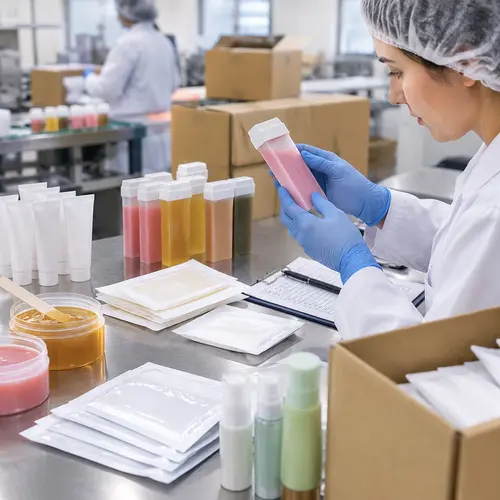
Direct Answer: How Does a Hair Removal OEM Project Move from Brief to Production?
A capable hair removal OEM manufacturer should translate your product brief into a controlled workflow: feasibility review, baseline formula selection or customization, packaging screening, sampling, stability and compatibility testing, compliance documentation, pilot filling, quality release, and shipment. These stages should overlap where risk permits rather than wait for one another sequentially.
For a project using a prevalidated formulation, the practical target may be a 24-hour feasibility plan, samples in 3–5 days, and a formulation-to-shelf cycle of under 30 days. Those timelines are not automatic. They depend on ingredient availability, packaging readiness, claim complexity, and the amount of formula modification requested. Pilot runs from 1,000 units can support market testing, but they should follow the same ISO 22716 controls intended for later scale-up. The goal is not simply speed. It is reaching a launch-ready SKU without changing the approved formula, texture, packaging behavior, or quality criteria after sampling.
Key Takeaways for Private Label Buyers
- Define the hair-removal format, target user, claims, sales regions, packaging, and target cost before requesting samples.
- Ask whether the sample and commercial batch will use the same formula, raw-material sources, equipment logic, and quality specifications.
- Review texture, application time, removal performance, odor, residue, and irritation risk together rather than approving appearance alone.
- Test packaging with the actual formula. A compatible empty tube or cartridge can still leak, deform, or lose barrier performance after filling.
- Run compliance work alongside formulation and packaging development, especially for MoCRA records, EU notification support, and label review.
- Approve objective release criteria before launch, including viscosity or melting-point specifications, fill weight, leakage checks, and storage conditions.

Buyer Context: Why the Workflow Matters
Hair-removal products leave little room for vague briefs. A depilatory cream must spread evenly, remain stable in its pack, remove hair within the labeled use conditions, and manage the irritation risk created by its active system. Sugar wax and hot wax require controlled flow, grip, and temperature behavior. Wax strips must balance adhesion with clean release, while roll-on wax cartridges need consistent roller movement without leakage during warm storage or transit.
This is why selecting a product from a catalog is only the beginning. Buyers should map each concept to a defined use case through hair removal product solutions. A face cream, body cream, salon wax, at-home strip, and post-removal soothing gel have different performance boundaries even when they share a similar clean or natural positioning.
The workflow becomes especially important when a DTC brand is replacing an unreliable supplier or trying to catch a short market window. Repeated sampling can consume that window, but premature approval can create leakage, batch variation, or negative live demonstrations on social media. A structured hair removal manufacturing process gives the buyer decision gates without turning every change into a restart.
Technical and Packaging Factors to Resolve Before Approval
Formula Performance and Texture
Begin with measurable product behavior. For custom depilatory cream formulation, document the target viscosity range, spread pattern, odor profile, labeled application time, rinse behavior, and residue. The manufacturer should also review active concentration, pH control, fragrance interactions, and foreseeable misuse. Sensitive positioning requires more than removing fragrance; it calls for a documented irritation-risk review and a clear rationale for the complete formula. Buyers developing this position can compare requirements for sensitive skin hair removal products.
For wax, record the specified melting or softening range, working temperature, stringing, grip, brittleness after cooling, and removal residue. Sugar wax should be checked for crystallization and consistency after heat exposure. Wax strips require adhesion aging on the intended backing and release liner, not only a fresh hand-made sample. Relevant format options can be evaluated through private label waxing products.
Packaging Compatibility
Packaging selection should occur before final formula approval. Depilatory cream can challenge seals, tube laminates, pumps, inks, and decorative finishes. Roll-on wax cartridges need warm-condition leakage review in upright, horizontal, and inverted positions. Wax jars require lid-fit checks after heating and cooling, while wax strips need pouches that protect adhesion from humidity and contamination.
Request tests using production-intent components rather than visually similar substitutes. Evaluate dispensing force, roller movement, seal integrity, label adhesion, fill appearance, and formula loss. Sustainable material claims should be supported by traceable specifications or certification rather than broad environmental language.

Storage, Stability, and Shipment
A useful screening plan includes controlled storage at 4°C, 25°C, and 40°C, plus three freeze-thaw cycles when the formula and pack justify that stress. Review color, odor, viscosity, phase separation, crystallization, pack distortion, leakage, and weight change at scheduled intervals. Accelerated screening helps identify risk but does not replace an appropriate real-time stability program.
Shipment planning should reflect actual lanes. Warm containers can soften wax, reduce strip performance, or increase cartridge leakage. Cold exposure can make some wax systems brittle or trigger sugar-wax crystallization. Agree on carton orientation, inner protection, pallet pattern, and seasonal shipping limits before release.
Safety and Market Documentation
Compliance scope should be established during briefing, not after packaging artwork is complete. For the United States, request ingredient, facility, product-listing, safety-substantiation, and adverse-event support appropriate to the product and responsible party. For Europe, align the ingredient list, safety assessment inputs, Product Information File materials, responsible-person workflow, and notification with the EU Cosmetics Regulation framework.
Claims such as soothing, reduced visible regrowth, clinically tested, vegan, organic, or halal need evidence and precise wording. Scientific background can be checked against peer-reviewed research indexed by PubMed and NCBI. Where halal positioning matters, review ingredient and facility expectations through the MUI World Halal Council mutual-recognition guide. An aftercare concept should also have its own specifications; see post-depilation care OEM for relevant gel and lotion formats.
Decision Framework Table
| Factor | What to Check | Why It Matters | ODM Buyer Note |
|---|---|---|---|
| Product brief | Format, body area, user, claims, regions, cost target | Prevents unsuitable samples and late reformulation | Submit must-haves separately from preferences |
| Formula | Viscosity or melting range, odor, removal, residue, irritation risk | Connects sensory approval with repeatable performance | Approve numeric specifications where applicable |
| Packaging | Seal, dispensing, leakage, compatibility, traceability | Protects stability and customer experience | Test the final decorated component |
| Stability | Heat, cold, cycling, appearance, weight, pack condition | Reveals formula and packaging failure modes | Confirm protocol, checkpoints, and acceptance limits |
| Scale-up | Same formula, inputs, process controls, and release tests | Reduces differences between sample and saleable units | Review batch records through the custom hair removal product development workflow |
| Launch file | Ingredients, label copy, test records, market documents | Supports customs, platforms, and responsible parties | List required files in the initial hair removal product RFQ |
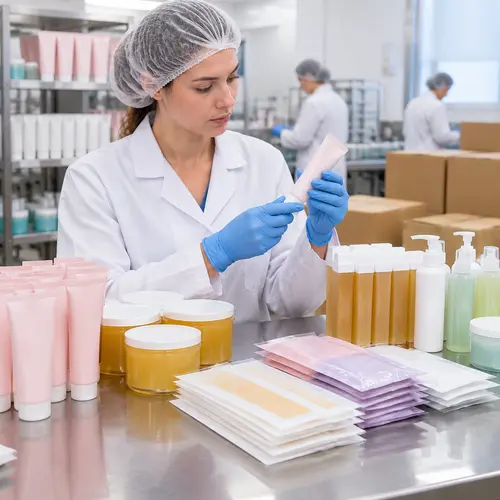
ODM Manufacturing Considerations
Once a private-label buyer selects a hair-removal product direction, the project should move through controlled confirmation points rather than informal approvals. A capable hair removal OEM manufacturer should document what is being approved, which variables may still change, and which tests must be repeated after a formula or package adjustment.
Sample Confirmation and Formula Customization
The first sample is a decision tool, not merely a presentation sample. Review the depilatory cream for spreadability, removal performance, residue, odor, rinse-off behavior, and post-use comfort. For wax and sugar wax, confirm softness, stringing, working temperature, hair grip, brittleness, and whether the material remains usable after repeated opening. Wax strips should be checked for even coating, clean release, and consistent adhesion across the strip surface.
Customization can involve fragrance level, color, botanical positioning, aftercare feel, wax hardness, cream texture, or the balance between quick removal and skin comfort. Each requested change should be recorded in a revision sheet. A turnkey base may shorten development, but the buyer should ask which characteristics are proprietary, which are standard, and whether the formula can be adjusted enough to create a recognizable market position.
Packaging Compatibility and Stability Review
Packaging approval should use production-intent components whenever possible. Check whether a depilatory cream tube resists formula interaction, whether a wax jar lid remains secure after warming and cooling, and whether a roll-on cartridge maintains a clean seal during handling. Inspect liners, closures, labels, and adhesive performance under expected bathroom humidity and transport conditions. Packaging deformation can create consumer complaints even when the formula itself remains acceptable.
Stability review should compare the product appearance, odor, viscosity, color, phase uniformity, closure condition, and label adhesion before and after storage exposure. For wax products, look for cracking, sweating, graininess, or a changed softening profile. For cream, check separation, thinning, swelling, and odor drift. A buyer should receive written observations and acceptance criteria instead of a simple statement that the product is stable.
MOQ, Cost Structure, and Production Planning
MOQ should be evaluated against the complete cost model, not only the unit price. Small initial runs may carry higher filling, setup, component, testing, and decoration costs. Ask for separate assumptions for formula, packaging, printing, assembly, inspection, and freight. This helps a DTC brand assess whether customer acquisition costs can be covered without overcommitting to inventory.
A practical plan may use a simpler label treatment, a stock container, or a limited scent range during the market test, followed by more customized packaging after demand is proven. The supplier should explain which components are reusable for a future run and which costs will recur. This is particularly important for wax strips, cartridge systems, and aftercare kits with multiple assembled components.
Labeling Documents and Shipment Conditions
Before release, request the ingredient list in the required naming format, batch coding information, product specifications, safety documentation, fragrance or allergen information where applicable, and packaging component details. The final label should match the approved formula and market claims. For European distribution, the EU Cosmetics Regulation framework provides the relevant regulatory context for cosmetic products, safety responsibility, labeling, and market placement.
Shipment planning should cover temperature exposure, pallet or carton protection, orientation, stacking limits, and the risk of leakage or deformation. Wax products may soften during transit, while cream tubes and roll-on cartridges may be damaged by compression. The buyer should approve the shipping configuration and receive a defined procedure for handling goods that arrive with broken seals, dented packaging, or visible formula changes.

Common Problems or Failure Cases
Wax brittleness: A hard wax or sugar wax can crack during application, break before removal, or leave fragments on the skin. This may result from an unsuitable hardness balance, moisture change, or storage exposure. Compare samples after normal handling and shipment simulation, not only immediately after filling.
Strip adhesion loss: Wax strips may lose grip when the coating is uneven, the backing absorbs oils, or the adhesive surface is affected by humidity. Inspect the first and last strips from several cartons, then test hair pickup and clean release after storage. A strip that performs well in the lab but fails after transport is not ready for approval.
Cream separation: Depilatory cream can show oil separation, watery leakage, thinning, or localized discoloration. Review filling temperature, mixing uniformity, preservative strategy, and compatibility with the tube or sachet. Do not approve a corrected formula until the revised sample has passed the agreed observation period.
Cartridge leakage: Roll-on wax cartridges can leak from the roller head, cap, seam, or internal fit. Test upright and horizontal storage, carton compression, repeated cap removal, and movement during shipment. Examine both the cartridge and the secondary packaging because a minor leak can contaminate labels and outer cartons.
Fragrance sensitivity: A pleasant scent can still increase irritation concerns for some users. Review fragrance concentration, declared allergens, intended body area, and available fragrance-free alternatives. Claims such as sensitive, natural, or clean should be supported by the formula record and appropriate documentation rather than marketing preference alone. Relevant peer-reviewed research indexed by PubMed/NCBI can help teams assess published evidence on irritation and cosmetic ingredients.
Packaging deformation: Tubes, lids, labels, and cartons may warp, wrinkle, loosen, or lose print quality under heat, cold, pressure, or humidity. Record the exact defect, affected component, storage condition, and corrective action. A supplier should distinguish a cosmetic appearance issue from a seal or contamination risk.
Supplier Checklist
Use the following checklist when evaluating a hair removal OEM manufacturer or ODM development partner:
- Can the supplier provide a clear sample revision record, approved specification, and retained reference sample?
- Are formula options available for depilatory cream, wax, sugar wax, strips, roll-on cartridges, and aftercare products within the intended market positioning?
- Does the supplier explain customization limits, standard base components, fragrance choices, and ownership of buyer-specific modifications?
- Has packaging compatibility been assessed with the actual tube, jar, strip pouch, cartridge, closure, label, and carton?
- Are storage observations documented for appearance, odor, viscosity, phase stability, leakage, seal condition, and label adhesion?
- Can the supplier provide ingredient, safety, labeling, batch, fragrance, and claim-support documents that match the approved formula?
- Are MOQ assumptions, recurring costs, component lead times, and sample charges stated separately?
- Is there a written shipment plan covering heat, cold, compression, orientation, and damage inspection?
- Can the supplier sign a practical NDA covering formulas, packaging concepts, brand plans, samples, and commercial information?
- For clean, cruelty-free, organic, or environmental claims, are the underlying standards, certificates, audits, and chain-of-custody records available for review?
FAQ
Can an Asian supplier comply with European clean beauty and cruelty-free requirements?
Yes, but location alone is not evidence of compliance. Ask for the applicable ingredient restrictions, animal-testing policy, supplier declarations, audit records, formulation review process, and claim-support documents. The buyer remains responsible for ensuring that the finished product and market claims meet the destination market requirements.
Will a low MOQ make the unit cost too high for a new brand?
It can. Smaller runs often spread setup, decoration, testing, and component costs across fewer units. Request a staged cost model and compare a stock package, reduced scent range, or simpler decoration with a fully customized option. The correct decision should consider landed cost, expected sell-through, and CAC rather than unit price alone.
Will a turnkey formula make my product look identical to other brands?
It may if the formula, fragrance, texture, packaging, and claims are left unchanged. Ask what can be customized and whether the supplier can create a documented variation in texture, scent, color, aftercare feel, wax behavior, or packaging presentation. A recognizable product position should be defined before final sample approval.
Can we sign a strict NDA before sharing our product concept?
Most professional suppliers should be willing to review an NDA. Define confidential information broadly enough to cover formulas, samples, packaging artwork, customer data, launch timing, and commercial plans. Also clarify permitted access inside the supplier organization, exclusions, duration, ownership of improvements, and remedies for unauthorized disclosure.
How can I verify that environmental packaging claims are genuine?
Request the material specification, recycled or bio-based content statement, certification where applicable, and evidence of the relevant supply chain. Avoid broad claims such as fully sustainable unless the scope is clearly defined. Confirm whether the claim applies to the tube, lid, pouch, carton, adhesive, or the entire assembled package.
What should happen if the approved product changes during shipment?
The purchase specification should define acceptable variation and the inspection process on arrival. Photograph damaged cartons and seals, record batch and shipping conditions, and compare the goods with the retained reference sample. The supplier should provide a root-cause review and corrective action rather than treating every complaint as a user-handling issue.
References