Direct Answer
Choose depilatory cream when your brand needs a low-friction home routine, broad DTC accessibility, and a product that customers can use without heating or learned technique. A well-developed private label depilatory cream can support body, sensitive-skin, and carefully positioned face variants while fitting tubes, pumps, or sachets designed for subscription, travel, and TikTok Shop fulfillment.
Choose wax when the brand story depends on a salon-inspired ritual, longer-lasting smoothness positioning, visual texture, or higher-value kits. Wax strips reduce preparation, while hot wax, sugar wax, and roll-on cartridges create stronger professional cues but introduce more variables around temperature, adhesion, leakage, and user technique.
Neither format is universally better. Cream usually offers the simpler consumer journey; wax often offers the more demonstrable ritual. The right decision comes from matching formula risk, packaging behavior, shipping conditions, audience skill level, and launch economics—not simply comparing hair-removal performance.
Key Takeaways for Private Label Buyers
- Start with the usage occasion: Cream suits fast shower routines; wax suits deliberate at-home or salon-style removal.
- Review the complete formula system: For cream, assess active performance, odor, viscosity, application time, and irritation risk. For wax, review melting behavior, spread, grip, residue, and removal comfort.
- Test the final package: A stable laboratory sample can still fail through tube swelling, cap leakage, cartridge seepage, strip delamination, or label damage.
- Include climate exposure: Heat and cold storage can alter cream viscosity, wax texture, strip adhesion, and roll-on flow.
- Define the sample scope: Confirm whether sampling includes fragrance, packaging compatibility, stability, artwork review, and documented revision rounds.
- Build compliance into development: Formula documentation, safety substantiation, label content, facility information, and market-specific files should progress alongside sampling.
Buyer Context
For an emerging hair-removal brand, format selection affects nearly every operational decision that follows. It influences the contract manufacturing process, packaging bill of materials, customer education burden, shipment configuration, claims strategy, and likelihood of negative reviews caused by misuse.
Depilatory cream is usually easier to explain in a short product page or social video: apply, wait according to the validated directions, remove, and rinse. That simplicity can support repeat purchase and make the category approachable for customers without waxing experience. The tradeoff is that the formula must balance effective removal with a controlled sensory profile. Odor, skin feel, application uniformity, and irritation-risk communication can shape market acceptance as much as raw efficacy.
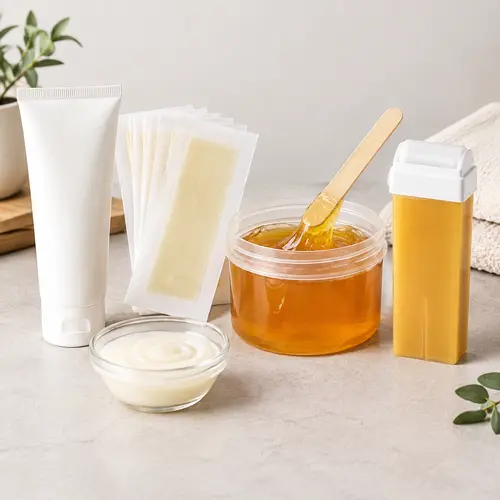
Wax creates a more tactile and visually expressive experience. The shine of hot wax, the pull of a strip, or the controlled flow of a roll-on cartridge can become part of the brand’s styling and content language. It can also support kits that combine preparation and after wax care products. However, performance depends more heavily on hair length, application thickness, temperature, pull direction, strip quality, and consumer confidence.
Within wax, the format matters. Pre-coated strips prioritize convenience but require adhesion-aging checks. Hot wax offers a professional ritual but needs clear heating instructions and a stable melting profile. Sugar wax may support a distinctive ingredient story, yet consistency and storage behavior still need validation. Roll-on wax improves application control but adds cartridge fit, roller movement, cap seal, and leakage checks.
This is why a buyer should evaluate formats through a portfolio lens rather than as isolated SKUs. A cream can anchor a simple body-removal range, while wax can support a premium kit architecture. A soothing lotion or private label hair inhibitor serum can extend either format into a more complete routine.
Regulatory readiness belongs in that same decision. Under the Modernization of Cosmetics Regulation Act of 2022, responsible persons must maintain adequate safety substantiation, while applicable facilities and products are subject to registration and listing requirements. ([fda.gov](https://www.fda.gov/cosmetics/cosmetics-laws-regulations/modernization-cosmetics-regulation-act-2022-mocra)) The FDA regulatory framework for cosmetics also places responsibility for product safety and proper labeling on the companies marketing cosmetics. ([fda.gov](https://www.fda.gov/cosmetics)) A buyer therefore needs more than a visually attractive sample; the launch file should connect the approved formula, final package, claims, directions, warnings, and responsible-party documentation.
Technical and Packaging Factors
Depilatory Cream: Control the Active System and User Experience
A depilatory cream should maintain an even texture that spreads without running and dispenses consistently throughout its shelf-life target. Ask the formulation team to define the approved viscosity window, appearance standard, odor profile, and active-ingredient specification. Testing should cover normal storage and heat-cold exposure in the final package, not only in a laboratory jar.
Packaging compatibility deserves particular attention because alkaline depilatory systems can interact with unsuitable components. Review the tube laminate or bottle resin, closure liner, pump pathway, printed decoration, and induction seal where used. During compatibility testing, look for paneling, swelling, stress cracking, discoloration, seepage, blocked dispensing, or changes in formula background odor.
Body and face positioning should not be treated as interchangeable. Application area, contact directions, warnings, and irritation review must correspond to the validated product. For sensitive positioning, examine the complete safety file and consumer-use protocol rather than relying on calming botanical ingredients alone. The FDA notes that cosmetics must be safe under labeled or customary conditions and properly labeled; its small-business cosmetics guidance also emphasizes the marketer’s legal responsibility for safety and labeling. ([fda.gov](https://www.fda.gov/cosmetics/resources-industry-cosmetics/small-businesses-homemade-cosmetics-fact-sheet)) Buyers developing a mild concept can compare available sensitive skin hair removal products before selecting the baseline formula.

Wax: Validate Thermal Behavior, Adhesion, and Delivery
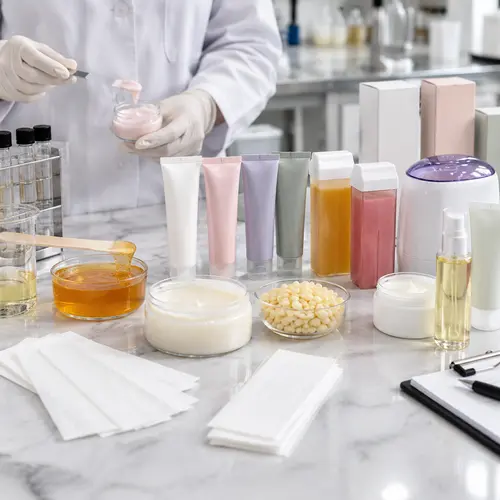
For hot wax or sugar wax, request a defined melting or working-temperature specification, spread test, set time, flexibility review, residue assessment, and pull-performance evaluation. A wax that looks smooth during sampling may become brittle in cold storage, overly fluid in heat, or inconsistent after repeated warming.
For wax strips, inspect the nonwoven or film backing, coating uniformity, release liner, edge cleanliness, and adhesion after aging. The pouch must protect the wax from drying, migration, dust, and fragrance loss. For roll-on formats, conduct upright, inverted, and side-storage leakage reviews, then confirm that the roller continues to rotate after temperature cycling.
These checks should appear in a documented hair removal manufacturing process that connects approved samples with filling parameters, in-process quality control, packaging inspection, and shipment release. Buyers comparing private label waxing products should also confirm what accessories are included, how kit components are sourced, and whether every element is tested as a finished retail configuration.

Decision Framework
| Factor | What to Check | Why It Matters | ODM Buyer Note |
|---|---|---|---|
| Consumer routine | Time, skill, heating, cleanup, and treatment area | Determines conversion, repeat use, and support burden | Cream is generally simpler; wax offers a stronger ritual |
| Formula performance | Cream viscosity and odor; wax spread, grip, residue, and working range | Visible performance drives reviews and retention | Approve measurable specifications, not appearance alone |
| Skin experience | Directions, warnings, irritation review, and aftercare | Misuse or poor positioning can create avoidable complaints | Evaluate hair removal product solutions by use area and audience |
| Packaging | Tube or pump compatibility, pouch barrier, strip backing, cartridge seal | The package protects formula stability and delivery accuracy | Test the decorated retail package, not a substitute component |
| Climate and shipment | Heat-cold exposure, leakage, texture recovery, and carton protection | Cross-border logistics can change product behavior | Align test conditions with target markets and fulfillment routes |
| Development scope | Sample rounds, documentation, artwork review, stability, and scale-up | Unclear scope creates delays and unexpected cost | Use defined hair removal OEM ODM services with written stage gates |
ODM Manufacturing Considerations
For a private label depilatory cream or wax project, the development agreement should define what constitutes an approved sample. Do not approve a formula based only on appearance or fragrance. Record the selected sample code, ingredient list, color, odor, application feel, removal performance, fill weight, primary container, and instructions for use. The approved sample should become the reference standard for the first commercial batch and future replenishment orders.
Customization can range from a light adjustment to an existing formula through a more extensive ODM development program. For depilatory cream, buyers may change fragrance, color, application time, sensory finish, or positioning for body or face use, subject to safety and regulatory review. Wax projects may involve resin selection, oil balance, fragrance, color, firmness, or salon-versus-home-use styling. Ask which changes require a new stability program, revised safety assessment, or additional sample rounds. A turnkey base does not have to look generic if the supplier can control the sensory profile, usage instructions, aftercare pairing, pack size, and visual identity.
Package selection should happen before formula approval is final. Components must be evaluated with the actual product rather than an unrelated background formula. For cream, confirm that the tube, bottle, cap, liner, seal, and printed decoration remain functional throughout the proposed shelf life. For wax strips, sugar wax, and roll-on formats, confirm that contact materials do not soften, lift, discolor, or transfer odor. The supplier should define inspection points and provide dated observations instead of a simple pass statement.
A stability review should cover the complete saleable configuration and identify the study duration, storage conditions, evaluation frequency, batch code, and acceptance criteria. Buyers should receive a summary showing whether appearance, odor, formula uniformity, pack integrity, net content, and application performance remained acceptable. When launch timing requires work to continue before long-term data are complete, the contract should state which results are available, which remain pending, and who carries the risk of ordering components early.
MOQ discussions should separate the minimums for formula preparation, printed packaging, cartons, applicators, and complete retail units. A low finished-product MOQ may still require the brand to purchase surplus decorated components. Request a cost model at two or three volume levels and include sampling, testing, artwork setup, freight, inspection, and storage. This gives the brand a more realistic contribution-margin view against customer acquisition cost rather than focusing only on unit price.
Before shipment, request the final ingredient declaration, batch record or certificate of analysis format, safety data documents where applicable, artwork confirmation, usage directions, warnings, lot coding method, and country-specific labeling inputs. For the United States, clarify which party is the responsible person and how facility registration, product listing, safety substantiation records, and adverse-event procedures will be handled under the Modernization of Cosmetics Regulation Act of 2022. FDA states that covered facilities generally must register and renew every two years, while responsible persons generally must list marketed cosmetic products and maintain adequate safety substantiation records. ([fda.gov](https://www.fda.gov/cosmetics/cosmetics-laws-regulations/modernization-cosmetics-regulation-act-2022-mocra))
Shipment terms should identify carton configuration, pallet requirements, temperature precautions, leakage controls, inspection timing, and responsibility for damaged or nonconforming goods. Brands selling through marketplaces should also screen each cream, wax, fragrance, or aftercare SKU against the platform’s dangerous-goods process before inventory arrives.
Common Problems or Failure Cases
Wax becomes brittle or breaks during removal. This can result from an unsuitable resin balance, excessive cooling, thin application, or storage conditions outside the intended range. Approve performance across realistic room conditions and define whether the product is designed for salon heaters, microwavable use, strips, or direct removal.
Wax strips lose adhesion. Common warning signs include edge lifting, reduced grip, oil migration, or uneven coating transfer. Confirm that the approved strip substrate, wax loading, pouch material, and sealing settings match the sample. A supplier should investigate the substrate and process together rather than attempting to solve every complaint by adding more adhesive material.
Depilatory cream separates or changes consistency. Separation, surface liquid, graininess, or unusual odor may indicate an unstable emulsion, raw-material variation, unsuitable processing, or interaction with the container. Compare the retained batch sample with the approved reference and review manufacturing records before releasing affected inventory.
Roll-on cartridges leak or deform. Leakage may originate at the roller fit, neck finish, seal, cap, or filling parameters. Deformation can occur when the component specification does not suit the formula or distribution environment. The corrective action should identify the exact failure location and include component measurements, fill temperature, torque settings, and shipping observations.
Fragrance causes unexpected sensitivity complaints. A scent that performs well in a wash-off background product may not be appropriate for a hair-removal formula. Review the fragrance level, intended application area, directions, warning language, and available safety documentation. A fragrance-free version may be commercially useful, but it still requires an honest odor assessment because depilatory actives can have a noticeable base smell.
Packaging decoration deteriorates. Ink smearing, label lifting, tube-panel distortion, and pouch delamination can damage consumer trust even when the formula remains usable. Include decorated components in development samples and require the supplier to approve the final artwork process, not merely an undecorated container.
Supplier Checklist
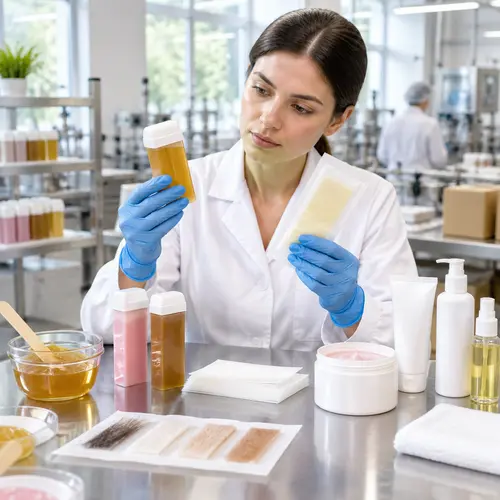
- Confirm the facility scope, relevant cosmetic manufacturing certifications, audit dates, certificate owners, and issuing bodies.
- Request a written development plan covering sample rounds, change control, approval records, test responsibilities, and target timelines.
- Define separate minimums and lead times for formula, primary packaging, printed cartons, applicators, wax strips, and aftercare items.
- Review the approved ingredient list, restricted-substance controls, fragrance documentation, cruelty-free policy, and raw-material traceability.
- Require clear acceptance criteria for appearance, odor, uniformity, removal performance, pack integrity, fill weight, and coding.
- Verify support for US MoCRA records, EU or UK documentation when relevant, and label review for each target market, including Japanese-language projects.
- Confirm shipment configuration, inspection rights, retained samples, complaint handling, replacement terms, and recall cooperation in the manufacturing contract.
- Ask whether the facility can provide an expedited transfer path if a previous supplier fails or reaches a capacity bottleneck, including sample replication and component sourcing steps.
Buyers can also compare the supplier’s hair-removal product categories, OEM/ODM development process, and manufacturing process before selecting a technical route.
FAQ
Can an Asian manufacturing facility follow US and European clean-beauty and cruelty-free expectations?
Location alone does not prove or disprove compliance. Ask for current certifications, audit scope, ingredient policies, supplier declarations, animal-testing statements, and market-specific restricted-substance controls. Because clean beauty has no single universal definition, place your brand’s prohibited-material list and evidence requirements in the contract.
Will a low MOQ make the unit cost too high to support customer acquisition cost?
It can, especially when decorated packaging, testing, setup, and freight are spread across few units. Compare contribution margin at several quantities and calculate excess-component exposure. A slightly larger run may improve economics, but only if demand and storage life justify the inventory.
Will a turnkey formula make the brand look identical to competitors?
Not necessarily. Differentiation can come from fragrance strategy, texture, application instructions, pack format, aftercare pairing, target area, claims discipline, and brand styling. Ask which formula elements are exclusive, adjustable, or shared, and document the agreed variation in the sample approval record.
How many samples should be approved before placing an order?
There is no universal number. Approve enough rounds to lock the formula, fragrance, color, performance, component system, fill presentation, and artwork execution. The final signed sample should match the exact commercial configuration rather than a laboratory jar or temporary package.
Which labeling documents should the supplier provide?
Request the ingredient declaration, net-content details, directions, warnings, business-name requirements, lot-code format, shelf-life basis, and supporting safety information. FDA notes that cosmetics must be safe under labeled or customary use and properly labeled; cosmetic labeling is generally the responsible company’s obligation rather than a premarket FDA approval process. ([fda.gov](https://www.fda.gov/cosmetics/resources-industry-cosmetics/small-businesses-homemade-cosmetics-fact-sheet))
How quickly can a replacement supplier take over an urgent hair-removal project?
Speed depends on whether the existing formula, component specifications, artwork, and test records are transferable. A credible expedited plan identifies what can be matched immediately, what needs new sampling, and which checks cannot be skipped. Treat very fast sample promises as targets that require a written scope, not as proof of readiness.