Direct Answer
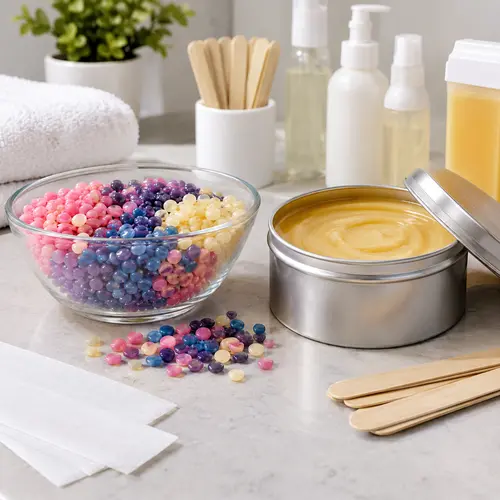
In the hard wax vs soft wax decision, the right format depends less on trend and more on body area, application method, and the experience your brand promises. Hard wax beads are usually the stronger choice for bikini lines, underarms, facial areas, and creator-led products where colorful melting beads and a stripless pull create compelling video. Soft wax tins are better suited to legs, arms, backs, and salon workflows that prioritize thin spreading, fast coverage, and lower product use per large-area service.
For a private label launch, hard wax offers stronger visual differentiation and simpler kit styling because removal strips are optional. Soft wax can support a more professional, efficiency-led position, but it requires compatible strips, applicators, and residue-removal products. Neither format is automatically safer or better. The winning SKU is the one tested as a complete system: wax, warmer, applicator, container, storage conditions, labeling, and aftercare.
Brands comparing formats can begin with a specialized hair removal OEM manufacturer rather than selecting wax solely from a catalog.
Key Takeaways for Private Label Buyers
- Choose by use case. Hard wax is optimized for smaller or sensitive areas; soft wax is efficient across larger, flatter areas.
- Test the removal system. Review bead melt behavior, soft wax spread, working time, hair hold, residue, and breakage using the intended warmer and applicator.
- Treat packaging as functional. Bead pouches need reliable seals and moisture control. Tins need heat resistance, seam integrity, clean pouring, and dent protection.
- Review irritation risk early. Compare fragrance, colorants, resin system, application temperature, repeat-pass guidance, and the proposed after wax care products.
- Sample the full kit. Approve the wax together with strips, spatulas, warmer instructions, cartons, labels, and shipment configuration.
- Plan beyond the pilot. Confirm that a 1,000-unit test run can move into larger production without changing texture, color, packaging materials, or approved performance.
Buyer Context
Wax is not one generic hair-removal category. A hard bead pouch, a professional soft wax tin, a sugar wax jar, and a roll-on cartridge create different application rituals, cost structures, shipping risks, and content opportunities. That distinction matters for overseas creator brands because the product must work on camera, survive fulfillment, and remain intuitive for customers who may never have visited a salon.
Hard wax beads have a natural visual advantage. Colorful beans pouring into a warmer, a smooth melt, and a flexible strip lifting from the skin can become the product demonstration. This makes hard wax attractive for TikTok Shop launches, creator tutorials, starter kits, and limited-edition colors. The tradeoff is technique sensitivity. If the melt is too cool, application may become thick and uneven. If it is overheated, the user experience and safety margin deteriorate. A brittle formula may crack during removal, while an overly elastic formula can stretch without releasing cleanly.
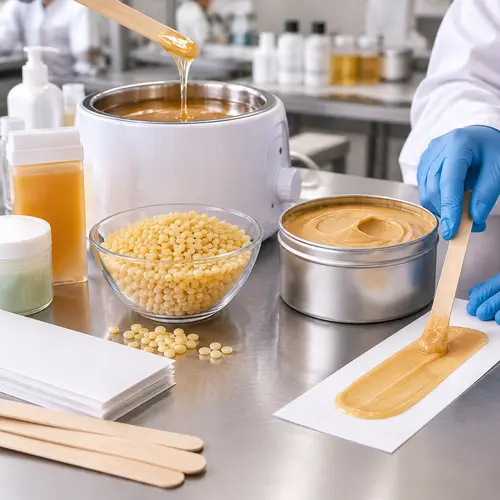
Soft wax tins create a different proposition. The texture is applied in a thin layer and removed with a fabric or nonwoven strip. This can be faster for legs, arms, backs, and chest areas, but the brand must manage more components. Strip quality, applicator width, warmer compatibility, residue-removal oil, and repeat-pass instructions all affect the outcome. Consumer guidance commonly distinguishes hard wax as better suited to smaller sensitive areas and soft wax as more efficient on large areas. ([healthline.com](https://www.healthline.com/health/soft-wax-vs-hard-wax))
A portfolio decision should also consider adjacent formats. A buyer might pair hard wax with a calming gel, position soft wax inside a salon-size kit, add private label depilatory cream for customers who do not want waxing, or build a broader routine through waxing product solutions. The objective is not to force one formula across every consumer need. It is to give each SKU a clear job.
Technical and Packaging Factors
Texture and Working Window
For hard wax, request samples that show bead uniformity, melt speed, spread thickness, set time, flexibility, edge lift, and resistance to snapping. A consumer source describes warming hard wax to around 130°F, but an ODM buyer should never treat one public figure as a universal specification. The approved range must come from the exact formula, intended warmer, fill weight, and directions for use. Soft wax review should focus on viscosity, thin-film spread, strip adhesion, residue, stringing, and temperature stability during repeated salon use.
Ask the supplier to demonstrate each candidate on fine, medium, and coarse hair. A formula that performs well on one model may miss short or stubborn hair on another. Review first-pass removal and the visible skin response rather than judging only whether the wax looks smooth in a jar.
Container and Closure
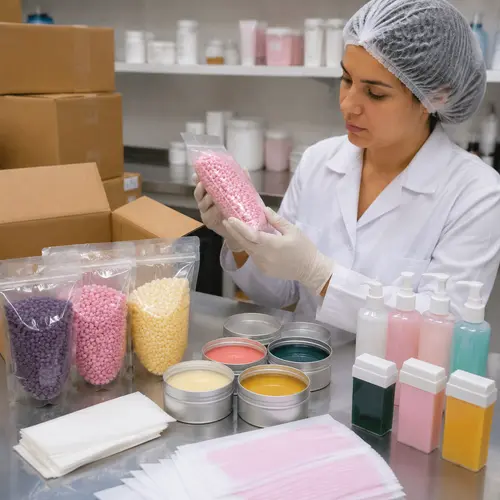
Hard wax beads are commonly packed in stand-up pouches, jars, or refill bags. Check seal strength, zipper alignment, bead dust, puncture resistance, and whether the package remains easy to pour after heat and cold exposure. Transparent windows can improve shelf impact, but they also expose color variation and bead breakage.
Soft wax tins require a different packaging review. Confirm the tin coating, lid fit, seam quality, warmer dimensions, and resistance to dents or leakage. Test whether wax migrates around the lid after warm storage. For roll-on products, add cartridge fit, roller movement, cap retention, and leakage orientation checks. These steps should sit inside the documented hair removal manufacturing process, not appear only after the first shipment problem.
Storage, Shipment, and Market Readiness
Wax behavior can shift during ocean freight, last-mile delivery, or storage near a warm fulfillment center wall. Request heat and cold review on the finished pack, followed by a room-temperature recovery check. Look for oil separation, surface sweating, color movement, fragrance change, bead clumping, tin leakage, label lifting, and carton deformation. Shipment testing should use the final case count and dividers, not an unprinted sample container.
Market documentation should be scoped before artwork approval. Ingredient naming, warnings, directions, responsible-party details, batch coding, and language requirements vary by destination. Brands entering Gulf markets should verify current requirements through the UAE MoIAT industrial standards and the Saudi FDA cosmetic registration requirements. For broader safety positioning, public education from Healthline on soft wax and hard wax can help buyer teams understand consumer-facing distinctions, while final claims should remain specific to the approved SKU.
A responsive ODM should be able to issue initial samples in approximately seven days when an existing base is selected, provide a transparent BOM for wax, primary pack, accessories, and carton, and define what changes after pilot approval. Review these items through structured hair removal OEM ODM services, then use the get a private label sample process to compare options under the same brief.
Decision Framework
| Factor | What to Check | Why It Matters | ODM Buyer Note |
|---|---|---|---|
| Target area | Sensitive zones versus large flat areas | Determines application speed and removal method | Hard wax usually fits precision areas; soft wax favors broad coverage |
| Texture | Melt, viscosity, spread, set time, flexibility, residue | Controls ease of use and visible finish | Approve with the actual warmer and applicator |
| Hair performance | Fine, short, medium, and coarse hair removal | One attractive sample may not cover the full market | Record first-pass results for each sample |
| Packaging | Pouch seals, tin seams, lid fit, dents, and leakage | Wax can move or soften during shipment | Test decorated production-equivalent packs |
| User system | Strips, spatulas, pre-care, aftercare, and directions | Accessories change the final customer outcome | Evaluate the kit rather than wax alone |
| Launch path | MOQ, sample scope, BOM, timeline, and scale plan | Prevents changes between pilot and repeat orders | Use private label waxing products as the product-development scope |
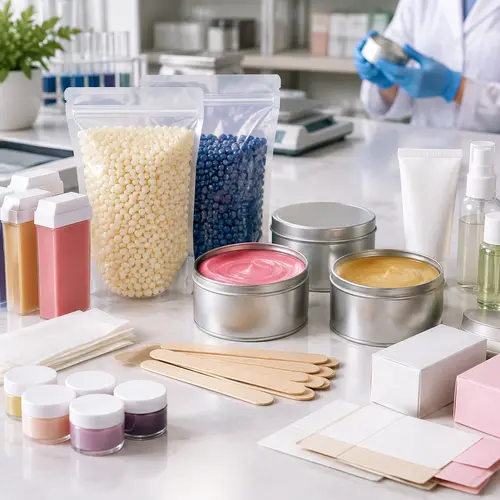
Before selecting either format, request two or three formula bases, test them in realistic content and user scenarios, and document the approved texture, color, pack, accessories, and shipment conditions. Additional hair removal product guides can support the brief, while sensitive skin hair removal products provide useful context when irritation-conscious positioning is central to the launch.
ODM Manufacturing Considerations
In a hard wax vs soft wax private label program, approval should be based on a complete product system rather than a visually appealing sample alone. The confirmed sample must define the target color, fragrance, texture, application behavior, removal performance, and finish. Buyers should sign off on a coded reference sample and retain a sealed unit so later production batches can be compared against the same standard.
Customization should begin with a written product brief covering intended body areas, user experience, hair type, brand positioning, fragrance limits, color direction, and desired content appearance. Hard wax beads, sometimes marketed as wax beans, may need adjustments to flexibility, setting speed, surface shine, and low-temperature handling. Soft wax tins may require control of spreadability, strip pickup, residue, and hold across the intended working range. If dramatic styling is important for social content, request video samples under normal studio lighting instead of approving color from a phone photo.
Packaging compatibility should be confirmed before artwork is finalized. For beads, review pouch film, zipper performance, fill weight tolerance, and whether the wax blocks together during storage. For tins, confirm coating compatibility, lid fit, rim cleanliness, and resistance to denting. Depilatory cream tubes, sugar wax jars, and roll-on wax cartridges require separate pack evaluations because their closure systems and product flow behave differently. Buyers can review related formats through the hair-removal product range and compare development steps through the OEM/ODM services overview.
Stability review should include appearance, odor, texture, package condition, and application performance at defined checkpoints. The supplier should document acceptance limits rather than reporting only that a sample passed. For irritation-risk review, ask how raw materials are screened, how fragrance levels are controlled, how retained samples are stored, and how complaints can be traced to a batch.
MOQ discussions should separate formula MOQ, packaging MOQ, printed component MOQ, and shipping carton MOQ. A transparent quotation should show the bill of materials, decoration costs, testing charges, tooling if applicable, freight assumptions, and potential overrun quantities. This prevents a low initial unit price from becoming misleading after custom tins, pouches, labels, spatulas, strips, or aftercare items are added.
Labeling documents normally include the ingredient list, product identity, net contents, directions, warnings, batch coding plan, shelf-life statement, and responsible-party information required by the destination market. Market-specific artwork should be reviewed before printing. For example, Saudi guidance requires clear label artwork and product images during cosmetic product notification, while UAE product entry may require conformity documentation and supporting test records. Shipment instructions should also state carton strength, pallet configuration, storage limits, loading method, and whether hot-season routing needs extra protection.
Common Problems or Failure Cases
Hard wax becomes brittle during removal. This can result from an unsuitable flexibility target, excessive setting before removal, a layer that is too thin, or storage conditions that changed the product. The buyer should define an acceptable bend and pull behavior using the approved sample instead of relying on a general description such as flexible.
Soft wax loses strip adhesion. Possible causes include incorrect application thickness, surface contamination, a mismatch between wax and strip material, or viscosity drift during use. Soft wax is designed to be removed with a strip, while hard wax sets for strip-free removal, so instructions and accessory selection must match the format. This basic use distinction is also summarized by Healthline’s hard and soft wax comparison.
Depilatory cream separates or changes color. Separation, odor change, or uneven flow may indicate that the formula, tube, storage condition, or filling process needs investigation. Production should not proceed until the supplier identifies the cause and confirms an acceptance standard for appearance and dispensing.
Roll-on cartridges leak or dispense unevenly. Common contributors include poor roller fit, excess fill, cap pressure, product trapped around the neck, or deformation during warm storage. Buyers should approve the assembled cartridge, not only the bulk wax.
Fragrance creates avoidable sensitivity complaints. A fragrance that performs well in a jar may feel too strong when warmed or applied over a larger area. Request fragrance-level options, review the allergen declaration where applicable, and avoid masking base odor with unnecessarily high perfume loading.
Packaging deforms in transit. Thin pouches may crease or puncture, tins may dent, and plastic parts may warp under stacked weight or heat. A low-cost package that arrives damaged can undermine a premium cosmetics position even when the wax performs correctly.

Supplier Checklist
- Confirm experience with hard wax beads, soft wax tins, sugar wax, depilatory cream, cartridges, strips, and aftercare where relevant.
- Request a written sample specification covering color, fragrance, texture, use temperature, application, removal, residue, and finish.
- Verify how custom ideas, artwork, formulas, and project files are access-controlled and whether confidentiality terms cover subcontractors.
- Ask for batch records, raw-material traceability, retained-sample practices, complaint handling, and corrective-action examples.
- Review packaging component specifications, fill tolerances, closure fit, coding position, carton design, and storage instructions.
- Require a clear BOM quotation with formula, packaging, printing, testing, assembly, accessories, freight assumptions, and possible extra charges separated.
- Check the formula MOQ and every component MOQ before approving a custom design.
- Confirm which labeling files, ingredient documents, safety records, and destination-market support documents are included.
- Ask for available production capacity, peak-season lead-time rules, material reservation options, and the process for urgent repeat orders.
- Evaluate whether the project contact can translate marketing goals such as camera-visible stretch, bold color, matte finish, or clean removal into measurable sample criteria.
FAQ
How can I reduce the risk of a factory copying my concept or formula?
Use a mutual confidentiality agreement, define ownership of custom work in the manufacturing contract, limit access to project files, and ask whether similar formulas remain available to other buyers. Keep dated briefs, sample codes, artwork files, and written approvals. Absolute secrecy cannot be guaranteed, but clear ownership terms and document control materially reduce ambiguity.
Can the factory make the wax texture and color look dramatic on camera?
Yes, but visual goals must become sample criteria. Provide lighting references, target color values, desired stretch or snap behavior, preferred shine or matte finish, and example application thickness. Request unedited video from multiple lighting conditions before approving the master sample.
Can quality controls guarantee that no customer will have a bad reaction?
No supplier can promise zero reactions. Buyers should instead verify ingredient screening, fragrance controls, contamination prevention, batch traceability, retained samples, clear warnings, use directions, and a documented complaint process. The brand should also avoid exaggerated safety claims and ensure the product is used only on suitable, intact skin.
What if I do not understand technical ingredient language?
A capable project manager should convert brand goals into measurable product requirements and explain tradeoffs in plain English. Ask for a one-page brief showing what each requested change affects, such as color stability, fragrance intensity, setting time, residue, cost, or packaging choice.
What happens if social media demand suddenly increases?
Ask the supplier to disclose monthly capacity, current utilization, material lead times, and how production slots are allocated. Discuss reorder forecasts, packaging reservations, backup component options, and staged releases before launch. Do not assume an approved sample automatically guarantees immediate high-volume production.
Should hard wax and soft wax use the same private label packaging strategy?
No. Hard wax beads usually favor resealable pouches or containers that support clean pouring and storage. Soft wax commonly uses tins or jars compatible with warming and repeated salon use. The package should follow the product’s working behavior, target channel, shipment conditions, and user instructions.
References
- Healthline: Soft Wax vs Hard Wax — general differences in strip use, application areas, and removal behavior.
- UAE Ministry of Industry and Advanced Technology: Product Conformity Services — conformity applications and supporting documentation for regulated products.
- Saudi Food and Drug Authority: Cosmetic Product Notification Guidance — label artwork and product notification documentation.