Direct Answer
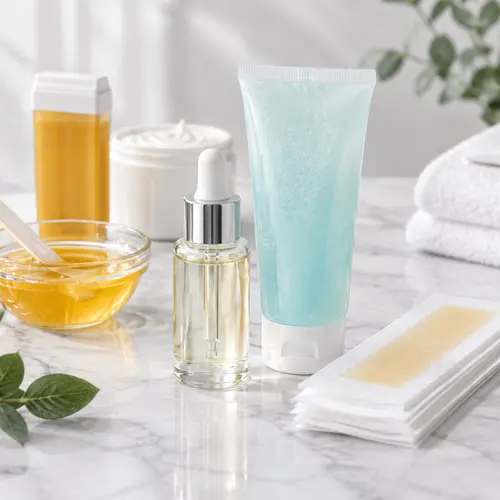
The practical difference in hair inhibitor serum vs post depilatory care is not simply one ingredient list versus another. A hair inhibitor serum is positioned as a repeat-use product intended to support a smoother-looking result and reduce the appearance of rapid regrowth over time. Post depilatory care is designed for the immediate recovery window after waxing, sugar wax, wax strips, or depilatory cream, with priorities such as comfort, hydration, and reduced visible redness.
The formulas can overlap. Both may contain humectants, soothing botanical extracts, panthenol, allantoin, or bisabolol. The distinction comes from the primary performance target, directions, claim language, texture, and validation plan. Buyers developing a private label hair inhibitor serum therefore need a different claim and testing strategy from buyers sourcing after wax care products. Combining both functions is possible, but the product must remain comfortable on freshly treated skin and avoid unsupported anti-regrowth claims.
Key Takeaways for Private Label Buyers
- Define the routine role first. Decide whether the SKU provides immediate post-removal comfort, supports a longer-term routine, or carefully combines both.
- Review claims before finalizing actives. In the United States, product positioning and intended use matter under the FDA’s regulatory framework for cosmetics. Hair-growth language requires more caution than general smoothing or conditioning language.
- Match texture to the treated area. A fast-absorbing face serum, cooling body gel, and richer after-wax lotion should not share one viscosity specification by default.
- Test the complete package. Evaluate pump output, dropper control, tube recovery, leakage, label adhesion, and formula contact with seals under heat and cold storage.
- Request substantiation files. Stability, preservative efficacy, safety review, ingredient documentation, and claim support should be defined before artwork approval.
- Plan the launch as a system. A serum can accompany wax strips, roll-on wax, sugar wax, or private label depilatory cream, but directions must explain when and how each product is used.
Buyer Context
Hair removal creates an unusual formulation challenge: the aftercare product is often applied when the skin feels more reactive than it did before removal. Waxing and sugar wax mechanically pull hair from the follicle, while depilatory cream chemically breaks down exposed hair. Even when the removal product performs as intended, friction, residue, repeated passes, excessive wax temperature, or longer-than-directed cream contact can affect the user experience.
This makes routine architecture commercially important. A soothing gel is expected to feel useful immediately. A hair inhibitor serum asks the customer to continue using it between removal sessions, so sensory elegance and clear instructions influence repeat use. If a brand labels an ordinary calming serum as a growth inhibitor without adequate evidence, it creates regulatory and reputation risk. The Modernization of Cosmetics Regulation Act of 2022 also reinforces the need for responsible-person records, safety substantiation, facility compliance, and adverse-event readiness for products marketed in the United States.
Format matters as much as positioning. Wax-strip kits may need a compact sachet or travel-size tube. Salons may prefer a controlled pump. DTC brands may choose an airless serum bottle for cleaner dispensing and stronger visual merchandising. Buyers should review these options alongside the broader private label waxing products range rather than treating aftercare as an unrelated add-on.
Clean Beauty, Vegan, and Cruelty-Free requirements also need precise documentation. A raw material carrying an approved natural-origin credential does not automatically certify the finished cosmetic. If certification is part of the market strategy, review the scope of Ecocert organic and natural cosmetic certification, supplier declarations, processing aids, fragrance components, and packaging statements before printing claims.
Technical and Packaging Factors
Formula Architecture and Skin Feel
A hair inhibitor serum usually benefits from a light, spreadable base that dries without tack because it may be used repeatedly across legs, underarms, or the face. Candidate ingredients may include humectants, skin-conditioning agents, soothing extracts, and brand-specific botanical complexes. The ODM should separate the ingredient story from the measurable claim: the presence of a plant extract alone does not demonstrate slower visible regrowth.
Post depilatory care is optimized around immediate tolerance. Cooling gels and lightweight lotions often prioritize slip, hydration, and reduced friction. Strong fragrance, high alcohol content, aggressive exfoliating acids, or unnecessarily intense cooling agents can be uncomfortable on freshly treated skin. For reactive-skin positioning, compare the aftercare formula with the removal step through a documented irritation-risk review and relevant low irritation hair removal products guidance.
Specification and Stability Controls
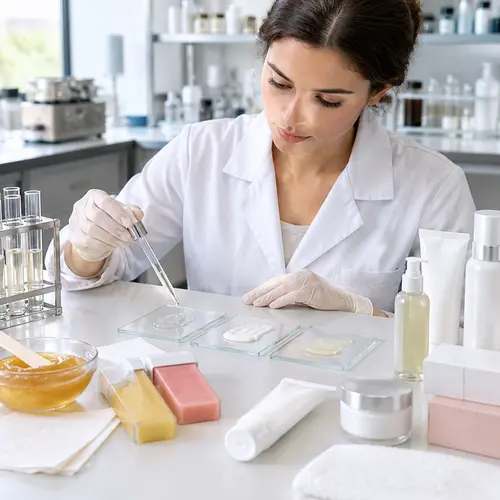
Do not approve a sample based only on its first-day appearance. Request a target pH specification, viscosity range with a defined test method, color and odor limits, microbiological criteria, and fill-weight tolerance. Heat, cold, room-temperature, and cycling studies should assess separation, sedimentation, viscosity drift, odor change, discoloration, and package distortion. The protocol should reflect expected shipment conditions rather than relying on a generic stability statement.
Compatibility testing should use the actual bottle, tube, sachet, pump, cap, liner, and decoration. Thin serum may leak through a closure that performs well with a cream. Botanical color can migrate into some plastics, while oils or solvents may affect seals, printed coatings, or label adhesive. For kit formats, confirm that the aftercare pack does not stain wax-strip envelopes or soften adjacent components.
Safety, Claims, and Manufacturing Handoff
The buyer file should include the ingredient list, raw-material documentation, safety assessment inputs, preservative efficacy results where applicable, stability records, and market-specific labeling support. A cosmetic formulation should not inherit medical or permanent hair-growth claims simply because a competitor uses them. Final wording needs jurisdiction-specific review.
Sampling should also represent the intended production formula and package. PZIK programs can begin with 1,000-unit pilots under ISO 22716 protocols and are structured to compress a conventional 90-day formulation-to-shelf cycle to under 30 days. That speed is useful only when the approved sample, specifications, raw materials, and filling method remain aligned during scale-up. Buyers can map these checkpoints through the hair removal manufacturing process and broader custom hair removal product development pathway.

Decision Framework Table
| Factor | What to Check | Why It Matters | ODM Buyer Note |
|---|---|---|---|
| Primary role | Immediate soothing, ongoing serum use, or a combined routine | Controls the formula brief, claims, and directions | Approve one primary promise before selecting actives |
| Texture | Spread, absorption, tack, residue, and pumpability | Repeat-use serum and recovery gel have different sensory needs | Review samples on the intended face or body area |
| Skin tolerance | Fragrance, alcohol, acids, cooling agents, and known sensitizers | Freshly treated skin may respond differently | Assess the removal and aftercare products as one routine |
| Claim support | Test design, ingredient evidence, and jurisdictional wording | Anti-regrowth language can change regulatory exposure | Do not rely on supplier brochures as finished-product proof |
| Package compatibility | Leakage, seal integrity, pump output, label adhesion, and staining | Formula-package interaction may appear during storage or shipping | Test decorated components from the intended supplier |
| Launch readiness | Samples, stability status, safety files, artwork, and shipment conditions | Parallel work reduces delay without skipping controls | Use a written sample scope before submitting a hair removal product RFQ |
ODM Manufacturing Considerations
In the hair inhibitor serum vs post depilatory care decision, buyers should evaluate more than ingredient lists. Sampling must establish a measurable product standard, while packaging, documentation, order structure, and transport conditions determine whether that standard survives commercial production. An urgent replacement project after a supplier disruption also requires verified component availability and realistic production capacity.
Sample Confirmation and Formula Customization
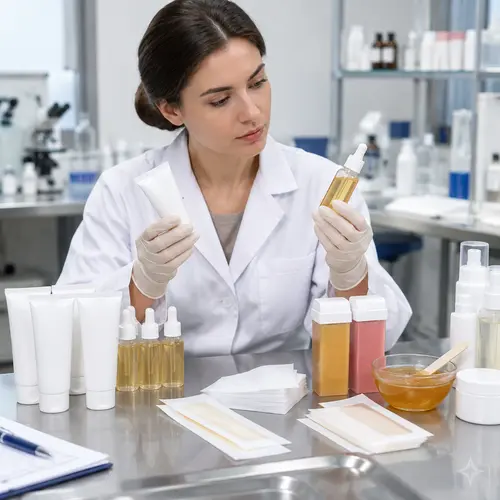
Approve a retained reference sample rather than relying on a general description. Record appearance, aroma, pH, viscosity range, spreadability, absorption, and residue. For wax or sugar wax, include working temperature, melting behavior, grip, and brittleness. For depilatory cream, assess application uniformity, removal performance, rinse-off, and skin feel. Testing should represent intended areas such as the legs, underarms, or face where appropriate.
Customization can include fragrance level, sensory profile, botanical ingredients, color, or the balance between soothing and anti-regrowth positioning. A ready formula does not have to look generic if the supplier can create meaningful sensory and ingredient distinctions. If a brand story depends on a specialty imported plant oil, request origin records, specifications, and certificates of analysis. Any material change may affect preservation, color, odor, viscosity, and claim support.
Package and Stability Alignment
Evaluate the formula in the intended commercial package, not only in laboratory jars. Depilatory cream can interact with tube linings or dispensing components. Wax-strip formulas may migrate into the pouch or lose tack when barrier performance is inadequate. Roll-on wax cartridges require correct roller fit, seal compression, fill level, and room for thermal expansion. Filled samples should undergo storage at defined temperature extremes, inversion, vibration, and simulated distribution handling.
A written stability plan should track pH, viscosity, phase integrity, odor, color, microbial quality, net content, and dispensing performance at scheduled intervals. Wax formats also need softening, cracking, peel, and residue checks. Acceptance limits should be agreed before the buyer signs the sample, with responsibilities documented in the customization workflow and manufacturing process.
MOQ, Documents, and Shipment Conditions
Ask for separate minimums for formula filling, printed components, cartons, and specialized applicators. At a lower MOQ, unit economics may be driven more by setup, testing, decoration, and component purchasing than by formula cost. Compare landed cost against expected contribution margin and customer acquisition cost rather than comparing filling prices alone.
The technical file should include the approved ingredient declaration, specifications, certificates of analysis, safety data where applicable, batch-coding format, artwork approval, allergen information, claim support, and market-specific label responsibilities. Cosmetic classification depends partly on intended use and claims under the FDA’s regulatory framework for cosmetics. Shipment instructions should define case orientation, pallet protection, acceptable transit temperatures, and controls for hot-weather routes that could soften wax, distort cartridges, or weaken strip performance.
Common Problems or Failure Cases
- Wax becomes brittle: Hard wax may crack because of resin balance, insufficient flexibility, aging, or low application temperature. Confirm the working-temperature window and perform repeated bend, spread, and removal trials.
- Wax strips lose adhesion: Oil migration, humidity, unsuitable nonwoven material, or a weak pouch barrier can reduce grip. Test aged strips on the intended hair-removal area and examine the pouch for staining or delamination.
- Depilatory cream separates: Emulsion stress may produce watery discharge, graininess, or uneven active distribution. Review pH, viscosity, fill temperature, ingredient addition order, and performance after accelerated storage.
- Roll-on cartridges leak: Incorrect roller tolerances, excessive fill, thermal expansion, or seal incompatibility can cause seepage during transit. Inspect upright, inverted, and vibration-conditioned units before approval.
- Fragrance causes discomfort: Recently depilated skin can be more sensitive to fragrance and certain botanical ingredients. Consider a low-fragrance or fragrance-free aftercare option, review listed allergens, and provide clear use directions.
- Packaging deforms: Heat or formula contact may warp a cartridge, soften a cap, or damage a printed pouch. Corrective action may require a material change, reduced headspace pressure, stronger secondary packing, or revised shipping conditions.

Supplier Checklist
- Confirm experience with the relevant hair-removal product formats, not cosmetics in general.
- Define texture, pH, viscosity, wax melting behavior, application temperature, fragrance, color, residue, and removal criteria.
- Request an irritation-risk review covering intended use area, contact time, fragrance allergens, and post-removal skin condition.
- Approve filled samples using the final cartridge, tube, pouch, bottle, strip substrate, or applicator.
- Review stability protocols, microbiological controls, package interaction results, and documented acceptance limits.
- Separate formula MOQ from component, printing, and carton commitments.
- Verify ingredient records, batch traceability, specifications, label documents, claim evidence, and change-control procedures.
- Confirm transit limits, carton configuration, route risks, and handling requirements for temperature-sensitive wax.
- For replacement sourcing, verify raw-material availability, component lead times, line capacity, and the process for transferring specifications.
FAQ
Can an Asian manufacturer genuinely meet Western clean beauty and cruelty-free expectations?
Yes, but geography is not evidence. Clean beauty has no single universal legal definition, so provide a written restricted-ingredient policy for the target market. Audit manufacturing records, ingredient declarations, supplier statements, animal-testing policies, and traceability. If certified natural or organic positioning is required, verify the precise product and facility scope against Ecocert organic and natural cosmetic certification rather than treating a logo as general proof.
Will a low MOQ make the unit price impossible to support against CAC?
It can if custom components, decoration, and testing costs are spread across too few units. Model landed cost, fulfillment, expected conversion, returns, and CAC before approval. A standard container with customized formula and artwork may preserve differentiation while reducing component commitments.
Will turnkey or ready-base formulations make the product identical to competing brands?
Not necessarily. Ask which parts of the base are fixed and which can be changed without destabilizing it. Differentiation can come from verified specialty ingredients, fragrance strategy, viscosity, absorption, residue, applicator choice, regimen design, and supported claims. Require exclusivity terms if a distinctive formula modification is commercially important.
What documents should be available before artwork is finalized?
Request the ingredient declaration, usage instructions, warnings, net-content format, responsible-party details, country-of-origin information, batch-code location, allergen data, and evidence supporting cosmetic claims. Regulatory responsibilities should be allocated in the manufacturing contract.
Can a hair inhibitor serum claim permanent hair reduction?
Such wording can change the regulatory interpretation of the product and demands strong evidence. Conservative cosmetic positioning usually focuses on the appearance or feel of regrowth and post-removal skin conditioning. Have claims reviewed for every destination market before labels are printed.
How should wax products be prepared for summer shipment?
Define a maximum transit-temperature exposure, confirm cartridge and pouch performance after heat conditioning, use protective case packing, and consider route timing or temperature-managed transport. Shipment approval should be based on filled-package evidence rather than assumptions about the wax formula alone.