Direct Answer
For most creator-led brands, the safer first move is one visually distinctive hero SKU—not a full summer kit. A focused launch reduces packaging dependencies, concentrates content around one clear demonstration, and makes inventory easier to control. Choose a kit only when your audience already understands the routine, each component adds a credible use step, and the combined margin can absorb assembly and freight costs.
The strongest strategy for summer hair removal products private label is often hybrid: manufacture one hero depilatory cream, wax strip, sugar wax, or roll-on wax product, then offer an aftercare item as an optional bundle. This preserves a simple launch while testing kit demand. Buyers can begin by comparing established private label hair removal products and reviewing whether the supplier supports both standalone and bundled configurations without changing the approved formula.
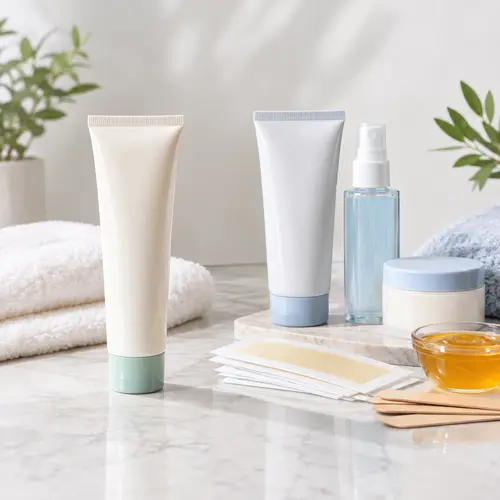
Key Takeaways for Private Label Buyers
- Start with the content hook. A single SKU works best when texture, application, removal, or the before-and-after result can carry the launch video by itself.
- Count every kit dependency. Components, cartons, inserts, applicators, labels, assembly labor, and minimum order quantities can each affect timing.
- Approve performance in final packaging. A lab sample in a generic jar does not confirm cartridge leakage, tube dispensing, wax strip aging, or cream compatibility.
- Review irritation risk by use area. Contact time, removal method, fragrance, residue, and aftercare directions must match the intended consumer and body area.
- Use staged inventory. A hero product plus optional aftercare lets a founder test bundle uptake before committing to a fixed kit.
- Treat rapid timelines as planning targets. A seven-day first-sample target or an under-30-day launch path depends on formula selection, component availability, artwork readiness, and destination-market review.
Buyer Context
Summer demand creates a short commercial window. Creator-led brands often need product samples while content concepts, launch dates, and retail listings are still being finalized. A multi-product kit appears attractive because it raises perceived value and average order value, but it also creates more points of delay. If one insert, cartridge, carton, or aftercare bottle is late, the finished kit cannot ship.
A single depilatory cream is operationally simpler and can deliver a clear demonstration. Buyers evaluating depilatory cream OEM options should still assess odor, spreadability, removal efficiency, contact-time instructions, and residue. Wax strips offer portable, camera-friendly use, while sugar wax and hot wax provide stronger texture content but require tighter temperature and handling instructions. The relevant formats can be compared through private label waxing products.
A kit becomes more defensible when the products form a genuine sequence: preparation, removal, and calming aftercare. A soothing gel or lotion should not be included merely to increase the item count. It needs compatible directions, a distinct consumer benefit, and packaging that survives shipment beside the primary product. Buyers can review post-depilation care OEM formats or assess whether an after hair removal serum fits the intended positioning.
For a first market test, a 1,000-unit pilot may limit exposure while preserving meaningful consumer feedback. Confirm whether that quantity applies to the finished kit, each formula, or each printed component. A clear component-level BOM and preliminary freight estimate should be available before artwork approval.

Technical or Packaging Factors
Formula Performance
Define measurable approval criteria before sampling. For depilatory cream, record texture uniformity, viscosity specification, dispensing force, odor profile, spread coverage, removal behavior, and the permitted contact-time window. Do not approve a fast result if it depends on use outside the labeled directions. For a sensitive positioning, request an ingredient and irritation-risk review through a supplier experienced with mild hair removal formula development.
For wax and sugar wax, check working texture at the stated use temperature, melting or softening specification, pickup, grip, residue, and removal consistency. Wax strips also need aging review because adhesive performance can change during warm storage. Each sample should be evaluated on the intended use area and with the final strip, fabric, paper, or applicator—not only as bulk material.
Packaging Compatibility
A kit multiplies compatibility checks. Depilatory cream can interact with unsuitable tubes, closures, liners, or printed surfaces. Roll-on wax cartridges require upright and inverted leakage checks, cap retention review, roller movement assessment, and warm-storage evaluation. Jars need closure torque and seal confirmation. Wax strips need barrier packaging that limits drying, migration, or unwanted adhesion to the pouch.
Ask the ODM to test the approved formula in production-intent packaging. Generic sample containers are useful for texture selection but cannot validate shelf performance. The complete hair removal manufacturing process should show where compatibility, filling, sealing, coding, inspection, and shipment release occur.
Storage, Shipment, and Label Readiness
Review heat, cold, and cycling results against the expected distribution route. Summer parcels may spend hours in warm vehicles or fulfillment centers. Buyers should confirm leakage, separation, odor change, discoloration, carton deformation, and label lifting after the agreed storage program. Shipping tests should use the final retail pack and master carton.
Destination requirements also affect launch timing. US artwork should be checked against the FDA Cosmetics Labeling Guide. Products entering Great Britain may require action under the UK SCPN cosmetic notification process. Amazon sellers should determine whether ingredients or product format trigger review under Amazon dangerous-goods classification rules for cosmetics. Patch-test language and warnings do not replace a complete product safety assessment.

Decision Framework Table
| Factor | What to Check | Why It Matters | ODM Buyer Note |
|---|---|---|---|
| Content clarity | Can one product produce a clear application and removal sequence? | A focused visual story is easier to communicate. | Request camera tests using the intended lighting and application amount. |
| Formula readiness | Texture, contact time, residue, odor, and approved specification | More formulas create more approval gates. | Use a pre-developed baseline where speed matters. |
| Packaging | Leakage, dispensing, seals, labels, and component availability | One delayed component can block the full kit. | Review hair removal OEM ODM services for sampling scope. |
| Consumer routine | Whether every item has a necessary and understandable step | Unclear kits can create misuse or weak perceived value. | Map directions in actual use order. |
| Unit economics | Formula, component, assembly, carton, freight, and fulfillment costs | Kit size can reduce margin despite a higher selling price. | Require an itemized BOM and packed dimensions. |
| Scale path | Capacity for replenishment without formula changes | A successful launch may require fast repeat production. | Compare private label hair removal solutions before locking the format. |
If the hero product has not yet been validated with the audience, launch it alone and design the carton so aftercare can be bundled later. If the routine is already proven and every component has passed formula, packaging, storage, and shipment review, a kit can support stronger gifting and seasonal positioning. Buyers ready to compare sample scope, MOQ, packaging, and lead time can request a hair removal product quote.
ODM Manufacturing Considerations
For an ODM summer launch, convert the creative brief into an approved, traceable sample. List every item in the proposed kit: depilatory cream, wax strips, sugar wax, roll-on wax cartridge, and aftercare. Record the target user, application area, scent, color, spread, working texture, removal result, and acceptable sensory limits. Require a sealed sample with a version code, fill quantity, packaging component, and directions. Photos are useful for discussion but should not be the final approval.
Confirm the sample in the finished pack. For cream, compare the viscosity window, nozzle output, spread, odor, and rinse-off. For hard or sugar wax, check the working window, softening, stringing, and residue. For strips, inspect coating uniformity and pull result on the intended backing. Test the roll-on cartridge with its actual roller head and carton. Keep one approved master per SKU and define which changes require reapproval.
Customization should answer a buyer need. A stock base may support a faster, simpler launch; a tailored formula may adjust cream flow, wax firmness, sugar wax tack, fragrance intensity, or aftercare feel. Request an ingredient and fragrance irritation-risk review, especially for sensitive-user positioning. Ask which traits are adjustable and whether a change affects cost, shelf life, or filling equipment.
Packaging compatibility needs a filled-pack review, not an empty-component fit. Fill the cream into the intended tube, place wax in its final jar or sachet, and load strips and cartridges into shipping cartons. Check dispensing, swelling, label lift, ink transfer, wax migration, and product change after contact with the material. Review the kit as a whole because oily aftercare can affect nearby labels or inserts. Use the OEM/ODM services page to identify standard and custom components.
Stability review should mirror summer storage, cooler warehouse conditions, room conditions, and transit. Compare color, odor, separation, viscosity, wax crystallization, strip tack, cartridge flow, and pack appearance at each check. Request dated observations and retained samples, not only a pass statement. The manufacturing process page can help structure questions about sampling, filling, and release checks.
Commercial and document scope must be written. Confirm MOQ by finished SKU, custom-print minimums, sample quantities, kit assembly, change fees, and replacement terms. Request a line-item cost sheet with carton dimensions, weight, and shipment assumptions. Before shipping, collect the ingredient declaration, net contents, lot coding, shelf-life or period-after-opening details, directions, warnings, responsible business information, and any SDS or carrier classification document that applies. Verify destination-market and marketplace requirements against official sources; the References below include UK notification, U.S. labeling, and Amazon shipment guidance. Finally, ask for capacity by SKU, component availability, and an order-priority policy for demand spikes. A marketing-aware contact should translate a video brief into measurable acceptance points.

Common Problems or Failure Cases
Failures usually appear when the production pack differs from the approved sample or when storage assumptions are vague. Ask for corrective action with evidence, not only a replacement shipment.
Wax brittleness. Wax that works in a warm room may crack or drag in a cooler room. Confirm the working range and even spread after storage; changes in wax grade, fill temperature, or storage history can alter performance.
Strip adhesion loss. Uneven coating, oil transfer, backing changes, or heat can reduce tack. Compare sealed and stored strips, inspect residue and pull surface, and set an acceptance rule for adhesion.
Cream separation. Oiling, watery release, color shift, odor, or a blocked nozzle signals a formula-pack interaction or storage problem. Check viscosity at dispensing and after standing, using samples from more than one batch.
Cartridge leakage or packaging deformation. Heat expansion, side storage, carton compression, warped tubes, swollen sachets, or label lift can turn a usable product into a return. Review filled cartridges and complete kits after handling and realistic transit.
Fragrance sensitivity. A strong scent can create complaints even when removal performance is acceptable. Compare scented and lower-fragrance options, document the ingredient review, and make the warning and support process clear.
Supplier Checklist
Before signing an OEM/ODM contract, verify:
- Sample control: Coded master, approval record, sample scope, and change rule.
- Formula fit: Target viscosity or working behavior, scent and color limits, removal expectations, and irritation-risk review.
- Pack review: Actual filled tube, jar, sachet, strip pack, cartridge, and aftercare kit.
- Stability: Observations in warm, cool, room, and transit conditions, with retained samples and pass criteria.
- Quality records: Batch identification, release checks, deviation handling, complaints, and withdrawal contact.
- Commercial clarity: MOQ per SKU, custom minimums, assembly and change fees, line-item costing, shipping assumptions, and surge terms.
- Documents: Ingredient list, net contents, directions, warnings, lot and shelf-life details, responsible business information, and applicable SDS or transport documents.
- IP and communication: Confidentiality, custom ownership, exclusivity scope, and a marketing-aware project lead.
Use the depilatory cream products and wax products categories to compare formats, then request a like-for-like quote through the RFQ contact page.

FAQ
How can I protect a distinctive product idea or formula from being reused?
Use a signed confidentiality and manufacturing agreement before sharing full artwork, formula targets, or campaign details. Define ownership of custom formula work and packaging artwork, plus any territory or time limits on exclusivity. Keep the approved formula and sample code in the contract file; a verbal promise is not enough.
Can the cream or wax look dramatic enough for social video?
Approve it on camera in the final color and pack. Record lighting, background, spread thickness, wax stringing, and removal sequence as the visual reference. Ask the supplier to match that reference without relying on excessive fragrance or misleading claims.
What if a customer experiences a strong reaction?
No quality system can promise zero irritation. Reduce avoidable risk with ingredient and fragrance review, clear directions and warnings, batch checks, retained samples, and a documented complaint path. Ask how the supplier isolates an affected batch and traces its formula and components before you publish a high-reach campaign.
Can a factory understand a social-media brief if I do not know ingredients?
Describe the desired camera effect, spread, color, scent strength, application time, target pack, audience, and unacceptable outcomes. Require a plain-English specification and approval sheet, and ask to see an anonymized visual prototype or creator-led project with similar use.
What happens if a video creates a sudden order spike?
Ask for capacity by SKU, component stock, line allocation, alternate standard components, and an order-priority policy before launch. A useful commitment is a documented response plan with status updates, not a promise of unlimited capacity.
Should I start with one SKU or a full summer kit?
Request comparable quotes. One SKU simplifies approval, labeling, and inventory; a kit adds assembly and replenishment points. Compare MOQ per item, kit pack-out, carton dimensions, shelf-life alignment, and the cost of replenishing only the fastest-moving product.
References
- UK SCPN cosmetic notification protocol for UK cosmetic product notification information.
- FDA Cosmetics Labeling Guide for U.S. cosmetic labeling information.
- Amazon’s Hazmat classification rules for cosmetics for marketplace classification and shipping review.