Direct Answer
Sensitive skin hair removal claims should be written as qualified cosmetic positioning, not as a promise that irritation cannot occur. For depilatory cream, wax, wax strips, sugar wax, roll-on wax, and aftercare, the label should tell the user where the product may be applied, how long or how often it may be used, when to stop, and which skin conditions or body areas make use unsuitable. The final wording must reflect the tested formula, intended market, pack format, and actual directions for use.
A strong private-label brief separates four elements: the front-panel claim, step-by-step directions, use limits, and mandatory or risk-based cautions. Terms such as ‘gentle,’ ‘for sensitive skin,’ and ‘dermatologist tested’ require different evidence and should not be treated as interchangeable. Buyers developing sensitive skin hair removal products should approve the claim set before artwork begins, then verify every statement against formula testing, packaging, and target-market requirements.
Key Takeaways for Private Label Buyers
- Define the product type, body area, target market, and removal mechanism before drafting claims.
- Require a formula-specific use-time range rather than copying directions from another cream or wax SKU.
- Treat a patch-test instruction as one control, not proof that the product is irritation-free.
- Test the final formula in the final pack under heat, cold, transport, leakage, and dispensing conditions.
- Keep front-panel language consistent with the ingredient file, safety assessment, and substantiation held for the finished product.
- Freeze directions and cautions before print approval; late label edits can disrupt launch timing and create obsolete packaging.
Buyer Context
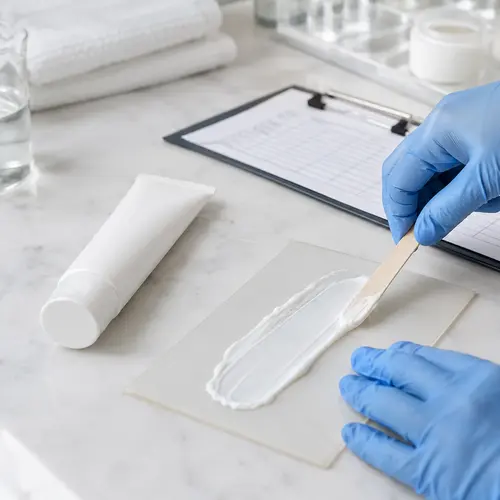
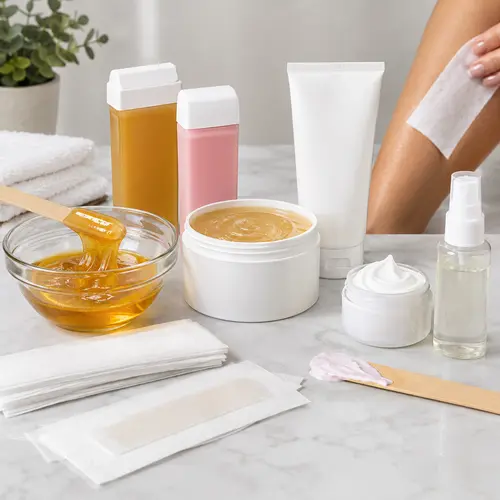
Hair removal creates a specific labeling challenge because performance depends on controlled contact with hair and, in some formats, the skin surface. A depilatory cream must remain in place long enough for its active system to work, but the user must not exceed the validated contact time. Wax must reach a workable texture without becoming excessively hot. Wax strips require clear pull direction and reuse limits. Sugar wax and roll-on cartridges need practical heating, application, and storage instructions. Aftercare should support comfort without implying treatment of burns, dermatitis, or another medical condition.
This matters most for creator-led launches. A short video may demonstrate a thick cream layer, a dramatic wax pull, or an immediately smooth finish, while the label must communicate the less visual boundaries: do not use on broken skin, avoid specified areas, stop if severe discomfort occurs, and wait the stated interval before repeating use. Content scripts should therefore be reviewed alongside pack copy. Otherwise, the campaign can show behavior that contradicts the approved directions.
Product naming also changes the evidence burden. ‘For sensitive skin’ identifies an intended user group. ‘Gentle’ describes perceived mildness. ‘Hypoallergenic’ can be interpreted as a stronger statement about allergy risk. ‘Pain-free,’ ‘no irritation,’ and similar absolutes are difficult to defend because individual response, technique, and prior skin condition vary. Buyers should ask the depilatory cream OEM to map each proposed claim to a specific document, test, or formulation rationale.
A fast development schedule does not require blind approval. A useful sample round should include texture on camera, odor, spread, removal efficiency, residue, rinse behavior, and immediate skin feel. An itemized BOM and packaging scope help founders see which custom elements affect cost or timing. The broader hair removal product solutions decision should also cover aftercare, travel packs, and content samples rather than treating the hero SKU in isolation.
Technical and Packaging Factors
Directions Must Match the Validated Use Pattern
Directions should state preparation, application amount, application method, maximum contact or heating condition, removal method, rinsing or residue removal, and post-use care. For a cream, the label should distinguish the initial check time from the absolute maximum contact time. A generic 5-10 minute statement must not be adopted unless the finished formula supports that range. For wax, instructions should address temperature checking, hair-growth direction, strip placement, pull direction, and the number of passes permitted over one area.
A patch-test statement must specify timing, location, removal, observation, and what result prevents full use. Some products direct a test 24 hours before each application, but that interval must be confirmed for the SKU and market. Do not present patch testing as a guarantee against later sensitivity. The FDA explanation of cosmetic oversight is also relevant to U.S. copy: cosmetics are regulated, but ordinary cosmetic products should not be marketed as FDA approved.
Limits Define the Safe Use Envelope
Use limits should identify approved body areas, excluded areas, minimum time between applications, repeat-pass restrictions, and any relevant age or supervision language. Face, bikini, and body versions are not automatically interchangeable. A body cream should not imply facial suitability merely because the base ingredients appear similar. Claims that suggest prevention, healing, or treatment can also change product classification; Australia’s TGA cosmetic-therapeutic boundary guidance illustrates why market-specific wording review matters.
Cautions Must Reflect Real Failure Modes
At minimum, the risk review should consider broken, inflamed, sunburned, recently exfoliated, or otherwise compromised skin; accidental eye or mucosal contact; prolonged cream exposure; overheated wax; repeated waxing over one area; and use after a previous adverse reaction. The label should tell users to stop and rinse or remove the product when unexpected burning, severe stinging, or marked discomfort occurs. Emergency wording, contact details, and market-required statements should be confirmed during artwork review rather than improvised from competitor packs.
Ingredient naming should match the finished formula and applicable nomenclature. The INCI ingredient nomenclature database is a useful research aid, but the supplier’s signed formula and market-ready ingredient declaration remain the controlling project documents. For the United States, buyers should also review the FDA overview of cosmetics under U.S. law before approving claims or warnings.
Packaging and Stability Can Change Label Accuracy
A direction is only reliable if the package delivers the intended dose and protects the formula. Depilatory cream tubes should be checked for seal integrity, paneling, cap leakage, print resistance, and controlled dispensing. Roll-on wax cartridges need roller rotation and leakage review after upright, inverted, and transport storage. Wax strips require adhesion-aging checks because backing, liner release, and wax transfer can shift over time. Sugar wax jars need closure compatibility and instructions that remain valid as viscosity changes with temperature.
Ask for finished-pack stability at justified cold, ambient, and accelerated conditions, such as 4 C, 25 C, and 40 C where appropriate to the project. Include heat-cold cycling, shipment simulation, net-content checks, odor, color, viscosity or melting behavior, and label legibility. The exact program should follow the formula, pack, destination, and expected distribution route. Review these checkpoints within the documented hair removal manufacturing process, not as an isolated final inspection.

Decision Framework
| Factor | What to Check | Why It Matters | ODM Buyer Note |
|---|---|---|---|
| Claim scope | Exact meaning of ‘sensitive,’ ‘gentle,’ or related wording | Prevents an absolute promise that exceeds available support | Request a claim-to-document matrix before artwork |
| Directions | Body area, amount, timing, removal, rinse, and repeat interval | Controls exposure and foreseeable misuse | Approve copy against the final sample, not the baseline concept |
| Formula performance | Spread, grip, residue, odor, viscosity, melting behavior, and removal result | Confirms that instructions match real consumer handling | Record samples on camera under realistic room conditions |
| Pack compatibility | Seal, leakage, dispensing, liner release, roller movement, and print durability | Packaging failure can alter dose, stability, and safe use | Test decorated production-equivalent packs |
| Market review | Claims, ingredient declaration, cautions, responsible-party details, and language | Requirements and classification boundaries vary by destination | Include every launch country in the initial brief |
| Launch readiness | Sample scope, itemized BOM, MOQ, artwork freeze, shipment conditions, and scale plan | Connects compliance work to the content calendar | Use hair removal OEM ODM services to define ownership, then request a hair removal product quote with the complete claim brief |
For a sensitive-positioned range, include recovery products in the same review. A post-depilation care OEM brief should align aftercare directions with the cream or wax SKU without making treatment claims. Buyers can use established hair removal product guides to prepare questions, but final decisions should remain product-specific.
ODM Manufacturing Considerations
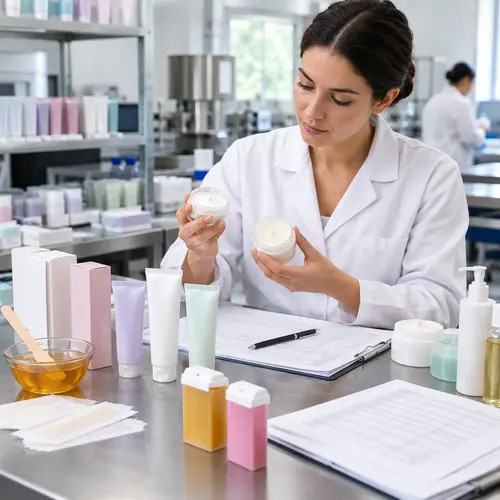
ODM development should begin with a written sample brief that separates essential performance requirements from preferences. For a depilatory cream, the brief may define target body areas, desired spread, removal behavior, fragrance limits, pack size, and intended market. For wax, strips, or roll-on cartridges, it may specify working temperature, viscosity or melting range, residue level, hair-grip expectations, and acceptable packaging formats. The approved sample should be identified by version number so later revisions cannot be confused with the buyer’s final reference.
Formula customization requires tradeoff decisions. Reducing fragrance, changing color, adjusting wax flexibility, or modifying cream consistency can affect consumer experience and manufacturing repeatability. Buyers should ask the supplier to record every approved change and confirm which claims remain supportable after the revision. Ingredient names can be checked against the INCI ingredient nomenclature database, but the final ingredient declaration should come from the supplier’s controlled formula record and be reviewed for the destination market.
Packaging should be confirmed as a complete system rather than selected from appearance alone. Check whether the cream dispenses cleanly, strip sachets remain sealed, wax tubs resist distortion, and roll-on components continue to close securely after filling and transport simulation. Decoration also matters: labels, printed tubes, cartons, and batch coding must remain legible after handling and storage. Request filled test units using production-intent components before authorizing a bulk packaging order.
A stability review should cover appearance, odor, spread, separation, weight change, pack distortion, seal integrity, and functional dispensing across the planned shelf-life program. Acceptance criteria should be written before testing begins. Any change to fragrance, active system, pack material, closure, or fill process may require additional review because the approved result applies to a defined formula-pack combination.
MOQ discussions should distinguish formula batch MOQ, packaging MOQ, printed-component MOQ, and finished-product MOQ. A low filling quantity can still require excess tubes, cartridges, sachets, or cartons. Ask for a transparent BOM showing product, components, printing, assembly, testing, and estimated freight as separate lines. Also confirm sample scope, revision charges, retained units, production lead time, and whether unused custom packaging will be stored, shipped, or discarded.
Labeling files should include the ingredient list, net contents, responsible-party details, batch identification, directions, limits, cautions, storage wording, and any market-specific documents agreed in the specification. U.S. buyers should understand that cosmetics are regulated but generally are not preapproved by FDA, as explained in the agency’s FDA authority over cosmetics guidance. Australian buyers should also review Australia’s TGA cosmetic-therapeutic boundary guidance when wording could move a product beyond cosmetic positioning.
Shipment conditions should state carton configuration, palletization when used, storage limits, transport mode, and controls for prolonged heat or cold exposure. The release specification should also identify which inspections occur before dispatch and what evidence the buyer receives, such as lot records, inspection results, and photographs of finished cartons.
Common Problems or Failure Cases
Wax becomes brittle: A hard wax may crack instead of flexing when its resin balance, working range, storage history, or applied thickness differs from the approved sample. Compare production units with the retained standard and document melting behavior, application thickness, cooling time, and break pattern.
Wax strips lose adhesion: Poor hair pickup can result from adhesive migration, unsuitable backing material, weak sachet seals, or storage exposure. Inspect adhesion at opening and after transport simulation, and verify that strips separate evenly without excessive adhesive transfer.
Depilatory cream separates: Visible liquid release, graininess, uneven color, or inconsistent dispensing may indicate that the formula or pack has not remained uniform. Quarantine affected lots, compare samples from different carton positions, and review mixing, filling, storage, and component records before deciding whether the product is acceptable.
Roll-on cartridges leak: Leakage may appear around the roller, neck, cap, or cartridge seam, especially after temperature changes or inverted shipping. Evaluate filled cartridges in multiple orientations and confirm that caps do not loosen during carton movement.
Fragrance increases sensitivity complaints: A fragrance that supports the brand concept may still be poorly suited to a sensitive-positioned product. Review fragrance level, allergen declaration requirements, consumer instructions, and whether an unscented option is commercially practical. Avoid presenting fragrance reduction as proof that irritation cannot occur.
Packaging deforms: Wax tubs, cream tubes, or cartridge bodies can soften, panel, swell, or lose closure fit under adverse storage. The investigation should compare component lots, fill weights, storage records, and shipping conditions rather than treating deformation as a cosmetic defect only.

Supplier Checklist
- Confirm relevant hair removal manufacturing experience by product type, not only general cosmetics experience.
- Request a controlled sample brief with version numbers, target texture, color, odor, viscosity or melting range where relevant, and pass or fail criteria.
- Define an irritation-risk review and the evidence needed for every sensitive skin hair removal claim.
- Verify filled-pack checks for dispensing, sealing, leakage, deformation, print durability, and storage exposure.
- Ask how production batches are compared with the approved sample and how deviations are investigated.
- Review formula, packaging, printing, assembly, testing, freight assumptions, and potential overage in an itemized BOM.
- Confirm formula batch MOQ, component MOQ, sample quantities, revision limits, lead times, and surge-capacity rules.
- Request draft directions, cautions, ingredient declarations, batch coding format, and destination-market labeling documents before artwork approval.
- Agree on shipment orientation, carton strength, storage conditions, inspection scope, retained samples, and release records.
- Identify one technical-commercial contact who can translate social-media concepts into measurable sample requirements without promising unsupported performance.
FAQ
Can a factory take my concept or formula and sell it to another brand?
No supplier can eliminate commercial risk through verbal assurances. Use a signed confidentiality agreement, define ownership of custom formulas, artwork, molds, and test data, restrict subcontracting, and record who may access project files. Ask whether the starting formula is exclusive, semi-custom, or part of the supplier’s existing library.
Can any quality system guarantee that followers will never have a bad skin reaction?
No. Hair removal products interact with different skin conditions, application habits, and exposure patterns. Risk can be reduced through ingredient review, controlled manufacturing, appropriate testing, traceable lots, accurate directions, clear limits, complaint handling, and conservative claims, but a zero-reaction promise is not credible.
How do I communicate a visual social-media concept without understanding ingredients?
Provide reference videos and describe observable targets such as spread, opacity, stringiness, shine, removal action, and residue. A capable contact should convert those goals into measurable sample criteria, explain tradeoffs, and confirm which effects remain consistent in routine production.
What should I approve before placing the first production order?
Approve the formula version, filled pack, color and fragrance standard, functional criteria, artwork, directions, cautions, BOM, inspection plan, MOQ, delivery assumptions, and shipment configuration. Keep signed or otherwise controlled approval records.
How should I evaluate a fast sample promise?
Ask what the timing includes. A quick initial sample may use stock packaging and an existing base, while custom fragrance, printed components, market documents, or extended reviews require more time. The supplier should distinguish first-sample speed from production readiness.
What if a video creates demand above the original forecast?
Request documented monthly capacity for the relevant filling and packing line, component reorder times, minimum forecast notice, and allocation rules during peak periods. Discuss staged releases and reserved packaging stock, but do not assume capacity is guaranteed without written volume and scheduling terms.