Direct Answer
For summer hair removal products private label development, start with the use case, not the format. Decide where the product will be used, how quickly it must work, what the customer will see on camera, and where it may be stored during summer shipping. Those answers determine whether a depilatory cream, wax strip, sugar wax, roll-on cartridge, or aftercare gel is the strongest launch candidate.
The winning specification balances three systems: a stable, camera-ready texture; packaging that remains clean and functional in heat; and instructions that set realistic application limits. Request samples in final or production-equivalent packaging, then review viscosity or wax flow, removal performance, residue, odor, skin feel, leakage, and label space. A capable hair removal OEM manufacturer should connect these checks to an itemized BOM, sample scope, testing plan, and shipment conditions before the purchase order is signed.
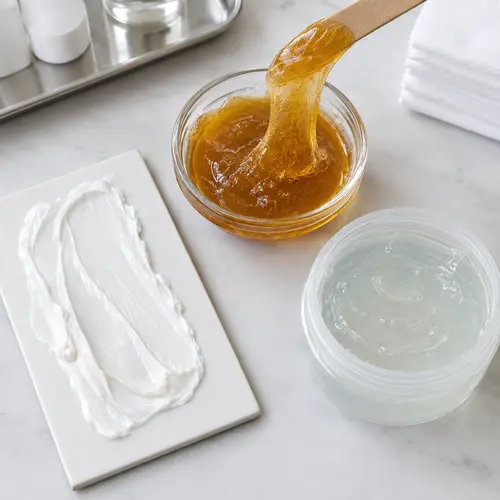
Key Takeaways for Private Label Buyers
- Select the formula around a defined body area and routine. A face cream, leg wax strip, and bikini-line aftercare product require different performance limits.
- Approve texture under normal room conditions and simulated summer storage. A visually strong sample is not ready until its flow and removal behavior remain consistent.
- Test the formula and packaging as one system. Cap seals, cartridge rollers, sachet laminates, and jar liners can fail even when the bulk product remains stable.
- Ask for the target viscosity or melting range, permitted appearance variation, fill tolerance, leakage method, and irritation-risk review in writing.
- Keep launch claims aligned with the directions, warning copy, and available evidence. Finalize artwork only after the ingredient list and net contents are confirmed.
- Build content from approved production samples. This reduces the risk that the texture shown in a launch video differs from the first commercial batch.
Buyer Context
Summer changes both consumer behavior and manufacturing risk. Customers remove hair more frequently, expose larger body areas, travel with products, and leave packages in bathrooms, luggage, mailboxes, or delivery vehicles. At the same time, creators need a texture that reads clearly in a short video: a cream must spread in an even, visible layer; sugar wax needs controlled stretch; wax strips must separate cleanly; and an aftercare gel should look fresh without becoming watery.
That creates a practical sourcing question. The most dramatic prototype is not always the best commercial formula. A softer wax may look fluid on camera but migrate inside a jar during hot shipment. A dense depilatory cream may create satisfying application footage but dispense poorly through a narrow tube opening. Strong fragrance can mask the base odor during sampling while increasing the need for a more careful tolerance review.
Product choice should also reflect customer skill. Pre-coated strips support fast, low-mess routines. Roll-on wax offers controlled coverage but depends on cartridge flow and warming instructions. Sugar wax can create distinctive content, yet application technique affects the result. Depilatory creams are familiar and scalable, but timing, body-area restrictions, patch-test directions, and warning visibility are essential. Compare these formats through depilatory product development solutions before funding custom design work.
For a creator-led brand, speed still matters. A supplier offering a seven-day first-sample target and pilot manufacturing from 1,000 units can support a content calendar, but timing must be tied to formula readiness, packaging availability, and required tests. Review the complete hair removal manufacturing process rather than treating the sample date as the launch date.
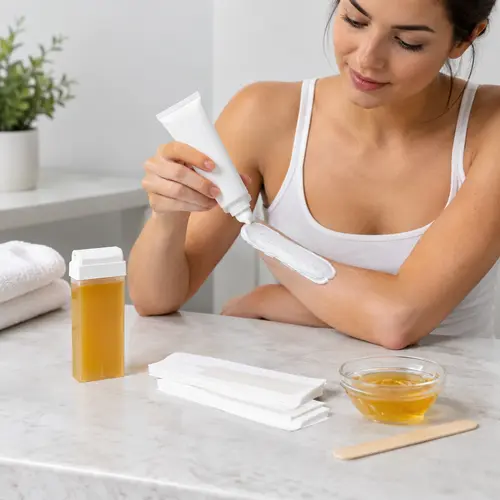
Technical and Packaging Factors
Texture Must Be Measurable
Visual approval is useful, but it is not a manufacturing specification. For creams and aftercare, request an agreed viscosity range, measurement temperature, spindle or method, appearance standard, and allowable odor variation. For sugar wax and hot wax, define the working or melting range, pickup behavior, stringing, residue, and recovery after cooling. For strips, inspect coating uniformity, backing flexibility, separation force, and adhesion after aging.
Evaluate a custom depilatory cream formulation on the intended body area and within the proposed contact-time instructions. A stronger sensory effect is not automatically better. The review should include removal consistency, rinse-off, post-use feel, fragrance level, and foreseeable misuse. Products positioned for delicate areas require a dedicated mild hair removal formula assessment rather than a simple label change.
Heat Changes the Package
Ask the ODM to screen packaged samples at representative conditions such as 5 degrees C, 25 degrees C, and 40 degrees C. These checkpoints can reveal separation, wax migration, roller blockage, paneling, seal lift, label movement, odor change, or color drift. The exact temperatures and duration should reflect the formula, destination market, shipping route, and package material.
For roll-on wax, inspect upright, inverted, and side storage, then check startup flow after warming. For jars, review liner adhesion and cap torque. For tubes, test seal integrity and dispensing after heat exposure. For wax-strip sachets, confirm that the laminate protects the coating without making the strips difficult to separate. These controls should be documented within the hair removal OEM ODM services scope and repeated when a resin, adhesive, cap, or decorator changes.
Aftercare Is Part of the Use Case
A summer kit can pair removal with a lightweight soothing gel or lotion, but the claims must remain cosmetic and supportable. Avoid presenting aftercare as a treatment for burns, infection, or pigmentation. The AAD guidance on hyperpigmentation provides useful context for why irritation and sun exposure deserve careful consumer communication. Buyers can review options through post-depilation care OEM and decide whether a kit improves the routine or adds unnecessary complexity.
Manufacturing controls should be aligned with ISO 22716 guidance for cosmetics. US artwork should be checked against the FDA summary of cosmetics labeling requirements. Facial products also need unmistakable eye-avoidance directions; the FDA eye-area cosmetic safety guidance reinforces the need to keep products and claims within their intended area of use.

Decision Framework
| Factor | What to Check | Why It Matters | ODM Buyer Note |
|---|---|---|---|
| Use case | Body area, hair type, routine, customer skill, and contact time | Defines the suitable format, strength, directions, and warnings | Approve one written product brief before sampling |
| Texture | Viscosity or working range, spread, pickup, residue, and camera appearance | Connects visual content with repeatable batch performance | Record the method and temperature used for measurement |
| Package fit | Seal, cap, liner, roller, laminate, dispensing, and decoration | Prevents leakage, blockage, label movement, and consumer mess | Test production-equivalent components with the actual formula |
| Storage | Heat, cold, orientation, recovery, appearance, odor, and function | Summer transit can alter wax flow and cream consistency | Set conditions around destination and shipment route |
| Safety review | Body-area restrictions, patch-test copy, exposure time, warnings, and rinse-off | Reduces foreseeable misuse and protects brand trust | Do not extend one sample approval to every body area |
| Commercial scope | MOQ, sample rounds, mold or tooling cost, BOM, test fees, lead time, and freight | Keeps the launch plan realistic and transparent | Use a version-controlled quote and artwork checklist |
Before contract approval, compare a standard packaging route with one customization route. Standard components usually protect speed and MOQ; custom molds or finishes can strengthen the logo and shelf presence but add tooling, compatibility work, and schedule risk. Use custom wax strips and hot wax specifications for wax formats, then request a hair removal product quote that separates formula, components, decoration, testing, and freight assumptions.
ODM Manufacturing Considerations
For summer hair removal products private label development, sample approval should cover more than fragrance and appearance. The buyer and manufacturer should agree on a written sample specification that records texture, color, odor, application weight, removal behavior, residue, skin feel, and the intended body area. Photos and short application videos can support approval, but measurable limits should remain the production reference. Retain sealed samples from the approved batch so later production can be compared against the same benchmark.
Formula customization should begin with the use case. A depilatory cream intended for legs may need different application, contact-time, and odor-masking targets from a formula positioned for the face. Sugar wax for professional salons may prioritize working time, while a home-use product may require easier handling across less controlled room temperatures. Buyers should identify mandatory ingredients, excluded ingredients, fragrance limits, target melting point or viscosity range, and acceptable color variation before requesting revisions. Every revision should receive a unique sample code and version record.
Packaging should be selected alongside the formula rather than after approval. The supplier should document the package material, fill weight, headspace, closure specification, and decoration method. Compatibility review should include contact between the formula and all product-facing components, as well as deformation, discoloration, odor transfer, closure movement, and dispensing changes after heat and cold storage. Wax-strip packs also require attention to seal quality and resistance to oil migration. Buyers can review relevant formats through the hair removal product categories before defining a custom pack.
A stability plan should state test duration, storage conditions, evaluation frequency, acceptance limits, and responsibility for approving results. Checks may include appearance, odor, weight change, pH where applicable, viscosity or melting behavior, microbial limits, and package condition. Accelerated observations are useful for identifying likely problems, but they do not guarantee every outcome during real distribution. Irritation-risk review should consider intended application area, directions, exposure time, fragrance level, and foreseeable misuse.
MOQ discussions should separate formula batch minimums from packaging and decoration minimums. A custom-colored component may require a larger order than the filled product itself. Ask for a transparent bill of materials showing formula, primary pack, printed materials, assembly, testing, freight assumptions, and any unused component inventory. The supplier should also disclose which elements are stock, customized, or purchased from subcontractors. The OEM and ODM service overview and manufacturing process can help buyers map approval stages before issuing a purchase order.
Before artwork approval, request the ingredient declaration, net-content format, directions, warnings, batch coding method, shelf-life basis, country-of-origin statement, and responsible-party details needed for the destination market. Shipment planning should identify carton count, gross weight, pallet configuration, temperature exposure, transport mode, and any carrier restrictions affecting wax or cream products. Confirm whether summer routes, port storage, or last-mile delivery require additional protective packing.

Common Problems or Failure Cases
Wax becomes brittle or cracks. A hard wax may perform correctly in the development room but fracture after storage or repeated temperature changes. Review melting behavior, application thickness, cooling time, and removal technique using the intended warmer and accessories. Do not approve the sample from appearance alone.
Wax strips lose adhesion. Heat, backing material, coating variation, or contamination can reduce grip and leave inconsistent residue. Compare aged samples with retained controls and test them on the stated hair length and body area. Packaging seals and storage instructions should be investigated before changing the wax formula.
Depilatory cream separates. Visible liquid release, graininess, discoloration, gas formation, or a strong odor shift can indicate instability. Quarantine affected samples, document the storage history, and have the manufacturer determine whether the cause is the formula, process, package, or contamination. Mixing the sample and treating it as acceptable can hide a recurring defect.
Roll-on cartridges leak or deform. Leakage can arise from component tolerances, closure fit, fill temperature, rough transit, or prolonged heat. Test filled units in multiple shipping orientations and inspect cartons for staining or component distortion. Shipment simulation should reflect the actual case pack rather than single units handled carefully in a lab.
Fragrance causes avoidable complaints. Strong masking fragrance may improve the initial product impression but increase sensitivity concerns or conflict with aftercare products. Request fragrance-free or lower-fragrance comparisons when the target market includes face use or sensitivity-conscious customers. Directions should make patch testing and application limits easy to find.
Packaging changes shape or loses presentation quality. Summer heat can warp components, lift labels, soften adhesives, or scuff decorated surfaces. Evaluate filled retail units inside their final cartons and shipping cases. Cosmetic damage matters even when the formula remains usable because distributors and customers may reject visibly compromised stock.

Supplier Checklist
- Confirm experience with the specific removal format, intended body area, and target sales channel.
- Request coded samples, revision records, retained controls, and written acceptance criteria.
- Define target viscosity or melting range, color tolerance, fragrance level, application behavior, and residue limits.
- Review ingredient restrictions, irritation-risk assessment, patch-test directions, and complaint-handling procedures.
- Require stability and package-compatibility plans covering heat, cold, leakage, deformation, and decoration durability.
- Separate formula, component, printing, and filling minimums in the quotation.
- Request an itemized bill of materials, tooling charges, testing fees, freight assumptions, and ownership of excess components.
- Verify batch coding, traceability records, inspection points, release documents, and retained-sample periods.
- Review ingredient lists, warnings, directions, net contents, claims support, and destination-market labeling documents before printing.
- Confirm production lead-time assumptions, carton specifications, pallet details, shipment orientation, and temperature precautions.
- Put confidentiality, formula ownership, artwork ownership, and restrictions on third-party use into the manufacturing contract.
- Assess whether the account team can translate content concepts into measurable sample requirements. Use the project inquiry page to submit a structured brief rather than relying on scattered messages.
FAQ
Can a manufacturer reuse my idea or formula for another brand?
No supplier can remove every commercial risk through verbal promises. Use a signed confidentiality and development agreement that defines ownership of your brief, custom formula, test data, artwork, molds, and rejected versions. Ask whether the base is proprietary, buyer-owned, or modified from a ready formula, and specify whether similar products may be offered to other customers.
How can I tell whether the sample texture and color will look dramatic on camera?
Provide reference footage, lighting conditions, application amount, background color, shot distance, and the desired visual behavior. Ask the supplier to film coded samples under an agreed setup, then confirm measurable limits for color and texture. A marketing-aware contact should convert terms such as glossy, stretchy, dense, or fast-melting into repeatable approval criteria.
Can quality control guarantee that no customer will experience irritation?
No responsible supplier can promise zero reactions. Risk can be reduced through ingredient review, controlled manufacturing, suitable limits, stability evaluation, clear warnings, patch-test directions, batch traceability, and complaint investigation. Face products require especially careful directions around sensitive areas. The FDA guidance on eye-area cosmetic safety explains why products used near the eyes require particular caution.
What should be approved before mass production?
Approve the final coded formula sample, filled package, color, fragrance, fill weight, component specifications, artwork, carton marks, directions, warnings, acceptance limits, and shipment configuration. The purchase order should identify the approved versions rather than relying on product names alone.
Which labeling files should the supplier provide?
Request the ingredient declaration, product identity, net quantity, directions, warnings, responsible-party information, origin details, and batch-coding format. Final obligations depend on the destination market. For US distribution, review the FDA summary of cosmetics labeling requirements.
How should I compare two OEM or ODM quotations?
Normalize formula quantity, fill weight, component quality, decoration, testing scope, inspection, cartons, freight terms, and unused inventory. A lower unit price may exclude printing plates, stability work, or export packing. Compare total landed assumptions and written deliverables, not only the headline price.