Direct Answer
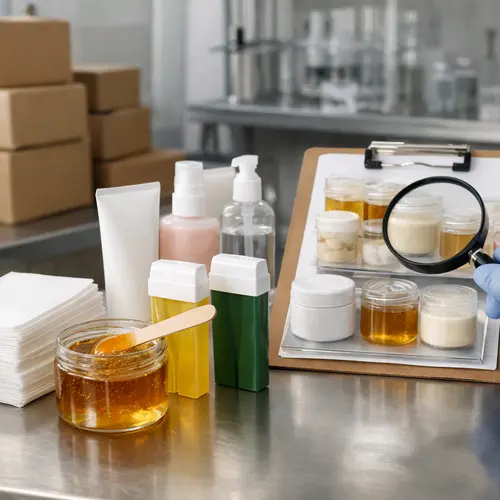
Before approving any hair removal sample, a buyer should require evidence that the formula, packaging, manufacturing process, and intended market claims can be controlled from pilot batch through commercial production. Hair removal product safety testing should therefore begin with documented questions, not with a visual review of texture alone. Ask the supplier which ingredients drive irritation risk, how the formula is tested on the intended body area, whether the packaging is compatible with the product, and how stability is assessed under heat, cold, transport, and normal storage conditions. The supplier should also define batch specifications, release criteria, traceability, complaint handling, and the documents needed for each target market. A credible sample is not merely a small quantity of cream, wax, or aftercare gel. It is a controlled representation of the formula and process that the ODM can reproduce at scale without changing the safety profile.
Key Takeaways for Private Label Buyers
- Request the complete sample specification, including ingredient nomenclature, intended use area, texture range, odor profile, and known contraindications.
- Require a written irritation-risk review for depilatory cream, wax, sugar wax, roll-on wax, wax strips, and post-depilation care products.
- Check packaging compatibility through filled-pack observation, leakage review, seal integrity, dispensing performance, and storage-condition testing.
- Confirm that the sample is made on the same or technically equivalent equipment and under the same quality system intended for mass production.
- Link every safety claim to supporting documentation, including stability records, microbiological results where relevant, labeling files, and market-specific compliance assessments.
- Set approval gates before sampling: formula approval, packaging approval, pilot-batch release, and launch-market documentation review.

Buyer Context
Hair-removal products create a concentrated risk because they are designed to alter, loosen, or physically remove hair at the skin surface. The consumer may apply a depilatory cream to the legs, underarms, or bikini area; spread hot wax or sugar wax across a large surface; pull a wax strip against the direction of hair growth; or use a roll-on cartridge repeatedly during one treatment. Each use case creates different failure modes. A cream may become more aggressive when the consumer leaves it on too long. Wax may be overheated, applied too thinly, or become difficult to remove. A strip may lose adhesion after storage in a hot distribution environment. An aftercare product may be applied to freshly treated skin, where fragrance, preservatives, or botanical extracts require closer review.
This issue becomes more material when a mature brand needs a replacement supplier after a quality incident, a sudden capacity interruption, or a failed third-party audit. The commercial pressure to approve a sample quickly can obscure whether the supplier has a repeatable control plan. It also matters when a group introduces a new format, such as a roll-on wax cartridge or a bag-on-valve depilatory foam, that the incumbent factory cannot manufacture. In parallel, an ESG mandate may require evidence of responsible labor practices, environmental controls, and traceable production records before a new facility enters the approved supplier pool.
The buyer should treat sampling as an early-stage supplier qualification activity. The objective is to identify whether the manufacturer can protect consumers, meet regulatory obligations, and maintain consistent output across regions. The hair removal manufacturing process should be reviewed alongside the formula itself, including filling, sealing, labeling, inspection, warehousing, and shipment release.
Technical or Packaging Factors
Formula and skin-contact risk
For depilatory cream, request the target pH range, active system, exposure-time basis, preservative approach, fragrance profile, and rationale for use on each body area. The supplier should explain how the formula balances hair removal performance with irritation risk and whether the same composition is intended for face, body, underarm, or bikini applications. Do not accept a general statement that a formula is gentle. Ask for the supporting safety assessment, compatibility rationale, and clear consumer-use limitations. The European Commission’s CosIng ingredient database can support an ingredient and function review, but it does not replace a product-specific safety assessment.
For wax and sugar wax, confirm the softening or melting behavior, application temperature guidance, pull strength, set time, residue profile, and performance after repeated opening. The sample should be examined for stringing, cracking, excessive brittleness, and inconsistent spread. For roll-on wax, inspect roller rotation, dispensing volume, cartridge fit, cap closure, and the risk of leakage after storage and transport. A supplier should identify which parameters are controlled during filling and how deviations are segregated.
Packaging compatibility and shipment conditions
Packaging is part of the safety system. A depilatory cream can interact with a tube, cap, pump, liner, or adhesive. Wax can soften a component, migrate into a closure, or deform a cartridge when exposed to heat. Wax strips can lose adhesion or pick up contamination if the primary and secondary packs are not properly sealed. Request compatibility evidence using the final commercial packaging, not a laboratory container. Review seal integrity, torque or closure control where applicable, dispensing behavior, label adhesion, print durability, and leakage after handling.
Define the expected storage and shipment profile before approving the sample. The supplier should test heat and cold exposure relevant to the distribution lanes, then assess appearance, odor, viscosity, melting behavior, adhesion, container deformation, and net contents. Ask whether samples are shipped in insulated packaging, whether temperature excursions are recorded, and whether the receiving team has a defined inspection protocol. The depilatory cream OEM brief should include both formula and final-pack performance.
For global launches, clarify how the label will identify ingredients, net contents, warnings, directions, batch coding, responsible parties, and market-specific requirements. FDA explains that cosmetics are regulated even though they are generally not pre-approved as finished products; this distinction makes supplier documentation and claim discipline especially important. For regional programs, also map requirements such as SASO conformity assessment standards or the JAKIM Halal certification framework where relevant to the product, market, and consumer positioning.
Decision Framework Table
| Factor | What to Check | Why It Matters | ODM Buyer Note |
|---|---|---|---|
| Formula safety | Ingredient list, active system, pH or viscosity specification, exposure guidance, irritation-risk review | Determines whether intended performance is controlled across body areas and consumer conditions | Require a defined specification and approval of any post-sample formula change |
| Wax performance | Melting or softening behavior, application temperature, set time, pull strength, residue | Controls treatment consistency and the risk of excessive heat or difficult removal | Review the production method and fill temperature used for the pilot sample |
| Packaging compatibility | Container interaction, closure fit, seal integrity, dispensing, leakage, label durability | Prevents loss of product, contamination, misapplication, and transport failures | Test the final commercial pack under defined heat, cold, and handling conditions |
| Stability and shipment | Appearance, odor, texture, adhesion, viscosity, melting behavior, and container condition after storage | Shows whether the product remains within specification across distribution lanes | Agree on acceptance criteria before pilot release and shipment |
| Manufacturing control | ISO 22716 system, batch records, traceability, line clearance, QC release, deviation handling | Establishes whether the sample represents a reproducible commercial process | Confirm pilot and scale-up production use compatible equipment and controls |
| Market documentation | Safety file inputs, labeling documents, claims support, certificates, and responsible-party data | Reduces launch delays and prevents unsupported claims across jurisdictions | Use the same documentation review for samples and commercial purchase orders |

ODM Manufacturing Considerations
A buyer should ask whether the supplier can hold the approved formula and packaging specification through scale-up. This is particularly important when the sampling partner uses a small laboratory vessel but commercial production moves to different mixing, heating, filling, or sealing equipment. The supplier should disclose process-critical parameters, acceptable ranges, in-process checks, and the point at which QA can stop a batch. The hair removal OEM ODM services scope should also define ownership and approval rights for formula changes, packaging substitutions, alternate raw materials, and manufacturing-site transfers.
Ask for the pilot MOQ and sample scope in operational terms: how many units are produced, how many are reserved for testing, which packaging components are included, and whether the batch receives normal release testing. A micro-batch capability can reduce exposure during qualification, but only when the same quality governance applies at pilot and commercial stages. A facility operating under ISO 22716 should be able to provide controlled records, sanitation procedures, personnel training evidence, supplier qualification records, and a documented complaint and recall process.
For procurement and QA teams, resilience is also a safety consideration. Review critical raw-material sources, approved alternatives, inventory policy, equipment maintenance, backup utilities, and business-continuity procedures. Confirm how the supplier prioritizes strategic customers during material shortages and whether a second site or qualified backup line exists. The hair removal OEM manufacturer should be evaluated as part of a broader approved-supplier strategy, with technical, ESG, information-security, and commercial controls documented before the sample is accepted.
Initial Buyer Checklist
Before authorizing the next sampling stage, request the formula specification, safety assessment inputs, final-pack compatibility plan, stability protocol, shipment conditions, batch traceability format, and market-labeling file. Confirm the intended use area and consumer warnings in writing. Record the acceptance criteria for texture, viscosity, melting behavior, adhesion, leakage, appearance, odor, and container integrity. Finally, define who approves deviations and who owns the decision if the sample passes sensory review but fails a laboratory, packaging, or compliance requirement. A disciplined sampling gate gives procurement, R&D, QA, and legal teams one evidence base for the launch decision. Buyers can use the request a hair removal product quote workflow to submit the target market, format, packaging, sample scope, and documentation requirements for coordinated technical review.
ODM Manufacturing Considerations
Sampling should begin with a written confirmation sheet, not only a product photo or verbal description. For each depilatory wax, wax strip, cream, sugar wax, or roll-on cartridge, record the intended use area, target market, pack size, fragrance position, color, texture, application method, removal method, and expected shelf life. The buyer should approve a retained reference sample and define which characteristics are allowed to vary between pilot and commercial batches.
Formula customization needs a controlled brief. Ask the manufacturer to identify the requested changes, such as softer wax application, a different set time, a narrower cream viscosity range, reduced fragrance intensity, or a more suitable aftercare texture. The supplier should explain which changes may affect skin-contact risk, residue, adhesion, melting behavior, or filling performance. Request a formula specification or agreed product profile that includes appearance, odor, texture, viscosity or softening range when relevant, fill weight, and acceptance limits.
Packaging compatibility is part of the product decision. Confirm that the jar, tube, sachet, strip pouch, cartridge, cap, roller head, liner, and adhesive seal remain functional after contact with the formula and exposure to expected warehouse conditions. A buyer should request filled samples, closure checks, seal inspection, and observation for swelling, stress cracking, staining, odor transfer, label lifting, or changes in dispensing. For roll-on wax cartridges, inspect the roller movement, valve response, and external residue after storage in multiple orientations.
The stability review should cover the actual commercial formula and the actual proposed pack. Ask for a protocol showing sampling points, storage conditions, appearance checks, texture or viscosity checks, odor review, package inspection, and any relevant microbiological or chemical criteria. The report should distinguish completed evidence from ongoing work. A preliminary sample can support a decision to continue development, but it should not be presented as proof of full shelf-life performance.
MOQ and sample scope should be documented before approval. Confirm the number of development rounds included, sample quantities, artwork or mold charges, pilot-batch requirements, minimum order by SKU and color, and the process for handling a failed sample. Buyers managing several markets should also ask whether one base formula can support different pack sizes or language versions without creating separate production constraints. The supplier’s OEM/ODM services page and manufacturing process documentation should match the commitments in the quotation and sampling record.
Labeling documents should be reviewed before artwork is finalized. Request the ingredient declaration, net contents, batch coding method, usage instructions, precautions, storage wording, country-of-origin information, and supporting test or specification documents required for the destination market. The European Commission’s CosIng ingredient database can help buyers check ingredient naming and regulatory information, but it does not replace a market-specific compliance review. For Middle East distribution, ask whether the product and packaging documents support SASO conformity assessment standards where applicable.
Shipment conditions should be agreed before samples leave the factory. Define the packing method, carton quantity, temperature exposure limits, protection from compression, orientation requirements, and the inspection process on arrival. Wax can soften during transit, while cream tubes and sachets can deform under pressure. The buyer should photograph outer cartons and inner packs at receipt, record transit time and visible temperature exposure where possible, and compare the shipment with the approved sample.
Review the manufacturing process with the supplier before moving from sample approval to a purchase order. The objective is to confirm that the approved experience can be reproduced at the intended scale, in the intended pack, under realistic distribution conditions.

Common Problems or Failure Cases
Wax brittleness: A hard wax or sugar wax may crack during removal, break into fragments, or fail to spread evenly when the sample is tested at a cooler room temperature. Ask for application and removal observations across the temperatures expected in salons, homes, warehouses, and transport. Record the heating method, application thickness, setting time, and removal angle so the result can be compared fairly.
Loss of strip adhesion: A wax strip can appear acceptable during a quick demonstration but lose adhesion after pouch storage, humidity exposure, or contact with oily surfaces. Check seal integrity, strip flexibility, wax transfer, and performance after the proposed storage period. A buyer should also test whether the strip remains usable after being handled with dry and gloved hands, since production and salon conditions may differ.
Cream separation: A depilatory cream may show oiling, watery release, graininess, color drift, or inconsistent dispensing. Inspect samples from different positions in the container and after controlled storage. Ask the supplier to connect any separation finding to the formula profile, mixing process, filling temperature, and container material. Do not approve a cream solely because its first-open appearance is acceptable.
Cartridge leakage: Roll-on wax cartridges can leak around the cap, roller assembly, seam, or neck when stored horizontally or subjected to vibration. Test filled cartridges in the intended shipping configuration and inspect both the cartridge and secondary packaging. Leakage can create a product-safety concern, damage labels, and complicate customs or warehouse handling even when the wax itself remains within specification.
Fragrance sensitivity: A strong fragrance may create complaints even when the depilatory function is satisfactory. Ask whether fragrance is essential, which fragrance materials are used, and whether an unscented or lower-intensity version can be sampled. The buyer should compare the finished product odor before application, during use, and after removal, while ensuring that claims and warning language remain appropriate for the target market.
Packaging deformation: Tubes, pouches, jars, and cartridge components may dent, warp, discolor, or lose closure performance during heat exposure, cold exposure, stacking, or shipment. Evaluate filled packs rather than empty components alone. A failed pack should trigger a documented corrective action, such as a material change, closure adjustment, carton revision, or revised storage instruction, followed by another filled-sample review.
Supplier Checklist
- Confirm a signed sample brief, retained reference sample, revision number, and approval record.
- Request the formula profile, ingredient declaration, target texture, viscosity or softening range, odor standard, and acceptance limits.
- Verify that customization changes are reviewed for irritation risk, residue, adhesion, set time, and filling behavior.
- Inspect filled packaging for compatibility, seal performance, closure function, leakage, staining, odor transfer, and deformation.
- Review stability evidence for the commercial formula in the proposed final pack, including open findings and test limitations.
- Confirm MOQ by SKU, sample-round scope, pilot quantity, artwork requirements, lead time, and failed-sample handling.
- Collect labeling, batch-code, storage, usage, precaution, ingredient, and shipment documents before artwork approval.
- Define carton protection, temperature exposure, orientation, transport conditions, and arrival inspection requirements.
- Ask how confidential formulas, artwork, and technical files are access-controlled and whether the manufacturing site is physically separated from unrelated customer work.
- Request evidence of worker-welfare controls, environmental records, complaint insurance coverage, and corrective-action ownership when these are material to the buyer’s supplier approval.
FAQ
How can a buyer protect a custom formula from being disclosed?
Use a confidentiality agreement that covers formula files, samples, specifications, and customer identity, then verify who can access those records. Ask whether the factory uses role-based system permissions, controlled sample rooms, visitor logs, and physical separation for confidential development work. A contract alone is weaker when the supplier cannot explain its information controls or provide an audit trail for file access.
Can the factory guarantee priority supply during a raw-material shortage?
No supplier should promise priority using only a general statement. Ask for a written continuity plan covering approved alternative materials, minimum safety stock, supplier diversification, allocation rules, and escalation contacts. Strategic buyers should request the basis for any reserved capacity claim and understand which formula or packaging changes would require reapproval if an input becomes unavailable.
What evidence should support environmental and labor due diligence?
Request current wastewater and emissions records, disposal documentation, energy or carbon accounting where relevant, and permission for independent verification. For labor, review age-verification controls, wage records, working-hour records, grievance channels, and corrective-action reports. A supplier should be able to explain how subcontractors are monitored. These records do not eliminate risk, but they make unsupported compliance claims easier to identify.
What should be compared when two depilatory cream samples look similar?
Compare dispensing force, spreadability, odor, contact-time instructions, residue, removal ease, skin feel, fill weight, and package behavior after storage. Also compare the documented formula profile and test evidence. A visual match does not establish equivalent performance or equivalent skin-contact risk.
When is a sample ready for pilot production?
A sample is ready when the product profile, filled pack, labeling documents, stability plan, acceptance limits, MOQ, and shipment conditions are approved in writing. The buyer should also know which properties remain provisional. Pilot production should confirm scale reproducibility, not serve as the first time the supplier evaluates whether the formula can be filled correctly.
Do regional certification questions apply to every hair-removal product?
Requirements depend on the product classification, ingredients, claims, packaging, and destination market. Ask the supplier for a market-specific document list rather than assuming one certificate covers every country. For products intended for halal-sensitive markets, review the JAKIM Halal certification framework and confirm whether the proposed ingredients and manufacturing controls fit the applicable pathway.
References
- European Commission’s CosIng ingredient database, used for ingredient naming and regulatory information checks.
- SASO conformity assessment standards, relevant to applicable Saudi market conformity requirements.
- JAKIM Halal certification framework, relevant to applicable halal certification inquiries.