Direct Answer
For a private-label buyer, the best sensitive skin depilatory cream is not simply the product with the shortest ingredient list. It is the formula that balances effective removal, controlled contact time, low sting potential, stable texture, compatible packaging, and clear usage instructions. Buyers should evaluate the complete product system: active level, pH, fragrance load, viscosity, preservative approach, container, storage conditions, and evidence from repeatable testing.
Ask an ODM partner to show the formula performance on representative skin-use panels, explain the irritation-risk review, and provide stability, compatibility, and leakage records before approving a launch sample. The same discipline applies across depilatory wax, wax strips, sugar wax, roll-on cartridges, and post-removal care. A fast sample is useful only when it can be reproduced at production scale without changing its feel or safety profile.
For category context, review sensitive skin hair removal products and compare them with the broader depilatory cream OEM workflow.

Key Takeaways for Private Label Buyers
- Define the use area first. A face formula, body formula, and bikini-area formula may require different performance limits, directions, and packaging decisions.
- Evaluate irritation risk as a complete system. Review the active, pH, fragrance, colorants, contact time, rinse instructions, and intended consumer profile together.
- Request a texture benchmark, not only an ingredient list. Spreadability, drag, drip resistance, removal speed, and rinse feel are visible product strengths on camera and in consumer reviews.
- Check packaging compatibility early. Tube walls, closures, seals, pumps, and roll-on components can change after exposure to the finished formula or elevated storage temperatures.
- Use a pilot batch to confirm repeatability. The approved sample should match the pilot in viscosity, odor, color, filling weight, seal integrity, and removal performance.
- Make launch claims match available documentation. Label language, ingredient naming, warnings, batch coding, and market-specific files should be reviewed before artwork is locked.
Buyer Context
Sensitive skin positioning changes the buying question from ‘Does it remove hair?’ to ‘Can the product remove hair predictably while minimizing avoidable discomfort?’ That distinction matters because consumers often judge depilatory products immediately through sting, odor, redness, residue, and the condition of the skin after rinsing. For a creator-led brand, one poor demonstration or complaint can travel faster than the original launch content.
The product format determines the main evaluation risk. A depilatory cream must hold a consistent layer without running, drying too quickly, or becoming difficult to rinse. Wax strips require stable wax coating, reliable strip adhesion, and clean release from the backing material. Sugar wax needs a controlled working texture across temperature changes. Roll-on wax cartridges need smooth dispensing and protection against leakage. Aftercare products must feel calming without leaving a heavy film that conflicts with the brand promise.
Private-label buyers should also decide how much variation they want between the first sample and the commercial SKU. A dramatic sample texture may help short-form content, but a formula that depends on a narrow temperature window or unusually precise manual application may create customer-service problems. The most useful ODM discussion connects visual appeal with manufacturing repeatability, shipment conditions, and consumer instructions.
Start with the hair removal product solutions relevant to your intended use case, then define whether the first launch needs a cream, wax, strip, roll-on, or aftercare pairing. For market-facing ingredient review, the CIR safety assessment on thioglycolate-based depilatories and the European Commission CosIng ingredient database are useful starting points. They do not replace product-specific testing or market review.
Technical or Packaging Factors
Formula performance
For a sensitive skin depilatory cream, request the target pH range, active concentration, intended contact time, and viscosity range. These values should be connected to actual use instructions. A thick cream may reduce dripping, but excessive thickness can make consumers apply an uneven layer. A thin cream may spread quickly, but it can migrate outside the intended area. Ask the ODM to demonstrate the formula on a consistent test surface and to explain how the texture is maintained during filling and storage.
Odor is another practical issue. Depilatory actives can have a recognizable smell, and fragrance can reduce that perception while increasing sensitivity concerns for some users. Buyers should compare an unfragranced option, a low-fragrance option, and the proposed commercial fragrance under the same use conditions. Record odor before application, during contact, and after rinsing rather than relying on a fragrance blotter alone.
Performance should be reviewed after heat and cold exposure. Check color, separation, viscosity, odor, nozzle or tube behavior, and removal effectiveness after the agreed storage study. Ask whether the formula is sensitive to repeated temperature cycling during shipment. A sample that performs well in a controlled room may behave differently after a container spends time in a hot delivery vehicle or a cold warehouse.
Packaging compatibility
Packaging is part of the formula decision. For creams, compare laminate tubes, plastic tubes, airless packs, and jars based on barrier needs, dispensing control, seal quality, and consumer hygiene. Check whether the formula softens the tube shoulder, changes the closure fit, stains the plastic, or causes odor transfer. For wax, inspect jar seals, liner materials, spatula storage, and carton protection. For roll-on wax, confirm that the ball, housing, wiper, and cap remain functional after storage and shipment.
Ask for a filled-pack compatibility review rather than a formula-only stability file. The review should cover leakage, swelling, deformation, label adhesion, fill weight, closure torque where applicable, and repeated opening. Packaging samples should travel through the same shipment conditions expected for the launch market. The hair removal manufacturing process should show where filling, sealing, inspection, and release checks occur.

Documentation and market readiness
Before approving artwork, request the full ingredient declaration, usage directions, warnings, batch coding format, net contents, responsible-party information where required, and available safety documentation. For US distribution, review the FDA cosmetics guidance and the FDA explanation of cosmetics oversight. The buyer remains responsible for making sure claims and labels fit the destination market.
Decision Framework Table
| Factor | What to Check | Why It Matters | ODM Buyer Note |
|---|---|---|---|
| Skin-use profile | Body, face, underarm, or bikini-area positioning; contact time; warnings | Different areas have different tolerance and consumer expectations | Approve one defined use case before expanding the range |
| Formula texture | Viscosity, spread, drip resistance, rinse feel, odor, and color | Texture affects application accuracy, comfort, and video presentation | Request side-by-side sample and pilot comparisons |
| Irritation review | Active level, pH, fragrance, colorants, usage directions, and removal method | Risk often comes from the full use system, not one ingredient alone | Ask for the review method and unresolved limitations |
| Packaging compatibility | Tube, jar, seal, closure, pump, roll-on parts, label, and liner | Formula contact can create leakage, deformation, or dispensing failure | Use filled packs under planned storage and shipment conditions |
| Stability and shipment | Heat, cold, cycling, separation, odor, color, viscosity, and seal integrity | Products may face long transport and warehouse temperature changes | Set acceptance criteria before the pilot batch |
| Scale-up control | Sample-to-pilot match, filling accuracy, batch records, and release checks | Viral demand is only valuable if the commercial product remains consistent | Confirm the same approved formula and package can scale |
ODM Manufacturing Considerations
A founder-friendly ODM should make the decision path visible: brief, sample, review, package check, pilot, release, and shipment. Ask who owns each approval, which changes require a new sample, and how the approved reference is protected during scale-up. A practical pilot can begin at 1,000 units for suitable projects, but the exact minimum depends on the formula, container, filling line, and market requirements.
For a brand built around visual content, request close-up footage of spreading, removal, rinsing, and the finished skin feel. The goal is not theatrical texture alone. It is a product that looks distinctive on camera and remains easy for ordinary customers to apply. PZIK-style development is most useful when the visual brief is translated into measurable requirements: controlled viscosity, stable color, clean dispensing, predictable removal, and packaging that survives fulfillment.
Compare the proposed project with documented hair removal OEM ODM services, including sample scope, revisions, package sourcing, testing, labeling support, and shipment planning. Buyers interested in a complete routine can also review post-depilation care OEM options or hair inhibitor serum OEM positioning, provided the claims and intended use remain clearly separated.
Decision Checklist Before Approval
- Confirm the intended body area, user profile, removal promise, and market.
- Record the approved sample texture, odor, color, application amount, contact time, and rinse result.
- Request filled-pack compatibility and storage findings for the exact container and closure.
- Review warnings, ingredient naming, batch coding, shipment conditions, and available market files.
- Run a pilot that compares the commercial batch with the approved sample before committing to a wider launch.

ODM Manufacturing Considerations
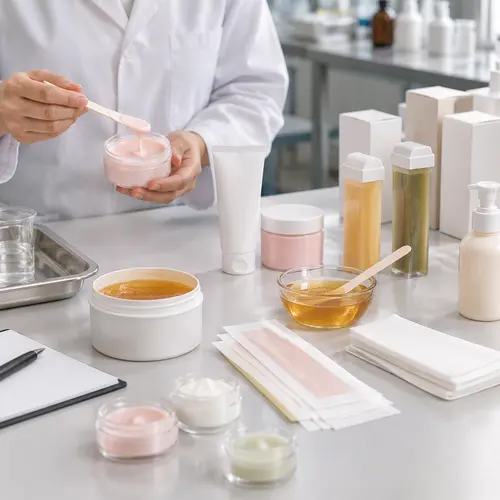
Sample approval should be treated as a controlled commercial decision, not a casual request for a free sample. For a sensitive skin depilatory cream, ask the supplier to record the approved appearance, odor, application feel, contact time, removal performance, and rinse-off behavior. For wax products, document the melt behavior, spreadability, set time, strip pull, and residue level. The signed sample record should identify the formula version, packaging format, batch code, and date so later pilot production can be compared against the same reference.
Formula customization can cover depilatory strength, wax hardness, sugar wax moisture balance, cream viscosity, fragrance level, color, aftercare format, and the intended body area. Buyers should distinguish between a meaningful formula adjustment and a simple color or fragrance change. Ask which ingredients are fixed, which can be modified, and whether any change requires a new sample review. An ODM partner should also explain practical limitations, such as a formula that cannot deliver both very fast removal and a low irritation profile across every skin type.
Packaging compatibility must be checked with the actual container and closure selected for production. Cream tubes need review for squeeze behavior, seal integrity, odor retention, and possible interaction between the formula and the inner tube layer. Wax jars need attention to liner fit, lid sealing, residue around the thread, and whether repeated heating affects the package. Roll-on wax cartridges should be checked for roller movement, flow control, cap fit, and leakage after handling. The same formula can behave differently in a tube, jar, sachet, or cartridge, so a buyer should not approve packaging from empty-container samples alone.
A stability review should reflect the markets and shipment route planned for launch. Request observations after storage in warm, cool, and ambient conditions, including separation, color shift, odor change, hardening, thinning, crystallization, and package deformation. For wax strips, inspect whether the adhesive remains evenly distributed and whether the strip backing curls or loses strength. Shipment conditions should specify carton configuration, pallet limits, protection from excessive heat, loading requirements, and whether temperature-sensitive items need seasonal routing controls.
MOQ should be separated into sample quantity, pilot quantity, and first commercial order quantity. Ask whether custom fragrance, printed tubes, cartons, labels, and inserts have separate minimums. A transparent BOM should identify formula, filling, packaging, printing, testing, tooling if applicable, and freight assumptions. This helps the buyer compare offers without confusing a low product price with a complete landed cost.
Labeling documents should be requested before final artwork. Depending on the target market, the supplier may need to provide a full ingredient declaration, net contents, batch coding method, shelf-life or period-after-opening information where applicable, usage directions, warnings, manufacturer details, and supporting product documents. Buyers remain responsible for confirming local requirements, but an experienced facility should be able to organize the relevant information clearly. The FDA cosmetics information page and the European Commission’s CosIng ingredient database are useful reference points for market preparation: FDA cosmetics information and CosIng ingredient database.
A seven-day sample promise can be valuable when a product launch is tied to a content calendar, but confirm what seven days means. It may refer to a laboratory sample, not decorated packaging or a finished shipment-ready set. Ask for the sample route, approval deadline, revision allowance, and production slot reservation. If a social campaign creates sudden demand, also ask how the supplier allocates capacity between new brands and existing accounts.
Common Problems or Failure Cases
Wax brittleness often appears when a hard wax formula is adjusted for a dramatic snap or a particular climate without enough flexibility. The wax may crack during spreading, break during removal, or leave uneven coverage. The buyer should test the product at its intended working temperature and record whether the same behavior appears across several portions, not only in the first application.
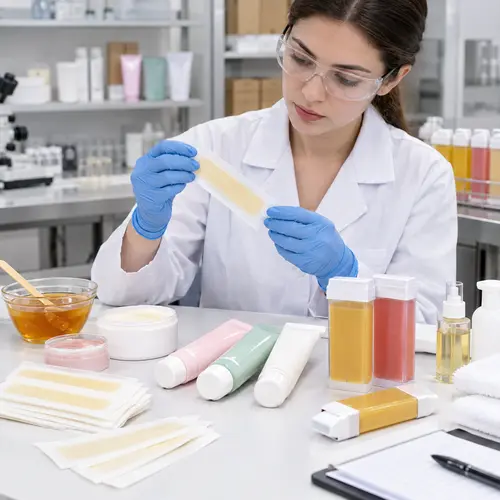
Strip adhesion loss can result from an uneven wax coating, unsuitable backing material, dust exposure, or storage in excessive heat. A strip that looks acceptable in a still photograph may fail when pulled from the package or used on fine hair. Inspect coating uniformity, edge lift, backing separation, and remaining residue after use.
Cream separation is a serious approval failure because it changes both appearance and dose consistency. Look for liquid release, graininess, color bands, or a thinner layer near the tube shoulder. Do not approve a cream solely because it returns to a smooth appearance after vigorous shaking. The supplier should explain whether the separation is reversible, what caused it, and whether the affected sample represents a production risk.
Cartridge leakage may come from a loose cap, poor roller fit, excessive fill, or expansion during warm transport. Test cartridges upright and on their side, inspect the cap and seam, and review outer-carton protection. Packaging deformation can also affect cream tubes and wax jars, especially when closures are tightened against softened material.
Fragrance sensitivity is frequently underestimated. A fragrance that seems mild in the jar may become stronger during warming or use. Compare an unscented option, a low-fragrance option, and the proposed fragrance under realistic use conditions. Claims such as natural or gentle should not replace a clear ingredient review, usage warning, and suitability assessment for the intended body area.
Communication failure is another common cause of delay. A supplier may understand technical words such as viscosity or hardness but miss a marketing requirement such as a visible whipped texture, high-contrast color, or clean removal on camera. Convert creative goals into measurable sample questions, reference photos, usage videos, and pass-or-fail criteria.
Supplier Checklist
- Can the supplier provide a numbered sample record with formula version, batch reference, appearance, odor, texture, and performance notes?
- Can it explain which formula features are customizable and which changes may affect removal time, irritation risk, or shelf behavior?
- Will it test the filled product in the proposed tube, jar, strip pouch, or roll-on cartridge?
- Does the quotation separate sample work, formula development, packaging, printing, filling, testing, freight, and any tooling?
- Are MOQ levels stated separately for formula, packaging components, printed materials, and finished goods?
- Can the supplier provide ingredient and labeling documents early enough for artwork review?
- Are storage limits, carton configuration, shipment conditions, and seasonal handling instructions written into the order record?
- Can the facility show how it handles failed batches, customer complaints, retained samples, and batch traceability?
- Does the account manager understand the content schedule, target audience, visual priorities, and launch quantity assumptions?
- Can the factory describe available capacity and lead times if demand increases after a campaign?
FAQ
Can a Chinese OEM or ODM factory copy my concept or formula?
Reduce this risk through a written confidentiality agreement, clear ownership language, controlled formula references, and a statement that custom work cannot be reused for another client without permission. Ask who can access the formula, how samples are coded, and whether your artwork and product brief are stored separately from general stock formulas. Contract terms do not replace supplier screening, so review the facility’s history and references before disclosing sensitive details.
Can the product achieve an exaggerated visual effect for social media?
It can, but visual impact must remain compatible with safe use and consistent manufacturing. Define the desired color, foam, whipped texture, spread pattern, wax pull, or before-and-after contrast in the brief. Request video samples under similar lighting and test several production samples. A dramatic appearance that depends on unstable separation, excessive fragrance, or inconsistent texture is not a reliable launch asset.
Can any quality system guarantee that followers will not experience a bad reaction?
No supplier can guarantee individual skin responses. A responsible partner can reduce avoidable risk through controlled raw materials, documented batch checks, clear warnings, appropriate use directions, retained samples, and complaint investigation. Require the factory to explain its release checks and escalation process, and avoid broad claims that the product is suitable for every user or skin type.
What if I do not understand cosmetic ingredients or manufacturing terms?
Ask the supplier to translate the brief into plain-language decisions: target body area, hair type, removal speed, texture, fragrance intensity, visual effect, package, and market. A capable account manager should return a structured sample plan with open questions, cost impact, and timing. If every discussion stays at the level of generic catalog formulas, the supplier may not be suitable for a distinctive private-label project.
Will the factory keep up if a video causes an unexpected order surge?
Ask for normal capacity, peak capacity, current booking assumptions, and the time required to secure raw materials and packaging. Discuss whether blank components can be reserved before final artwork and whether repeat orders receive a documented production window. A written escalation plan is more useful than an informal promise to move your order ahead.
Which records should I approve before placing the first commercial order?
Approve the final sample record, formula or ingredient declaration, packaging specification, artwork proof, MOQ and cost breakdown, shipment instructions, labeling documents, and acceptance criteria for appearance and performance. Keep one buyer-approved reference set and require the supplier to notify you before material, formula, package, or process changes.
References
For ingredient naming and market preparation, consult the FDA cosmetics information and the European Commission CosIng database. For background on thioglycolate ingredients used in depilatory products, review the CIR ingredient safety assessment.