Direct Answer
A sensitive skin depilatory cream should not be treated as a weaker version of a standard cream. It is a separate product brief built around controlled hair removal, lower irritation potential, restrained fragrance, predictable application time, and recovery after rinsing. A standard formula may prioritize speed, dense hair performance, or a stronger sensory signal. The sensitive-skin option prioritizes a narrower performance window and a more forgiving user experience.
For private label buyers, the decision should be based on the intended body area, consumer profile, claim language, application time, packaging system, and verified stability – not the front-label term alone. Request side-by-side samples using the same hair type and filming conditions. Review removal consistency, cream spread, odor, redness potential, rinse feel, and pack dispensing before approving either direction. The right choice is the formula that meets the brand promise without creating avoidable complaint risk or limiting how the product can be demonstrated on camera.
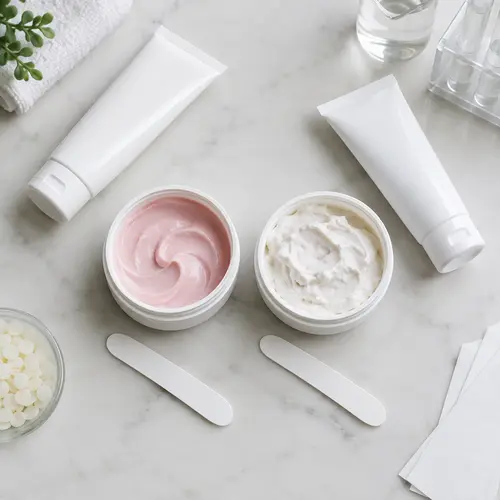
Key Takeaways for Private Label Buyers
- Define the use case first. Legs, underarms, bikini lines, and face-positioned products require different application instructions, caution language, and irritation-risk review.
- Compare complete specifications. Ask for target pH, viscosity range, active system, fragrance level, maximum contact time, and approved body areas for both samples.
- Treat packaging as part of performance. The cream must dispense cleanly, remain compatible with the tube or pump, and resist leakage during heat, cold, and shipment handling.
- Approve the mass-production standard on camera. Evaluate spread, opacity, residue, and rinse behavior under the same lighting and screen setup used for launch content.
- Plan aftercare with the core SKU. A coordinated soothing product can improve the routine, but it should never be used to disguise an overly aggressive depilatory formula.
- Match launch scope to evidence. Begin with a clearly defined product claim and a controlled pilot run before adding multiple scents, sizes, or regional labels.
Buyer Context
Hair-removal products create an unusually visible link between product performance and brand trust. Consumers can judge removal immediately, while discomfort, uneven results, odor, or redness can become public content within hours. That exposure is amplified for creator-led brands whose audience associates the product directly with the founder.
The sensitive-versus-standard decision also affects more than the ingredient list. It changes the content brief, target body areas, label wording, patch-test directions, packaging format, and aftercare strategy. Buyers considering sensitive skin hair removal products should therefore start with a product requirement document rather than a trend phrase. It should identify the user, hair coarseness, intended application zone, desired removal time, texture, scent tolerance, and target sales markets.
A standard cream can be appropriate for consumers who prioritize efficient removal on legs or other approved body areas. A sensitive option is better positioned when comfort, fragrance restraint, or delicate-area suitability leads the offer. Neither claim removes the need for clear directions and a patch test. The US FDA explains how cosmetic products are categorized and overseen in its guidance on personal care products regulated as cosmetics. EU-bound brands should also map claims, safety documentation, and notification duties against the EU cosmetics rules.
Portfolio planning matters as well. A founder may launch one cream, then build a routine with soothing gel after hair removal or an after hair removal serum. Buyers comparing cream with sugar wax, roll-on wax, or private label waxing products should not assume that the same comfort claims, packaging checks, or usage content transfer across formats.
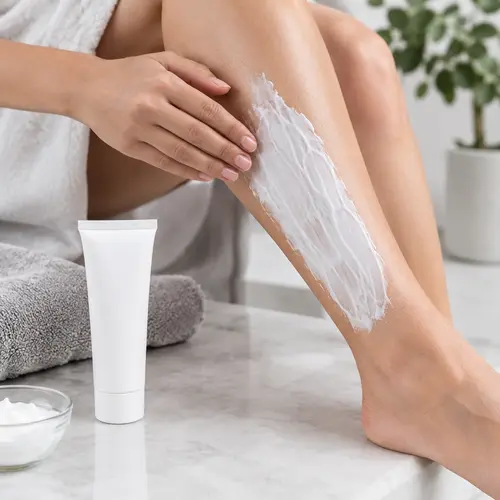
Technical and Packaging Factors
Performance Window
Depilatory performance depends on the complete formula, including the hair-breaking active system, alkalinity, emulsion structure, humectants, emollients, fragrance, and application thickness. Sensitive positioning may involve a more controlled active profile and additional attention to skin feel, but no single ingredient proves mildness. Ask the supplier to document the intended contact-time window and the point at which removal becomes uneven or discomfort increases.
Side-by-side sample review should use a consistent dose, application area, hair condition, and removal method. Record how easily the cream spreads, whether it stays in place, how fully it coats hair, and whether it dries at the edges. A useful custom depilatory cream formulation brief turns these observations into measurable approval criteria instead of relying on subjective labels such as rich or gentle.
Texture, Odor, and Camera Behavior
Texture is both a manufacturing variable and a content asset. A cream that looks smooth in a jar may string from a spatula, collapse on warm skin, or appear translucent under studio lighting. Request a 7-day first-sample target when schedule pressure is real, but do not approve from a beauty shot alone. Review the physical sample during application, dwell time, removal, and rinsing.
Fragrance can mask part of the characteristic depilatory odor, but excessive perfume may conflict with sensitive positioning. Ask for unscented or low-fragrance variants and compare them after the pack has been opened, closed, and stored. The final approved scent must be assessed in the finished packaging, not only in a lab container.
Packaging Compatibility and Storage
Tubes are common because they limit repeated product exposure and support controlled dosing. Pumps may offer cleaner content demonstrations, but the formula viscosity and internal components must permit reliable priming and evacuation. Jars provide visual access but introduce repeated opening and user-contact considerations. For every format, inspect seal integrity, cap fit, panel distortion, product discoloration, odor change, and dispensing after heat and cold storage.
The depilatory product production process should connect bulk approval, filling trials, pack compatibility, finished-product checks, and shipment release. Independent services such as SGS cosmetic compliance and stability testing services can support testing plans where the launch market or retailer requires outside verification. Unauthorized products also create direct channel risk, as illustrated by the Philippine FDA warning concerning an unauthorized strip-off hair removal cream.
Before placing a pilot order from 1,000 units, confirm which tests, packaging components, label files, and shipment simulations are included in the quote. A complete BOM should separate formula, primary pack, decoration, carton, inserts, testing, freight assumptions, and any market-specific documentation. This makes a sub-30-day development target easier to evaluate and prevents late changes from distorting launch economics.

Decision Framework
| Factor | What to Check | Why It Matters | ODM Buyer Note |
|---|---|---|---|
| Consumer and body area | Approved zones, hair coarseness, exclusion areas, patch-test directions | Determines the realistic performance and caution profile | Do not extend a leg formula to face or bikini positioning without a separate review |
| Formula specification | Target pH, viscosity range, active system, fragrance, contact-time window | Controls removal consistency, spread, odor, and user tolerance | Lock an approved range before the production batch |
| Camera-ready texture | Opacity, spatula pickup, spread, edge drying, rinse appearance | Connects actual use with social content expectations | Approve under launch lighting with final packaging |
| Packaging | Tube or pump compatibility, seal, cap, dispensing, label adhesion | Prevents leakage, blocked dispensing, and visible pack damage | Use filled-pack trials, not empty component samples |
| Storage and shipment | Heat and cold exposure, odor, color, separation, leakage, carton condition | Shows whether the SKU can tolerate warehousing and transit | Align test conditions with destination and shipping route |
| Launch scope | Sample rounds, MOQ, BOM, documents, production timing | Keeps the first launch focused and financially legible | Review hair removal OEM ODM services and depilatory product development solutions before finalizing the brief |
Once these decisions are documented, buyers can compare suppliers on repeatability rather than presentation. Review the capabilities of a hair removal OEM manufacturer, then use a structured hair removal product RFQ to request matched samples, packaging options, testing scope, and a transparent cost model.
ODM Manufacturing Considerations
A sensitive skin depilatory cream should move into production only after the buyer approves a clearly identified sample. Record the sample code, appearance, odor level, viscosity range, removal performance, application area, and intended exposure instructions. Approval should cover both the bulk cream and the final filled package. A loose laboratory sample can behave differently after filling, storage, and transport, so verbal confirmation or approval based only on photographs is insufficient.
Formula customization should begin with a written product brief. Define the target user, body area, hair type, desired removal result, fragrance direction, color, texture, and aftercare position. For a sensitive-skin claim, ask the supplier to explain which ingredients differ from its standard cream and how the changes may affect performance. A milder positioning does not remove irritation risk. Usage directions, warnings, patch-test language, and maximum exposure instructions still need careful review.
Packaging selection should account for the cream’s pH, viscosity, and potential interaction with the container, cap, liner, printed decoration, and sealing area. Confirm dispensing force, closure security, fill-weight consistency, and whether residue accumulates around the opening. Stability work should evaluate the formula and filled unit under defined temperature conditions for changes in color, odor, viscosity, separation, swelling, panel distortion, or seal failure.
MOQ discussions should separate bulk manufacturing minimums from printed packaging minimums. A supplier may accept a modest cream run while the tube printer, carton converter, or roll-on cartridge vendor requires a larger quantity. Request a written breakdown covering usable finished units, expected process loss, spare packaging, testing samples, and any remaining printed components owned by the buyer.
Before artwork approval, obtain the ingredient list, product specifications, batch coding format, net-content tolerance, directions, warnings, manufacturer details, and available test reports. Market-specific label responsibilities should be assigned in writing. Shipment terms should also identify carton configuration, pallet use, temperature exposure expectations, dangerous-goods status when applicable, and the process for documenting damaged or leaking deliveries. Buyers can review related capabilities through the OEM/ODM services and manufacturing process pages.

Common Problems or Failure Cases
Cream separation: A watery layer, uneven color, or grainy texture may appear after storage even when the initial sample looked acceptable. Require retained samples from the production batch and define measurable acceptance limits for appearance and viscosity.
Fragrance sensitivity: Masking the base odor with a stronger perfume can create a second consumer complaint rather than solving the first. Evaluate fragrance intensity after application and removal, and make sure marketing language does not imply that a pleasant scent proves gentleness.
Package deformation or leakage: Caps can loosen, seals can lift, and container walls can soften during storage or shipment. Roll-on wax cartridges may leak around the roller assembly, while depilatory cream can collect in cap threads and compromise presentation. Inspect filled units from multiple cartons, including cartons from different pallet positions.
Wax brittleness: Hard wax or sugar wax may crack instead of flexing when storage temperature, formula balance, or reheating instructions are unsuitable. Confirm the workable temperature range and removal behavior using the intended consumer method rather than judging only the unmelted product.
Strip adhesion loss: Wax strips can lose grip because of insufficient wax coating, liner interaction, storage exposure, or inconsistent pressure during converting. Check coating uniformity, strip separation, grip on representative hair, and residue after removal.
Scale-up mismatch: A custom sample may meet expectations, but the commercial batch can vary if raw-material substitutions, mixing order, processing time, or filling settings are not controlled. The manufacturing contract should link production to the approved sample and require written authorization for material or process changes.

Supplier Checklist
- Confirm experience with depilatory cream, wax strips, sugar wax, roll-on wax cartridges, and relevant aftercare products.
- Request a coded sample record with specifications for appearance, odor, viscosity, fill weight, and removal performance.
- Ask how sensitive and standard formulations differ and which claims the available evidence can support.
- Verify incoming-material controls, in-process checks, finished-batch release criteria, retained samples, and complaint traceability.
- Review filled-package stability evidence, closure integrity, leakage results, and carton performance under expected shipment conditions.
- Separate product MOQ, custom packaging MOQ, artwork charges, test costs, tooling, freight, and storage fees in the quotation.
- Check ingredient documents, specifications, test reports, batch records, label files, and market-specific declarations before production.
- Require confidentiality, ownership, change-control, rejection, rework, and recall responsibilities in the manufacturing contract.
- Ask for anonymized examples of overseas creator or DTC hair-removal launches, including how forecasts and viral demand were handled.
- Evaluate whether the account contact can translate content goals into measurable product requirements and documented decisions.
FAQ
Can a factory reuse my idea or custom formula for another brand?
No document can eliminate misuse risk, but buyers can reduce it. Sign a confidentiality and non-use agreement before disclosing the full brief. The manufacturing contract should define ownership of custom work, packaging artwork, test data, and tooling. Also ask whether the proposed cream is an exclusive development, a modified base, or an existing stock formula.
Can quality control guarantee that no consumer will experience irritation?
No. Depilatory products act on hair and can irritate some users even when a batch meets its specifications. Risk control should combine ingredient review, defined usage directions, warning language, appropriate testing, batch release checks, traceability, and a documented complaint process. Avoid absolute safety claims for face or body use.
How can a nontechnical buyer communicate product requirements clearly?
Use consumer and content language first, then require the supplier to convert it into a written specification. Describe the target body area, hair type, texture, odor, application method, removal result, package format, and market. A capable contact should explain tradeoffs in plain English and confirm decisions in sample records.
What should I ask before relying on a supplier for a viral sales spike?
Request monthly output by product and filling line, current utilization, component lead times, backup equipment, forecast rules, and capacity-reservation terms. Clarify whether confirmed orders receive protected production slots and how the factory allocates capacity between smaller brands and major accounts.
Is a sensitive-skin version automatically better than a standard cream?
No. It may offer a more suitable fragrance profile, texture, or ingredient approach for the intended user, but performance and tolerance vary. Compare substantiated claims, removal consistency, directions, consumer feedback plans, and commercial cost rather than relying on the product name.
Which documents should be complete before shipment?
At minimum, confirm the final ingredient list, approved artwork, product specification, batch identification, quantity record, release results, packing list, invoice, and transport documents. Destination-market requirements may add responsible-party, notification, language, or safety-file obligations.
References
SGS cosmetics and personal care testing services describes independent services covering product quality, safety, and performance evaluation.
European Commission cosmetics guidance provides official information for products placed on the European Union market.
FDA guidance on personal care product classification explains that intended use determines how products are treated under United States law.