Direct Answer
A successful sensitive skin depilatory cream should be designed as a controlled removal system, not simply a weaker version of a standard cream. Buyers need to balance hair breakdown, contact time, spreadability, odor, rinse behavior, and post-use comfort. The strongest product brief defines the intended body area, user profile, application thickness, maximum contact time, packaging format, and claims before sampling begins.
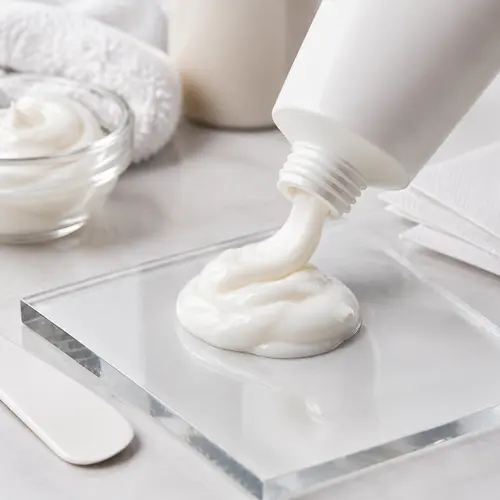
For creator-led brands, the product also has to perform on camera. It should dispense cleanly, remain visibly even during application, and wipe away without excessive dripping or residue. Ask the ODM to provide a visual prototype, a documented irritation-risk review, packaging compatibility results, and samples from the same baseline intended for production. A seven-day sample target can protect a social launch window, but speed should never replace stability, labeling, and repeat-use checks. Review the mild hair removal formula options before locking the product concept.
Key Takeaways for Private Label Buyers
- Define the use area first. A face-positioned product, body cream, and bikini-area product require different application instructions, texture decisions, and risk controls.
- Approve performance as a system. Compare hair removal, skin feel, odor, contact time, rinse-off behavior, and residue rather than selecting the fastest sample.
- Test the final package. Tube layers, seals, caps, pumps, and printed decoration must tolerate the formula throughout storage and shipment.
- Keep sample and production baselines aligned. Require written confirmation that scale-up will not introduce an unapproved change in ingredients, color, fragrance, or viscosity.
- Build aftercare into the launch. A paired calming gel or lotion can create a more complete personal-care ritual and a stronger content story.
- Request commercial visibility early. Ask for the pilot MOQ, itemized BOM, sample scope, packaging lead time, testing plan, and estimated logistics conditions before approving artwork.
Buyer Context
Hair-removal products create an unusually narrow margin between visible efficacy and user discomfort. If a depilatory cream is too slow, consumers may reapply it, extend contact time, or use an excessive layer. If it is too aggressive, a single negative reaction can become highly visible across TikTok, Instagram, Amazon reviews, and creator communities. This makes comfort positioning a product-development decision rather than a naming exercise.
The first buyer decision is the format. Creams offer clear before-and-after demonstrations and broad body coverage. Wax strips provide portable, low-mess removal but depend on adhesion and backing quality. Sugar wax emphasizes a hands-on ritual yet requires temperature and texture control. Roll-on wax cartridges need consistent flow and leakage resistance. Aftercare adds an immediate calming step and can improve the perceived completeness of a kit. Buyers comparing formats can review broader hair removal product solutions, private label waxing products, and soothing gel after hair removal.
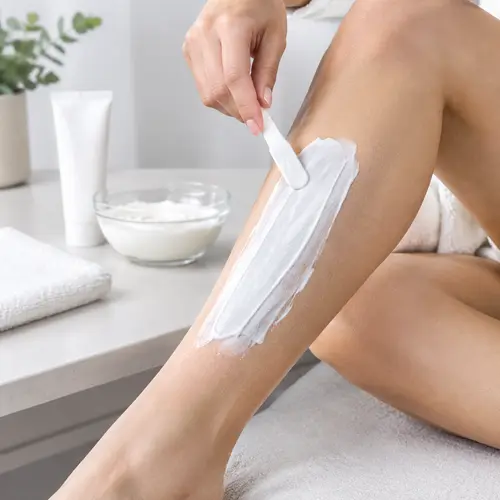
For an audience-led brand, product theater also matters. The cream should create an even, camera-readable layer rather than disappearing into the skin or running down the leg. A controlled wipe-off reveal is usually more useful for content than exaggerated color or fragrance. Ask the manufacturing team to film sample dispensing, spreading, timed removal, and rinsing under neutral lighting. This gives the founder a practical visual checkpoint before investing in molds, printed tubes, cartons, or launch assets.
Market choice affects the project brief. US cosmetic products are regulated rather than pre-approved, as explained in the FDA overview of cosmetic oversight. Canadian launches should be screened against Health Canada’s cosmetic requirements. Buyers can also use ISO 22716 manufacturing guidance when assessing how a facility manages cosmetic production and records.
Technical and Packaging Factors
Removal Performance Versus Comfort
The ODM should establish a repeatable application method before comparing formulations. That method should define the treatment area, approximate layer thickness, contact-time checkpoints, wipe direction, and rinse step. Samples should be reviewed on representative coarse and fine hair because a formula that performs well on one profile may underperform on another. The goal is predictable removal within labeled instructions, not the shortest possible exposure.
Comfort assessment should record immediate sensations, visible redness, tightness after rinsing, lingering odor, and skin feel after drying. Avoid claims such as irritation-free or safe for everyone. A better product position is precise: intended use area, clear patch-test directions, defined maximum contact time, and instructions against reapplication during the same session.
Texture, Odor, and Rinse Behavior
Viscosity should be expressed as an agreed target range measured under a stated method, temperature, and timing. A sample described only as thick or creamy is difficult to reproduce at scale. The cream should stay where applied, spread without dragging, dispense without sudden spurting, and rinse without leaving a waxy film. Fragrance can soften the user experience, but it should not be used to conceal instability or create unnecessary sensory load for a sensitive-skin position.
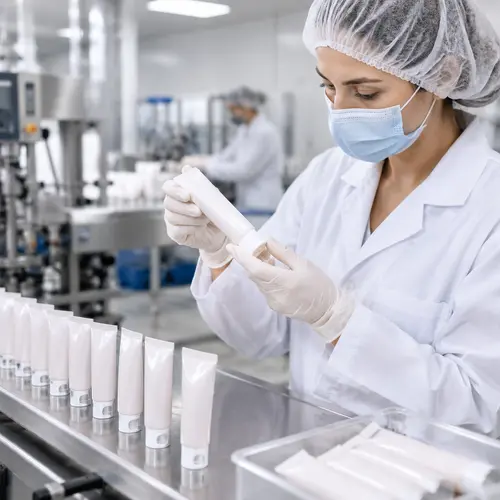
Ask to compare retained samples after room-temperature, elevated-temperature, cold, and repeated heat-cold storage. Review separation, color drift, odor change, viscosity movement, package swelling, seal stress, and dispensing behavior. These checks should continue in the selected retail package, not only in a laboratory jar. The hair removal manufacturing process provides useful checkpoints from sampling through filling and shipment.
Packaging Compatibility
Tubes are a common choice because they support controlled dispensing and familiar consumer instructions. However, the formula may interact with tube layers, cap materials, seal liners, adhesives, inks, or metallic decoration. Request compatibility work on the exact package specification. Include upright, inverted, and side storage where relevant, plus leakage review after heat exposure and transport simulation.
Airless pumps may create a premium appearance but can complicate evacuation when the cream is highly viscous. Jars simplify filling yet increase the chance of over-application and repeated product contact. A spray or foam concept may look distinctive on video, but it needs a dispensing system engineered for the formula and should not be selected solely for visual novelty. Buyers can compare options through a focused custom depilatory cream formulation discussion.
Decision Framework
| Factor | What to Check | Why It Matters | ODM Buyer Note |
|---|---|---|---|
| Intended use area | Face, legs, underarms, bikini line, or multi-area positioning | Changes the performance target, directions, and warning language | Do not approve a universal claim without area-specific evidence |
| Texture | Spread, hold, dispensing, wipe-off, and rinse behavior | Controls application consistency and on-camera presentation | Set a measured viscosity range before scale-up |
| Comfort review | Immediate sensation, redness, tightness, odor, and repeat-use feedback | Protects the brand promise and helps define instructions | Review more than one hair and skin profile |
| Package fit | Seal condition, leakage, swelling, decoration, and product evacuation | Prevents failures during storage, fulfillment, and consumer use | Test the final tube, cap, liner, and printed finish |
| Storage plan | Room, warm, cold, and heat-cold sample behavior | Reveals separation, odor change, viscosity drift, and package stress | Confirm shipment conditions for launch markets |
| Commercial scope | Sample fee, pilot MOQ, BOM, artwork needs, lead time, and freight estimate | Reduces late cost changes and missed content dates | Use request a hair removal product quote to compare a defined brief |
A founder-ready brief should end with one approved product target, one backup texture direction, the chosen package family, launch-market labeling needs, and a dated sample review plan. If demand spikes after launch, the production path should scale without changing the approved formula. Review the available hair removal OEM ODM services to align sampling, packaging, documentation, and production responsibilities before the first purchase order.
ODM Manufacturing Considerations
Developing a sensitive skin depilatory cream requires a controlled approval path from the first brief through commercial shipment. Begin with a written sample brief covering the intended body area, expected hair type, application thickness, removal window, fragrance direction, color, rinse feel, and acceptable post-use sensation. The supplier should record each revision so the approved sample can be traced to a specific formula version rather than an informal description.
Formula customization should focus on commercially meaningful variables. Buyers may request changes to cream density, spreadability, odor masking, visible color, or aftercare ingredients, but every adjustment can affect removal performance and user comfort. Confirm whether a requested ingredient is functional, sensory, or mainly intended for marketing. Claims such as suitable for the face, gentle, or suitable for sensitive skin require especially careful review because intended use and label wording influence the supporting documentation needed in each market.
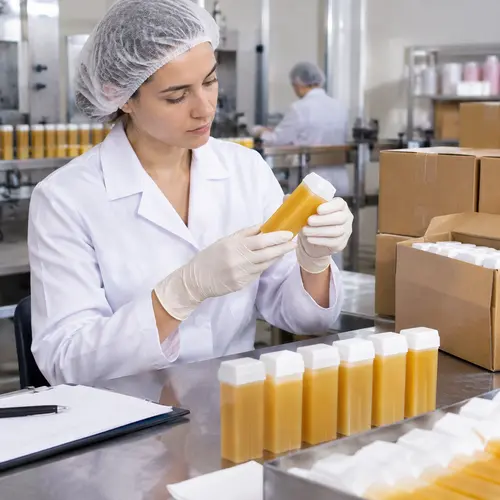
Packaging selection should follow the product rather than precede it. Ask the supplier to fill candidate tubes, pumps, or sachets with the actual formula and document dispensing consistency, closure cleanliness, printed-surface durability, and product contact with seals or internal coatings. For a broader hair-removal range, sugar wax, strip wax, roll-on wax cartridges, and aftercare products need separate packaging decisions because their flow, temperature exposure, and opening methods differ.
A stability review should define acceptance limits before testing begins. Relevant observations include color drift, fragrance change, phase separation, surface crusting, net-weight loss, dispensing force, and any change in removal behavior. Buyers should receive dated records for the approved pack, not only a statement that the formulation passed. Retained production samples also help investigate later complaints.
MOQ discussions should separate formula MOQ, packaging MOQ, print MOQ, and finished-goods MOQ. A low filling quantity may still require purchasing excess decorated tubes or cartons. Request a cost breakdown for unused components, future storage, and repeat-order conditions. The scope of an OEM/ODM sample should also state how many revisions, pack options, and label checks are included.
Before production, obtain the ingredient list, usage directions, warnings, batch coding format, shelf-life basis, and available product records. Market-specific artwork remains the brand owner’s responsibility, but a capable manufacturer should identify obvious conflicts and provide documents needed for review. Shipment planning should specify carton configuration, pallet use, temperature precautions, freight method, destination restrictions, and responsibility for damaged or delayed cargo. Buyers can compare these steps with the supplier’s OEM/ODM service scope and manufacturing process.

Common Problems or Failure Cases
Wax brittleness: Hard wax or sugar wax may crack instead of flexing when its working properties do not match the use environment. Approve samples at realistic salon or home-use temperatures and define acceptable pull behavior.
Strip adhesion loss: Wax strips can lose grip after prolonged storage, contamination, or unsuitable material selection. Check whether the strip separates cleanly, transfers wax evenly, and removes hair without excessive residue.
Cream separation: A depilatory cream that releases liquid, develops lumps, or changes color should not proceed solely because it still removes hair. Separation can create inconsistent dosing and undermine consumer confidence. Establish visual and sensory rejection criteria for incoming batches.
Cartridge leakage: Roll-on wax may escape around the roller or closure during transport. Evaluate filled commercial packs under representative handling and inspect cartons for staining, loose caps, and restricted roller movement.
Fragrance sensitivity: Strong perfume may cover depilatory odor but become a complaint itself. Review fragrance level in the final base and offer a lower-fragrance option when comfort positioning is central.
Packaging deformation: Tubes, sachets, or cartridge bodies can soften, crease, or lose seal integrity during storage and freight. Do not approve a package from an empty component alone; assess filled packs and shipping cartons together.
Supplier Checklist
- Confirm that the facility has documented experience with depilatory cream, wax strips, sugar wax, roll-on cartridges, or the specific hair-removal format being sourced.
- Request a signed sample specification covering appearance, fragrance, texture, application, removal behavior, fill weight, and packaging.
- Ask how formula revisions are identified and how the final approved sample is transferred into manufacturing instructions.
- Review ingredient restrictions and label requirements for every destination market. For Canada, compare ingredients against Health Canada’s cosmetic ingredient hotlist.
- Define irritation-risk review steps, consumer directions, maximum contact time where applicable, warnings, and the intended body area.
- Obtain acceptance limits for viscosity or melting behavior when relevant, plus appearance, odor, net content, and dispensing performance.
- Require evidence that the finished formula has been evaluated in its proposed tube, sachet, strip pouch, jar, or cartridge.
- Clarify the quantities and lead times for formula, undecorated packaging, printed components, cartons, and finished goods.
- Review batch records, inspection points, retained-sample practices, complaint handling, and the process for stopping nonconforming goods.
- Confirm export-carton strength, pallet pattern where used, freight conditions, lot identification, and shipping documentation.
- Ask for anonymized examples of overseas creator-led or DTC hair-removal launches, including what the supplier handled and what the brand handled. Treat marketing claims as background unless supported by records.
- Use a written RFQ through the supplier’s contact and RFQ process so assumptions about sample scope, components, testing, and freight are visible before payment.
FAQ
How can I prevent a manufacturer from using my idea or formula for another brand?
Use a mutual confidentiality agreement, define ownership of custom formulas and artwork, and prohibit unauthorized sample display. Ask whether the base is exclusive, modified from a shared platform, or fully custom. Keep dated briefs and approvals, and ensure subcontractors handling packaging or fragrance are covered where necessary.
Can a sample deliver the dramatic texture and color needed on camera?
Possibly, but approve it under the lighting, application thickness, and filming distance used for content. Request several controlled variants rather than vague changes such as more dramatic. Camera appearance must not compromise even application, removal, rinsing, or skin comfort.
Can quality controls guarantee that no customer will experience irritation?
No responsible supplier can guarantee zero reactions. Risk can be reduced through ingredient review, clear directions, defined contact time, batch controls, traceability, and appropriate user warnings. Brands should also maintain complaint escalation and stop-sale procedures rather than relying on a claim of perfect safety.
How do I communicate if I do not understand cosmetic ingredients?
Describe the consumer, body area, content concept, sensory target, and unacceptable outcomes in plain language. A suitable account team should translate those marketing needs into measurable sample criteria and explain tradeoffs without expecting the buyer to write a technical formula brief.
Should sensitive skin depilatory cream be fragrance-free?
Not automatically. An unfragranced base may retain a noticeable functional odor, while added fragrance can create sensitivity concerns. Compare a low-fragrance version with an option containing no added perfume, then evaluate odor during use and after rinsing.
What should be approved before paying for mass manufacturing?
Approve the formula version, finished pack, fill quantity, artwork files, label text, carton configuration, inspection criteria, batch code position, production quantity, payment milestones, and shipment terms. Any unresolved item should be listed as an open decision rather than assumed.