Direct Answer
The safest way to launch private label hair removal products quickly is to treat sampling, packaging, testing, and compliance as parallel workstreams rather than sequential handoffs. Begin with a tightly defined product brief, select a proven baseline formula, review the first sample against measurable acceptance criteria, and lock a signed reference sample before approving the pilot run. Packaging compatibility, stability screening, artwork review, and market-specific documentation should begin while the formula is being refined.
For a DTC brand, an under-30-day pathway is most realistic when the project uses an established formulation platform, readily available packaging, and limited sensory customization. A pilot run from 1,000 units can reduce inventory exposure, but low MOQ should never mean reduced ISO 22716 controls, incomplete safety support, or a formula that changes after approval. The goal is not simply a fast sample. It is a launch-ready product that behaves like the approved sample through filling, shipment, storage, and consumer use.
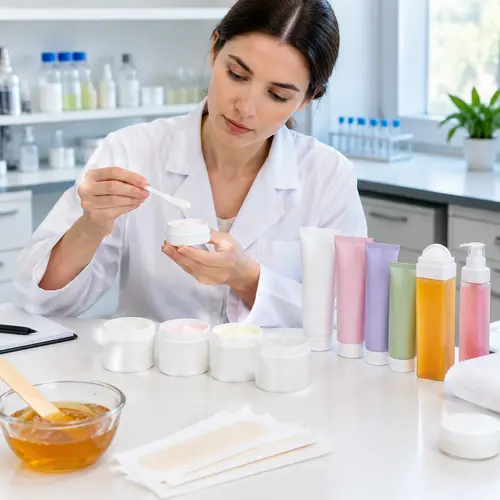
Key Takeaways for Private Label Buyers
- Write measurable sample criteria. Define texture, odor, application time, removal performance, residue, skin feel, fill weight, and packaging behavior before the lab starts.
- Choose customization deliberately. A validated base can be adapted through fragrance, color, viscosity, after-feel, and packaging without rebuilding the entire formula.
- Test formula and pack together. A stable cream can still fail if a cap leaks, a cartridge deforms, or wax migrates into a seal.
- Separate regulatory alignment from approval language. Cosmetics are regulated, but the FDA does not pre-approve ordinary cosmetic products.
- Lock the reference sample. The approved formula code, BOM, process parameters, package components, and finished sample should become the controlled launch specification.
- Plan shipment conditions early. Wax, sugar wax, roll-on cartridges, and depilatory cream can react differently to prolonged heat, cold, vibration, or inverted storage.
Buyer Context: Why the Workflow Matters
Hair-removal products leave little room for vague development briefs. A depilatory cream must spread evenly, remain stable in its package, remove hair within the labeled use conditions, and limit foreseeable irritation risk. Wax strips need consistent adhesion and clean release after storage. Sugar wax must retain workable texture rather than crystallize or become excessively fluid. Roll-on wax cartridges need controlled flow without leakage around the roller or cap. Aftercare must feel soothing without undermining a vegan, fragrance-free, or clean-positioning claim.
These variables become commercially important when founders are launching through Shopify, Amazon, or TikTok Shop. A texture that looks smooth on camera may still create complaints if it strings, separates, leaves residue, or becomes difficult to dispense after warm-weather delivery. A supplier replacement after a capacity failure adds another concern: the new formula may look similar but behave differently during application or transit.
A useful starting point is to compare the available private label hair removal solutions and decide whether the first launch should center on cream, wax strips, hot wax, sugar wax, roll-on wax, or an aftercare set. Buyers considering thioglycolate-based products should review the development scope for custom depilatory cream formulation. Brands prioritizing mechanical removal can instead assess custom wax strips and hot wax, including pack format and climate exposure.
Regulatory planning also needs market specificity. In the United States, buyers should understand the FDA’s regulatory framework for cosmetics and the agency’s explanation of how cosmetics are regulated rather than FDA pre-approved. For the European Union, ingredient screening can reference the European Commission’s CosIng ingredient database, while the final assessment must also account for the complete formula, intended use, claims, labeling, Responsible Person obligations, safety report, product information file, and CPNP notification.
Technical and Packaging Factors
Formula Performance and Sample Acceptance
The first sample review should be based on a written scorecard rather than instinct alone. For depilatory cream, record appearance, odor, spreadability, viscosity range, removal performance under the intended directions, rinse behavior, and after-feel. Because these formulas are chemically active and typically alkaline, the irritation-risk review should cover exposure time, target body area, warnings, patch-test directions, and foreseeable misuse. A face-positioned product cannot simply inherit the use instructions of a body formula.
For wax and sugar wax, ask the labs to document softening or melting behavior, working temperature, pickup, spread, grip, breakage, residue, and removal technique. Wax strips should be aged in their final sachet before adhesion is judged. A freshly coated strip may perform well while later showing adhesive migration, dry edges, or uneven pull. Sensitive-skin positioning should be connected to ingredient review and appropriate testing rather than treated as a purely visual claim. The same principle applies when reviewing low irritation hair removal products.
Packaging Compatibility and Storage
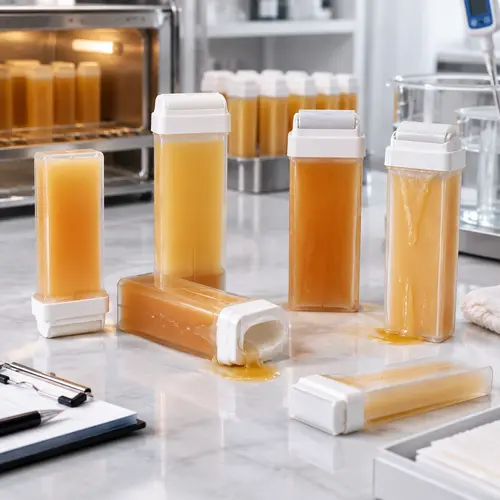
Packaging should be selected before the formula is frozen. Depilatory cream requires checks for tube or bottle paneling, seal integrity, cap compatibility, discoloration, odor transfer, dispensing force, and product buildup at the closure. Roll-on cartridges need upright, inverted, and side-storage leakage checks, plus roller movement after heat exposure. Wax jars require closure and liner review because heat can increase flow and expose weak seals.
A practical screening plan may include storage at 5°C, 25°C, and 40°C, along with three freeze-thaw cycles. These are useful development checkpoints, not universal pass criteria; the responsible technical team should define durations and acceptance limits based on the formula, packaging, destination market, and shipment profile. Record viscosity, appearance, odor, net content, leakage, component deformation, and application performance at each review point.
From Approved Sample to Launch Batch
The signed reference sample should connect to one controlled formula code and one approved packaging BOM. Raw-material substitutions, fragrance changes, process-temperature changes, and component changes should trigger documented review. This prevents the common failure in which a beautiful lab sample is followed by a launch batch with a different viscosity or application feel.
The buyer should also map each approval gate within the hair removal manufacturing process: brief approval, first sample, revised sample if required, formula lock, compatibility review, artwork approval, pre-run sample, quality release, and shipment authorization. A broader custom hair removal product development plan can keep formulation, component sourcing, testing, and documentation on the same timeline.
Aftercare can be developed as part of the same consumer routine, but it needs its own specifications and compatibility review. Options such as soothing gel after hair removal should be evaluated for pump or tube dispensing, fragrance level, skin feel, and kit fit. Before commercial approval, the buyer should receive an organized document set and use a structured hair removal product RFQ to confirm sample scope, 1,000-unit pilot feasibility, component lead times, testing responsibilities, and shipping terms.
Decision Framework for Sampling and Launch
| Factor | What to Check | Why It Matters | ODM Buyer Note |
|---|---|---|---|
| Formula fit | Target area, hair type, texture, odor, use time, removal method, and after-feel | Prevents a visually attractive sample from missing the actual consumer use case | Approve measurable criteria, not broad terms such as premium or gentle |
| Customization level | Base formula, fragrance, color, viscosity, claims, and hero ingredients | Every change can affect stability, safety review, cost, and timing | Ask which modifications remain inside a pre-validated formulation matrix |
| Packaging fit | Seal, cap, roller, tube, liner, dispensing force, leakage, and component deformation | Formula stability does not guarantee package compatibility | Test the exact decorated component whenever possible |
| Storage and shipment | Heat, cold, freeze-thaw, vibration, orientation, and carton protection | Wax flow, cream viscosity, strip adhesion, and seals can change in transit | Match the protocol to destination climate and shipping mode |
| Compliance file | Ingredient list, specifications, safety support, claims evidence, label copy, and market records | Missing or inconsistent files can delay listing, customs clearance, or retail review | Confirm MoCRA and CPNP responsibilities in the development contract |
| Scale consistency | Reference sample, formula code, BOM, process controls, and finished-product release criteria | Protects against texture or performance drift after sample approval | Require change control before any material, formula, or package substitution |
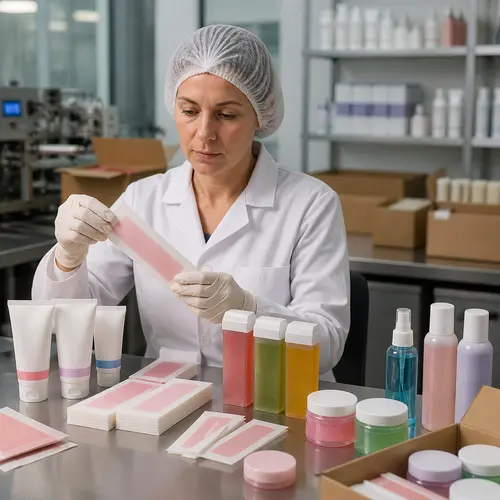
For additional technical preparation, buyers can review these depilatory product development articles before issuing the final brief. The most efficient project is not the one with the fewest checkpoints; it is the one in which every checkpoint answers a launch decision early enough to prevent rework.
ODM Manufacturing Considerations
Private label hair removal products should move into commercial manufacturing only after the buyer and contract manufacturer agree on measurable acceptance criteria. A visually acceptable sample is not enough. The confirmation record should identify the sample version, intended market, formula status, package configuration, target fill, fragrance level, and any approved tolerances.
Sample confirmation and formula customization
Keep a retained confirmation sample and a signed specification covering appearance, odor, texture, pH where relevant, and functional attributes. Numeric specifications should name the test method. For example, a cream viscosity range is meaningful only when the instrument, spindle, speed, and measurement temperature are recorded. Wax products may require a defined melting or working-temperature range tied to the intended salon or at-home use.
Customization should begin with a written product brief rather than an ingredient wish list. Founders should define target users, body or face application, desired sensory profile, fragrance restrictions, removal format, claims, and target landed cost. A ready formulation can still be differentiated through permitted ingredient changes, sensorial adjustments, fragrance design, package presentation, and a documented sourcing story. If the concept depends on a specific imported botanical oil or organic ingredient, request origin records, supplier declarations, and continuity plans before building claims around it. Buyers can compare available hair removal product categories and custom development options before setting the sample scope.
Compatibility, stability, and commercial controls
The final pack should be reviewed as a complete system. Contact materials, seals, printed surfaces, caps, cartridges, sachets, and applicators can react differently from sample containers. Stability work should monitor odor, color, pH, texture, net-weight change, seal condition, corrosion, migration, and package deformation over planned checkpoints. The protocol should reflect the formula, shelf-life objective, distribution climate, and likely warehouse exposure.
MOQ should be separated into formula preparation, filling, primary component, decoration, and carton minimums. The highest component minimum often determines the practical launch quantity. Ask for unit-cost scenarios at several quantities and include testing, setup, freight, duties, rejected-unit allowance, and fulfillment costs when checking whether the product can support customer acquisition cost.
Before release, the document packet should include the ingredient declaration, finished-product specification, lot coding format, certificate-of-analysis format, label content review, safety support, and market-specific files. Shipment instructions should define freight mode, seasonal route risks, carton configuration, pallet limits, receiving inspection, and the process for documenting damaged or leaking units. A transparent manufacturing process is particularly valuable when a brand needs an alternate source after supplier disruption or capacity constraints.

Common Problems or Failure Cases
- Wax becomes brittle: The formula may crack during application or removal because the resin, oil, or polymer balance does not match the working conditions. Compare the failed lot with the confirmed sample and verify raw-material and processing records.
- Strip adhesion declines: Weak removal can result from adhesive migration, substrate variation, seal weakness, or prolonged warm storage. Inspect both unused controls and returned products from the affected lot.
- Cream separates: Oiling-out, watery layers, or graininess may indicate emulsion stress, incorrect processing, raw-material variation, or interaction with the pack. Do not rely on remixing as an acceptance method.
- Roll-on cartridges leak: Leakage can come from dimensional variation, roller fit, fill temperature, headspace, or seal damage. Record where the leak originates instead of treating every failure as a formula issue.
- Fragrance causes complaints: A level that smells acceptable in the lab may be too strong during actual hair-removal use. Review allergen documentation, exposure conditions, fragrance concentration, and whether an unscented option is needed.
- Packaging deforms: Warped jars, softened sachets, or distorted cartridges may reflect resin selection, wall thickness, fill conditions, or warehouse exposure. Confirm whether the defect is cosmetic or affects sealing and safe use.
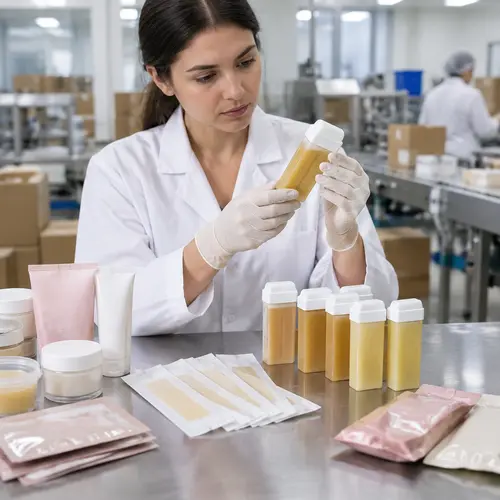
Supplier Checklist
Use this checklist to compare hair-removal labs and manufacturing partners on evidence rather than presentation:
- Confirm the legal company name, production location, audit scope, certification validity, and responsible quality personnel.
- Request a sample plan showing included variants, revision limits, testing responsibilities, cost, and expected timing.
- Set measurable criteria for texture, pH, viscosity or melting range when applicable, fragrance, fill weight, and performance.
- Review ingredient traceability, fragrance and allergen files, restricted-substance screening, and support for natural or organic claims.
- Require a compatibility and stability protocol based on the actual formula, pack, shelf-life goal, and destination markets.
- Break down minimum quantities by formula, component, printing, filling, and secondary packaging.
- List required label and compliance documents for each country before artwork approval.
- Review lot traceability, deviation handling, change notification, retained samples, complaint investigation, and recall procedures.
- Confirm production lead time, available capacity, contingency planning, shipment terms, and receiving-inspection rules.
- Record formula ownership, exclusivity, confidentiality, tooling ownership, and approved subcontracting in the contract.
FAQ
Can an Asian manufacturer actually follow Western clean beauty and cruelty-free requirements?
Yes, but location alone proves nothing. Treat clean beauty as a brand-defined restricted-substance standard and require ingredient screening against it. For cruelty-free positioning, examine supplier declarations, animal-testing policies, raw-material records, subcontractor controls, and the rules of each sales market. Certifications should be checked for issuing body, site, activities covered, and expiration date.
Will a low MOQ make the unit cost impossible to reconcile with CAC?
It can if custom components, extensive decoration, or testing costs are spread over too few units. Model contribution margin using landed cost rather than filling price alone. A simpler launch pack, shared component, or limited initial SKU range may preserve margin without lowering formula acceptance standards.
Will a turnkey base formula make the brand indistinguishable from competitors?
Not necessarily. Differentiation can come from verified performance targets, fragrance strategy, sensorial profile, selected specialty ingredients, package format, instructions, and aftercare configuration. Ask which formula elements may be changed and whether exclusivity is available. The contract should clearly distinguish brand-owned work from the lab’s pre-existing know-how.
Can we sign a strict NDA before sharing the concept?
Yes. The NDA should cover formulas, samples, forecasts, launch plans, artwork, supplier information, and permitted recipients. It should also address subcontractors, duration, return or destruction of records, and legal remedies. An NDA protects confidential information, but formula ownership and market exclusivity still require separate contract language.
How can we verify that environmental packaging claims are not greenwashing?
Request material specifications, supplier identity, recycled-content evidence, chain-of-custody records where applicable, and certificates whose scope matches the actual component. Verify whether recyclability claims are accurate in the intended market. Avoid broad terms such as eco-friendly when the supplier can document only one limited attribute.
Which regulatory records should be ready before launch?
The exact set depends on product classification and market, but buyers commonly need an ingredient list, label review, safety substantiation, product and package specifications, traceability records, and relevant notification or listing support. Do not describe a cosmetic as FDA approved. The FDA explains that cosmetics are regulated even though most cosmetic products are not subject to premarket approval.