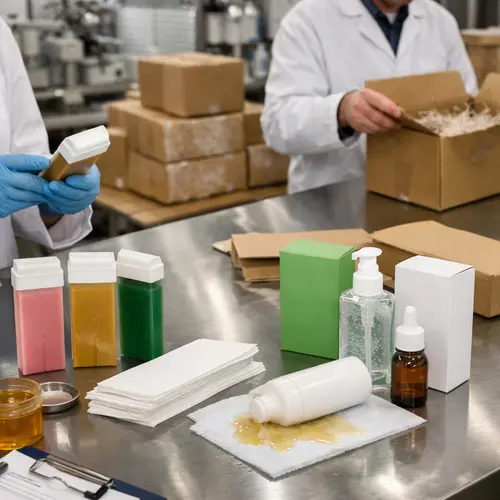
Direct Answer
For most private-label hair removal launches, a lotion is the most versatile post-depilation format, a gel is usually the strongest choice for immediate cooling and visual appeal, and a serum is best when the brand needs a concentrated, premium aftercare story. The right decision depends less on texture preference than on the removal method, target body area, skin sensitivity profile, packaging, and the claims your compliance file can support.
After wax, sugar wax, or roll-on wax, buyers generally need a lightweight product that reduces the feeling of tightness without leaving a greasy film. After depilatory cream, the priority shifts toward a mild, fragrance-controlled recovery formula with carefully reviewed irritation risk. A gel can communicate freshness on TikTok or a product page, while a lotion may be easier to use across larger body areas. A serum can raise perceived value, but it requires tighter control of dispensing, stability, and claim language. In practice, post depilatory care products should be selected as part of a complete hair removal system, not as an isolated SKU.
Key Takeaways for Private Label Buyers
- Match format to use case: Choose lotion for broad, everyday aftercare, gel for a fast-drying cooling experience, and serum for targeted application or a premium kit.
- Review the complete formula: Assess fragrance, alcohol content, botanical allergens, preservative strategy, and compatibility with recently depilated skin.
- Test the package with the formula: Pumps, tubes, droppers, and airless systems can each affect leakage, dose control, oxidation, and user perception.
- Validate storage and shipment conditions: Heat, cold, vibration, and repeated opening can change viscosity, appearance, or closure performance.
- Separate cosmetic claims from medical claims: Use supportable language such as soothing, cooling, or helping skin feel comfortable, subject to market-specific review.
- Use a pilot to test the market: A low-MOQ sample and pilot plan should include packaging, labeling documents, stability work, and a path to scale without reformulation.
Private label hair removal products can be planned as a coordinated assortment, including the removal formula, accessories, and the aftercare step that follows it.
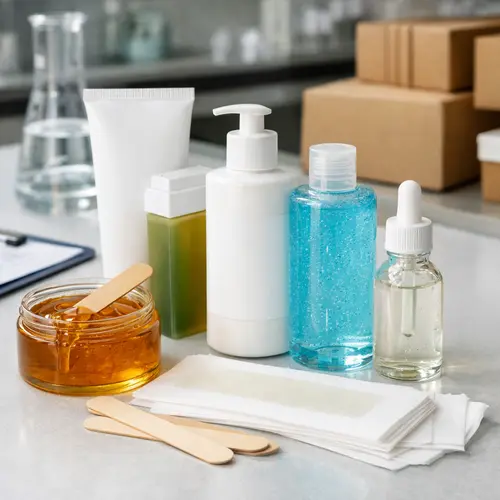
Buyer Context
Aftercare is where a hair removal brand proves that it understands the full customer experience. Wax strips and hot wax can leave a temporary sensation of warmth or tackiness. Sugar wax can create a similar need for a clean, comfortable finishing step. Roll-on wax cartridges add another consideration: residue and dispensing format must be managed without making the skin feel sealed or oily. Depilatory cream introduces a different risk profile because the skin has been exposed to a chemical hair-removal process, so the post-use product should be reviewed for mildness and compatibility rather than positioned only as a sensorial upgrade.
This distinction matters for DTC brands. A product page may show a glossy gel texture or an elegant serum drop, but the repeat-purchase decision is usually based on whether the product spreads evenly, absorbs at a reasonable speed, leaves clothing and sheets comfortable, and fits naturally into the removal routine. A lotion can support a larger body-area application and a family of body-care claims. A gel often offers a more immediately recognizable cooling cue. A serum can support a smaller dose and a targeted ritual, but a dropper may be impractical for legs or underarms.
For founders building a clean beauty, vegan, or cruelty-free position, the formula story must connect to documentation. Ingredient origin, allergen review, preservative rationale, packaging declarations, and market-specific labeling should be available before final artwork. Health Canada maintains a public cosmetic ingredient hotlist, while US brands should align their product responsibilities and records with the FDA MoCRA framework. These resources do not replace a regulatory review, but they are useful reference points during product definition.
The commercial context also favors flexible manufacturing. PZIK supports pilot runs from 1,000 units under ISO 22716 protocols, with a stated scale path to more than 500,000 units per SKU without changing the formula architecture. Its formulation library includes more than 800 baseline formulations across eight focused categories, with more than 150 supported by third-party clinical or instrumental validation. For a new brand, the practical question is not whether a library formula exists; it is whether the chosen base can be customized, documented, sampled, and reproduced consistently.
Technical and Packaging Factors
Formula behavior
Start with the post-removal sensation you want the customer to notice. A lotion should spread across a large area without dragging, pilling, or forming a heavy residue. Its emulsion stability should be checked after heat and cold exposure, especially when botanical oils or natural waxes are included. A gel should maintain a uniform appearance and predictable flow. Hydrocolloids and polymer thickeners can create an attractive slip, but they may also produce stringiness, tack, or dose inconsistency if the system is not balanced.
A serum is not automatically more effective because it is thinner or more concentrated. Its value is often precision: a small amount can be applied to the upper lip, underarms, bikini line, or isolated areas. That makes the choice of active ingredients, solvent system, preservative protection, and dispensing package especially important. If the product is positioned around slower-looking regrowth, the claim must be supported by the applicable evidence and reviewed for cosmetic versus drug implications in each target market. A dedicated post hair removal serum supplier can help define the claim boundary before packaging copy is finalized.
Packaging compatibility
Use the package as part of the formula evaluation. A lotion pump should be tested for priming, re-priming, residual product, and leakage after shipment. A gel tube needs a shoulder and cap combination that prevents seepage when stored upside down. A serum dropper must deliver a repeatable dose and protect the formula from unnecessary air exposure. Airless packaging may improve dose control, but it also needs compatibility testing with the formula viscosity and internal piston.
For an after-wax care kit, packaging should also tolerate oil transfer from wax products and repeated handling in bathrooms or salons. Conduct container-closure checks, appearance review, odor review, and dispensing tests after heat, cold, and vibration conditions. Stability testing should compare the formula and the filled package, not just a laboratory sample in a generic vessel. The same principle applies when an aftercare lotion is bundled with private label waxing products or a custom depilatory cream formulation.

Decision Framework
| Factor | What to Check | Why It Matters | ODM Buyer Note |
|---|---|---|---|
| Texture and use area | Spread, absorption, tack, residue, and application time on legs, underarms, or smaller zones | Determines whether customers will use the product consistently | Request side-by-side samples of lotion, gel, and serum using the same aftercare brief |
| Skin comfort | Fragrance level, alcohol, botanical allergens, preservative system, and irritation-review process | Recently depilated skin may be more reactive | Ask for ingredient rationale, safety documentation, and a defined review protocol |
| Package compatibility | Pump, tube, dropper, or airless performance; leakage; dose consistency; formula-package interaction | Packaging failure can create returns and undermine trust | Test filled samples after heat, cold, vibration, and repeated dispensing |
| Launch readiness | Sample scope, pilot quantity, stability plan, artwork review, and labeling documents | Prevents a visually finished SKU from being commercially unready | Use a parallel R&D and compliance track to reduce avoidable delays |
Post-depilation care OEM planning is most useful when the brief specifies the removal method, target skin area, texture reference, package format, intended market, and claim direction in one document.
ODM Manufacturing Considerations
Ask the development partner to show how the sample will remain the production formula. A credible workflow should define the baseline formulation, approved substitutions, batch records, raw-material specifications, filling parameters, and quality checks before the pilot begins. PZIK describes a parallelized compliance and R&D track that can reduce typical formulation cycles from 90 days to under 30 days, with MoCRA registration, CPNP notification, and stability testing progressing in parallel where the project scope allows.
For a new DTC launch, request a compact development package: formula INCI list, specification sheet, safety and compatibility review, packaging options, stability protocol, sample timeline, pilot quantity, and shipment conditions. A dedicated hair removal manufacturing process should also explain filling, packaging, QC release, and traceability. This level of visibility helps operators compare proposals on execution quality rather than on unit price alone.
Keep the aftercare SKU connected to the removal product. The team supporting sensitive skin hair removal products should understand the formula history and intended irritation profile. Brands can also review custom hair removal product development when they need coordinated sampling, packaging, and documentation across several products.
Practical Next Step
Prepare one brief comparing the three formats against the same customer scenario. Include the removal method, body area, desired finish, fragrance policy, clean beauty requirements, target market, package preference, pilot quantity, and launch date. Then ask for filled samples, not only bulk texture samples, and review them after realistic storage and shipment handling. This makes the lotion-versus-gel-versus-serum decision measurable and gives your production partner enough information to protect both the customer experience and the compliance timeline.
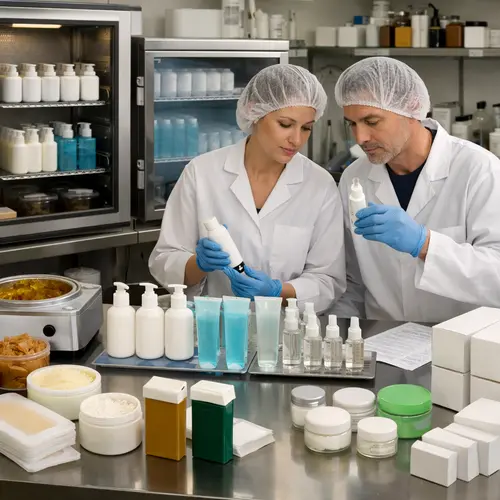
ODM Manufacturing Considerations
Sample confirmation should establish more than fragrance and color. For a post-depilatory care product, the buyer should approve the sensory profile, spreadability, absorption time, residue level, and intended use area. Ask the supplier to document whether the lotion is designed for recently waxed legs, whether the gel remains comfortable after sugar wax, and whether the serum can be applied sparingly to sensitive facial or underarm areas. The approved sample should carry a version number, date, target viscosity or texture description, fragrance specification, and packaging format so later production can be compared against a clear reference.
Formula customization can address brand positioning without making unsupported cosmetic claims. A lotion may be adjusted for a lighter after-wax finish, a gel for faster cooling feel, or a serum for concentrated application after removing wax residue. The formulation brief should define permitted and excluded ingredients, fragrance allergens, colorants, vegan requirements, and the markets where the product will be sold. Buyers should request the ingredient list in the appropriate INCI format, allergen information where applicable, microbial and preservative documentation, and a written explanation of any claim-support testing. A custom formula also needs a change-control process covering raw-material substitutions, fragrance changes, and future reformulation.
Packaging compatibility must be confirmed with the final formula and fill quantity. Pump lotions require consistent priming and clean dispensing through the full package. Thicker gels may need a tube or closure that does not trap excessive product, while a low-viscosity serum needs a dispensing system that limits over-application and leakage during transport. Test filled samples after storage in upright, inverted, and side positions. Inspect the actuator, cap, seal, label adhesion, and outer carton after handling. For kits containing wax strips, post-depilatory lotion, or cream, confirm that oil migration does not affect strip adhesion or printed surfaces.
A stability review should represent the actual shipment and consumer environment. The buyer should receive a schedule covering ambient observation, elevated-temperature exposure, cold exposure, freeze-thaw screening where relevant, and package observation. Review changes in color, odor, pH, viscosity, phase separation, pump function, tube deformation, and closure integrity. Products intended for use after hair removal should also be reviewed for irritation risk on freshly treated skin, with the appropriate safety assessment and claim substantiation for the target market. Stability evidence does not replace regulatory review, but it helps identify formula or package weaknesses before launch.
MOQ should be evaluated against the complete launch economics rather than unit price alone. Ask for the minimum quantity by formula, fragrance, fill size, and packaging component, and separate the quantities required for samples, printed components, and finished goods. A lower initial quantity may carry higher setup and component costs, but it can reduce inventory exposure while the brand tests demand and customer acquisition costs. Request a written cost structure that identifies formula work, filling, packaging, testing, documentation, and freight assumptions without relying on vague package pricing.
Labeling documents should be prepared for each destination market. Confirm the final INCI list, net contents, batch or lot coding, period-after-opening or expiry approach, responsible-party information where required, warnings, directions, and country-of-origin statements. For US launches, review the supplier’s support for MoCRA-related facility and product obligations through the FDA MoCRA guidance. Canadian brands should compare ingredients and labeling against Health Canada’s cosmetic ingredient hotlist and cosmetic requirements. Shipment conditions should specify pallet configuration, temperature limits, carton protection, storage orientation, and the process for handling transit damage or leakage claims.
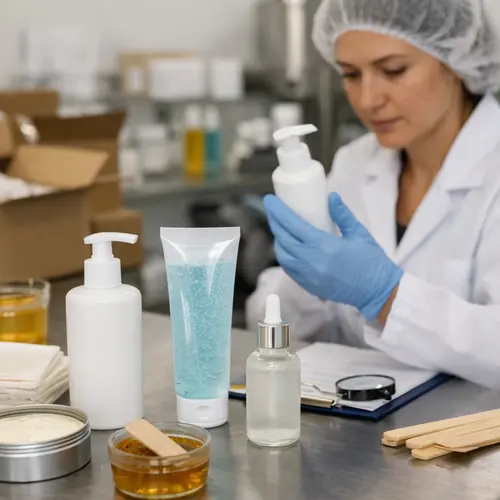
Common Problems or Failure Cases
Wax brittleness often appears when a strip or wax system is tested only at one temperature. A formula can become difficult to spread in a cool warehouse or overly soft during warm transport. Confirm the working temperature range, application thickness, set time, and removal behavior using production-intent materials. The review should distinguish between a formula problem and a storage problem before changing the recipe.
Strip adhesion loss may result from oil transfer, unsuitable film, excess release coating, or poor storage. This matters when an aftercare lotion or serum is packed in the same kit as wax strips. Keep the products physically separated where necessary, test the strip after realistic carton storage, and verify that the strip still grips hair effectively after exposure to the intended shipping environment.
Depilatory cream can separate, thin, or develop an altered odor when its emulsion system is not compatible with the active ingredients or package. Inspect samples after heat and cold exposure and compare pH, appearance, odor, and application consistency. Any change to fragrance, preservative system, or active concentration should trigger a new compatibility review rather than an assumption that the original approval still applies.
Roll-on wax cartridges may leak around the roller assembly, cap, or neck when filled too hot, stored horizontally, or exposed to vibration. Check filled cartridges in multiple orientations and inspect both the primary package and carton. Packaging deformation can also occur when a tube, bottle, or closure is not suited to elevated temperatures. A buyer should require photographs and written test records for failed samples, corrective action, and the retest result.
Fragrance sensitivity is another common cause of complaints after hair removal. Recently treated skin may be more reactive to strong fragrance, essential oils, or certain preservatives. Ask for the fragrance composition and allergen declaration, define an unscented or low-fragrance option during sampling, and avoid claims that imply medical treatment. The final directions should state the intended use and any areas or conditions where the product should not be applied.
Supplier Checklist
- Confirm that the supplier can provide a controlled sample approval record with formula version, fill size, fragrance, texture, and package reference.
- Request the formula brief, INCI list, restricted-ingredient review, allergen information, safety documentation, and claim-support records for the destination market.
- Verify viscosity, pH, appearance, odor, spreadability, absorption, and residue criteria for lotion, gel, or serum formats.
- Ask for package compatibility results covering dispensing, seal integrity, leakage, label adhesion, deformation, and transport orientation.
- Review stability conditions and acceptance criteria for heat, cold, freeze-thaw where applicable, phase separation, color, odor, and texture.
- Clarify MOQ separately for formula, fragrance, fill size, printed packaging, and finished units, including setup or sampling charges.
- Require a written shipment specification covering carton strength, palletization, temperature exposure, storage orientation, and damage procedures.
- Check whether an NDA, formula ownership clause, restricted-access process, and change-notification obligation can be signed before detailed brand planning.
- For sustainability claims, request material composition, recycled-content or recyclability evidence, chain-of-custody information where relevant, and recognized certification documents rather than general environmental language.
- Inspect quality records, audit reports, complaint handling, batch traceability, and the supplier’s documented response process when a replacement source is needed quickly.
FAQ
Can an Asian manufacturing partner follow European or US clean beauty and cruelty-free requirements?
Location alone does not establish compliance. Ask for the supplier’s restricted-ingredient policy, raw-material documentation, animal-testing position, supplier declarations, safety assessment support, and market-specific labeling process. Require these commitments in the quality agreement and verify that claims apply to the finished formula, packaging, and relevant supply chain rather than relying on a general marketing statement.
Will a low MOQ make the unit cost too high for a private-label launch?
It can, especially when the project uses custom printed components, several fragrances, or multiple fill sizes. Compare the total launch cost, including development, testing, packaging setup, finished goods, and shipment, against the planned selling price and CAC. A focused first launch with one format and one package can make demand testing more predictable than splitting a small quantity across many variations.
Will a turnkey base formula make my product look identical to competing brands?
A base can shorten development, but it may limit differentiation if the brand changes only fragrance and color. Ask which elements can be customized, such as texture, absorption, scent level, ingredient story, package format, and use-area directions. The supplier should identify what is proprietary, what is shared, and what can be protected through a formula version, exclusivity clause, or documented customization brief.
Can we sign a strict NDA before sharing our product and launch plans?
Request an NDA before disclosing customer data, positioning, packaging artwork, or formula concepts. It should define confidential information, permitted access, exclusions, duration, return or destruction of materials, and remedies for unauthorized disclosure. A separate manufacturing or development agreement should address formula ownership, tooling or artwork ownership, and whether the supplier may use a similar concept for another customer.
What evidence should support an environmentally responsible package claim?
Ask for the exact material structure, recycled-content evidence, recyclability guidance for the target market, supplier traceability, and applicable third-party certifications. Check whether the claim refers to the bottle, pump, tube, carton, or the complete package. Avoid broad statements such as environmentally friendly unless the evidence supports a precise, consumer-understandable claim.
What should be checked before approving an aftercare product for freshly depilated skin?
Review the ingredient and fragrance profile, directions, intended body area, irritation-risk assessment, pH where relevant, preservative support, and stability results in the final package. Conduct a controlled sensory and safety review using the intended lotion, gel, or serum format. Confirm that the label does not imply treatment of a medical condition and that warnings match the destination market.
What documents should accompany the first shipment?
Confirm the approved specification, final INCI list, batch or lot information, certificate of analysis where applicable, packing list, commercial invoice, carton details, storage conditions, and destination-market labeling files. The shipment record should connect the finished goods to the approved formula and package version so receiving teams can identify discrepancies quickly.
References
For market context, see Mintel global beauty market reports. For US regulatory background, consult the FDA overview of the Modernization of Cosmetics Regulation Act. Canadian ingredient and labeling checks should reference Health Canada’s cosmetic ingredient hotlist.