Direct Answer
For men’s hair removal products private label, texture, odor, and use experience should be treated as one product decision. A depilatory cream that removes hair effectively but spreads unevenly, smells harsh, or leaves a tacky film will create poor reviews even when the core formula performs. The same applies to wax strips, sugar wax, roll-on cartridges, and aftercare products: buyers judge the product through the first squeeze, spread, pull, rinse, and skin feel.
The practical answer is to approve a complete use system, not a formula sample in isolation. Ask the ODM partner to document removal performance, viscosity or melting behavior, odor profile, residue, packaging compatibility, storage conditions, and irritation-risk review at the sample stage. A focused supplier can usually turn these checks into a visual sample review within seven days, then move an approved concept into a pilot run from 1,000 units without changing the production line or user experience.
For a founder-led brand, this reduces the chance that a product looks impressive in a short video but fails in real bathrooms, salons, or repeat-use routines.
Key Takeaways for Private Label Buyers
- Source for use-case depth: Choose a partner experienced with cream, wax, sugar wax, roll-on, and aftercare formats, not only general cosmetics manufacturing.
- Approve the sensory brief early: Define spread, pull, rinse, residue, fragrance intensity, and post-use skin feel before finalizing the formula.
- Match packaging to the formula: Review tube dispensing, jar sealing, strip adhesion, cartridge leakage, and compatibility with oils, waxes, and alkaline creams.
- Test realistic storage: Include heat, cold, transport vibration, upright and inverted storage, and repeated opening in the sample review.
- Protect the launch schedule: Confirm sample timing, pilot quantity, labeling documents, stability testing scope, and shipment conditions in writing.
- Design for content and conversion: A visible cream texture, clean wax pull, or satisfying roll-on application can become a market asset when performance remains consistent.
Buyer Context
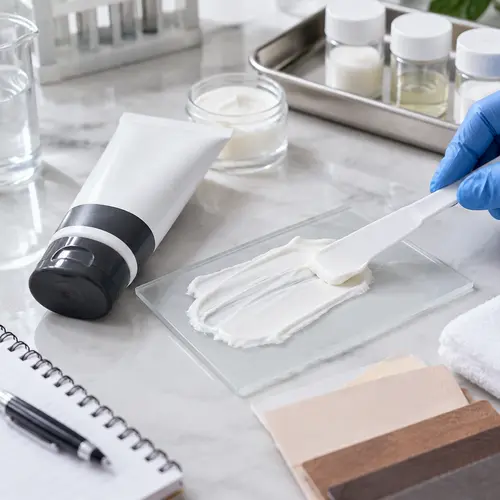
Men’s hair-removal products are often purchased for larger body areas, denser hair, fast grooming routines, or shared household use. That changes the product brief. A body depilatory cream must spread across the chest, back, legs, or arms without running. A wax strip must maintain adhesion through a controlled pull while limiting unnecessary residue. Sugar wax needs a workable consistency across changing room temperatures. A roll-on wax cartridge must deliver a stable layer without clogging or leaking during shipment.
These details matter because social audiences notice use experience immediately. A creator may show a dramatic before-and-after removal video, but customers will judge whether the cream rinses cleanly, whether the scent remains tolerable, and whether the skin feels comfortable afterward. The product therefore needs a simple, repeatable grooming ritual that works outside a controlled studio.
For DTC operators, this is also a positioning issue. A product described as clean, gentle, salon-inspired, or high-performance must support those claims through its physical behavior. A heavy fragrance can conflict with a sensitive-skin message. A thin cream can undermine a premium image if it drips. A wax that softens during delivery can create complaints before the customer has used it. Strong private label hair removal solutions begin with a clear use scenario and a written sensory target.
Buyers can compare relevant categories through hair removal product solutions, review hair removal OEM ODM services, and use a focused depilatory cream OEM brief when cream is the hero SKU.
Technical and Packaging Factors
Texture and application
Texture should be measured against the application method. For depilatory cream, request a target viscosity range, spread width, dwell-time instructions, rinse behavior, and residue assessment. The cream should remain coherent on the skin rather than separating, dripping, or becoming difficult to remove. If the formula is designed for coarse body hair, ask how the performance target changes across small and large application areas.
For wax, the key variables are softening behavior, working temperature, pull strength, and recovery after cooling. Hot wax and sugar wax should be checked for melting point, flow, stringing, and grip on the intended strip or applicator. Roll-on wax needs an even deposit from the first pass, with no blockage after storage. Ask the manufacturer to review the cartridge in upright, horizontal, and inverted positions because leakage can occur at the roller head, cap, seam, or neck.
Odor and skin feel
Odor is not only a fragrance decision. Depilatory creams can have a noticeable active-material smell, while waxes may carry resin, oil, or fragrance notes. Request an odor profile at opening, during application, after the recommended dwell time, and after rinsing. The goal is a controlled experience rather than simply adding more fragrance.
Include an irritation-risk review based on the intended body area, directions, ingredient restrictions, and consumer profile. Aftercare can extend the experience with a soothing gel or lotion, but it must not leave excessive oil that interferes with clothing, repeat waxing, or a subsequent hair-inhibitor serum. Buyers should assess immediate skin feel, visible residue, and fragrance persistence at each stage.
Packaging and storage
Packaging compatibility should be checked with the actual formula, closure, and filling process. For cream, evaluate tube recovery, orifice size, cap cleanliness, and whether the package can be emptied without excessive pressure. For wax, test jar sealing, liner integrity, cartridge fit, strip adhesive aging, and label adhesion after heat exposure. A packaging supplier may approve an empty component, but the filled product must still pass leakage and interaction checks.
Ask for storage observations across cold and warm conditions, including 5-40°C where appropriate for the intended distribution route. Review separation, viscosity drift, odor change, color change, cap deformation, and leakage after temperature cycling. Add transport vibration and drop checks for cartons that will move through parcel networks. Stability testing should be connected to the actual packaging rather than performed only in a laboratory container.
For broader production planning, buyers can review the hair removal manufacturing process and the wax strips OEM workflow. For a sensitive-skin positioning, the sensitive skin hair removal products page provides a useful starting brief.

Decision Framework Table
| Factor | What to Check | Why It Matters | ODM Buyer Note |
|---|---|---|---|
| Texture | Spread, viscosity, stringing, pull strength, rinse behavior | Controls coverage, removal consistency, and perceived quality | Approve against a written sensory brief and real application area |
| Odor | Opening, application, dwell, rinse, and aftercare scent | Strong or persistent odor can drive returns and negative content | Assess fragrance and active-material odor separately |
| Formula performance | Removal result, dwell instructions, residue, and skin feel | Links the product promise to the actual grooming routine | Use the intended hair type and body area during sample review |
| Packaging fit | Dispensing, closure, liner, roller head, strip adhesion, leakage | Prevents failure during use, storage, and shipment | Test filled components, not empty packaging alone |
| Stability | Heat, cold, vibration, color, odor, viscosity, and separation | Protects consistency across market routes and seasons | Confirm the test scope, sample quantity, and reporting format |
| Launch readiness | Sample timing, pilot quantity, labels, documents, and shipment conditions | Connects product approval to a workable launch date | Confirm whether the same approved formulation enters mass production |
These checks should be captured in the product development record before artwork is finalized. A supplier offering private label hair removal products should be able to explain which observations are controlled by the formula, which depend on packaging, and which require consumer instructions.
ODM Manufacturing Considerations
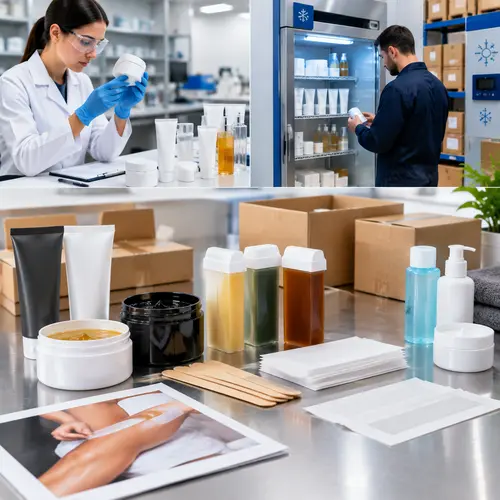
Texture-led products need an ODM partner that can connect labs, filling, packaging, quality review, and documentation in one project. Ask whether the sample formula can move into production without re-engineering, whether the same raw material sources are retained, and how deviations are handled before shipment. A seven-day sample is useful only when the approved sample remains traceable through pilot and full production.
For creators and DTC founders, the most efficient brief includes the target video moment, intended body area, preferred fragrance direction, pack size, retail market, and expected launch date. The supplier can then recommend cream, wax, strip, cartridge, or aftercare formats without forcing the brand into a generic catalog choice.
Review post-depilation care OEM options if the launch includes an aftercare kit, and consider a hair inhibitor serum OEM format only when its use instructions and packaging fit the depilation routine. Before approving the production slot, use the request a hair removal product quote page to align sample scope, MOQ, packaging, labeling documents, and delivery assumptions.
ODM Manufacturing Considerations: From Sample Approval to Shipment
For men’s hair removal products private label development, approval should be based on a controlled reference sample rather than informal comments such as ‘make it thicker’ or ‘reduce the smell.’ The buyer and manufacturer should sign off on measurable and observable attributes: cream flow, wax flexibility, strip tack, fragrance intensity, color, spreading behavior, rinse character, and residue after removal.
Keep at least one sealed approval sample with the buyer and another with the factory. Record the batch number, fill weight, packaging components, and approval date. For products intended for social media demonstrations, photograph the sample under fixed lighting and record how it spreads, stretches, or lifts hair. This creates a more reliable target for production than edited campaign footage.
Customization should focus on the actual use occasion. A body depilatory cream may need easy coverage over large areas, while a face-focused cream requires especially careful directions and an irritation-risk review. Hard wax, sugar wax, wax strips, and roll-on cartridges each need different expectations for working temperature, hair grip, flexibility, residue, and removal technique. Fragrance changes should also be assessed after application and during removal because heat and exposure time can alter odor perception.
Container-formula fit should be confirmed using the intended tube, tub, sachet, bottle, or cartridge. Buyers should look for seal weakness, cap loosening, label lifting, wall softening, restricted dispensing, and formula contact with closure liners. A stability program should track appearance, odor, texture, fill integrity, and dispensing performance under representative warm, cool, and fluctuating storage conditions.
MOQ discussions should separate formula batch minimums from printed component minimums. A factory may be able to manufacture the product quantity requested while the carton, sachet film, or custom-colored cap supplier requires more units. Request a transparent BOM showing product bulk, filling, primary packaging, decoration, cartons, testing, and estimated freight assumptions. Buyers can review related hair removal product categories and OEM/ODM service scope before comparing quotations.
Before shipment, obtain the final ingredient declaration, directions, warnings, net-content statement, lot coding plan, product specification, and available batch quality records. Confirm carton strength, inner dividers, cartridge orientation, pallet arrangement, and any temperature-sensitive shipping instructions. A pre-shipment inspection should compare sale units against the approved reference rather than checking packaging appearance alone.
Common Problems and Failure Cases
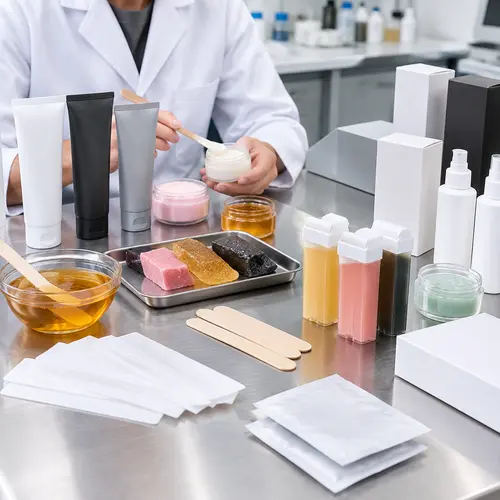
Wax becomes brittle: Hard wax that looks attractive in a short video may crack during real removal. Review flexibility at the intended working temperature and after the wax has remained open during a normal service period.
Strip adhesion declines: Wax strips can lose effective tack because of wax migration, unsuitable release paper, weak sachet sealing, or prolonged warm storage. Test strips from the beginning, middle, and end of a production lot on representative hair length.
Cream separates or dispenses unevenly: Visible liquid release, graininess, or inconsistent flow can create dose and coverage differences. Examine samples after storage and confirm that the selected opening does not encourage clogging or sudden over-dispensing.
Roll-on cartridges leak: Leakage often appears around the roller housing or cap after cartons are stored sideways. Inspect filled cartridges in multiple orientations and confirm that users can apply an even wax layer without excessive pressure.
Fragrance causes complaints: A strong scent may cover the product’s base odor in the jar but become unpleasant during use. Offer fragrance-level comparisons and include unscented or lower-fragrance options where commercially appropriate. Fragrance preference does not establish skin tolerance, so patch-test directions and clear warnings remain important.
Packaging deforms: Wax tubs, cream tubes, or aftercare bottles may dent, soften, or lose seals during hot transport. Shipment trials should use final components, final cartons, and realistic stacking weight.
Supplier Checklist
- Can the supplier show relevant cream, hard wax, sugar wax, strip, cartridge, and aftercare manufacturing experience?
- Does the sample brief define texture, odor, color, working temperature or viscosity target, residue, and removal performance?
- Are approval samples retained by both parties with traceable batch details?
- Will the supplier disclose formula MOQ, packaging MOQ, tooling charges, testing costs, and freight assumptions separately?
- Are skin-contact warnings, patch-test directions, intended body areas, and irritation-risk controls reviewed?
- Are tubes, seals, sachets, tubs, labels, and cartridges assessed with the final product?
- Does the quality plan include incoming materials, in-process controls, fill-weight checks, lot coding, and finished-product inspection?
- Can the supplier provide ingredient, specification, labeling, and batch-release documents needed for the destination market?
- Are surge capacity, reserved production windows, component lead times, and shipment conditions documented in the contract?
- Does the quotation remain consistent with the agreed sample and packaging specification?
Buyers can use the supplier’s manufacturing process overview to identify where each checkpoint occurs and include unresolved questions in an RFQ brief.

FAQ
How can I reduce the risk of a factory copying my idea or formula?
Use a mutual confidentiality agreement, define ownership of custom work in the contract, restrict use of brand assets, and identify which elements are exclusive. Ask whether the base formula is a standard platform or a buyer-funded custom version. Keep dated briefs, sample records, and payment documentation.
How do I know whether the sample will create the visual effect I want on camera?
Provide reference footage and define observable targets such as opacity, color intensity, stretch, spread, wax peel behavior, and residue. Review samples under your actual lighting, camera settings, application thickness, and editing workflow. Approve the real product behavior, not only a staged factory demonstration.
Can quality controls guarantee that no customer will experience irritation?
No supplier can guarantee zero reactions. Risk can be reduced through ingredient review, controlled manufacturing, patch-test instructions, clear body-area restrictions, traceable lots, and complaint procedures. Claims should remain appropriate for a cosmetic hair removal product, and users must follow exposure-time and removal directions.
Can a factory understand social media requirements if I do not understand technical ingredients?
A capable project contact should translate marketing requests into sample criteria. Instead of discussing ingredients alone, describe the target audience, application scene, video length, desired visual behavior, odor tolerance, removal method, and cleanup experience. The supplier should return a written brief with measurable acceptance points.
What happens if a video causes a sudden increase in orders?
Ask for documented monthly capacity, component availability, changeover limits, and rules for reserving production time. Forecasts should distinguish a base order from a surge scenario. Holding approved packaging or selected raw materials may shorten response time, but it creates inventory and cash-flow risk that should be priced openly.
Which labeling documents should I request?
Request the ingredient declaration, intended-use directions, warnings, net contents, responsible-party details, country-of-origin information where applicable, lot-code format, and supporting product specifications. Destination-market requirements vary, so artwork should be reviewed before printing.
References
- FDA Cosmetics Labeling Guide — U.S. labeling information for cosmetics.
- Health Canada cosmetics guidance — Canadian cosmetic safety, notification, and ingredient information.
- COSMOS standard — reference for buyers considering substantiated organic or natural positioning.