Direct Answer
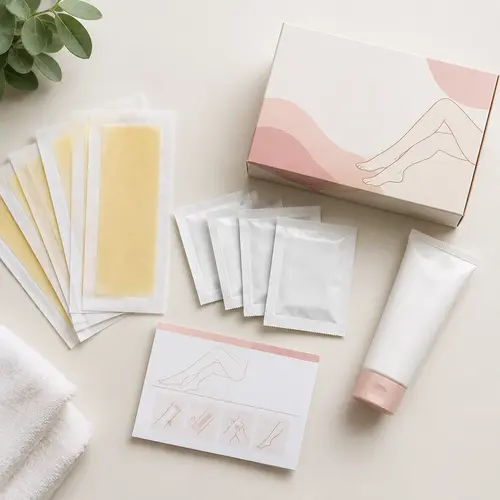
A complete private label wax strips kit should be designed as one controlled product system—not as unrelated components placed in the same carton. Start by defining the body area, strip size, wax behavior, skin-positioning claim, and expected retail channel. Then match the strips with finishing wipes that remove residue, an aftercare product that supports a comfortable post-wax routine, and instructions validated against the actual components.
The core buyer decision is the kit architecture: strip count, wipe count, aftercare format, carton size, instruction language, and target-market label. Each component must also remain compatible during warm storage, cold storage, shipping, and normal consumer handling. Before launch, approve one signed sample covering formula texture, strip adhesion, wipe saturation, aftercare feel, packaging fit, and printed content. A qualified wax strips OEM should provide a component-level BOM, test plan, label files, and shipment configuration before mass production.
Key Takeaways for Private Label Buyers
- Specify the use case first. Face, underarm, bikini, and body strips need different dimensions, backing flexibility, adhesion, and instruction language.
- Treat wipes as a functional component. Check liquid load, seal integrity, residue removal, fragrance level, and compatibility with the sachet laminate.
- Keep aftercare claims cosmetic. A calming gel or lotion can support comfort and moisturization without implying treatment of burns, injury, or disease.
- Test the finished kit, not only each formula. Warm storage, cold storage, wax migration, wipe leakage, carton distortion, and transport vibration can change the final experience.
- Lock the approved sample. Strip construction, wax coat, wipe fill, aftercare viscosity, artwork, and pack-out should match the version used for content creation and sales photography.
- Build labels by destination market. Ingredient declarations, warnings, responsible-party details, batch coding, and language requirements should be reviewed before printing.
Buyer Context
Waxing kits look simple on camera: warm the strip, separate it, apply, pull, wipe, and finish with aftercare. Operationally, they combine several materials with different stability and packaging needs. A change to one component can affect the entire unboxing and removal sequence.
For creator-led businesses, this matters because the sample seen in launch content must behave like the shipped product. A strip that separates cleanly during sampling but becomes difficult to open after warm storage can produce negative reviews immediately. An oversaturated wipe can leak into the carton. An aftercare cream that feels elegant alone can become too heavy when layered over residual oil.
The kit format also affects positioning. Body kits usually prioritize coverage and value. Face kits need precise strip geometry and careful irritation-risk review. Travel kits require compact packaging and stronger leakage controls. Sensitive-skin positioning requires a review of fragrance, botanical extracts, adhesive strength, use time, and warning language. Buyers developing this route should compare sensitive skin hair removal products and relevant hair removal product solutions before freezing the brief.
A modular ODM path can shorten development without making the kit generic. Existing strip bases, wipe systems, and aftercare options can be adjusted through scent, texture, dimensions, artwork, and component ratios. PZIK supports pilot runs from 1,000 units under ISO 22716 and targets a formulation-to-shelf timeline under 30 days when the selected components, claims, and market files fit an established route. Scope and timing should still be confirmed through the specific hair removal OEM ODM services plan.
Technical and Packaging Factors
1. Wax Strip Construction
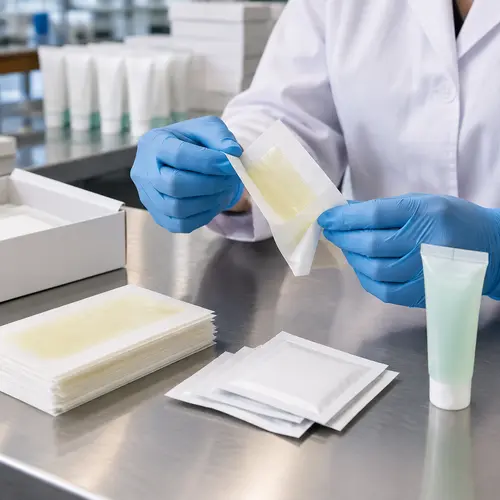
Define the substrate, strip dimensions, wax type, wax coat tolerance, fragrance, color, and intended hair length. The wax should grip hair while allowing the backing to separate without excessive stringing or edge transfer. Evaluate performance after storage rather than judging only a fresh sample.
Ask the supplier to demonstrate application on the intended body area or a suitable test surface. Review separation, flexibility, residue, removal efficiency, and skin feel. If a colorant is used, confirm its permitted application through the FDA color additive permitted-use database for the US market. Natural positioning does not remove the need for ingredient and color review.
2. Finishing Wipes
One or two wipes may be packed depending on strip count and use area. The liquid system must remove residual wax without leaving an unexpectedly greasy finish. Confirm wipe material, folded dimensions, liquid load, fragrance, sachet seal width, and opening behavior. Inspect sachets after heat exposure and compression to identify seepage or oil migration.
The wipe should also be evaluated with the chosen aftercare. If both leave a substantial film, the routine may feel heavy. A lighter wipe or gel-texture aftercare may create a cleaner extension of the waxing experience.
3. Aftercare Format
Common options include a soothing gel, light lotion, or post-removal serum. Select the format based on the desired finish, package size, and content concept. A transparent gel reads clearly on short-form video, while a lotion can support richer moisturization positioning. Buyers can compare post-depilation care OEM options or assess an after hair removal serum when the claim strategy supports it.
Review viscosity, spread, absorption, odor, color, and package dispensing once the product has experienced storage testing. For post-wax pigmentation concerns, the AAD treatment standards for hyperpigmentation provide useful consumer-health context, but the kit should avoid medical promises.
4. Instructions and Label Content
Instructions should follow the exact order of use: patch test, skin preparation, warming if required, strip separation, application direction, removal direction, residue cleanup, and aftercare. Include contraindications, body-area restrictions, repeat-use limits, storage conditions, and actions to take if discomfort persists.
For US sales, review identity, net contents, ingredient declaration, business details, warnings, and placement against the FDA Cosmetics Labeling Guide. Brands targeting halal-sensitive markets can also consult the MUI World Halal Council mutual-recognition guide before making certification statements.
5. Finished-Kit Storage and Shipment
A practical test plan can include ambient review, warm storage such as 40°C, cool storage such as 5°C, and three controlled temperature cycles when appropriate for the selected materials. These are planning examples, not universal pass conditions. The ODM should set durations and acceptance limits for the actual formulas and packaging.
Check wax movement, backing distortion, wipe leakage, aftercare separation, label lifting, carton scuffing, and master-carton compression. Confirm the full hair removal manufacturing process, including incoming checks, filling, coding, assembly, inspection, and shipment release.
Decision Framework
| Factor | What to Check | Why It Matters | ODM Buyer Note |
|---|---|---|---|
| Strip system | Dimensions, backing, separation, wax coat, grip, residue | Controls removal performance and user confidence | Approve after storage, not only when freshly made |
| Wipe system | Material, liquid load, seal, scent, cleanup performance | Prevents leakage and incomplete residue removal | Test inside the retail carton under compression |
| Aftercare | Texture, absorption, dispensing, claims, wipe compatibility | Shapes the final skin feel and perceived kit value | Review the complete routine once, in sequence |
| Instructions | Use steps, warnings, body areas, patch test, languages | Reduces misuse and supports market readiness | Proofread the final dieline, not a separate document |
| Storage and shipping | Heat, cold, cycling, leakage, carton strength, coding | Protects performance between factory and customer | Define pass criteria before the production deposit |
| Commercial scope | MOQ, sample inclusions, BOM, tooling, lead time, freight pack | Prevents hidden changes to cost or launch timing | Use a component-level RFQ through request a hair removal product quote |
For additional specification examples, review the hair removal product guides. The final purchase specification should connect every approved component to its material code, tolerance, artwork version, test requirement, and pack-out position.
ODM Manufacturing Considerations
For private label wax strips, sample approval should cover the complete user experience rather than the strip alone. Ask for production-representative strips, wipe sachets, aftercare, printed instructions, inner packaging, and the retail carton. Test strip separation, wax pickup, hair removal, residue level, wipe performance, skin feel, opening force, and the order in which consumers encounter each component.
Define sample acceptance in writing. The record can include wax color, fragrance, strip dimensions, coat weight range, suitable use area, aftercare texture, sachet fill, carton finish, and approved artwork. If social content is important, review samples under the same lighting and camera settings used for product demonstrations. A visually strong prototype is not enough unless its appearance can be reproduced consistently in regular production.
Customization may involve wax tack, fragrance, color, strip size, backing material, wipe liquid, or an aftercare oil, gel, or cream. Buyers should explain the intended hair type, body area, climate, removal technique, and desired residue profile. For depilatory cream extensions, request an approved viscosity range and observe whether the cream dispenses evenly and remains uniform. For sugar wax or roll-on wax cartridges, confirm the intended working-temperature range and application flow.
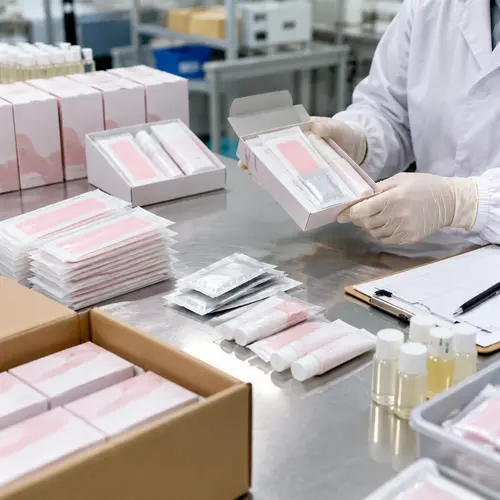
Packaging must be assessed as a system. Carton dimensions should prevent loose movement without crushing sachets or bending strips. Films, seals, inks, adhesives, and aftercare containers must remain functional when placed together. Review whether oily components soften print, whether sharp carton folds damage sachets, and whether cartridge caps or bottle closures loosen during distribution.
Stability review should reflect the actual sales route and destination climate. Agree on test duration, evaluation intervals, retained-sample handling, and acceptance criteria for appearance, odor, tack, viscosity, seal integrity, and pack shape. MOQ discussions should separate the minimums for wax conversion, printed film, cartons, wipes, and aftercare containers. This reveals which component is setting the finished-kit MOQ and whether generic packaging can support a smaller launch.
Request a transparent BOM showing each kit component, assembly cost, tooling or plate charges, testing charges, and estimated freight assumptions. Labeling documents should include ingredient declarations for applicable cosmetic components, net contents, directions, cautions, responsible-party details, batch identification, and available product records. Shipment planning should state carton count, gross weight, pallet configuration, transport method, storage limits, and protections against prolonged heat or load pressure. Buyers can also review related OEM/ODM service scope and the supplier’s manufacturing process before approving commercial terms.

Common Problems or Failure Cases
Wax becomes brittle: The layer cracks during separation or leaves uneven fragments on the backing. Possible causes include an unsuitable wax profile, excessive age, or exposure outside the expected distribution conditions. Compare affected stock with retained samples and check whether the issue appears across multiple batches.
Strip adhesion declines: A strip may feel dry, fail to grip hair, or transfer wax unevenly. Investigate sealing quality, material consistency, storage history, and whether the chosen strip is appropriate for coarse body hair or finer facial hair.
Depilatory cream separates: Visible liquid, graininess, or inconsistent dispensing can indicate that the product or pack is unsuitable for the intended environment. Check viscosity against the approved range, examine closure performance, and evaluate samples from the beginning, middle, and end of filling.
Roll-on cartridge leaks: Leakage may occur around the roller, neck, or cap after handling and transport. Check fill level, closure fit, cartridge material, orientation, and the conditions used during shipment simulation.
Fragrance causes complaints: A pleasant scent does not establish universal skin suitability. Offer fragrance-free options where appropriate, review allergen-related label needs for the target market, and use clear instructions for a small-area test before normal use.
Packaging deforms: Cartons can bow, trays can compress, and sachet edges can crease during warehousing or parcel delivery. Review board strength, internal fit, case packing, pallet loading, and courier handling rather than treating the retail carton as an isolated component.

Supplier Checklist
- Confirm experience with wax strips, depilatory cream, sugar wax, roll-on cartridges, wipes, and aftercare formats relevant to the project.
- Request a sample plan listing customization limits, sample fees, lead time, revision rounds, and what will represent final production.
- Define measurable ranges for strip size, wax weight, tack, relevant melting behavior, cream viscosity, fill volume, and pack dimensions.
- Ask how irritation risk, fragrance selection, directions, cautions, and consumer misuse are reviewed.
- Verify packaging materials, seal methods, closure fit, leakage checks, print durability, and transportation evaluations.
- Obtain component-level MOQ, unit pricing assumptions, setup charges, freight estimates, and expected material overages.
- Review ingredient lists, specifications, test summaries, batch records, artwork files, and market-specific labeling support.
- Confirm production capacity, forecast requirements, reorder lead time, peak-season allocation, and the escalation contact for urgent sales demand.
- Put confidentiality, ownership of custom work, change approval, defect handling, and remake responsibility into the manufacturing agreement.
FAQ
How can I reduce the risk that a factory will copy my wax strip concept?
Use a mutual confidentiality agreement, define ownership of custom formulas and artwork, prohibit unauthorized resale, and limit access to sensitive files. Ask how projects are coded, stored, and shared internally. No document removes every risk, so review the supplier’s history, references, and willingness to accept clear contractual remedies.
Can a sample deliver the dramatic texture or color needed for social media?
Yes, within practical limits. Provide reference footage, lighting conditions, desired wax pull, color target, and application method. Film the sample during evaluation, but also require reproducibility and permitted-use review. In the United States, color selection should be checked against the FDA color additive permitted-use database.
Can quality control guarantee that no customer will have a bad skin reaction?
No supplier can promise zero reactions. Risk can be reduced through ingredient review, controlled production, traceable batches, clear cautions, small-area test directions, complaint procedures, and appropriate claims. Brands should avoid suggesting that waxing or aftercare is risk-free, especially for sensitive facial areas.
What if I do not understand technical ingredient language?
A capable project manager should translate marketing goals into measurable sample requirements. Describe the content outcome in plain language, such as low residue, visible hair pickup, natural finish, mild scent, or quick aftercare absorption. Require the supplier to return a written specification rather than relying on chat messages alone.
What happens if a video goes viral and demand suddenly increases?
Ask for normal and surge output, material lead times, reserved-capacity rules, and reorder cutoffs before launch. Forecast scenarios should identify the slowest component, commonly custom printed packaging or wipe sachets. Confirm whether large accounts receive priority and how allocation decisions are communicated.
Should every kit include aftercare?
Not necessarily. Aftercare can improve the kit experience, but it adds cost, labeling work, pack space, and another potential leakage point. Choose it when it supports the positioning and use area. A simple finishing wipe may be more suitable for travel, trial, or entry-price kits.
Which labeling source is useful for products sold in the United States?
The FDA Cosmetics Labeling Guide provides general information on cosmetic label presentation and required declarations. Final artwork should still be reviewed against the exact product classification, claims, contents, and sales market.