Direct Answer
A reliable sensitive skin depilatory cream routine has four parts: a mild product brief, a controlled application window, immediate aftercare, and packaging that protects the formula from heat, air, and leakage. For private-label buyers, the objective is not to promise zero irritation. It is to build a product system that reduces avoidable risk and gives the end user clear, realistic instructions.
Start by defining the intended body area, hair type, contact time, fragrance direction, and aftercare pairing before requesting a sample. Ask the ODM partner to review irritation risks, confirm the formula’s validated operating range, and test the filled pack rather than only the bulk formula. A soothing gel or calming lotion can complete the routine, while an airless tube, laminate tube, or compatible pump may improve handling. Before launch, review stability, leakage, labeling, shipment conditions, and small-batch repeatability. PZIK supports pilot production from 1,000 units and can run sampling, documentation, and production planning in parallel for brands working toward a fast market window.
Key Takeaways for Private Label Buyers
- Define the use case first: legs, underarms, bikini line, or another approved area can require different positioning, instructions, and irritation-risk review.
- Evaluate a sample on texture, spread, odor, removal performance, and rinse-off behavior. A formula that looks good in a jar may perform differently in its final pack.
- Match the container to the formula. Check tube stress, cap closure, pump compatibility, seal integrity, and leakage after transport.
- Request heat, cold, freeze-thaw, light, and filled-pack stability evidence appropriate to the target market and shipment route.
- Pair the depilatory product with practical aftercare, such as a soothing gel or private-label aftercare lotion, without making medical or absolute no-irritation claims.
- Lock artwork, ingredient nomenclature, warnings, batch coding, and shipment conditions before mass production so the launch does not depend on last-minute changes.
Buyer Context
Sensitive-skin positioning changes how buyers evaluate every part of a hair removal project. The product is used directly on the skin, often over a relatively large area, and the consumer may apply it shortly before wearing tight clothing, exercising, swimming, or applying fragrance. That creates a narrow margin for poor texture, excessive odor, uneven removal, or unclear instructions.
The same principle applies across adjacent formats. Depilatory cream needs controlled spread and a predictable removal window. Wax strips need consistent strip-to-wax adhesion and clean release from the backing. Sugar wax and hot wax need a defined working texture and melting behavior. Roll-on wax cartridges require a close review of roller movement, viscosity, cartridge seals, and leakage during shipment. Aftercare products must feel comfortable on freshly depilated skin and should not introduce unnecessary fragrance or a heavy residue.
For a creator-led brand, this is also a content issue. A visible cream texture, clean wipe-off, or neatly packaged aftercare kit can support short-form video. However, visual impact must not replace repeatable performance. The sample shown on camera should match the batch shipped to customers, and the pack should survive fulfillment, parcel handling, and storage in the intended market.
Buyers can use the sensitive skin hair removal products page to compare positioning options, or review custom depilatory cream formulation requirements before sending a brief. The right starting point is a defined use case, not a generic request for a mild product.
Technical or Packaging Factors
Formula and user experience
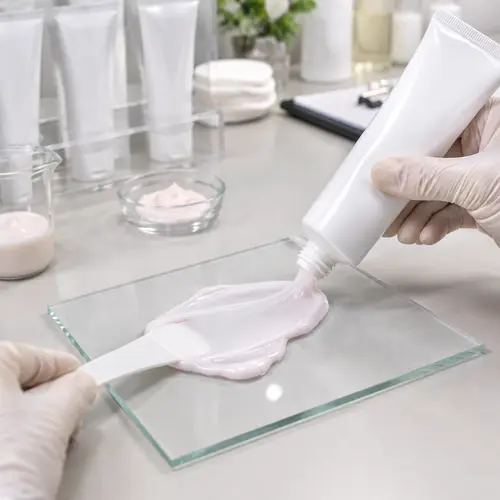
Ask the supplier to describe the target texture in operational terms: cream density, spreadability, rinse-off behavior, odor profile, and the expected contact window. A stable, uniform cream should dispense consistently from the chosen tube and remain easy to remove without excessive rubbing. If the brand wants a richer visual texture for social content, confirm that added viscosity does not create uneven coverage or slow removal.
Ingredient review should focus on the intended body area, known sensitization concerns, fragrance level, preservative system, and interaction with the aftercare product. The supplier should provide an ingredient list using the naming convention required for the destination market, along with use instructions and warnings. Buyers should also ask how the formula behaves after opening and whether repeated consumer use can introduce contamination through the package opening.
Packaging compatibility
Packaging is part of product performance. For a depilatory cream, test the formula in the actual tube, cap, nozzle, label, and secondary carton. Review softening, swelling, discoloration, odor transfer, seal separation, and changes in dispensing force. A laminate tube may offer useful barrier properties, while a plastic tube can support a more flexible and cost-efficient format. The choice should be based on formula compatibility, target price, visual direction, and shipping conditions.
For wax products, check whether the jar, cartridge, roller head, liner, and closure remain stable across the expected temperature range. A roll-on format should be tested in upright and horizontal orientations, including vibration and parcel simulation. For wax strips, inspect backing adhesion, strip separation, wax migration, and edge lifting after storage. For aftercare, confirm that the pump or flip-top does not clog and that the pack remains clean when used with freshly washed but damp skin.
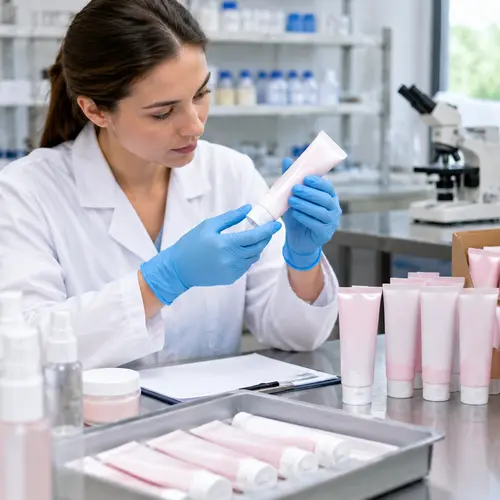
Storage and shipment checks should reflect the destination market. Review heat exposure in containers, cold transport, freeze-thaw stress where relevant, light exposure, and time in warehouse conditions. Record viscosity, color, odor, pH where applicable, fill weight, package appearance, and removal performance at defined checkpoints. This gives the buyer a practical comparison between the initial sample and later production batches.
Decision Framework Table
| Factor | What to Check | Why It Matters | ODM Buyer Note |
|---|---|---|---|
| Skin-positioning brief | Body area, hair type, fragrance direction, contact window, and aftercare pairing | Prevents a generic formula from being marketed to an unsuitable use case | Ask for a written product brief before sample approval |
| Formula texture | Spread, uniform coverage, odor, rinse-off, and removal performance | Texture affects both consumer comfort and repeatable results | Review the sample in the final dispensing pack |
| Packaging compatibility | Tube, cap, pump, seal, label, swelling, leakage, and dispensing force | Formula-pack interaction can create complaints even when the bulk formula is stable | Require filled-pack testing and transport simulation |
| Storage stability | Heat, cold, light, freeze-thaw where relevant, viscosity, color, odor, and pH | Shipment and warehouse conditions can change the consumer experience | Match testing conditions to the actual destination and route |
| Aftercare pairing | Residue, fragrance level, absorption, dispenser function, and label claims | Post-removal comfort influences the perceived quality of the complete routine | Consider a soothing gel after hair removal or lotion as a coordinated SKU |
| Launch readiness | Ingredient list, warnings, batch coding, carton artwork, samples, MOQ, and shipment documents | Unresolved details can delay listing approval and production release | Use a single approval record for sample, artwork, and production version |
ODM Manufacturing Considerations
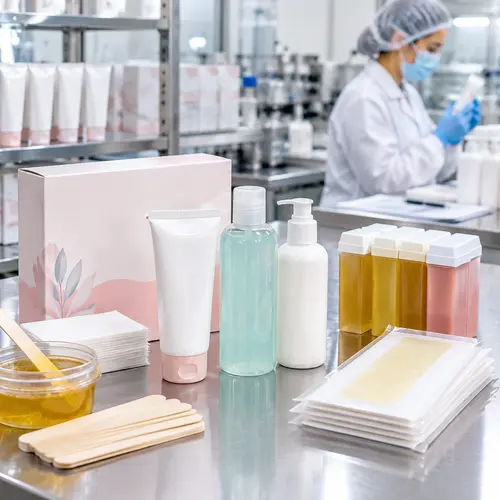
A capable ODM partner should make the decision process visible. The project should move from product brief to sample, filled-pack review, stability plan, artwork review, pilot run, and production release with clear approval points. For brands testing a social-media concept, a pilot quantity can reduce inventory exposure while preserving the option to scale on the same production line. Ask whether the approved sample, packaging specification, and production formula remain locked when volume increases.
Speed matters, but speed without records creates avoidable launch risk. Request the formula specification, ingredient documentation, package specification, batch records, quality release criteria, and shipment recommendations as part of the project file. PZIK positions its modular hair removal library and micro-batch facility for this type of work, with sample development targeted around short launch cycles and pilot runs from 1,000 units. For broader category planning, review the hair removal OEM ODM services page and the hair removal manufacturing process.
Before committing, buyers should request a sample scope, estimated lead time, MOQ by SKU and package format, compatibility test plan, stability schedule, artwork requirements, and shipment assumptions. A useful supplier conversation ends with decisions that can be checked: what was approved, under which conditions, and what changes require a new sample.
For a complete product family, buyers can compare after hair removal serum options, review private label waxing products, and consult the European Commission’s CosIng ingredient database alongside FDA cosmetics guidance. These resources do not replace market-specific review, but they help founders ask more precise questions before artwork and production are finalized.
Confirm the Sample as the Production Benchmark
Sample approval should create a measurable benchmark, not a casual agreement that the product looks acceptable. For a sensitive skin depilatory cream, record color, odor, viscosity range, spread, recommended contact time, removal behavior, rinse feel, and the appearance of the cream after dispensing. Wax benchmarks may include melting point range, working temperature, flexibility after cooling, hair pickup, and residue. Wax strips should be assessed for peel behavior, wax distribution, backing strength, and pouch opening.
The final approved sample should be identified by version, date, and formula code. Keep sealed retention samples with both the buyer and facility. Any later change to fragrance, pigment, active strength, raw material source, or package component should require written review rather than being treated as an invisible production adjustment.
Define Customization Around Use Conditions
Formula customization should begin with the body area, target hair type, application method, removal time, market positioning, and expected retail climate. A face-use depilatory requires different risk review and directions from a product intended for legs or underarms. Buyers should also specify fragrance limits, color targets, ingredient exclusions, rinse expectations, and whether the product will be sold with aftercare.
For sensitive positioning, avoid relying on a mild fragrance or soothing marketing language as proof of low irritation. Ask the manufacturer to document ingredient strengths, pH or other relevant finished-product specifications, warning language, and patch-test directions. Ingredient naming can be checked against the European Commission CosIng ingredient database when preparing EU-facing product information.
Match the Formula, Package, and Distribution Route
Packaging selection must reflect how the product flows and how consumers use it. A low-viscosity cream can seep through a closure that performs well with a thicker formula. Sugar wax may become difficult to dispense if the opening is too narrow. Depilatory wax can stress a cartridge seam when fill temperature, cooling rate, or component tolerances are poorly controlled.
Request component specifications covering resin type, dimensions, closure torque, liner, decoration method, and batch tolerances. For wax strips, confirm that the pouch protects the wax layer throughout the stated shelf period. For tubes, jars, and aftercare bottles, review dispensing consistency, cap security, label adhesion, coding space, and deformation after prolonged product contact.
Stability review should use agreed time points and intended storage profiles, with observations for odor drift, color shift, viscosity change, phase separation, wax hardening, strip performance, and package condition. MOQ should be separated by formula, filling format, printed component, and carton rather than presented as one unexplained number. A transparent BOM should show product, primary package, decoration, secondary pack, testing, and estimated freight assumptions.
Before release, collect the ingredient declaration, finished-product specification, certificate of analysis format, safety data sheet where applicable, batch-code method, artwork dimensions, warnings, directions, and market-specific label records. Shipment planning should identify carton count, unit weight, pallet pattern if used, maximum stacking expectations, route duration, and seasonal exposure. Review the supplier’s broader OEM and ODM service scope and manufacturing process to determine who owns each approval step.

Common Problems or Failure Cases
- Brittle depilatory wax: Wax that cracks instead of flexing may have an unsuitable working range, excessive cooling, or an imbalanced composition. Confirm melting point range, application thickness, room conditions, and removal timing using the approved sample as the control.
- Loss of strip adhesion: Poor hair pickup can result from wax migration, insufficient coating weight, backing incompatibility, or aging. Compare fresh and retained strips, measure coating consistency, and inspect pouch seals before changing the wax strength.
- Cream separation: Liquid pooling or uneven texture can indicate inadequate mixing, unsuitable viscosity, or incompatibility with a fragrance or pigment. Do not solve the problem only by shaking the package; investigate the batch record and component additions.
- Cartridge leakage: Leakage may originate from dimensional variation, weak seams, incorrect filling conditions, or a cap that does not remain secure. Inspect multiple units across the production run rather than relying on one display sample.
- Fragrance sensitivity: A fragrance described as light can still be unsuitable for some users. Offer a fragrance-free option where commercially appropriate, control fragrance concentration, and ensure the label does not imply zero irritation.
- Package deformation: Panels, caps, or labels may distort after contact with the formula or during distribution. Confirm material specifications and filled-unit condition before approving a custom mold, decoration, or large printed-component order.

Supplier Checklist
- Can the supplier show relevant depilatory cream, sugar wax, roll-on wax cartridge, wax strip, and aftercare manufacturing experience?
- Does the sample brief define body area, hair type, formula strengths, fragrance, color, texture, use time, and packaging format?
- Are acceptance ranges recorded for viscosity or melting point, appearance, odor, fill weight, and dispensing performance?
- Are irritation-risk review, warnings, directions, and patch-test wording included in development discussions?
- Are package materials, tolerances, decoration limits, coding areas, and contact suitability documented?
- Does the quotation separate formula, components, printing, testing, cartons, and logistics estimates without hidden additions?
- Are MOQ requirements listed for each custom element, including color, fragrance, tube, pouch, label, and carton?
- Can the facility provide ingredient, specification, batch, artwork, and shipment documents needed for the destination market?
- Is there a named contact who can translate social-media goals such as dramatic spread, clean peel, or camera-visible color into sample criteria?
- Can the supplier explain reserved capacity, component lead times, and the process for scaling after a fast sales increase?
FAQ
How can I reduce the risk of a factory copying my concept or formula?
Use a mutual confidentiality agreement, identify ownership of custom work in the development contract, limit access to final files, and require written permission for portfolio use. Ask whether the formula is exclusive, semi-custom, or based on an existing facility platform; these options provide different ownership expectations.
Can a sample deliver the exaggerated texture and color needed on camera?
Yes, within safe use and manufacturing limits, but camera appearance must be part of the brief. Evaluate the sample under the actual lighting, background, application thickness, and filming distance. Approve physical color standards and texture measurements instead of relying only on edited images.
Can quality controls guarantee that no follower will experience irritation?
No supplier can guarantee zero reactions. Risk can be reduced through appropriate ingredient selection, controlled production, clear directions, patch-test wording, traceable batches, and complaint procedures. Avoid claims such as universally safe or irritation-free, especially for face hair removal.
What should be included in a depilatory sample round?
Request the proposed formula, one or more strength options if relevant, the intended package, use instructions, specification targets, and enough units for application, packaging, and retained-sample review. Record every requested revision by version.
How do I compare MOQ quotations fairly?
Separate bulk formula quantity from filling, stock packaging, custom decoration, and printed carton thresholds. Compare included testing, overrun allowances, spare components, freight basis, and payment terms. A low headline MOQ can conceal a much larger printed-package commitment.
What shipment information should be agreed before production?
Confirm destination, trade terms, carton dimensions, gross weight, palletization, loading expectations, required documents, and any carrier restrictions relevant to the product. Logistics estimates should state assumptions because actual cost can change with route, season, and shipment size.
References
- European Commission CosIng ingredient database — searchable information on cosmetic ingredients and listed functions.
- FDA cosmetics overview — official information for cosmetics sold in the United States.
- FDA authority over cosmetics — explains that cosmetic products and ingredients generally are not subject to FDA premarket approval, with the stated exception for color additives.