Direct Answer
Brands should treat sample feedback as a controlled decision record, not a stream of reactions. In a strong cosmetic product sampling process, every comment identifies the product version, test condition, observed result, desired change, and launch priority. Replace vague notes such as ‘make it smoother’ with measurable direction: easier spreading on dry legs, less residue after rinsing, slower flow from the roll-on cartridge, or stronger wax-strip grip after warm storage.
Test the formula, packaging, visual effect, and use experience separately. Approve each against the original brief before requesting another iteration. Change one major variable at a time whenever possible, then preserve the approved sample as the production reference. This approach helps founders move quickly without allowing camera preferences, irritation concerns, and packaging problems to become mixed into one unclear revision request. It also gives the ODM a usable path from sample to batch.
Key Takeaways for Private Label Buyers
- Define pass or fail criteria before testing: texture, application, removal, residue, odor, skin feel, and on-camera appearance.
- Record the sample code, date, storage condition, body area, application amount, and use time for every review.
- Evaluate packaging compatibility separately from formula performance, especially for tubes, wax jars, strips, and roll-on cartridges.
- Prioritize feedback as launch-critical, preferred, or optional. Avoid changing several major variables in one revision.
- Approve a physical reference sample, final specification, label copy, BOM, MOQ, shipment condition, and production tolerance together.

Buyer Context
Hair-removal samples are unusually sensitive to test conditions. A depilatory cream may appear too thick when cold but flow correctly at normal room temperature. Sugar wax can change handling behavior with temperature and technique. Wax strips may perform differently after warm storage, while a roll-on wax cartridge can pass an upright review and still leak during inverted transport.
This is why buyers should begin with the intended product model and use case. A brand comparing custom depilatory cream formulation options needs different evidence from one developing custom wax strips and hot wax. Sensitive-positioned concepts also need an explicit irritation-risk review; the relevant starting points include mild hair removal formula options and compatible after wax care products.
Market speed does not remove the need for disciplined decisions. A seven-day first-sample target is useful only when the brief states what must be visible, testable, and ready for content production. Before approving a 1,000-unit pilot, buyers should also understand the complete OEM hair removal production workflow and confirm that the approved sample can move into production without silent material substitutions.
For U.S. launches, review the FDA overview of cosmetics under U.S. law and the agency’s explanation of how cosmetics are regulated rather than preapproved. Gulf-market buyers should check current requirements through the Gulf Standardization Organization. Broader launch timing and category signals can be monitored through Business of Fashion beauty intelligence, but trend momentum should never replace product verification.
Technical or Packaging Factors
1. Formula Behavior
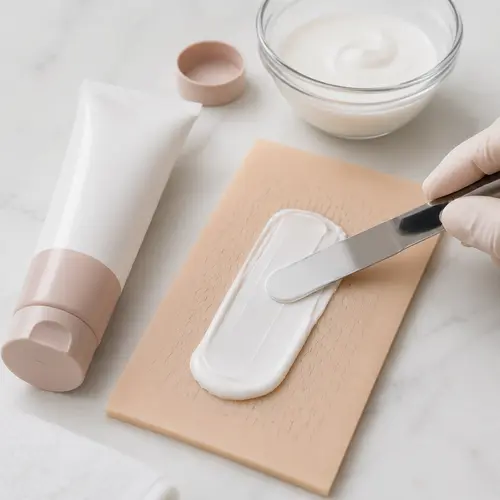
Review performance in the order consumers experience it. For depilatory cream, check dispensing, spread, coverage, odor, adherence during the stated use period, removal efficiency, rinsing, residue, and post-use feel. Ask the supplier to state the target viscosity range and acceptable batch tolerance rather than approving texture by sight alone.
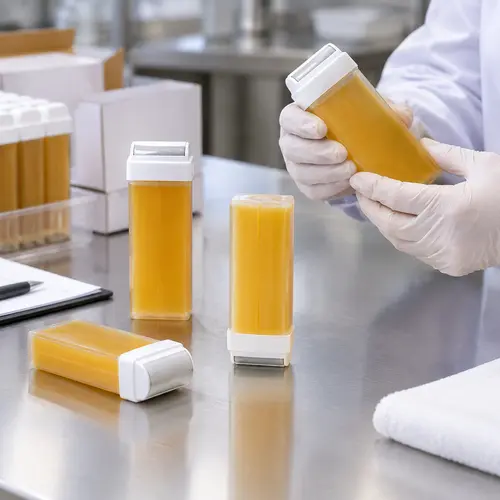
For hot wax, sugar wax, and roll-on wax, request the intended melting or operating range. Review pickup, stringing, spread thickness, working time, grip, breakage, and residue. Wax-strip feedback should cover strip separation, adhesion, pull behavior, material tearing, and performance after storage. Related development routes can be compared through waxing product solutions and broader custom hair removal product development.
2. Camera-Ready Appearance
Creator-led brands should test under the same lighting, lens distance, background, and application style planned for launch content. Record whether the cream holds a clean edge, the wax stretches attractively without uncontrolled stringing, and the strip produces a clear removal reveal. Send short, unedited clips alongside written notes. A reference clip is more actionable than asking for a ‘more viral’ texture.
3. Packaging Compatibility and Storage
Test the selected pack with the actual material, not a substitute container. Check tube crimping, cap contamination, jar closure, strip-pouch seals, roll-on ball movement, cartridge leakage, label lifting, and printed-code legibility. Store samples upright, on their side, and inverted where transport orientation may vary. Include reasonable warm and cold exposure, then return samples to normal room conditions before retesting flow and appearance.
Packaging feedback should also cover shipment cartons and fulfillment handling. Request a transparent BOM and estimated freight assumptions before final approval. Buyers can map these checks against the supplier’s hair removal OEM manufacturer scope and submit packaging details through a structured hair removal product RFQ.
4. Safety, Directions, and Documentation
Do not compensate for weak performance by extending use time beyond the proposed directions. Review the ingredient list, warnings, patch-test language, intended body areas, use restrictions, and aftercare instructions together. If the concept includes a companion product, define whether it is a calming lotion, soothing gel, or after hair removal serum; each claim and label needs separate review.
Request version-controlled documentation for the approved formula, packaging components, artwork, test status, and production reference. Additional depilatory product development articles can support buyer education, but project decisions should remain tied to the exact sample code.
Decision Framework Table
| Factor | What to Check | Why It Matters | ODM Buyer Note |
|---|---|---|---|
| Formula target | Viscosity or melting range, spread, working time, removal, residue | Converts subjective feedback into a repeatable batch target | Ask for the acceptable production tolerance |
| Visual result | Color, edge hold, stretch, strip reveal, camera consistency | Connects product performance with launch content | Use fixed lighting and an unedited reference clip |
| Skin-use review | Directions, contact time, intended area, warnings, post-use feel | Reduces misuse and irritation risk | Do not approve by testing outside stated directions |
| Packaging | Dispensing, seals, closures, leakage, label adhesion | Prevents formula-pack failures after filling or shipment | Test the final component material and decoration |
| Storage and transit | Warm, cold, upright, side, and inverted conditions | Reveals flow changes, separation, leakage, and seal weakness | Define shipment conditions before production |
| Commercial approval | Sample scope, revisions, BOM, MOQ, freight, lead time | Prevents launch surprises after formula approval | Link sign-off to one approved sample code |
ODM Manufacturing Considerations
In the cosmetic product sampling process, sample confirmation should function as a controlled approval stage rather than an informal reaction such as ‘looks good.’ Buyers should issue a written confirmation record covering appearance, texture, fragrance, application behavior, removal performance, fill weight, package components, and approved artwork status. The supplier should retain an agreed reference sample so the production batch can be compared with the version the brand accepted.
Formula customization should begin with a precise product brief. For a depilatory cream, specify the target application area, expected contact time, spreadability, odor expectations, and desired post-rinse skin feel. For hard or soft wax, define the intended salon or home-use method, preferred working behavior, removal style, and acceptable residue. Sugar wax and roll-on formats also require clear instructions about the environment and technique in which consumers will use them. Buyers can review available formats through the hair-removal product categories before requesting custom changes.
Every custom sample should be paired with its intended container or primary pack before approval. A formula that performs well in a lab jar may behave differently when filled into a retail tube, wax pot, strip sachet, or roll-on cartridge. Ask the supplier to confirm whether the resin, oils, fragrance, depilatory ingredients, or aftercare components interact with the selected plastic, seal, liner, adhesive, or printing surface. Packaging fit should also account for filling temperature, consumer handling, and the shipment route.
Stability review should test the final formula-pack combination, not only the bulk material. The review plan should define checkpoints for appearance, odor, separation, weight loss, closure performance, and package shape. Buyers should ask what the results can establish, what remains uncertain, and whether any accelerated conditions need confirmation through longer observation. A launch date should not force approval when a meaningful stability concern remains unresolved.
MOQ discussions should separate the minimum for the formula, primary packaging, printed components, and final assembly. A supplier may accept a modest finished-product order while a custom cartridge, printed pouch, or decorated jar requires a larger material commitment. Request an itemized bill of materials, setup charges, testing costs, tooling requirements, expected waste allowance, and logistics assumptions. This makes it easier to compare an initial project with later repeat orders without hidden cost changes.
Before production, confirm the documents required for the destination market. Depending on the product and market, the file may include an ingredient list, specification sheet, safety support, test summaries, batch coding format, label copy, directions, warnings, and manufacturer details. Claims must also match the intended product category. For the United States, imported cosmetics are subject to the same applicable laws as domestically produced products, and the responsible business must support product safety and proper labeling. Buyers entering Gulf markets should confirm current requirements through the relevant local authority and the Gulf Standardization Organization.
Shipment conditions belong in the sample approval discussion. Confirm carton configuration, inner protection, pallet preferences, temperature exposure risk, dangerous-goods status when applicable, port routing, and who is responsible for freight insurance. The approved sample should represent what can survive normal handling during the planned route, not only what performs well immediately after leaving the factory. Brands can compare these stages with the supplier’s manufacturing process and OEM and ODM service scope.

Common Problems or Failure Cases
Wax becomes brittle after cooling. A wax may look acceptable when freshly poured but crack during removal or break inside the retail container. Buyers should record the room conditions, heating method, applied thickness, cooling time, and break pattern. The supplier can then determine whether the issue relates to the formula, use instructions, filling history, or transport exposure.
Wax strips lose adhesion. Common warning signs include weak hair pickup, uneven transfer, adhesive remaining on the backing, or performance changing after the pouch is opened. Check whether the problem is linked to strip material, adhesive coat weight, release liner, sealing quality, storage duration, or user warming method. Evaluate multiple units rather than approving a single unusually strong strip.
Depilatory cream separates. Visible liquid, graininess, air pockets, color drift, or inconsistent dispensing may indicate that the sample is not ready for scale-up. Record when the change appeared and whether shaking or temperature exposure affected it. Do not accept a cosmetic explanation if the product no longer dispenses or applies consistently.
Roll-on cartridges leak. Leakage can originate at the roller housing, neck, cap, or body seam. It may occur only after heating or after movement during shipping. Photograph the leak location, weigh affected units when practical, and retain the carton so the supplier can distinguish a component issue from impact damage.
Fragrance causes unexpected sensitivity complaints. A pleasant scent does not establish suitability for every use case. Ask for fragrance identification, declared allergens where required, concentration control, and an unscented option when appropriate. Directions should tell users to follow the prescribed patch-check and contact-time instructions, while complaint handling should capture the batch code and use conditions.
Packaging deforms. Wax pots, caps, cartridges, or tubes may warp, soften, shrink, or lose printing adhesion after filling or transit. Confirm whether deformation appears during production, warehouse holding, or freight simulation. Changing only the outer carton will not solve a primary-package material problem.
Supplier Checklist
- Request a written sample brief with measurable targets, approved components, and intended destination markets.
- Confirm that the supplier assigns revision numbers to samples and retains the final approved reference.
- Ask which formula properties are checked for each hair-removal format, including relevant texture, viscosity, working behavior, and irritation-risk factors.
- Verify that testing uses the final primary package and includes leakage, seal, dispensing, print, and deformation checks.
- Review stability checkpoints, acceptance criteria, unresolved observations, and the planned period before commercial release.
- Obtain an itemized MOQ and cost model covering bulk formula, components, decoration, cartons, testing, and freight assumptions.
- Check batch traceability, incoming-material controls, production records, finished-product inspection, complaint handling, and retained samples.
- Confirm the labeling file includes ingredients, directions, warnings, net contents, responsible-party information, and batch identification as applicable.
- Ask how the factory protects custom briefs, artwork, samples, and formula information, including access limits and written confidentiality terms.
- Review standard capacity, surge capacity, lead-time assumptions, and how production slots are allocated during peak demand.
- Require clear shipment specifications, export documents, carton tests, routing assumptions, and responsibility for damaged or leaking goods.
- Evaluate whether the project manager can translate marketing goals into testable product requirements without making unsupported promises.

FAQ
How can I reduce the risk of a factory copying my idea?
Use a written confidentiality agreement, control access to the complete brief, and clarify ownership of artwork, custom components, samples, and any brand-funded development. Ask whether the proposed formula is exclusive, semi-custom, or selected from the supplier’s existing model library. Keep dated approval records and avoid relying on verbal assurances.
Can a supplier guarantee that no consumer will experience irritation?
No responsible supplier can promise zero reactions. Buyers should instead verify ingredient review, safety support, batch controls, clear directions, warnings, patch-check language where appropriate, and a documented complaint process. Approval should consider the intended body area, contact time, fragrance level, and foreseeable misuse.
What if I do not understand technical ingredient terminology?
Ask the supplier to convert your marketing goals into observable criteria: spread, pickup, residue, scent strength, removal method, dispensing, and target user experience. A capable project manager should explain tradeoffs in plain English and confirm decisions in a written brief rather than expecting the buyer to specify every ingredient.
How should I prepare for a sudden increase in orders?
Discuss surge planning before launch. Confirm available lines, monthly capacity by product format, component reorder times, raw-material constraints, staffing plans, and production-slot rules. Where practical, approve backup components in advance and maintain a rolling forecast so a viral sales spike does not become an emergency redesign.
Should I approve a sample before all packaging is finalized?
You may approve the direction of the bulk formula, but final commercial approval should use the intended primary package. Filling, heating, dispensing, sealing, and shipment can change performance. Record any provisional approval clearly so it is not mistaken for authorization to begin the full batch.
When is a sample ready for production?
It is ready when the buyer and supplier have closed material issues, agreed on the reference version, confirmed formula-pack compatibility, reviewed stability evidence, approved label content, and documented commercial specifications. If the sample still requires explanation or special handling to pass, it is not yet a reliable production standard.