Hard Wax vs Soft Wax: B2B Product Selection for Beauty Brands
Direct Answer
In the hard wax vs soft wax decision, choose hard wax for a premium, visual-first product aimed at sensitive zones, coarse hair, or creator-led demonstrations. Choose soft wax for speed, broad-area use, salon efficiency, and familiar strip-based routines.
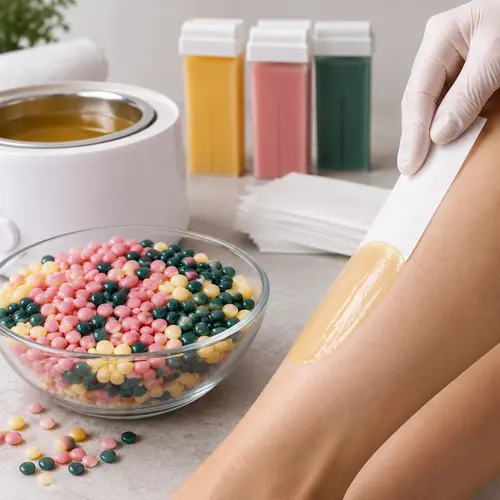
Hard wax cools into a removable film and normally does not require a strip. That makes colorful wax beans, elastic pulls, and clean peel moments especially effective on short-form video. Soft wax is applied in a thinner layer and removed with a fabric or nonwoven strip. It supports fast service on legs, arms, and other larger areas, but demands tighter control over adhesion, strip quality, and application thickness.
Neither format is universally better. Private-label buyers should select the system by use area, operator skill, target price, packaging, storage climate, and content strategy. Before committing, test the formula and its complete application system rather than approving wax from a jar alone.
Key Takeaways for Private Label Buyers
- Source a system, not only a formula. Review wax, heater settings, spatula behavior, strips, pre-wax preparation, and aftercare together.
- Define the use area first. Hard wax generally fits smaller or sensitive zones; soft wax supports faster coverage of larger areas.
- Approve texture on camera. Color, surface finish, stretch, break behavior, and visible residue can affect creator content as much as removal performance.
- Match packaging to heat and viscosity. Jars, bags for wax beans, roll-on cartridges, and wax strip sachets require different leakage and compatibility checks.
- Test realistic shipping conditions. Heat exposure, cold storage, freeze-thaw cycling, and inverted transit can reveal deformation, oil migration, or seal failure.
- Use pilot production before scale. A seven-day sample target and a 1,000-unit pilot can validate content, customer instructions, and packaging before a larger launch.
Buyer Context
For a creator-led brand, format determines both customer experience and the content hook. Hard wax offers a high-contrast transformation: solid beans melt, spread into a glossy layer, become matte as they set, and lift as one flexible piece. This sequence is easy to understand without narration. Soft wax creates a faster, more procedural demonstration built around spreading, strip placement, pressure, and removal.
The commercial implications extend beyond styling. A hard wax kit may need wax beads, a heat-safe jar or pouch, applicators, a heater recommendation, and precise temperature instructions. A soft waxing kit may combine a jar or roll-on cartridge with matched strips and aftercare. Buyers can review representative category configurations through these custom wax strips and hot wax options and broader waxing product solutions.
Portfolio planning also matters. A brand may launch hard wax as its visual hero SKU, then add soft wax strips for convenience, a soothing gel after hair removal, or a private label depilatory cream for customers who do not want heated wax. Keep claims and instructions distinct across these formats.
Category education can include a practical comparison of hard and soft wax use and a visual hard-versus-soft wax demonstration. These sources can clarify application differences, but the final buying decision must be based on samples from the actual production formula.
Technical and Packaging Factors
Formula Behavior
Ask the ODM to document the working window rather than supplying only a melting-point statement. As an initial screening range, some hard waxes are applied around 50–60°C, while soft wax systems may operate around 37–45°C. These are illustrative values, not universal instructions. Resin blend, ambient temperature, layer thickness, heater calibration, and package geometry can shift the safe working range.
For hard wax, examine melt uniformity, pickup from the pot, edge formation, setting time, elasticity, and break resistance. A trial layer around 2–3 mm can be used as a repeatable starting point when comparing samples. The approved formula should hold together during removal without becoming brittle, excessively stringy, or oily in the container.
For soft wax, assess spread at a thin film, hair pickup, skin drag, residue, strip release, and whether the same area appears to require repeated passes. A review focused on low irritation hair removal products should cover use directions, patch-test language, fragrance level, and foreseeable misuse. No formula should be positioned as irritation-free.
Packaging Compatibility
Hard wax beans need barrier packaging with dependable seals. Check whether fragrance or oil migrates into the pouch, whether beans block together after heat exposure, and whether the closure survives repeated opening. Jar-based wax also requires a lid and liner that tolerate warm filling or repeated heating without warping.
Roll-on soft wax needs a cartridge body, roller head, cap, and formula that work as one unit. Run a 24-hour upright and inverted leakage review at room and elevated temperatures. Inspect roller startup, flow consistency, cap contamination, and residual wax around the neck. Premade strips require seal-integrity checks and adhesion aging so that wax does not migrate into the sachet seal.
The supplier should show how these checks fit into the wider hair removal manufacturing process. If natural or organic positioning is planned, evaluate ingredient and label eligibility against Ecocert organic and natural cosmetic certification requirements before artwork approval.

Storage, Safety, and Launch Readiness
A practical stability plan can include accelerated storage at 40°C and 75% relative humidity for 12 weeks, parallel checks at 4°C and 45°C, and three freeze-thaw cycles. Acceptance criteria should cover odor, color, viscosity or flow, oil separation, brittleness, package distortion, leakage, and removal behavior. Longer real-time observation should continue after launch.
Request batch records, ingredient documentation, label review, and market-specific files early. Brands entering the Middle East should confirm applicable product registration and labeling through the Dubai Municipality Montaji registration system. US and EU projects should map MoCRA and CPNP deliverables before packaging is printed.
A capable partner should convert the creator brief into measurable sample criteria: camera color, finish, pull length, set time, residue, and package handling. Review scope, ownership, BOM assumptions, and shipment conditions through documented hair removal OEM ODM services, then use a formal hair removal product RFQ to compare sample and production terms.
Decision Framework
| Factor | What to Check | Why It Matters | ODM Buyer Note |
|---|---|---|---|
| Primary use area | Small sensitive zones or broad body areas | Determines application speed and removal method | Hard wax usually favors precision; soft wax favors coverage |
| Texture | Spread, set, elasticity, residue, and break behavior | Controls usability and visual finish | Approve under the intended heater and room conditions |
| Temperature | Working range and heater calibration | Reduces overheating and inconsistent application | Print formula-specific instructions rather than generic settings |
| Packaging | Seal, liner, roller, cap, pouch barrier, and strip sachet | Prevents leakage, blocking, and contamination | Test the final decorated package, not a substitute |
| Storage | Heat, cold, freeze-thaw, and inverted transit | Reveals separation and package failure | Set written acceptance limits before production |
| Content performance | Color, gloss-to-matte transition, pull, and residue | Affects short-form demonstration quality | Film samples under the creator’s actual lighting setup |
| Launch scope | Sample rounds, pilot MOQ, BOM, documents, and shipment terms | Protects launch timing and margin | Use waxing and depilatory guides to prepare review questions |

ODM Manufacturing Considerations
In a hard wax vs soft wax project, sample approval should define more than fragrance and color. The approved reference sample should record appearance, texture, melt behavior, working time, hair pickup, removal feel, residue, and finish. For wax strips, confirm fabric or paper dimensions, wax distribution, separation force, and pouch opening. For depilatory cream, record viscosity, spreadability, odor, rinse-off behavior, and appearance after storage.
Ask the manufacturer to retain a sealed approval sample and issue a specification sheet with measurable acceptance limits. Production batches can then be compared against an agreed standard rather than subjective descriptions such as soft, premium, or strong hold. If the product must create a dramatic matte, glossy, translucent, or highly pigmented effect in social content, review physical prototypes under the brand’s normal filming lights and on the intended camera settings.
Customization may cover resin balance, flexibility, fragrance level, color, working texture, hair-removal strength, or aftercare pairing. Every adjustment can affect another characteristic. A softer hard wax may improve flexibility but extend setting time, while a stronger soft wax may increase residue or discomfort on sensitive areas. Buyers should approve the final combination rather than assuming individually acceptable ingredients will produce the intended result.
Packaging should be tested with the actual bulk formula. Confirm jar closure fit, container wall resistance, cartridge valve performance, strip pouch barrier properties, label adhesion, and whether printed decoration changes during storage. Stability review should include normal storage, elevated-temperature exposure, lower-temperature exposure, and realistic warehouse or delivery excursions. Define acceptable changes in color, odor, viscosity, wax flexibility, cream uniformity, and pack shape.
MOQ discussions should separate bulk production minimums from packaging minimums. A manufacturer may support a modest finished-goods order while the decorated jar, printed pouch, or custom carton requires a larger purchase. Clarify which unused components remain the buyer’s property, how they are stored, and when they may become obsolete.
Before release, request the ingredient list, batch identification format, product specification, safety data where applicable, test summaries, label copy inputs, country-of-origin details, and carton information. Destination-market needs should be confirmed before artwork approval. Shipment instructions should state the acceptable transport and storage environment, pallet or carton configuration, lot separation, and procedure for receiving damaged or temperature-affected goods. Buyers can also review the supplier’s broader OEM and ODM service scope and manufacturing process before committing to tooling or printed materials.

Common Problems or Failure Cases
Hard wax becomes brittle: The wax may crack during removal because the applied film is too thin, the formula sets too rigidly, or storage has changed its flexibility. Compare retained samples with newly produced goods and document room conditions and application method before assigning the cause.
Soft wax loses strip adhesion: Poor pickup can result from excess product, contamination, incompatible strips, or a viscosity shift. Test the exact wax-and-strip combination intended for sale; generic strips may not produce the same result.
Depilatory cream separates: Oil release, watery layers, or viscosity collapse can indicate inadequate stability or unsuitable packaging contact. Separation should not be disguised by instructions to shake unless the product was deliberately designed and validated for that use.
Roll-on cartridges seep: Leakage around the roller or cap may appear after warm storage or shipment vibration. The supplier should identify whether the failure comes from fill level, closure dimensions, wax flow, or component variation.
Fragrance causes sensitivity concerns: A strong scent may support branding but can narrow suitability for sensitive users. Review fragrance concentration, allergen labeling needs, intended body area, warnings, and irritation-risk results before making gentle-use claims.
Packaging deforms: Jars, caps, cartridges, or pouches can warp, soften, or lose seals during distribution. Approval based only on an empty package is insufficient because the filled product may create different stresses.
Supplier Checklist
- Can the supplier show relevant hair-removal product categories, including hard wax, soft waxes, strips, sugar wax, cartridges, creams, and aftercare?
- Does the sample brief define texture, color, fragrance, finish, working behavior, residue, and removal expectations?
- Will the supplier provide a retained master sample and written production limits?
- Are the formula and final packaging evaluated together?
- Does the review cover irritation risk, fragrance allergens, intended body area, warnings, and use directions?
- Are bulk MOQ, packaging MOQ, component ownership, lead time, and reorder terms listed separately?
- Can the supplier provide ingredient, specification, test, labeling, batch, and carton documents before shipment?
- Are shipment environment, carton protection, lot traceability, and damaged-goods procedures documented?
- Can the project contact translate a social-media concept into measurable sample criteria?
- Can the supplier provide anonymized evidence of overseas creator-brand launches, repeat orders, or rapid demand increases without disclosing another customer’s confidential material?

FAQ
How can I reduce the risk of a factory copying my wax idea or formula?
Use a mutual confidentiality agreement, define ownership of custom work, restrict access to final specifications, and state whether the formula is exclusive or shared. Confirm how samples, files, molds, artwork, and unused packaging are controlled. No document removes all risk, so also assess the supplier’s recordkeeping and willingness to provide clear contractual terms.
Can a sample deliver the exaggerated texture and color I need on camera?
Yes, but camera appearance should be an approval criterion. Send lighting references, target finish, application footage, and color expectations. Request a physical prototype demonstration and film the sample using your own setup before approving production. A visually strong prototype still must retain acceptable waxing performance and storage behavior.
Can quality controls guarantee that no customer will have a bad skin reaction?
No responsible supplier can promise zero reactions. Risk can be reduced through ingredient review, controlled production, irritation-risk assessment, appropriate warnings, patch-use guidance where relevant, lot traceability, and complaint procedures. Avoid absolute safety claims, especially for facial waxing, fragranced products, and depilatory creams.
What if I do not understand technical ingredient language?
Ask for one project lead who can convert marketing goals into testable requirements. For example, strong content payoff should be translated into defined color intensity, stringing behavior, setting speed, finish, and removal performance. Meeting summaries and approval tables reduce misunderstandings.
What happens if a video creates a sudden order spike?
Ask for normal output, reserved capacity options, component lead times, reorder minimums, and allocation rules before launch. Determine whether undecorated stock packaging can support an emergency replenishment and whether demand forecasts affect production priority. Capacity promises should be written and time-bound.
Which labeling documents should be ready before artwork is printed?
At minimum, confirm the ingredient declaration, net contents, directions, warnings, responsible-party details, origin statement where required, batch marking, shelf-life presentation, and destination-language needs. Market-specific registration or certification claims should be checked before labels and cartons are ordered.
References
- Dubai Municipality provides official access to Dubai product registration and municipal service information relevant to cosmetics entering that market.
- Ecocert publishes requirements and certification information for brands considering organic or natural cosmetic positioning.
- Wax Bare comparison of soft and hard wax offers a practitioner-oriented overview of differences in use and removal.