Direct Answer
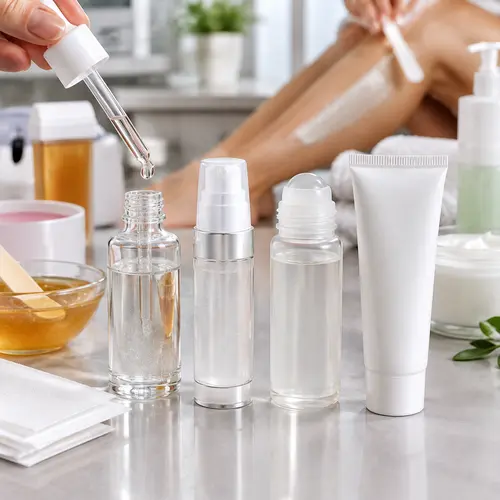
For most post-depilation launches, the best hair inhibitor serum formulation is paired with an airless pump, not selected after the formula is finished. A pump protects a water-based serum from repeated finger contact, gives a consistent dose, and fits a daily aftercare routine. A dropper works when the serum is very fluid and the brand wants a premium laboratory visual, but it can be messy on legs or underarms and needs a reliable wiper and closure. A roll-on suits targeted body application and short-form video, yet the ball, neck, and wiper must be tested with the formula. A tube is the practical choice for a thicker gel-serum, travel kit, or oil-containing formula, although dosing is less precise. The decision should follow viscosity, ingredient compatibility, application area, storage, and claim language. Approve the formula, final component, fill process, and stability plan as one system; otherwise a strong prototype may clog, leak, separate, or deliver an inconsistent customer experience.
Key Takeaways for Private Label Buyers
- Set the package after confirming the viscosity window, target dose, and application zone; a customized look cannot rescue poor dispensing.
- Use an airless pump for thin-to-medium water-based aftercare; reserve a dropper for very fluid formulas with controlled handling.
- Choose a roll-on for legs, arms, or bikini-line positioning only after ball material, wiper fit, and orientation-based leakage checks.
- Use a tube for thicker gel-serums and oil-containing blends; inspect nozzle flow, seal integrity, and squeeze recovery.
- Require filled samples, heat and cold storage checks, shipping simulation, ingredient and labeling documents, and a transparent BOM before a production release.
- A seven-day sample target and a pilot near 1,000 units are useful only when the same package and filling method can scale.
Buyer Context
Hair-removal buyers often treat the serum as an accessory to a wax, strip, cream, or sugar-wax purchase. It is actually the repeat-use touchpoint after a depilatory cream, wax service, or home routine, so the applicator influences consistent use. A hair removal OEM manufacturer should evaluate it beside a depilatory cream OEM project and private label waxing products, especially when selling a coordinated post-depilation care OEM kit.
Aftercare is used on freshly waxed or cream-rinsed skin. The label must clarify sequence, amount, frequency, and warnings without making medical promises. In a hair inhibitor serum OEM project, request the full INCI identity, use level, and documentation for each key ingredient. If a trade name such as Desifine is proposed, request its INCI name and claim support before artwork. Check copy against FDA cosmetics requirements and FDA guidance on prohibited and restricted cosmetic ingredients.
Creator-led brands also need a package that reads clearly on camera. A controlled roll-on stroke, fast absorption, or clean tube squeeze may create useful content, but visual novelty cannot replace an irritation-risk review. The product brief should connect texture, fragrance, color, and use area to the audience, while the manufacturing partner explains what is stock, what is customized, and what can be reproduced at scale.

Technical or Packaging Factors
Match the Dispenser to the Formula
Start with viscosity, solids, oils, and target dose. A dropper suits a low-viscosity serum that travels through the pipette without stringing or clogging. Check draw speed, drop size, cap reseal, pipette material, and odor or color change after repeated opening. Volatile ingredients, fragrance, or botanical load make the complete closure test essential.
An airless pump is usually the most forgiving option for a thin or medium body serum. Check priming, output consistency, residual volume, cap security, and performance after a pause. It is less suitable for particles or a formula too thick for reliable piston movement.
Roll-ons suit legs, arms, and targeted areas because use is visible and direct. Check wetting without flooding, ball material, wiper, neck clearance, cap fit, and flow in different orientations. Tubes suit thicker gel-serums or oil-containing blends; test nozzle flow, seal, squeeze recovery, odor transfer, and shoulder stress.
Test the Filled Package
Compatibility work should use the final formula in the final component. Track color, odor, pH, viscosity, separation, sediment, and dispensing after heat, cold, and relevant light exposure. Include upright and inverted storage, leakage, vibration, and carton checks. Repeat rolling, pump priming, cap seepage, and tube nozzle handling are package-specific failure points.
Review irritation risk on freshly depilated skin, especially with fragrance, essential oils, acids, or high alcohol. Confirm use area, frequency, warnings, net contents, lot coding, and storage language. A supplier that can provide a clear Intertek cosmetic testing and certification services pathway may help organize independent checks, but the buyer approves claims and market-specific label content.
Plan ODM Production and Scale
Ask a hair removal formulation service to document formula-package decisions. The hair removal manufacturing process should show sample filling, component inspection, closure control, label placement, lot coding, and shipment release. A seven-day sample target matters only when the sample uses the intended component and review loop.
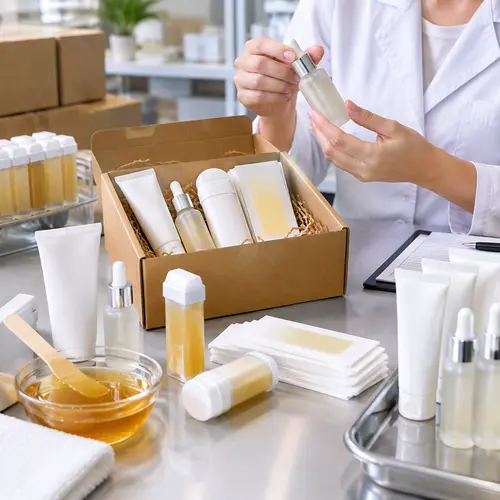
Request a component BOM for the bottle or tube, pump, dip tube, ball, wiper, cap, decoration, carton, and freight protection. This shows whether an under-30-day launch target is realistic. A pilot near 1,000 units should use the same ingredient specification, package, filling method, and release checks planned for scale. Ask for GMPC or ISO 22716 production documentation and confirm ownership of label files, stability records, and shipment conditions. A concise hair removal product solutions brief keeps wax, cream, and aftercare aligned.
Do not switch components after approval without repeating compatibility and leakage checks. A request a hair removal product quote brief should list fill size, market, sample date, pilot quantity, components, documents, and destination.
Decision Framework Table
| Factor | What to Check | Why It Matters | ODM Buyer Note |
|---|---|---|---|
| Formula texture | Viscosity window, pH, oils, solids, and phase behavior | Controls flow, skin feel, and visible stability | Approve the formula and filled component together |
| Package type | Dropper, pump, roll-on, or tube; target dose and use area | Determines reach, grip, mess risk, and repeat use | Match the applicator to the filmed use case |
| Dispenser mechanics | Priming, drop size, ball movement, nozzle flow, and reseal | Prevents inconsistent application and complaints | Record output across repeated uses |
| Material compatibility | Formula-contact plastics, elastomers, glass, decoration, and adhesive | Reduces swelling, odor transfer, discoloration, and leaks | Run checks with the final ingredient list |
| Storage and shipment | Heat, cold, light, orientation, vibration, and carton integrity | Shows whether texture and closure survive logistics | Include actual freight conditions |
| Skin and label review | Irritation risk, INCI, usage, warnings, net contents, and lot code | Supports clear use and market-ready artwork | Review claims before decoration and filling |
| Sample and scale | Seven-day review, 1,000-unit pilot, BOM, and ISO 22716 or GMPC records | Links rapid sampling to repeatable production | Keep formula, components, and filling method unchanged |
ODM Manufacturing Considerations
A hair inhibitor serum formulation should move into ODM production only after the buyer and supplier agree on a controlled master sample. Approval should cover appearance, viscosity, scent level, absorption, residue, dispensing behavior, fill weight, and the intended use after hair removal. Keep one sealed approval sample with the buyer and another with the manufacturer, supported by a dated specification and batch reference.
Customization should begin with a written product brief rather than an open-ended ingredient request. Define the desired texture, visible color, fragrance direction, skin feel, application area, drying time, and positioning language. If the product must look distinctive in short-form video, evaluate it under the actual lighting, background, and application quantity used for content. A dramatic visual effect should not interfere with even dispensing or leave excessive residue on recently waxed skin.
For packaging compatibility, confirm the bottle, closure, gasket, dip tube or applicator, decoration, and secondary carton as one filled system. Check whether the serum discolors contact surfaces, causes swelling, weakens printed decoration, blocks the outlet, or changes the delivered amount over time. Packaging sourced from a separate vendor should be delivered early enough for the manufacturer to assess it before the production slot is committed.
Stability review needs written checkpoints and acceptance limits. Record odor, color, viscosity, pH when applicable, package appearance, fill loss, and dispensing performance at each interval. Temperature-conditioned and normal warehouse samples can reveal gradual changes that a newly filled sample will not show. The review plan should reflect the expected market, especially when goods may remain in a warm freight container or an unconditioned fulfillment center.
MOQ discussions should separate the formula batch minimum from bottle, decoration, carton, and filling minimums. A stock container with a customized label may support a smaller opening order than a custom-colored bottle or decorated closure. Ask for an itemized quotation showing tooling, sampling, testing, packaging waste allowance, freight assumptions, and any quantity breakpoints.
Before release, obtain the ingredient declaration, finished-product specification, batch identification format, directions, warnings, net-content information, shelf-life basis, and available certification records. Claims about reducing the appearance or frequency of unwanted hair must be reviewed for the destination market. Buyers can compare the planned label with general information from FDA cosmetics resources and the agency’s list of prohibited and restricted cosmetic ingredients.
Shipment instructions should identify freight mode, carton count, pallet configuration, maximum stacking, lot separation, and acceptable warehouse conditions. Require pre-dispatch photos, packing-list reconciliation, and retention samples. For a broader view of private-label workflow, buyers can review the supplier’s OEM and ODM services and manufacturing process before approving commercial production.

Common Problems or Failure Cases
Wax becomes brittle: Hard wax can crack instead of flexing when its resin balance, storage history, or working temperature is unsuitable. Approve a melting and application range, then compare break behavior and removal performance across retained batches.
Wax strips lose adhesion: Pre-coated strips may lift poorly when wax loading is uneven, release liners transfer residue, or prolonged storage changes tack. Buyers should inspect coating uniformity, liner removal, grip-tab usability, and adhesion on the intended hair-removal area.
Depilatory cream separates: A cream may develop a watery layer, graininess, odor shift, or uneven active distribution. Do not accept remixing as the only corrective action. Request an investigation covering raw-material addition order, mixing conditions, filling temperature, and storage history.
Roll-on wax cartridges leak: Leakage can result from dimensional variation, a poor cap fit, cartridge distortion, or wax behavior during transit. Inspect filled units after conditioning and confirm that the cartridge still fits the intended warmer without binding or cracking.
Fragrance causes sensitivity complaints: Strong fragrance may support a brand concept but can increase consumer concern when used after waxing, sugaring, or depilatory treatment. Review fragrance concentration, allergen labeling needs, intended application timing, and the suitability of a fragrance-free option.
Packaging deforms: Bottles, cartridges, or tubes may panel, soften, or lose decoration after filling or transport exposure. The corrective action may require a different resin, wall thickness, closure fit, decoration method, fill temperature, or carton support rather than a formula change alone.
Supplier Checklist
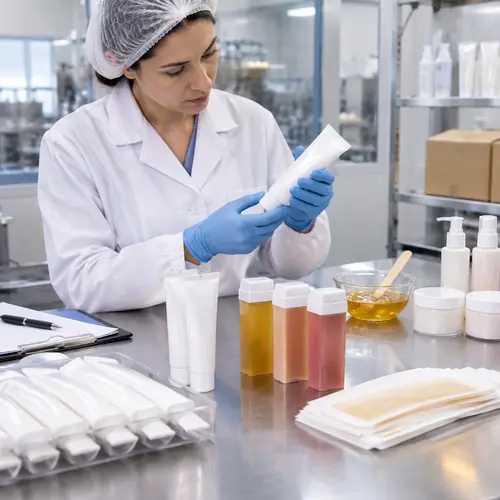
- Request hair-removal project examples that match the intended format, such as serum aftercare, depilatory cream, sugar wax, strips, or roll-on cartridges.
- Confirm who owns the customized formula, artwork, molds, test results, and rejected components.
- Ask for a controlled sample specification covering texture, color, odor, viscosity or melting range, fill weight, and functional use.
- Verify traceable ingredient lots, in-process records, finished-batch checks, retention samples, and complaint handling.
- Review the full package bill by component, including material, dimensions, decoration, closure, liner, carton, and case pack.
- Confirm the stability schedule, acceptance limits, irritation-risk assessment, and process for reporting an out-of-limit result.
- Compare formula, filling, packaging, decoration, and carton minimums instead of relying on one headline MOQ.
- Request an itemized cost sheet and estimated logistics charges with clearly stated assumptions.
- Check labeling support for ingredient names, warnings, directions, lot coding, shelf life, and destination-market language.
- Ask for evidence of previous overseas or creator-led brand projects, but verify references, launch scope, and the supplier’s actual role.
- Evaluate whether the account contact can translate a marketing brief into measurable sample criteria without making unsupported promises.
- Confirm available production capacity, reorder lead-time assumptions, and how urgent replenishment is prioritized.
FAQ
How can I reduce the risk of a factory copying my idea or formula?
Use a signed confidentiality and ownership agreement before sharing detailed files. Limit access to named project personnel, mark each revision, and state who owns custom formulas, artwork, molds, and test data. Also ask whether similar products may be sold to other customers and how confidential records are separated.
Can a sample be adjusted to look more dramatic on camera?
Yes, within functional and safety limits. Provide reference videos, lighting conditions, application quantity, and target color or texture. Approve the result both on camera and during normal consumer use; an exaggerated sample is unsuitable if it stains skin, dispenses poorly, or becomes unstable.
Can quality controls guarantee that no follower will have a bad reaction?
No responsible supplier can guarantee zero reactions. Risk can be reduced through ingredient screening, contamination controls, defined specifications, intended-use assessment, clear directions, warnings, batch traceability, and complaint procedures. The brand should avoid overstated safety claims and provide appropriate use guidance.
What should be included in an ODM sample approval?
Approve the filled package, formula appearance, scent, viscosity, application feel, delivered amount, label placement, coding area, and carton fit. Record acceptable tolerances rather than approving only from photographs.
Why can packaging have a higher MOQ than the serum?
Decoration, custom colors, molded parts, cartons, and closures often have separate production minimums. Using stock components with customized labels can reduce the initial commitment while preserving a branded presentation.
Which documents should be ready before shipment?
At minimum, collect the ingredient list, finished-product specification, batch and quantity records, approved label files, packing list, carton details, shelf-life support, and available test reports. Importers should confirm any additional destination-market requirements.