Direct Answer
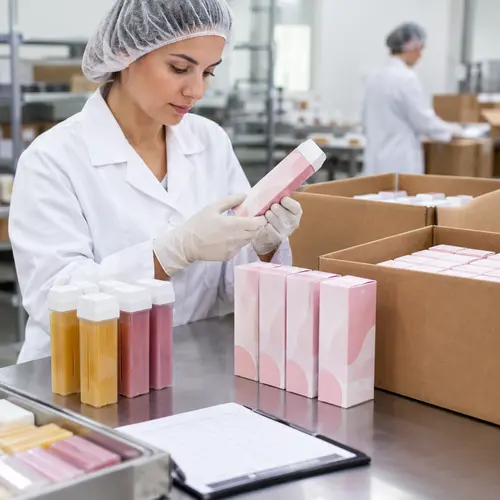
For a DTC hair removal product line, the strongest launch architecture is usually one hero SKU that solves a highly visible, repeatable problem and one companion SKU that improves the result or extends the routine. For example, a depilatory cream can act as the hero product, while a soothing post-depilation gel becomes the companion. A wax strip kit can pair with an aftercare lotion, or a roll-on wax cartridge can pair with a calming serum.
The decision should be based on more than trend appeal. Before approving a formula, review texture, removal performance, irritation risk, packaging compatibility, stability data, labeling documents, and the economics of a 1,000-unit pilot. The goal is to test a coherent customer promise within a 30-day operating cycle, then scale the same validated formula and packaging system if demand is confirmed. This approach gives founders a focused launch story without forcing the brand to carry an oversized assortment too early.
Key Takeaways for Private Label Buyers
- Choose the hero SKU around one clear use case, such as fast leg application, sensitive-skin depilation, or an at-home waxing ritual.
- Select a companion SKU that addresses the next customer concern: residue, tightness, visible redness, or slower-feeling regrowth.
- Request side-by-side samples with documented formula revisions, texture observations, and intended application areas.
- Check packaging compatibility with the actual formula, including leakage, dispensing, heat exposure, cold storage, and shipment vibration.
- Build MoCRA and CPNP documentation into the development calendar rather than treating compliance as a final packaging task.
- Use a pilot run to test conversion, repeat purchase, customer complaints, and bundle economics before adding more formats.
Buyers comparing categories can review hair removal product solutions alongside the more specific options for private label depilatory cream and private label waxing products.
Buyer Context
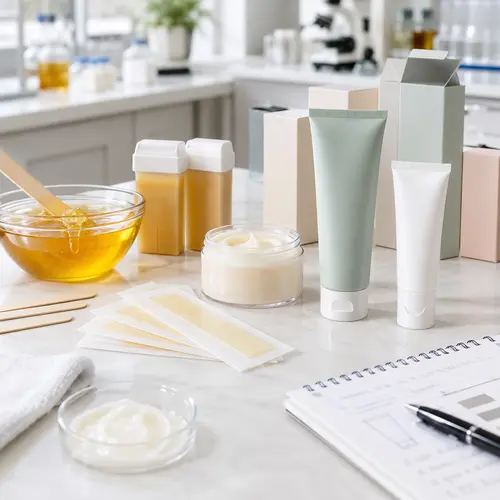
A hero-and-companion structure matters because hair-removal purchases are judged in two moments: the removal event and the skin experience afterward. A depilatory cream may perform well in a controlled sample but still create dissatisfaction if the scent lingers, the texture drips, or the skin feels dry. Wax strips may remove hair effectively but receive poor reviews when the adhesive transfers, the strip tears, or the package does not protect the individual sheets.
For a DTC brand, these details quickly become visible in social comments. A product that photographs well on a clean bathroom shelf must also work consistently across body areas, climates, and user skill levels. A companion product gives the brand an opportunity to manage the complete routine without making unsupported claims. Aftercare can help position the line around comfort and maintenance, while a second removal format can address a different use case, such as travel, facial areas, or larger body zones.
The model also supports more disciplined inventory planning. One hero SKU concentrates paid traffic, creator content, and customer education. The companion increases average order value and creates a logical bundle, but it should not introduce a completely different supply chain. Shared bottle components, compatible cartons, common labeling workflows, or the same active library can reduce operational complexity. A buyer evaluating hair removal OEM ODM services should ask whether the proposed companion can be sampled and validated on the same development track.
Technical or Packaging Factors
Formula behavior
For depilatory cream, assess spreadability, dwell-time guidance, rinse-off behavior, odor profile, and skin feel after removal. The formula should remain uniform through filling and should not separate, thicken unexpectedly, or become difficult to dispense after heat and cold exposure. Review the irritation-risk assessment for the intended application area and make sure claims remain aligned with available substantiation. The mild hair removal formula route may be appropriate for a sensitive-skin position, but gentle positioning still requires careful instructions and evidence.
Wax requires a different review. For sugar wax, hot wax, and roll-on wax, confirm melting or softening behavior, pull strength, spread thickness, and residue removal. A roll-on cartridge needs a practical leakage review after filling, storage, and shipment simulation. Wax strips require consistent adhesion and release, with attention to strip material, coating weight, liner separation, and aging. A hair removal manufacturing process review should include in-process checks, not only finished-goods inspection.
Packaging and storage
Packaging is part of the product performance. Creams may need tubes, pumps, or airless formats selected for viscosity and chemical compatibility. Wax jars and cartridges must tolerate temperature changes without distortion, seepage, or cap failure. Individual wax strips need a barrier that protects adhesion during storage and shipment. Aftercare gels and lotions should be tested for dispensing consistency and label durability.
Ask for compatibility observations using the final formula and final primary pack. Review leakage, paneling, closure torque, seal integrity, label adhesion, and carton scuffing. Define heat and cold storage conditions appropriate to the intended market, then inspect samples after exposure. Shipment conditions should also be discussed: pallet orientation, carton compression, vibration, and whether temperature-sensitive wax formats require seasonal handling instructions.
Documentation and launch readiness
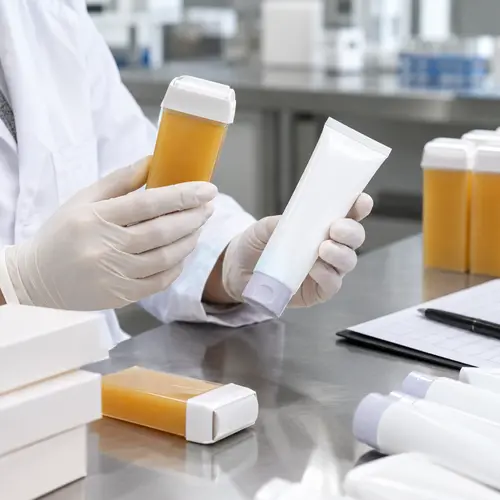
Request the ingredient list, specifications, safety documentation, stability plan, packaging specifications, batch coding method, and claim substantiation pathway. For United States distribution, advertising language should be reviewed against the FTC’s advertising substantiation guidelines. For market positioning and category context, Mintel global beauty market reports can help a team compare consumer signals without treating trend data as proof of product performance.
Compliance should run in parallel with sampling. PZIK’s operating model combines a vertically specialized formulation library with ISO 22716 pilot production from 1,000 units, while retaining a path toward 500,000-plus units without reformulation or supplier handoff. The stated formulation cycle is under 30 days, approximately 40% shorter than a typical 90-day development cycle. These figures should be confirmed in the project brief for the specific formula, packaging format, testing scope, and destination market.
Decision Framework Table
| Factor | What to Check | Why It Matters | ODM Buyer Note |
|---|---|---|---|
| Hero use case | Body area, removal method, application time, and customer skill level | Creates a focused promise for paid media and creator demonstrations | Approve one primary audience before adding secondary claims |
| Companion role | Aftercare, residue control, travel convenience, or an alternate format | Improves routine completion and bundle logic | Prefer shared components and compatible documentation workflows |
| Formula performance | Texture, spread, odor, dwell-time guidance, adhesion, residue, and rinse-off | Determines repeat purchase and complaint risk | Compare retained samples from each revision, not only the final sample |
| Packaging compatibility | Leakage, closure integrity, dispensing, label adhesion, and material response | Protects product quality during storage and shipment | Test the final formula in the final primary pack |
| Stability and storage | Heat, cold, aging, vibration, carton compression, and seasonal shipment conditions | Reveals failures that bench samples cannot show | Document acceptance criteria before pilot filling |
| Compliance readiness | Ingredient, safety, labeling, claims, batch coding, MoCRA, and CPNP documents | Reduces listing, customs, and market-entry risk | Run documentation review alongside formulation and packaging work |
| Pilot economics | MOQ, sample scope, component cost, bundle margin, and replenishment lead time | Connects product quality to viable customer acquisition | Model hero and companion as separate SKUs and as one bundle |
ODM Manufacturing Considerations
A practical development brief should define the hero SKU, companion SKU, intended markets, target customer, pack sizes, formula restrictions, claim boundaries, and launch date. It should also state which decisions are fixed and which can change after sample review. This reduces repeated sampling caused by unclear ownership between brand, formulation, packaging, and compliance teams.
For a cream-and-aftercare system, confirm that the two products can share a visual language without sharing unsuitable packaging. For wax strips and aftercare, test the complete kit as it will be shipped, including inserts and protective films. For a roll-on wax concept, include cartridge filling, roller movement, cap security, and leakage inspection in the sample scope. A detailed post-depilation care OEM brief can also clarify whether the companion is a soothing gel, calming lotion, or recovery-focused product.
Before approving the pilot, ask for a written production and quality workflow covering sampling, filling, packaging, inspection, release, and shipment. The post hair removal serum supplier route may suit a longer-term maintenance story, but any slow-regrowth positioning should be reviewed carefully for claim support and market-specific restrictions. For the first launch, clarity usually matters more than SKU count.
Common Failure Cases
Frequent failures include selecting a hero product because it is visually distinctive without confirming removal performance; pairing two products that require incompatible storage; approving packaging before formula compatibility is complete; and treating a low-MOQ pilot as a reduced version of the final process. Another common issue is allowing a marketing claim to outrun the available testing. Buyers should resolve these risks through a documented sample review, an agreed stability plan, and a final label and claims check before shipment.
Supplier Checklist
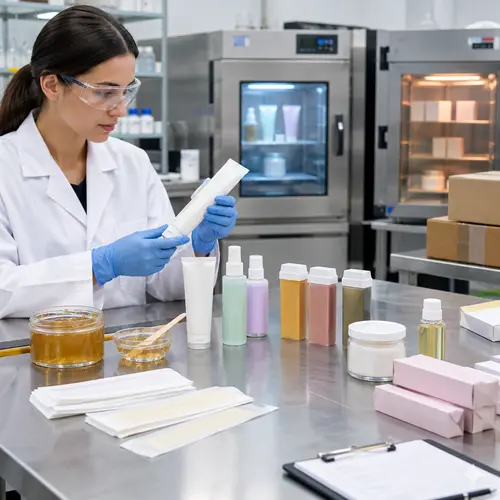
- Can the supplier provide samples, specifications, and revision records for both SKUs?
- Has the final formula been reviewed for irritation risk and intended application areas?
- Will packaging compatibility include leakage, dispensing, closure, heat, cold, and shipment checks?
- Are MoCRA, CPNP, labeling, safety, and claim documents assigned to named project owners?
- Can the pilot begin at 1,000 units while preserving the same formula and quality controls for later scale?
- Are bundle economics, replenishment timing, and seasonal storage requirements modeled before launch?
For project scoping, buyers can review the hair removal OEM manufacturer overview, the hair removal product guides resource path if available, and the request a hair removal product quote page to define samples, packaging, documentation, and pilot requirements.
ODM Manufacturing Considerations
A reliable DTC hair removal product line should move through controlled confirmation gates before production begins. The first gate is sample approval. Request the exact cream, sugar wax, hot wax, strip, roll-on cartridge, or aftercare sample that will be used for commercial production. Record texture, fragrance intensity, color, spreadability, removal performance, residue, and skin-feel in a signed sample approval sheet. A verbal approval is insufficient because later changes in wax hardness, cream viscosity, or fragrance level can alter customer experience.
Formula customization should be tied to a clear commercial brief. Define the target body area, hair type, application method, removal time, preferred fragrance profile, skin-sensitivity positioning, and intended climate. For wax products, ask for the working temperature range, melting behavior, set time, brittleness risk, and pull performance. For depilatory cream, review viscosity, separation resistance, application thickness, rinse-off behavior, and irritation-risk screening. Aftercare products should be evaluated for absorption, tack, scent persistence, and dispensing consistency rather than judged only by a laboratory sample.
Packaging compatibility needs its own approval stage. A cream tube or jar should be checked for stress cracking, seal integrity, chemical interaction, and controlled dispensing. Sugar wax and hot wax require a review of container deformation and temperature exposure. Roll-on wax cartridges need upright storage, roller movement, cap fit, and leakage checks. Wax strips should be assessed for adhesive transfer, release quality, strip flexibility, and aging behavior. Ask the supplier to test the commercial formula in the commercial package, including closure, label, liner, and secondary carton.
Stability review should reflect the markets and shipment routes being considered. Request retained samples from relevant heat and cold conditions, with inspection points for color, odor, separation, viscosity, wax texture, seal failure, and package deformation. Shipment conditions should be documented, including pallet configuration, carton compression, orientation, protective inserts, temperature exposure, and handling limits. A product that performs well in a controlled room can still arrive with a separated cream, cracked wax, or leaking cartridge if transport conditions are ignored.
MOQ should be evaluated against the complete cost of the launch, not only the unit price. Ask for separate quantities and costs for formula sampling, printed packaging, labels, cartons, and finished goods. A lower initial quantity may carry higher packaging costs, while a larger run can create excess inventory if the hero SKU has not yet proven repeat demand. Model landed cost, fulfillment, expected returns, sampling, and customer acquisition cost before approving the assortment. This is especially important when a companion aftercare item is added to the order.
Labeling documents should be collected before artwork is finalized. Depending on the market, the file may need the ingredient declaration, product specifications, batch coding format, safety information, claims support, allergen or fragrance disclosures, certificate of analysis, and relevant responsible-person documentation. The supplier should explain which documents are generated internally and which require an independent laboratory or regulatory partner. For advertising claims, use the FTC’s advertising substantiation guidelines as a useful reference when reviewing statements such as sensitive-skin suitability, natural origin, or cruelty-free positioning.
For broader category and consumer trend assumptions, compare supplier recommendations with independent sources such as Mintel global beauty market reports. This does not replace product testing, but it can help a buyer distinguish a genuine market opportunity from a temporary packaging or fragrance preference.
Review the ODM development process and manufacturing process information together so that sample approval, documentation, inspection, and shipment responsibilities are assigned in writing.

Common Failure Cases
Wax brittleness is a frequent problem when a formula is optimized for a visual finish rather than removal performance. A hard wax can crack during application or fail to lift evenly, leaving residue and increasing repeat passes. Ask for a controlled comparison across room temperatures and confirm whether the product remains workable after storage.
Strip adhesion loss may result from adhesive aging, unsuitable release paper, excess humidity, or insufficient contact between the strip and wax. Review adhesion and release after conditioning, then test the strip on the intended wax formula rather than on a substitute. Packaging should also prevent folded edges and pressure damage during shipment.
Depilatory cream separation can appear as an oily layer, watery leakage, graininess, or an inconsistent active distribution. It may be caused by formula instability, unsuitable tube materials, or exposure to temperature changes. A buyer should inspect samples from multiple storage conditions and compare viscosity and removal performance before and after conditioning.
Roll-on cartridge leakage often comes from a poor cap fit, roller assembly tolerance, weak seal, or storage in the wrong orientation. Test filled cartridges in upright and horizontal positions, with vibration and compression representative of the intended shipment. Inspect the applicator after opening because a cartridge can pass a static leak check but still dispense unevenly.
Fragrance sensitivity can create complaints even when the primary hair removal formula performs correctly. Confirm the fragrance composition, allergen disclosure requirements, intended scent level, and availability of an unscented option. Avoid broad claims that imply universal suitability. The same review applies to aftercare gels and lotions, where residual fragrance may be noticed more strongly on freshly treated skin.
Packaging deformation is another preventable failure. Thin plastic can warp near hot wax, caps can loosen under pressure, and printed labels can wrinkle after contact with oily formulas. Approve the final component set together and define acceptable limits for dents, leakage, label lift, color change, and carton damage.
Supplier Checklist
- Can the supplier provide a retained sample of the exact commercial formula and package?
- Are texture, viscosity, melting behavior, working temperature, fragrance, and removal performance recorded in the approval specification?
- Has irritation risk been reviewed for the intended use area, fragrance profile, and aftercare combination?
- Can the supplier demonstrate formula-to-package compatibility, seal integrity, leakage control, and dispensing consistency?
- Are heat and cold storage results available, with defined inspection points and acceptance criteria?
- For wax strips, have adhesion, release, folding, humidity, and aging performance been tested?
- For cartridges, have upright storage, horizontal storage, vibration, closure fit, and roller movement been checked?
- Are MOQ, sampling charges, packaging quantities, tooling, artwork changes, and lead-time assumptions listed separately?
- Does the document package include ingredients, specifications, batch coding, safety information, claims support, and certificates of analysis where applicable?
- Can the supplier explain its cruelty-free, clean-beauty, recycled-content, or responsible-sourcing evidence without relying on vague marketing language?
- Will an NDA and formula ownership schedule define confidentiality, permitted use, tooling ownership, and restrictions on sharing brand materials?
- Are pre-shipment inspection, retained samples, carton standards, and responsibility for transport damage included in the supply agreement?
FAQ
Can an Asian supplier meet European and US clean-beauty and cruelty-free requirements?
Yes, but location alone proves nothing. Require the ingredient list, supplier declarations, animal-testing policy, fragrance information, claims substantiation, and relevant third-party documentation. Ask which claims are verified by records and which are only proposed marketing language. Then have the final formula and label reviewed for each target market before release.
Will a low MOQ make the unit cost too high to support customer acquisition costs?
It can, especially when custom cartons, printed tubes, or specialized strip materials are included. Request a cost model at several quantity levels and separate formula, packaging, testing, freight, and fulfillment assumptions. A focused hero SKU with a simple companion item may produce a healthier launch model than several low-volume variations with fragmented inventory.
Will a turnkey base formula make my brand look identical to competitors?
Only if the brand accepts the base without meaningful differentiation. A base can be customized through texture, fragrance, removal time, hair-area positioning, aftercare pairing, package format, claims discipline, and documented performance targets. Ask for a formula history and an exclusivity discussion, then confirm that the approved variation is recorded as the commercial standard.
What should be covered by an NDA before sharing a launch plan?
Cover the formula brief, product architecture, target pricing, artwork, customer research, supplier identities, samples, and launch timing. The agreement should define confidential information, permitted access, retention or destruction of files, formula ownership, and remedies for unauthorized disclosure. An NDA does not replace a clear development and ownership schedule.
How can I verify that environmental packaging claims are not greenwashing?
Ask for the material specification, recycled or bio-based content percentage, chain-of-custody evidence where relevant, disposal guidance, and any applicable international certification. Check whether the claim applies to the whole package or only one component. Keep consumer-facing language narrower than the evidence supports.
What shipment checks matter most for a first hair-removal launch?
Confirm carton compression, pallet stability, orientation marks, temperature exposure, closure protection, and inspection at arrival. Sample cartons from different pallet positions and check wax texture, cream separation, strip condition, cartridge leakage, label adhesion, and aftercare dispensing. Record photographs and batch numbers before inventory is released.
References
The FTC’s advertising substantiation guidelines support the review of evidence for environmental, cruelty-free, natural-origin, and performance claims.
Mintel global beauty market reports provide independent market context for beauty and personal-care category planning.