Direct Answer
When evaluating salon hair removal products wholesale, the central question is not simply whether a formula removes hair. The product must perform consistently across the full salon workflow: preparation, application, removal, cleanup, aftercare, storage, and shipment. A private-label buyer should assess the formula, package, operating temperature, skin-contact profile, and documentation as one connected system.
For wax, strips, cream, sugar wax, roll-on cartridges, and aftercare, the best supplier can show a repeatable sample process, explain known limitations, and confirm that the pilot version is materially the same product intended for scale. Ask to review texture on camera, application thickness, removal behavior, residue, leakage resistance, and stability records before approving artwork or placing a production order. This approach helps founders protect customer experience while moving quickly from concept to a market-ready SKU.
Start with the hair removal OEM manufacturer page to compare applicable product formats, then request a structured sample review through the request a hair removal product quote page.
Key Takeaways for Private Label Buyers
- Define the service workflow first. A salon product needs clear application, removal, cleanup, and aftercare behavior.
- Review formula performance in practical terms: spread, set time, pull strength, residue, fragrance, and skin feel.
- Check packaging compatibility with the formula, heat exposure, transport vibration, and repeated opening or dispensing.
- Request evidence from stability, leakage, microbial, and package-interaction checks before approving mass production.
- Confirm sample scope, pilot quantity, labeling documents, and shipment conditions in writing.
- Choose an ODM partner that can preserve the approved formula and package specification when volume increases.
Buyer Context
Salon buyers usually purchase a workflow, not an isolated jar or tube. A wax specialist needs a product that melts or softens predictably, spreads in a controllable layer, grips the hair, and releases without excessive residue. A strip buyer needs reliable adhesion after storage, clean separation from the backing, and enough flexibility for common body areas. A depilatory cream buyer must balance removal performance with a comfortable application window and clear use directions.
The same logic applies to sugar wax and roll-on wax. Sugar wax may be judged by tack, pliability, and cleanup with water. Roll-on wax must move through the cartridge and roller evenly without clogging or leaking. Aftercare products must fit the timing of the service, absorb without interfering with the next step, and remain compatible with the selected bottle, pump, tube, or sachet.
This matters even more for creator-led brands. A product shown in a short video is judged immediately by its texture, visual payoff, and ease of use. A seven-day sample target can support a content calendar, but speed only has value when the sample is traceable, reviewable, and representative of the production formula. Buyers should also confirm whether a pilot from 1,000 units can use the same manufacturing line, filling method, and package components planned for scale.
Use the hair removal product solutions hub to narrow the format by salon service, customer segment, or launch objective. For broader buyer education, the hair removal product guides can help teams prepare a more precise brief.
Hair removal manufacturing process reviews should cover sampling, filling, packaging, QC inspection, and shipment handoff. This gives a buyer a clearer view of where performance can change between approval and delivery.
Technical or Packaging Factors
Formula behavior
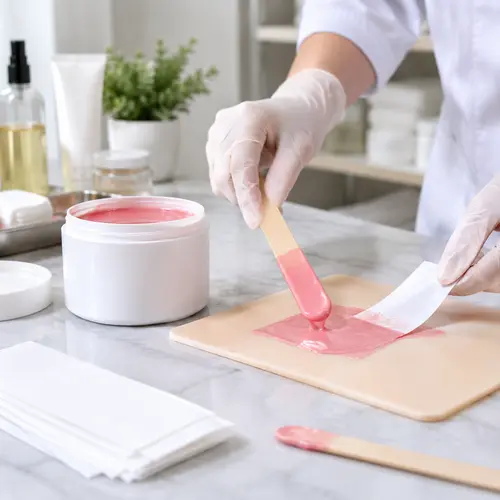
For depilatory wax, ask for the intended working range and the method used to verify melting or softening behavior. The practical test is whether the wax reaches a workable texture without becoming stringy, overly fluid, or difficult to remove. Evaluate a fresh sample and a stored sample, because heat exposure can change viscosity, adhesion, color, fragrance, and residue.
For wax strips, inspect the coating weight, backing flexibility, adhesive consistency, and separation from the release liner. Aging can reduce adhesion or cause transfer. Request an aging comparison and test strips after realistic heat and cold storage. The package should protect the strips from dust, moisture, compression, and curling during shipment.
For depilatory cream, review application thickness, odor, spread, removal completeness, and the recommended contact time stated on the label. The irritation-risk review should consider the target body area, intended user profile, fragrance, preservatives, and foreseeable misuse. Do not approve a claim based only on a pleasing sample demonstration. Require clear directions, warnings, ingredient documentation, and a defined review process for adverse feedback.
Package compatibility
Packaging is part of product performance. A pump, tube, jar, sachet, cartridge, or aerosol-style dispenser can change how much product is delivered and how well the formula remains protected. Ask whether the formula has been checked against the contact materials, closure, liner, adhesive, and decoration. Look for swelling, cracking, odor transfer, discoloration, separation, label lifting, and closure deformation.
Roll-on wax deserves a dedicated leakage check. Store filled cartridges upright and on their side, inspect the roller ball and cap, and test after vibration or compression. For cream, confirm that the tube shoulder, seal, and cap remain clean after repeated dispensing. For aftercare, check pump priming, dosage consistency, and whether the lotion or soothing gel separates after temperature changes.
Storage and shipment
Agree on heat and cold storage conditions before production. Wax may soften in transit, while cream and aftercare can show viscosity shifts or separation. The supplier should define acceptable appearance and texture changes, test filled packages rather than bulk formula only, and provide a shipment recommendation that reflects the destination market.
For private-label projects, the documentation package should cover the ingredient list, product specification, batch coding, package specification, safety information, and applicable market files. Buyers targeting the United States should understand the obligations described in the FDA cosmetic safety guidance and the Modernization of Cosmetics Regulation Act of 2022. For pigment-containing products or tinted wax, review the CIR safety profile of iron oxide pigments where relevant.
For product architecture and sampling support, compare hair removal OEM ODM services and the depilatory cream OEM process. Buyers considering a complete service kit can also review post-depilation care OEM.

Decision Framework Table
| Factor | What to Check | Why It Matters | ODM Buyer Note |
|---|---|---|---|
| Wax texture | Softening or melting behavior, spread, set time, pull strength, residue | Controls service speed, operator confidence, and customer comfort | Request fresh and heat-exposed samples using the same package type |
| Wax strip performance | Adhesion, liner release, backing flexibility, coating uniformity | Reduces incomplete removal and product waste | Ask for aging and transport-compression comparisons |
| Depilatory cream | Viscosity, spread, odor, contact-time directions, removal completeness | Balances user experience with responsible use instructions | Approve claims only after formula and labeling review |
| Package compatibility | Swelling, leakage, cracking, odor transfer, pump or roller function | Prevents failures during storage, fulfillment, and salon use | Test filled packages, closures, liners, and decoration together |
| Storage and shipment | Heat and cold exposure, vibration, compression, carton protection | Connects factory performance with delivered product quality | Confirm destination conditions and acceptable appearance limits |
| Launch readiness | Sample scope, pilot quantity, label files, batch coding, shipment terms | Prevents approval delays and unclear ownership at launch | Document the approved formula and package before scale-up |
A practical next step is to send the supplier a one-page brief covering target service, body area, texture reference, package format, market, target price, launch date, and forecast. Include video references if visual styling matters, but translate each reference into a measurable request such as thicker spread, cleaner strip release, lower residue, or a more controlled roll-on flow.
For wax-specific development, review wax strips OEM options. For future regrowth-positioning kits, examine hair inhibitor serum OEM as a separate aftercare SKU, with its own compatibility and labeling review.

ODM Manufacturing Considerations
For salon hair removal products wholesale, ODM planning should begin with a written product brief that connects service use, formula behavior, package choice, and launch timing. The brief should identify whether the product is depilatory wax, sugar wax, wax strips, depilatory cream, a roll-on cartridge, or an aftercare item. It should also define the intended body area, professional or at-home use, target texture, fragrance direction, color, application method, and removal experience.
Sample Confirmation and Formula Customization
Approve samples against measurable points rather than appearance alone. For wax, record working texture, melting behavior, spreadability, set time, brittleness, and release from the skin or strip. For cream, check viscosity, uniformity, contact-time instructions, rinse behavior, fragrance intensity, and the condition of the skin after removal. For sugar wax, review stringiness, scoopability, moisture response, and performance across normal salon temperature changes.
A useful sample record includes an approved reference sample, acceptable variation limits, color references, fragrance description, filling weight, and the exact application method. Formula customization can address texture, scent, color, heating behavior, or skin-feel targets, but every change should be documented and rechecked. A visually unusual formula may attract social media attention, yet it still needs a controlled application and removal experience suitable for the intended service.
Packaging Compatibility and Stability Review
Packaging must be evaluated with the filled product, not selected from a catalog image. Check whether a jar, tube, sachet, strip pouch, or cartridge resists softening, cracking, staining, odor transfer, and seal failure. For roll-on wax, inspect the roller head, cap, weld or closure, and product flow after storage in different positions. For cream, examine tube shoulder stress, cap cleanliness, and whether the opening remains easy to control during salon use.
Ask the supplier to document heat and cold exposure, appearance changes, odor changes, phase separation, viscosity movement, seal condition, and package deformation. Shipment conditions should state temperature exposure limits, carton configuration, inner protection, pallet or case loading, and whether the product must be protected from freezing or excessive heat. These details matter because a formula can leave the facility in good condition and still arrive with brittle wax, a distorted tube, or a leaking cartridge.
MOQ, Documents, and Commercial Scope
Confirm the minimum order quantity separately for formula development, packaging, printed components, and finished goods. A lower finished-goods MOQ may still require a large purchase of custom cartons, labels, or molded components. Request a BOM-style quotation that identifies formula, filling, packaging, artwork setup, testing, documents, freight assumptions, and any one-time charges. This makes it easier to compare suppliers without confusing a low unit price with a low total launch cost.
Before production, request the ingredient list, product specification, batch coding approach, safety and handling information, material declarations for packaging, and labeling support for each destination market. Claims such as sensitive-skin suitability, rapid action, or professional performance should be reviewed against the available support before they appear on packaging or social media. For products used near the eyes or brows, follow the FDA’s eye-area cosmetic safety framework and keep usage directions visibly specific.
For a broader United States launch, buyers should also understand the recordkeeping and business responsibilities associated with the Modernization of Cosmetics Regulation Act of 2022. The manufacturer can provide documents and production records, but the brand owner remains responsible for confirming that the final label, claims, and market placement are appropriate.
Relevant internal resources include the hair-removal product range, OEM and ODM services, and the manufacturing process. Use them as starting points for a more specific RFQ rather than as substitutes for a product brief.

Common Problems or Failure Cases
Wax brittleness: A wax can look attractive in the container but crack during application or removal. Common contributors include an unsuitable hardness balance, excessive cooling, or mismatch between the wax and the strip material. Compare samples at the intended service temperature and after shipment simulation. Record whether the wax forms a continuous layer, breaks at the edge, or leaves excessive residue.
Strip adhesion loss: Wax strips may lose pickup strength when exposed to heat, humidity, or an incompatible pouch adhesive. Test unused and aged packs, inspect the strip surface, and compare removal consistency on the same test area. The supplier should identify the strip substrate, adhesive construction, sealing method, and storage limits.
Cream separation: A depilatory cream may develop oiling, watery bleed, lumps, or a changed odor. Review samples after temperature exposure and check viscosity from the top, middle, and bottom of the container. Filling consistency and package cleanliness also matter because a separated or overfilled tube can create a poor consumer experience even when the bulk batch was uniform.
Cartridge leakage: Roll-on cartridges can leak from the roller head, cap, seam, or closure during transport. Test upright and inverted storage, repeated handling, carton compression, and temperature movement. Inspect both the cartridge and the carton for residue, swelling, or deformation before approving a shipment method.
Fragrance sensitivity: A strong scent can undermine trust during an intimate salon service. Ask for fragrance descriptions and alternatives, then assess intensity during application and after removal. Do not treat fragrance preference as a purely cosmetic issue; it can affect repeat use and customer complaints.
Packaging deformation: Heat can warp tubes, loosen caps, soften strip pouches, or alter wax presentation. Request defined storage and transport conditions, and require photographs or inspection records for damaged cartons. A buyer should know how claims are handled when the product arrives outside specification.
Supplier Checklist
- Confirm the supplier has experience with the exact hair-removal format and intended service use.
- Request a written sample specification covering texture, color, fragrance, viscosity or melting behavior, application method, and removal result.
- Ask how formula changes are recorded and how the approved sample is protected as the production reference.
- Review packaging compatibility evidence for jars, tubes, strip pouches, cartridges, caps, seals, and labels.
- Verify heat and cold storage observations, leakage checks, carton protection, and shipment temperature assumptions.
- Separate MOQ requirements for formula, packaging components, artwork, and finished goods.
- Obtain ingredient, specification, batch, labeling, safety, and packaging-material documents before final artwork approval.
- Check whether the quotation shows BOM elements, one-time charges, freight assumptions, and document fees.
- Ask how complaints, retained samples, batch investigation, and replacement decisions are handled.
- Confirm available production capacity, holiday schedules, backup material plans, and allocation rules during an unexpected order increase.
- Use a supplier contact who can translate marketing goals such as camera-visible texture into measurable product requirements.
FAQ
How can I protect my concept and formula from being sold to another brand?
Use a written confidentiality and ownership agreement before sharing the complete brief. Identify which formula, artwork, package specifications, samples, and production records are exclusive to your brand. Ask how access is limited inside the facility and whether your custom formula is assigned a distinct internal code. Protection is contractual and operational, so do not rely only on verbal assurances.
Can the sample have an exaggerated texture or color that looks strong on camera?
Yes, but the visual target should be tested alongside spreadability, removal, residue, and storage behavior. Provide reference images or approved color chips, then ask the supplier to define acceptable variation. A dramatic appearance is useful only when it remains stable in the jar, tube, strip, or cartridge and performs consistently during the salon service.
How can I reduce the risk of a product causing serious customer complaints?
Require documented ingredient and specification information, clear use directions, batch coding, retained samples, and a complaint-response process. Review irritation risk for the intended body area, require appropriate user warnings, and avoid unsupported claims. No supplier can promise zero adverse reactions, so the quality decision should include controlled use instructions, traceability, and a practical response plan.
Will the factory understand social media marketing requirements if I am not a technical buyer?
A capable ODM team should convert terms such as creamy, elastic, clean release, camera-bright, or low-residue into sample criteria. Ask for a shared product brief, short video demonstrations, comparison samples, and a single approval record. Communication quality is measurable: unclear answers on texture, package limits, documents, or timing are reasons to pause.
What happens if a video creates a sudden wholesale order increase?
Discuss capacity before launch and document how extra orders are allocated. Ask about material availability, filling line capacity, finished-goods storage, overtime options, and lead-time changes. A supplier should explain whether existing customers receive priority and what forecast or deposit is needed to reserve production space.
Which documents should I request before approving the label?
Request the ingredient list, product specification, usage directions, warnings, batch coding format, packaging-material information, and destination-market labeling review. Confirm that every claim on the carton, tube, strip pouch, or online listing matches the approved product and available support.
References
- FDA eye cosmetic safety guidance, supporting precautions for products used around the eye area.
- FDA information on the Modernization of Cosmetics Regulation Act of 2022, supporting United States cosmetic business and recordkeeping considerations.