Direct Answer
Designing a private label wax kit starts with one decision: define exactly who will use it, where they will use it, and what a successful result looks like. Retail kits need intuitive portions, clear instructions, shelf-ready presentation, and low-mess application. Salon kits prioritize service speed, repeatable heating, higher unit volume, and packaging that survives daily handling.
Effective wax packaging for private label must be developed alongside the formula rather than selected afterward. Wax type, melting behavior, fill temperature, container material, closure, applicator, storage exposure, and shipping conditions all affect performance. Begin with one hero format, validate the complete kit through compatibility and stability checks, then add aftercare or accessory differentiation. A capable hot wax OEM manufacturer should provide sample scope, an itemized BOM, packaging options, label files, test plans, and estimated shipment conditions before production approval.
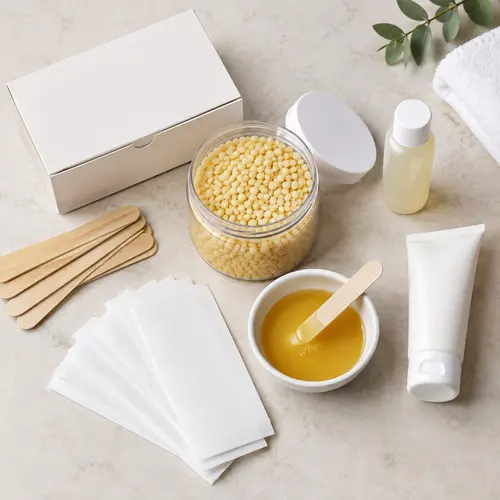
Key Takeaways for Private Label Buyers
- Choose the use case first. A consumer sugar wax kit and a salon hard-wax system require different portions, instructions, closures, and accessories.
- Approve the formula inside production packaging. A jar, pouch, strip sachet, or roll-on cartridge can change leakage, heating, and application behavior.
- Test the whole kit. Review heat and cold storage, closure integrity, wax strip adhesion aging, carton scuffing, and transport leakage.
- Keep the initial SKU focused. One wax format, one aftercare product, and essential tools typically create a clearer launch than an oversized kit.
- Lock specifications before scale-up. Record color, odor, texture, melting or viscosity target, fill weight, pack count, artwork, and acceptable tolerances.
- Separate claims from content language. Product labels and social captions must remain supportable in each target market.
Buyer Context: One Kit, Two Operating Environments
Hair-removal kits appear simple on camera, but each component creates a decision point. A hard-wax jar may need a heater and spatulas. Wax strips need consistent coating, release liners, and sealed pouches. Sugar wax may be sensitive to water exposure and storage temperature. Roll-on wax depends on cartridge fit, roller movement, cap security, and controlled flow. Depilatory cream introduces a different application time, viscosity, tube compatibility, and irritation-risk review.
Retail buyers are designing an experience for an untrained user. The pack must communicate preparation, application direction, removal technique, aftercare, warnings, and disposal without overwhelming the customer. Salon buyers can accept more procedural detail, but they need fast setup and predictable service yield. Explore these format choices through waxing product solutions before committing to artwork.
For creator-led brands, the visual moment also matters. The wax pull, bead melt, strip removal, and aftercare finish must read clearly under studio lighting without creating unrealistic performance claims. Request camera tests during sampling, including close-up texture, spread width, stringing, residue, and removal behavior. A seven-day sample target can be useful, but the buyer should confirm whether it covers an existing baseline, color and fragrance adjustment, or a fully assembled kit. The wider custom hair removal product development scope should state those boundaries in writing.
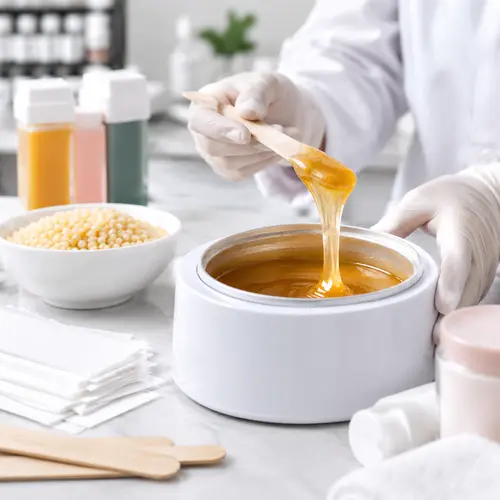
Technical and Packaging Factors
Formula Behavior Before Pack Design
Start with measurable sensory and operating targets. For hard wax, review bead or slab appearance, heating uniformity, working time, spread, flexibility, breakage, pull strength, and residue. For sugar wax, assess firmness, tack, hand warming, water sensitivity, and performance after repeated opening. For wax strips, examine coating uniformity, liner release, adhesion, and residue after aging. A depilatory cream requires defined viscosity, dispensing force, odor review, and contact-time directions. Buyers comparing that format can review the custom depilatory cream formulation pathway.
Do not approve a sample only because it looks dramatic in one short video. Test it across the intended body areas, application thickness, room conditions, and user skill levels. Sensitive-positioned products need a documented ingredient review, clear directions, appropriate warnings, and realistic claims. The mild hair removal formula guidance provides a useful starting point for this evaluation.
Primary Pack and Accessory Compatibility
The container must tolerate filling, storage, reheating where applicable, and transport. Review jar distortion, lid lift, seal adhesion, label movement, oil migration, pouch seal strength, tube paneling, and roll-on cartridge leakage. Confirm that spatulas do not soften or flex unexpectedly during use. If a kit includes fabric or nonwoven strips, verify dimensions, edge quality, absorption, and removal strength with the approved wax.
Accessories should solve a defined task. Pre-wax wipes prepare the area; collars reduce heater mess; aftercare helps remove residue or calm the cosmetic feel of skin. Adding accessories only to increase piece count raises costs, carton size, and assembly risk. For a recovery component, compare after wax care products and, where the positioning is appropriate, a post hair removal serum supplier.
Storage, Safety, Labels, and Launch Files
Request compatibility and stability reviews in the final production pack, not a generic lab container. The plan should cover defined heat and cold storage, room-temperature monitoring, leakage orientation, odor and color movement, texture change, closure function, and label adhesion. Shipment review should reflect likely warehouse and last-mile exposure. The hair removal product quality control workflow should show where incoming pack inspection, filling checks, assembly review, and final release occur.
For US distribution, use the FDA Cosmetics Labeling Guide to review identity, ingredient declaration, net quantity, warnings, and responsible-party information. Buyers should also understand applicable duties under the Modernization of Cosmetics Regulation Act of 2022. Ingredient safety references may include the Cosmetic Ingredient Review Expert Panel safety assessments. For relevant Southeast Asian or Middle Eastern positioning, verify certification scope through the JAKIM Halal certification system rather than relying on an unsupported logo.
Decision Framework
| Factor | What to Check | Why It Matters | ODM Buyer Note |
|---|---|---|---|
| Use environment | Home, travel, salon, or mixed use | Determines portions, tools, and instructions | Avoid forcing one pack to serve incompatible routines |
| Formula target | Texture, melt behavior, spread, residue, and odor | Controls user experience and repeatability | Approve written ranges with the physical sample |
| Primary packaging | Material, closure, seal, fill process, and leakage | Protects stability and shipment performance | Test the exact production component |
| Kit BOM | Wax, strips, applicators, wipes, aftercare, carton, and inserts | Reveals true unit costs and assembly complexity | Request itemized pricing and substitution rules |
| Launch readiness | MOQ, sample scope, artwork, label documents, lead time, and shipping conditions | Prevents content schedules from outrunning production | Use a controlled pilot before higher-volume release |
For pilot planning, align packaging availability with the stated 1,000-unit entry quantity and confirm whether the under-30-day development target includes testing, artwork approval, or only formula readiness. Submit these details through a structured hair removal product RFQ.

ODM Manufacturing Considerations
ODM planning should begin with a written sample brief rather than a verbal description of the desired product. Record the hair-removal format, intended user, target texture, color, fragrance level, pack size, application method, removal behavior, accessory count, and expected retail position. For wax packaging for private label, the brief should also identify whether the same unit must serve home users, salon professionals, or both.
Confirm samples against measurable acceptance points. Depending on the format, these may include a defined wax softening range, depilatory cream viscosity range, strip dimensions, wax coating weight, cartridge fill weight, fragrance intensity, and acceptable color tolerance. Keep one approved sample under controlled storage as the reference standard. Approval should cover both the bulk formula and the filled retail presentation; approving only a loose laboratory sample can leave packaging-related differences unresolved.
Customization can range from adjusting color or fragrance to changing the wax working characteristics, cream application thickness, sugar wax firmness, or aftercare profile. Each change can affect costs, filling efficiency, claims, irritation risk, and lead time. Ask the supplier to separate essential differentiation from optional features in the bill of materials. A transparent quotation should show formula, primary container, printed components, accessories, assembly, testing, freight assumptions, and any one-time setup charges.
Packaging selection should follow the approved formula. The supplier should assess whether contact surfaces soften, swell, discolor, absorb fragrance, or permit product migration. Filled units should be observed at ambient, elevated, and reduced temperatures for changes in seal integrity, container shape, texture, odor, and net weight. Stability review should use the intended decoration and complete pack because inks, labels, liners, and adhesives may behave differently from unprinted samples.
MOQ discussions should distinguish bulk production, printed packaging, accessory purchasing, and final assembled units. A moderate initial order may still require a higher quantity of custom cartons or molded parts. Buyers should ask who owns unused packaging inventory, how long it will be stored, and whether a later formula change could make that stock unusable. Review relevant hair-removal product categories and the supplier’s OEM/ODM service scope before committing to custom components.
Labeling files should include the ingredient declaration, net contents, responsible-party information, directions, warnings, batch identification method, shelf-life notation, and country-of-origin wording where applicable. Claims must match the available support and the target market. Shipment planning should define carton count, pallet configuration, temperature exposure expectations, freight mode, loading method, and acceptable delivery condition. Request pre-shipment photographs, batch records, inspection results, and final packing-list data before release.

Common Problems and Failure Cases
Wax becomes brittle or cracks during removal. This can result from an unsuitable formula-to-use-temperature relationship, excessive cooling, a layer that is too thin, or aging during storage. Compare retained production units with the approved sample and verify application thickness under realistic salon and home-use conditions.
Wax strips lose adhesion. Common causes include uneven coating weight, liner interaction, fragrance migration, humidity exposure, or pressure during stacked storage. Check strips from the top, middle, and bottom of multiple cartons rather than assessing a single hand-selected pack.
Depilatory cream separates or dispenses inconsistently. Separation may appear as watery discharge, uneven color, graininess, or a changing viscosity. The failure can originate in the bulk product, filling process, trapped air, or container interaction. Evaluate the first, middle, and final units from a filling run and compare upright and inverted storage.
Roll-on cartridges leak in transit. Leakage may come from dimensional variation, poor cap engagement, product expansion, or damage caused by tightly packed cartons. A unit that performs well on a workbench may still fail after vibration, stacking pressure, or warm freight conditions.
Fragrance causes avoidable sensitivity complaints. Strong fragrance may support differentiation but can increase consumer rejection, especially in products used on sensitive hair-removal areas. Review fragrance level, allergen documentation where required, directions, warnings, and whether an unscented option is commercially appropriate. Ingredient safety questions can be cross-checked against the Cosmetic Ingredient Review Expert Panel safety assessments.
Packaging deforms or decoration becomes unattractive. Panels may bow, caps may loosen, labels may wrinkle, and printed areas may scuff. These issues are often missed when buyers approve empty packaging rather than finished units packed in their shipping cartons.
Supplier Checklist
- Request a written sample scope covering formula, color, fragrance, texture, pack, accessories, and evaluation method.
- Define measurable approval limits for melting behavior, viscosity, fill weight, dimensions, coating weight, or removal performance where relevant.
- Ask how approved samples are retained and compared with future production batches.
- Review ingredient documentation, fragrance information, irritation-risk assessment, and restricted-substance controls for the destination market.
- Confirm that stability work uses the actual formula, decorated container, closure, liner, label, carton, and accessories.
- Inspect evidence from filled-unit storage, handling, drop, vibration, and stacked-carton evaluations.
- Separate MOQ requirements for formula production, printed packs, accessories, and assembled finished goods.
- Obtain an itemized BOM quotation with tooling, printing, testing, storage, and estimated logistics costs identified.
- Verify batch coding, traceability, incoming-material inspection, in-process checks, release criteria, and complaint handling.
- Review label documents against the destination market and use the FDA Cosmetics Labeling Guide when preparing products for the United States.
- Define shipment temperature assumptions, carton specifications, pallet pattern, inspection level, and release documents.
- Confirm ownership and confidentiality terms for formulas, artwork, molds, test data, and unused printed inventory.

FAQ
How can I reduce the risk of a factory copying my idea or formula?
Use a signed confidentiality and development agreement that defines ownership of custom formulas, artwork, molds, samples, and derivative work. Limit file access, use version-controlled briefs, and confirm whether the formula is exclusive, modified from a supplier base, or available to other buyers. Legal terms cannot remove every risk, but clear ownership and documentation improve accountability.
How do I know the product will not cause serious consumer complaints?
No supplier can promise zero reactions. Reduce risk through ingredient review, controlled manufacturing, defined release specifications, appropriate warnings, patch-test directions when applicable, retained samples, and traceable batch records. Avoid exaggerated claims and investigate complaints by batch rather than relying on general assurances.
Can an OEM team understand a social-media-led product concept?
Yes, if the concept is translated into observable requirements. Provide reference visuals, intended application sequence, desired texture movement, removal style, color tolerance, filming environment, and unacceptable outcomes. Ask the supplier to convert these marketing goals into a written sample specification before development begins.
Should retail and salon kits use the same pack size?
Not necessarily. Retail users often need smaller portions, clearer directions, and controlled accessory counts. Salons may prioritize higher unit efficiency, faster handling, and less secondary packaging. A shared formula with different fills or kit configurations can be more practical than forcing one pack to serve both channels.
What should I approve before ordering printed packaging?
Approve the filled product, container components, final dimensions, artwork dieline, ingredient list, directions, warnings, claims, barcode position, batch-code area, and shipping-carton arrangement. Printing too early creates costly obsolete stock when the formula or label copy changes.
What shipment details belong in the purchase order?
Specify finished-unit quantity, acceptable overrun or underrun, carton count, units per carton, pallet requirements, freight terms, destination, delivery window, batch documents, inspection expectations, and handling limits. The purchase order should also state how damaged, leaking, or deformed units will be documented and resolved.
References
- Cosmetic Ingredient Review — ingredient safety assessment resources.
- U.S. Food and Drug Administration Cosmetics Labeling Guide — labeling information for cosmetic products marketed in the United States.