Private Label Wax Products: Which Format Comes First, Formula or Delivery System?
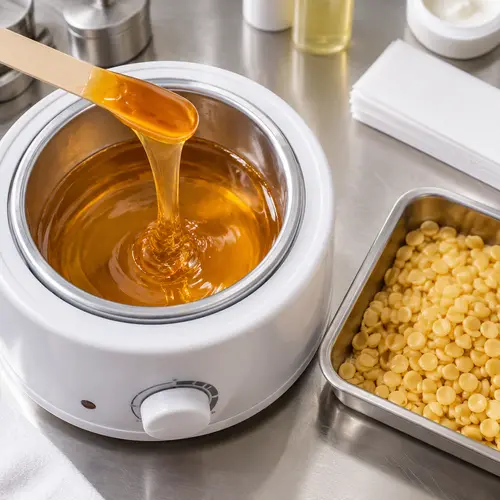
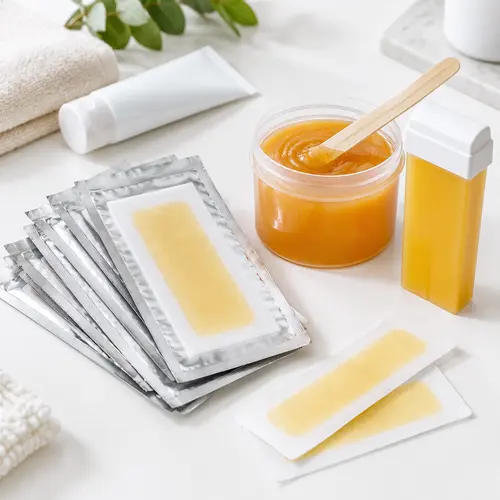
The format decision usually settles more of the commercial outcome than the formula does. With private label wax products, the practical answer is to choose the delivery system first, hot wax beads or pellets, soft wax in jars or tins, pre-coated strips, sugar paste, roll-on cartridges, or a paired aftercare kit, and only then lock the formulation. Format dictates melting point, viscosity window, packaging compatibility, the stability protocol you sign off on, and the true scope of the sample batch you approve. Reverse that order and a brand can burn eight weeks refining a texture that was never going to survive a jar sitting at 40 C inside a summer fulfillment center. Get the order right and one 1,000-unit pilot run can validate both the product and the listing before the traffic spike you built the launch around has already peaked.
Key Takeaways for Private Label Buyers
- Format drives the technical brief. Melting point, adhesion, and packaging compatibility are set by the delivery system, not by the fragrance or the marketing story.
- Ask for the melting range and viscosity band in writing before sampling. A wax that reads as creamy in a lab at 21 C behaves differently in a 35 C warehouse.
- Test the packaging as a system. Cartridge leakage, jar lid sealing, and strip foil aging fail more launches than the wax itself.
- Confirm what the sample round actually covers: base texture only, or formula plus filled pack plus labeling artwork review. Ambiguity here is where timelines quietly slip.
- Treat documentation as a deliverable. Stability summary, INCI and allergen declarations, and market-specific registration files should be listed in the project contract from day one.
Buyer Context: Why Format Choice Is the Real Bottleneck
Hair removal sits in an unusual position in the beauty catalogue. It is repurchase-driven, high-consideration at the first purchase, and unusually sensitive to texture on camera. A wax that strings too early or a strip that pulls unevenly gets caught on video and the review section writes itself. That is why DTC operators building on a visual-first model tend to treat format as a positioning asset rather than a manufacturing detail.
The commercial pressure compounds it. Trend windows on short-form video run for weeks, not quarters, and subscription box buyers sourcing travel sizes need a format that survives fixed monthly cadences without leaking or crystallizing in transit. Small businesses entering the category also carry a compliance load that larger brands absorb silently: cosmetic registration, labeling accuracy, and market notification deadlines all attach to the finished pack, not to the idea. A roll-on cartridge and a jar of soft wax can share 90 percent of a formula and still require different stability runs, different artwork, and different shipping tests.
Natural and vegan positioning narrows the field further. Sugar paste, rosin-based strip waxes, and plant-wax blends each behave differently under heat cycling, so the claim and the format have to be chosen together rather than sequentially. Once that pairing is fixed, the surrounding decisions, carton size, kit assembly, aftercare pairing, become straightforward.
Technical and Packaging Factors That Decide the Launch
Thermal behavior and melt point
Hot wax and film waxes are usually specified by melting range, commonly around 40 to 45 C for bead and pellet formats intended for home use, with a working viscosity that lets the wax flow off a spatula without running. Roll-on systems add a second constraint: the cartridge body must hold the wax in a semi-solid state at room temperature while releasing cleanly at application temperature. Ask for the melt range, the recommended heater or warmer setting, and the reheating tolerance. A wax that tolerates three reheats is a different consumer product from one that degrades after the first.
Adhesion and strip aging
Pre-coated strips are an adhesion engineering problem. The adhesive layer has to grip hair at application and release from skin without tearing, and that balance shifts as the foil-backed pack ages. Accelerated aging at elevated temperature for 12 weeks, plus a short freeze-thaw cycle set, is the standard way to catch the drift before a customer does. Physical checks are simple and worth demanding: peel force by hand assessment at 0, 4, and 12 weeks, plus a visual check for adhesive migration into the foil seal.
Formulation pH and irritation review
Depilatory creams sit in a narrow alkaline window, typically around pH 11.5 to 12.5, with thioglycolate as the active reducing agent. That chemistry is well characterized; the CIR safety assessment on thioglycolate-based depilatories is a reasonable reference point for a buyer briefing, and it explains why contact time and rinse instructions carry more weight than fragrance choice. For brands pairing wax formats with exfoliating or resurfacing aftercare, the CIR final report on alpha hydroxy acids is useful context on acid concentration and pH limits in leave-on versus rinse-off use. Mildness claims should be supported by a human irritation patch study on the finished formula, not on the raw material sheet.
Packaging compatibility and leakage
This is the most common failure point and the cheapest to test. A roll-on cartridge needs an upright and inverted hold test at 40 C for at least four weeks, plus a drop test on the filled unit. Jars need lid torque and gasket compatibility confirmed against the wax oil phase; some liners soften and migrate. Strip pouches need seal strength verified after aging, because a weak seal lets the volatile fraction escape and the adhesive dries out. Aluminum tins should be checked for internal lacquer compatibility if the formula carries fragrance or essential oils.
Labeling and market documentation
Ingredient declaration format, net quantity, and country-of-origin statements vary by market, and the FDA cosmetics labeling guide is the baseline for US-facing artwork. Where a brand wants a certified natural or organic positioning on the pack, the relevant standard is the Ecocert organic and natural cosmetic certification framework, and the certificate scope should match the actual finished formula, not the base concentrate.

Decision Framework: Matching Format to Your Launch Model
| Factor | What to Check | Why It Matters | ODM Buyer Note |
|---|---|---|---|
| Format and use case | Hot wax, soft wax, strips, sugar paste, roll-on, cream, or kit | Determines texture demo potential and repurchase rhythm | Compare against wax strips OEM formats before committing artwork |
| Melt point and viscosity | Written range, heater setting, reheat tolerance | Prevents separation, grainy texture, and burn complaints | Request values for the exact pilot batch, not a generic sheet |
| Stability protocol | 12-week accelerated plus freeze-thaw cycles | Catches adhesion drift and phase separation pre-launch | Confirm the protocol is included in the sample scope |
| Packaging system | Leakage hold test, seal strength, liner compatibility | Transit failures generate returns and review damage | Test filled packs, not empty components |
| Irritation review | Patch study on finished formula | Supports mild and sensitive-skin positioning | Pair with sensitive skin hair removal products briefs |
| Documentation | INCI, labeling file, registration support | Customs and marketplace compliance | Written into the project contract, not promised verbally |
| Pilot scale | 1,000-unit minimum, same line as scale-up | Protects cash flow during test-and-learn | Verify no reformulation between pilot and repeat order |
Format selection is a short exercise if it is done in the right sequence. The companion piece covers sampling scope, supplier verification, and the questions to ask before a contract is signed, along with the failure cases that show up most often in hair removal OEM ODM services projects. Buyers who want the manufacturing side in more detail can review the hair removal manufacturing process, and a hair removal product RFQ is the fastest way to confirm which formats are already validated under existing stability data.
ODM Manufacturing Considerations: From Approved Sample to Shipped Carton
Once a format is settled, the manufacturing plan turns into a chain of confirmations. Each confirmation closes one risk before the next one opens, and the sequence matters more than the calendar. A buyer who signs off on artwork before the fill trial, or on a fill trial before the formula is locked, will pay for that sequencing later in reprints and re-ships. The six checkpoints below are the ones that decide whether a hair-removal launch arrives on schedule or drifts by a quarter.
Sample confirmation and the signed reference standard
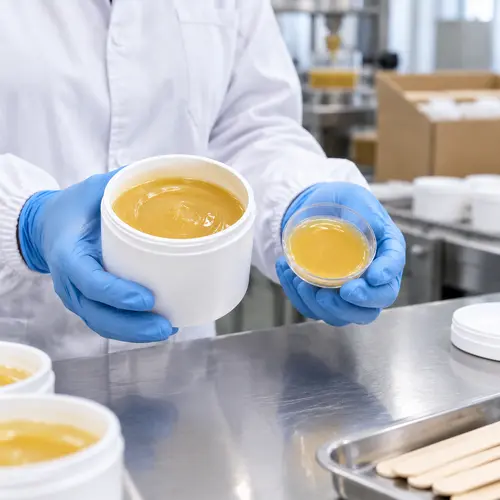
Ask for the approved sample to be produced in production-intent packaging, not a lab jar. A wax that behaves well in a 50 g glass beaker can read completely differently in a 400 g PET tub with a wide mouth, because cooling rate changes with mass and wall thickness. Most private-label programs run two to three sample rounds: a concept round for texture and scent direction, a refinement round for throw, grab, and removal cleanliness, and a pre-production round that matches the intended line. The final round should be retained by both parties as a signed reference standard, with a counter-sample held at the plant. Every later dispute about texture, color, or fragrance intensity is settled against that physical sample, not against a description in an email.
Formula customization within a proven base
Custom work usually means controlled movement inside a validated base rather than a new formula from scratch. Realistic levers include resin-to-oil ratio for flexibility, tackifier level for grip on finer hair, emollient load for after-feel, fragrance dosage, pigment, and the choice of film-forming agent in a peelable hard wax. Each lever has a ceiling. Push fragrance past the level the base was tested at and you reopen irritancy review; change the plasticizer system and you reopen strip adhesion and packaging contact checks. A supplier should be able to tell you where those ceilings are, in plain terms, before you commit to a brief.
Packaging compatibility and component lead time
Components, not wax, usually set the critical path. A stock tin or jar moves in weeks; a custom-molded shell, a refill insert, or a shaped applicator head can add a tooling cycle on top of that, and any change to the component after fill approval resets the whole timeline. For businesses planning line extensions, it is worth choosing a component family that can carry three or four SKUs, so the second and third launches skip tooling entirely. Confirm in writing which parts are stock, which are semi-custom with existing molds, and which require new tooling, because that single answer drives your launch date more than anything else in the project.
Stability review scope
Stability review should be scoped to the markets you actually intend to sell into, and to the shipping route, not run as a generic exercise. A product that sits in a warehouse in a temperate climate and a product that crosses the equator in a dry container face different stresses. Ask what the review covers, which package configuration was tested, and whether the tested unit was the same fill weight and material as the commercial one. A data pack for a 200 g aluminum tin does not transfer to a 500 g PET tub without a bridging rationale. Real-time data running in parallel with accelerated data is a good sign; only accelerated data with no real-time commitment is a question worth pressing.
MOQ structure and where the cost actually sits
Minimum order quantities attach to SKUs and components, not to a formula. A brand that launches three fragrances off one base wax often faces a lower total exposure than a brand that launches one SKU in a custom-molded component, because the mold and the component run carry the fixed cost. Ask for the MOQ broken down by format, by component, and by decoration method, and ask what happens to the price at the next tier. Setup fees, plate charges, and artwork origination should be listed separately so you can see what is one-time and what is per-unit.
Labeling documents and artwork lock
The document pack should arrive as a single folder: INCI listing in the correct order, allergen declarations, batch coding convention, country-of-origin statement, cruelty-free and vegan declarations with the basis for each claim, safety assessment reference, and the facility registrations relevant to your destination market. Artwork lock should be a dated milestone that sits after document review and before print. The most common avoidable delay in this category is artwork approved against a draft formula that later changed, which forces a reprint and, in some markets, a re-declaration.
Shipment conditions
Specify container type, loading temperature, and pallet configuration at the contract stage. Hot-filled wax shipped in peak summer through a tropical transshipment point needs either a reefer or a documented thermal rationale, and strip products in foil pouches need secondary protection so cartons do not compress against the seal edge. Ask who bears the risk at each handover point and confirm that the shipping configuration matches the one that was transit-tested.
Common Problems and How They Surface
Brittle hard wax that snaps instead of flowing. Usually a resin balance issue that appears only after the product has cycled through warm storage. It shows up as cracking across the surface of the cooled puddle and a film that breaks rather than lifts in one piece. The fix is formulation, not technique, and it needs a sample round rather than a heating instruction to the salon.
Strip adhesion loss over shelf life. A strip that releases cleanly at week one and leaves residue at month six is telling you something about the adhesive system or the foil surface, not the wax. Buyers should ask for retained samples from the commercial batch and pull one at intervals against the reference standard.
Depilatory cream separation. A thin watery layer at the top of the tube, or a grainy texture at the shoulder, points to emulsion instability that may be temperature-driven or may be a filling-temperature problem. Either way it is a batch-level question, so the batch record matters as much as the formula.
Cartridge leakage at the seal. Leakage usually starts at the plunger or the cap thread rather than the body. It is often a component tolerance issue between two suppliers who never met, which is why a single-source component decision is worth the small premium.
Fragrance sensitivity complaints. These arrive as consumer reviews rather than lab failures, and they are expensive. If your positioning leans on scent, request the fragrance allergen declaration early and consider keeping one SKU in an unfragranced or lightly fragranced version as a fallback for sensitive customers.
Packaging deformation in transit. Warped lids, ovalized tubs, and bulged pouches generally trace back to stacking load combined with heat. The corrective action is a carton and pallet spec, not a thicker wall alone.
Supplier Checklist for Hair-Removal OEM/ODM
- Documented process flow from raw material intake to pallet wrap, with named control points and batch records you are allowed to review.
- Certifications that match your market: ISO 22716 and GMPC for the site, plus social compliance audits where your retail partners require them.
- A written sample policy covering rounds, lead time, who pays freight, and what constitutes approval.
- Retained-sample practice, so a complaint six months out can be traced to a physical batch reference.
- Stability and compatibility data scoped to your package configuration and destination climate.
- Clear separation of stock, semi-custom, and new-tooling components, with lead times stated for each.
- Full labeling document pack available before artwork lock, not after.
- A stated position on confidentiality: NDA before brief, named project team, and a documented rule on whether your formula can be sold to another client.
- Traceability for any natural or recycled packaging claim, with certificates available for review rather than a logo on a slide.
- Transit and loading specifications written into the contract, including the tested configuration.

FAQ
Will a low MOQ push the unit price so high that customer acquisition costs stop working?
It can, and the way to control it is to look at fixed versus variable cost separately. Tooling, plates, and setup are one-time and get easier to absorb the longer the SKU lives; wax, component, and decoration costs scale with volume. A sensible approach is to launch a narrow range in stock or semi-custom components, prove the sales channel, and move to custom tooling on the second or third extension. Ask for pricing at two or three volume tiers so you can model contribution margin rather than guessing.
If we build on a stock base formula, will our product look identical to competitors?
The base is a starting point, not the product. Fragrance direction, color, texture, packaging format, applicator, and the aftercare pair are where differentiation actually lives, and those are the things a consumer can perceive.
Can we sign a strict NDA before sharing our brief and brand plan?
Yes, and you should ask for it as a first step rather than a later formality. The NDA should cover the formula, the packaging design, the brand plan, and the sampling brief, and it should state in plain language whether the supplier may offer a substantially similar formula to another client. A supplier that hesitates on that specific clause is telling you something useful.
How do we verify Clean Beauty and cruelty-free claims at an Asian plant?
Ask for the claim to be tied to a document rather than a statement: supplier declarations for every raw material, a named third-party standard where you intend to use a logo, and a fixed cut-off date policy if the brand follows one. Site-level social and quality audits do not substitute for ingredient-level review, and Ecocert or equivalent natural and organic certification is only relevant if you are actually making that claim.
Are eco packaging claims traceable, and can we prove them?
Request the certificate of origin or recycled-content verification for the specific component, not the material family in general, and confirm the claim wording against the market where you sell. Greenwashing risk sits in the wording as much as the material.
What if a component supplier discontinues a jar or cartridge mid-contract?
Build a substitution clause into the agreement and ask for the approved alternate at the start. Component discontinuation is common, and the brands that handle it well have a pre-approved second option with matching fill trials already on file.
References
- Ecocert organic and natural cosmetic certification for verifying natural-origin and organic claim criteria.
- CIR safety assessment on thioglycolate-based depilatories as background for irritancy review on cream formats.
- FDA Cosmetics Labeling Guide for declaration format on US-bound labeling.