Direct Answer
The best salon retail hair removal products are the products that extend the service, solve a clear at-home need, and remain simple for staff to recommend. For most salons, that means a focused retail range built around wax strips, professional or home-use depilatory cream, sugar wax, roll-on wax cartridges, and post-depilation care.
The strongest assortment usually combines one removal product with one recovery product. A salon may retail a compact wax strip kit for maintenance between appointments, a gentle cream for selected body areas, and a soothing gel or lotion for post-wax comfort. The commercial decision is not only about the formula. Buyers must also confirm texture, application control, packaging compatibility, storage stability, labeling documents, and shipment conditions before committing to a private-label launch.
For founders and salon groups, an hair removal OEM ODM services partner can turn this service-to-shelf model into a coherent product line, provided sampling and production are evaluated against the same brief.
Key Takeaways for Private Label Buyers
- Start with a narrow retail system: one removal SKU, one aftercare SKU, and one replenishment or travel format.
- Match the formula to the service area. Face, underarm, leg, and bikini positioning may require different irritation-risk reviews and usage directions.
- Test the full package, not only the formula. Review wax adhesion, cream viscosity, cartridge leakage, seal integrity, and label durability.
- Ask for samples made with the intended production formula and pack components. A laboratory sample in a temporary jar is not a launch-ready reference.
- Confirm heat and cold storage conditions, batch documentation, ingredient labeling, and shipment protection before approving the first order.
- Use the pilot order to validate staff recommendations, customer repeat purchase, and content performance before expanding the range.
Buyer Context
Salon services create a natural retail moment. The customer has already experienced professional removal and is more receptive to products that help maintain smooth skin between visits. That makes the retail offer practical rather than promotional: a customer may need wax strips for a small touch-up, a cream for a different body area, or an aftercare product to reduce the feeling of dryness after waxing.
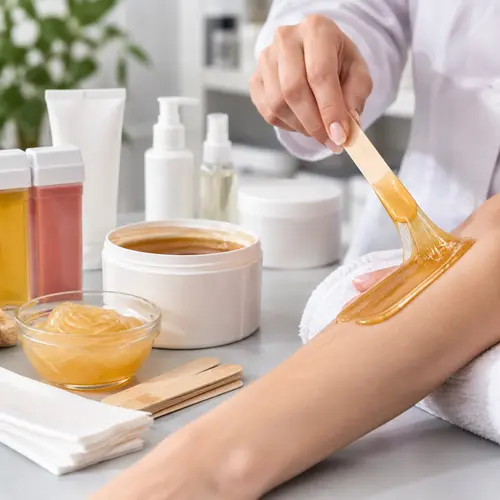
Each category carries a different operating profile. Wax strips are easy to explain and ship, but adhesion can change with temperature, skin preparation, and strip construction. Sugar wax offers a more tactile salon story, yet its texture must remain workable across expected storage conditions. Depilatory cream can provide broad body-area coverage, but viscosity, contact time, fragrance, and irritation-risk review must be handled carefully. Roll-on wax cartridges are convenient for trained users, while nozzle fit, refill behavior, and leakage control become central packaging questions.
Aftercare is often the simplest first retail extension. A calming gel, lotion, or recovery-focused product can be sold immediately after a wax service and used at home. Buyers should still avoid vague promises. The label should clearly state intended use, directions, restrictions, and storage instructions. The post-depilation care OEM category is useful when a salon wants to build a consistent aftercare kit rather than add an unrelated SKU.
For creator-led brands, this category also has strong visual potential. A peelable wax texture, a clean cream spread, a controlled roll-on application, or a neatly packed aftercare set can translate into short-form content. Visual appeal should support a reliable customer experience, not hide inconsistent performance. Buyers should request a request a hair removal product quote with the target audience, service area, pack size, and content concept clearly stated.
Market positioning also matters. A salon may prefer a natural or organic-inspired story, a sensitive-skin direction, or a professional maintenance kit. These claims affect ingredient selection, documentation, packaging copy, and testing scope. A buyer exploring sensitive skin hair removal products should ask for a specific irritation-risk review rather than accept a broad gentle claim.
Technical or Packaging Factors
Formula and application behavior
For wax products, request application notes that describe spread, pull, residue, and working temperature. The relevant question is not only the melting point. The wax should remain controllable during service, avoid excessive stringing, and release cleanly when used as directed. For sugar wax, review firmness changes after opening and whether the product remains workable after repeated exposure to air.
For depilatory cream, review viscosity, spread rate, fragrance level, contact-time instructions, and the intended body area. The formula should stay uniform during storage and dispensing. A buyer should request stability samples from the same formula intended for mass production, then check color, odor, separation, viscosity, and package interaction over the agreed testing period. The depilatory cream OEM process should also clarify whether the sample uses the final tube, pump, or sachet.
Aftercare formulas need their own review. A gel or lotion should apply evenly without excessive tack, pilling, or transfer onto clothing. If the product is positioned for face or sensitive areas, the label and directions should be especially precise. Buyers can compare options through a soothing gel after hair removal brief that specifies texture, finish, fragrance preference, and pack format.
Packaging compatibility and storage
Packaging should be selected around the product, not added after formula approval. Wax jars need seals that resist leakage and lids that remain usable after warming and cooling. Roll-on cartridges require a fit review for the roller head, closure, and outer carton. Cream tubes should be checked for squeeze force, nozzle blockage, seal performance, and compatibility with the formula over time. Wax strips need stable adhesion and packaging that protects the strip surface from humidity and contamination.
Ask the supplier to document heat and cold storage conditions, leakage checks, seal inspection, and carton protection for shipment. If the product may travel through hot distribution centers, run a practical transport review before launch. The hair removal product quality control workflow should identify where filling, sealing, labeling, and final inspection occur.
Documentation should cover the ingredient list, batch identification, usage directions, warnings, packaging specifications, and applicable market requirements. The FDA explains that cosmetics are regulated even though they are not generally FDA-approved before sale; buyers can review FDA cosmetic authority and product responsibilities when defining the launch file. For products used near the eye area, consult the FDA eye-area cosmetic safety guidance before approving positioning or directions.
For broader market planning, Mintel global beauty market reports can help buyers compare retail formats, consumer language, and category movement. Market research should inform the brief, while supplier testing confirms whether the selected product performs consistently.
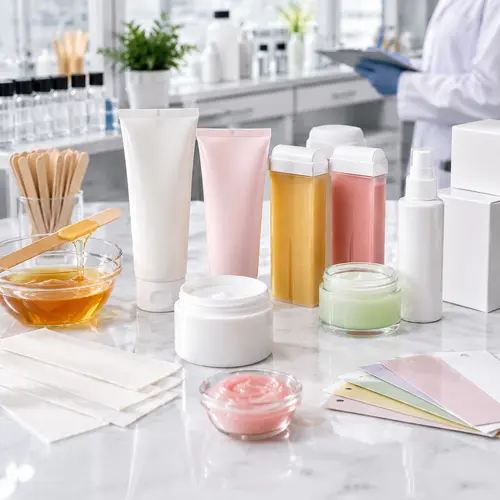
A buyer considering a complete private label waxing products range should request a side-by-side sample review. Compare wax texture, strip release, jar closure, carton fit, label adhesion, and customer instructions in one session.
Decision Framework Table
| Factor | What to Check | Why It Matters | ODM Buyer Note |
|---|---|---|---|
| Formula texture | Spread, stringing, residue, viscosity, odor, and separation | Controls user experience and repeat purchase | Approve samples made with the intended production formula |
| Removal performance | Wax adhesion, strip release, cream coverage, and residue after use | Connects the retail product to the salon service | Test on the intended body area with clear directions |
| Packaging fit | Seal, nozzle, roller head, jar lid, sachet, or tube compatibility | Reduces leakage, blockage, and contamination risk | Review formula and final pack together |
| Storage stability | Heat, cold, light, shipping vibration, and repeated opening | Protects quality through distribution and home use | Define storage and shipment conditions before production |
| Launch documentation | Ingredient list, warnings, directions, batch records, and label copy | Supports responsible market entry | Request the document list at quotation stage |
| Commercial scope | Sample quantity, pilot MOQ, lead time, carton count, and replenishment plan | Protects cash flow and launch timing | Use the first batch to validate demand before adding variants |
hair removal product solutions should be evaluated as an operating system for the salon: service, retail recommendation, repeat use, and replenishment. The most useful next step is a structured sample brief covering removal category, target body area, texture, pack format, storage conditions, label market, and expected launch quantity.

ODM Manufacturing Considerations
For salons and private-label buyers, the most important ODM decision is how clearly the factory converts a product idea into a repeatable sample. Start with a written brief covering the removal method, target user, body area, scent direction, color, texture, application method, package format, and intended retail environment. A salon aftercare lotion, sugar wax, depilatory cream, and roll-on cartridge each require different confirmation points.
Sample confirmation should be documented rather than handled through informal messages alone. Record the approved formula version, color reference, fragrance level, fill weight, package, application instructions, and acceptance standards. For wax, review spreadability, pull behavior, brittleness, residue, melting behavior, and performance after storage. For cream, check viscosity, separation, odor, rinse-off behavior, and skin-feel expectations. A sample approval should also identify what changes require a new confirmation round.
Formula customization can range from a modest fragrance or color adjustment to a new wax, cream, sugar, or aftercare formula. Ask the supplier to separate standard formula options from genuinely customized work. This helps clarify development fees, ownership of the final formula, exclusivity terms, and whether the same base may be offered to another customer. Intellectual property terms should be written into the contract before the factory receives sensitive brand concepts, packaging artwork, or proprietary ingredient targets.
Packaging compatibility needs to be checked with the filled product, not only with an empty container. Wax can soften or migrate in heat, cream can interact with seals or caps, and roll-on cartridges can leak when the closure is not properly matched to the fill. Review bottle, tube, jar, cartridge, strip pouch, label adhesive, liner, and carton together. Confirm that the final package remains functional after temperature exposure, handling, and transport vibration.
A stability review should represent the markets where the product will be sold. Request observations from heat and cold storage, including changes in color, odor, viscosity, separation, wax hardness, seal performance, and package deformation. The supplier should explain the test conditions and provide dated records rather than simply stating that the product is stable. This is especially important for salons that store stock in warm treatment rooms or receive shipments during summer.
MOQ should be evaluated beside sample scope and replenishment terms. A lower initial quantity may be useful for a new salon concept, while a larger run may improve unit economics for a proven retail product. Ask whether the MOQ applies per formula, scent, color, package, or combined order. Request a line-by-line BOM estimate that identifies product, packaging, printing, testing, tooling if applicable, and freight assumptions. Transparent costing helps prevent a visually attractive sample from becoming commercially impractical.
Labeling documents should be prepared before artwork is finalized. Depending on the destination market, request the ingredient declaration, net contents, batch or lot identification method, shelf-life or period-after-opening guidance where applicable, directions, warnings, responsible company details, and available product safety documentation. Eye-area claims and usage instructions deserve particular care; buyers can consult the FDA’s eye-area cosmetic safety framework when reviewing products used near the eyebrows or eyes.
Shipment conditions should cover carton strength, inner protection, pallet or parcel configuration, temperature exposure, and handling instructions. For wax and cream products, define what the receiver should inspect on arrival and how damaged or leaking units will be documented. These details should also connect to the supplier’s OEM and ODM service process and manufacturing records.

Common Problems or Failure Cases
Wax brittleness often appears when a formula is too hard for the intended application temperature or when storage conditions change its structure. The product may crack during spreading, break during removal, or leave excessive residue. Compare samples at the salon’s actual working temperature and record the heating method, application thickness, removal timing, and skin area.
Wax strips can lose adhesion when the strip material, wax coating, pouch seal, or storage environment is poorly matched. Humidity may affect handling, while heat can cause wax transfer inside the pouch. Check the strip after storage, open several units from different cartons, and test adhesion without changing the operator technique. A package that looks intact may still contain strips with inconsistent pull performance.
Depilatory cream separation can result in an unstable formula, poor filling conditions, or exposure to unsuitable temperatures. Look for oil or water layers, graininess, color drift, gas formation, or an odor change. Confirm that the product remains uniform after transport and that the tube or jar can dispense the expected amount without clogging.
Roll-on cartridge leakage is commonly linked to the roller head, seal, cap fit, filling level, or carton orientation. Test cartridges upright and on their sides after vibration and temperature exposure. Inspect the roller for free movement and verify that wax does not escape around the cap or contaminate the label. Leakage acceptance limits should be agreed before production.
Fragrance sensitivity can create complaints even when the removal performance is acceptable. Review fragrance intensity at opening and during use, then consider a low-fragrance or fragrance-free version for sensitive salon customers. Aftercare products should be checked for stinging, tackiness, and compatibility with the service routine without making unsupported skin-benefit claims.
Packaging deformation is another frequent failure. Tubes may dent, jars may crack, and pouches may wrinkle or open when cartons are compressed or exposed to heat. A packaging review should include filled units, finished labels, cartons, and the actual shipment configuration. When failures occur, preserve samples from the affected lot and compare them with the approved reference.
Supplier Checklist
- Can the supplier provide representative samples for wax, strips, cream, sugar wax, cartridges, and aftercare products?
- Is each approved sample linked to a formula version, fill weight, package, color, scent, and written acceptance record?
- Can the factory explain texture, melting behavior, viscosity, adhesion, rinse-off, and residue checks relevant to the selected product?
- Does it review irritation risk, fragrance level, eye-area warnings, directions, and intended use before final artwork?
- Will the supplier test filled packaging for leakage, seal performance, deformation, label adhesion, and transport vibration?
- Can it provide storage observations for both warm and cold conditions with dated records?
- Are MOQ, sample fees, formula charges, packaging costs, testing fees, and freight assumptions shown separately?
- Are formula ownership, confidentiality, exclusivity, and approved-substitute rules written into the agreement?
- Can the account team translate a social-media product concept into practical texture, color, scent, and usage requirements?
- Can the factory explain capacity reservations, replenishment timing, backup materials, and priority rules during a sudden sales increase?
- Are labeling documents, ingredient information, batch identification, warnings, and shipment records available for the destination market?
A supplier that answers these questions clearly is easier to evaluate than one that relies on attractive samples or broad promises. Buyers can use the same checklist when comparing a local contract manufacturer with an overseas facility or when reviewing a new manufacturing process overview.
FAQ
How can I protect my concept and formula from being reused?
Use a written confidentiality and ownership agreement before sharing detailed artwork, formula targets, or launch plans. Define who owns the customized formula, whether the base formula may be sold to others, what information is confidential, and what happens after the project ends. Keep approval records and version numbers for every accepted sample.
Can the sample have the bold color and unusual texture needed for social-media content?
Often it can, but visual performance must be evaluated alongside safe use and production repeatability. Provide reference images, target color standards, texture descriptions, and the intended camera lighting. Ask for filled samples and check whether the color, foam, spread, or pull behavior remains consistent after storage. A dramatic sample is only useful if the factory can reproduce it in production.
How do I reduce the risk of a product causing serious customer complaints?
No supplier can promise zero complaints. Reduce risk through documented ingredient review, appropriate warnings, controlled batch records, filled-package checks, storage testing, and a retained sample from each lot. Review directions for sensitive areas and avoid unsupported claims. The FDA explains that cosmetic products are generally not approved before sale, so the brand and manufacturer must take product safety and labeling responsibilities seriously.
Can a factory understand influencer marketing requirements if I do not know technical terminology?
A capable account team should convert marketing language into measurable product requirements. Explain the filming setting, desired visual effect, application speed, user skill level, scent expectation, and customer profile. The supplier should respond with practical options for texture, color, package, and testing rather than requiring the buyer to provide technical terminology.
What happens if a product suddenly becomes popular?
Ask in advance how capacity is allocated, which materials have longer lead times, whether replenishment slots can be reserved, and how priority is handled when larger customers place orders. A written forecast and staged production plan can reduce disruption. Do not assume that a successful sample automatically means unlimited production capacity.
Which documents should I request before approving a salon retail product?
Request the ingredient declaration, product specification, fill-weight information, batch identification method, storage guidance, usage instructions, warnings, package test records, sample approval record, and available safety documentation. Also request a clear BOM estimate and shipment plan so the retail cost can be evaluated before the order is released.
References
The FDA’s eye-area cosmetic safety framework provides relevant guidance for products used around the eyes and eyebrow area.
FDA information on cosmetic authority and oversight supports the distinction between cosmetic products and products that receive premarket approval.
Mintel global beauty market reports can provide broader market context when evaluating salon retail categories, consumer preferences, and product positioning.