Direct Answer
A successful depilatory cream formulation project starts with a precise product brief, not a long ingredient wish list. Define the target body area, hair type, removal time, skin feel, fragrance direction, visual texture, package format, market, and target unit cost before the first sample is made. Then review each sample against measurable approval points: spread, coverage, removal consistency, rinse behavior, odor, post-use feel, package dispensing, and appearance on camera.
For a creator-led brand, speed should not mean approving an attractive sample before its formula and packaging have been checked together. The final cream, tube or pump, label, and shipping carton must operate as one product. A practical ODM plan can target an initial sample in about seven days, complete the wider development program in under 30 days, and move into a 1,000-unit pilot without changing the approved formula between sampling and production.
Start with a defined custom depilatory cream formulation brief and an approval scorecard that every stakeholder can use.
Key Takeaways for Private Label Buyers
- Source by capability: Confirm that the supplier already handles depilatory creams, wax, strips, and aftercare rather than treating hair removal as a one-off custom request.
- Approve performance and presentation: The sample must remove hair consistently and produce the right texture, color, spread, and rinse shot for short-form content.
- Lock the package early: Test the actual cream in the intended tube, bottle, pump, seal, cap, and carton before approving production.
- Review irritation risk by use case: Face, body, underarm, and bikini products require different positioning, instructions, contact-time controls, and review criteria.
- Request a transparent sample scope: Separate formula work, fragrance options, custom packaging, decoration, testing, freight, and pilot production costs.
- Plan for a viral outcome: Verify that the approved formula can move from a 1,000-unit pilot into larger runs without material substitutions or a second development cycle.
Buyer Context
Hair removal products are unusually sensitive to the gap between a good-looking sample and a commercially reliable SKU. A depilatory cream may appear smooth in a sample jar yet dispense poorly through a narrow tube opening. Wax strips may look premium but lose adhesion after heat exposure. Sugar wax may deliver the right pull in a controlled room and become too soft during summer transit. Roll-on wax cartridges may leak when stored sideways or develop inconsistent flow after repeated heating.
That gap matters more for an overseas creator brand. The launch date may already be tied to a content calendar, retail event, or audience reveal. A seven-day delay can disrupt filmed content; a package change can invalidate product photography; a shift in color or viscosity can make the production unit look different from the approved sample.
Your first supplier screen should therefore cover category depth, pilot capacity, documentation, and communication style. Review the partner’s hair removal OEM ODM services, compare relevant depilatory product development solutions, and inspect its documented hair removal manufacturing process. A supplier should translate requests such as a dense whipped look, clean spatula pull, low-drip application, or high-contrast cream color into sample variables that can be reviewed objectively.
Market planning also belongs in the brief. Mintel tracks shaving and depilatories alongside product claims, textures, packaging, and labeling trends, which is useful when separating a visual trend from a durable category need. Mintel global beauty market reports can support that review. ([mintel.com](https://www.mintel.com/beauty-and-personal-care)) For U.S. launches, the FDA explains facility registration, product listing, safety records, and adverse-event responsibilities on its MoCRA information page. ([fda.gov](https://www.fda.gov/cosmetics/cosmetics-laws-regulations/modernization-cosmetics-regulation-act-2022-mocra)) The FDA also maintains hair product safety resources for consumers, salon professionals, and manufacturers. ([fda.gov](https://www.fda.gov/cosmetics/cosmetic-products/hair-products)) If Saudi Arabia is a target market, confirm product and shipment requirements through the SABER conformity certification platform before artwork approval.

Technical and Packaging Factors
Formula Performance
Build the sample scorecard around the intended user action. For a cream, record how easily it leaves the package, whether it stays where applied, how evenly it covers hair, whether it dries during the labeled contact period, and how cleanly it removes with the selected spatula or cloth. Review odor at application, during removal, and after rinsing. Fragrance can soften perception, but it should not be used to hide instability or an unacceptable base odor.
The cream should also recover after normal handling. Check whether shaking, squeezing, or warm storage creates separation, trapped air, watery discharge, or a grainy surface. Ask the ODM to define the approved pH, viscosity, appearance, odor, and fill-weight ranges in the finished-product specification. The correct numbers depend on the selected formula and package; the essential buyer check is whether production units are measured against the same ranges as the approved sample.
For delicate positioning, compare the proposal with the supplier’s mild hair removal formula options. Do not approve broad claims from a soft texture alone. Review the intended body area, directions, warnings, contact-time range, patch-test language, and supporting safety file as one package.
Package Compatibility
Depilatory creams can challenge seals, printed surfaces, caps, liners, and dispensing components. Test the actual decorated package upright, inverted, and on its side. Inspect seal integrity, panel swelling, cap fit, print transfer, odor migration, discoloration, and leakage after warm and cool storage. Confirm that the opening delivers a usable ribbon of cream without sudden spurting or excessive force.
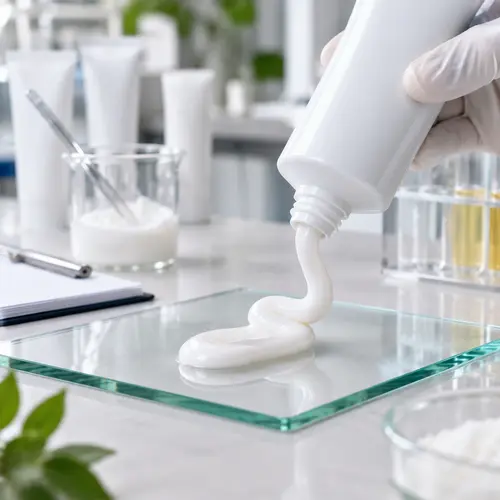
For creator brands, add a camera review. Film the approved sample under the same lighting, lens, and background planned for launch content. A cream that appears bright in person may look flat under studio light; a glossy texture may create distracting reflections. The visual target should be documented with controlled reference images rather than descriptive words alone.
The same discipline applies across the category. Review adhesion aging and pouch seals for custom wax strips and hot wax. For recovery kits, verify pump output, closure fit, and layered pack dimensions through a post-depilation care OEM program. If the launch includes a secondary serum, align bottle compatibility and claim boundaries with a post hair removal serum supplier.
Storage, Sampling, and Approval
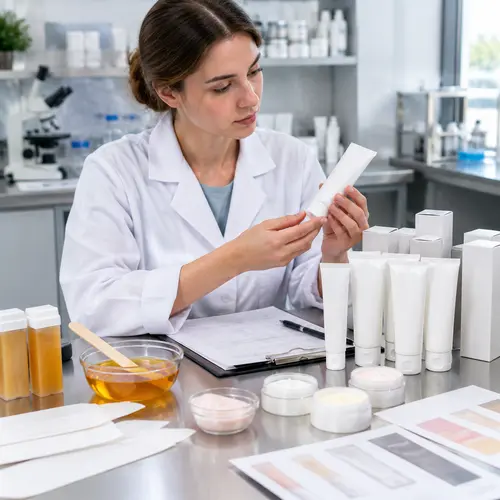
Request samples from at least two preparation points when possible, then compare color, odor, texture, removal, and package output. Keep one approved control sample sealed. Use it as the physical reference for pilot production review.
Ask for warm, ambient, cool, and temperature-cycle observations using the final package. The review should record separation, leakage, swelling, viscosity movement, odor change, color drift, and label damage. It should also include transport orientation and carton protection because a passing bottle can still fail as a shipped retail unit.
Before approval, request the ingredient list, finished specification, test plan, package specification, artwork checklist, batch coding format, sample history, BOM, pilot quantity, lead-time assumptions, and shipment conditions. A structured hair removal product RFQ should make those items visible before a purchase order is placed. Buyers comparing broader category options can also review a specialized hair removal OEM manufacturer rather than sourcing each removal and aftercare item from disconnected vendors.

Decision Framework
| Factor | What to Check | Why It Matters | ODM Buyer Note |
|---|---|---|---|
| Removal performance | Coverage, labeled contact period, wipe-off consistency, rinse behavior | Defines the consumer result and instruction set | Test on the intended body area and relevant hair profile |
| Texture and visuals | Spread, hold, gloss, color, ribbon shape, camera appearance | Connects user experience with launch content | Approve with controlled photos and video references |
| Skin-use review | Target area, warnings, patch-test language, post-use feel | Reduces claim and irritation risk | Separate face and body briefs rather than stretching one formula |
| Package fit | Dispensing, seal, cap, liner, decoration, leakage, panel change | Prevents failure after filling and shipment | Use final materials and decoration during compatibility work |
| Storage behavior | Warm, cool, ambient, and cycling observations | Reveals separation, odor, color, and viscosity movement | Review both bulk formula and finished package |
| Scale readiness | Raw-material controls, pilot plan, approved ranges, retained control | Keeps the production formula aligned with the sample | Require change approval before substitutions |
| Commercial scope | BOM, MOQ, samples, molds, decoration, freight, lead time | Prevents hidden cost and launch-date surprises | Compare landed scope, not the cream price alone |
ODM Manufacturing Considerations
A dependable depilatory cream formulation project needs a documented approval path from the first brief through shipment. The buyer should provide the intended application area, target removal speed, preferred texture, fragrance direction, color expectations, pack format, sales market, and planned content schedule. The manufacturer should then convert those commercial requirements into measurable sample criteria rather than treating the project as a general cream request.
Sample confirmation should cover more than appearance. Record the sample code, formula version, production date, net weight, fragrance level, application thickness, waiting time, removal result, rinse behavior, residue, and user comfort observations. For a social-first brand, review the cream under ordinary indoor lighting and close camera framing. A formula may look smooth in a jar but appear thin, gray, or uneven when spread on skin. Approve both the consumer experience and the visual presentation before the formula moves forward.
Formula customization can include texture, fragrance, color, removal performance, skin-feel after rinsing, and the balance between fast action and user comfort. Ask the supplier which changes require a full new sample and which can be handled as controlled adjustments. Request an ingredient declaration, intended use instructions, allergen or fragrance information where applicable, and a clear statement of which formula version is being quoted. This prevents an attractive sample from being replaced by a different production version later.
Packaging compatibility needs to be checked with the actual tube, pump, cap, seal, label stock, and decoration method. Depilatory creams can interact with some plastics, adhesives, inks, or elastomers over time. Review dispensing force, nozzle cleanliness, cap fit, label lifting, color transfer, swelling, cracking, and odor changes. Fill-weight checks should also confirm that the package delivers the promised usable amount without creating excessive headspace or pressure.
Stability review should represent the shipment route and the destination market. Ask for observations on appearance, odor, color, viscosity, separation, container shape, closure security, and dispensing after exposure to heat and cold. Shipment conditions should define palletization, carton protection, orientation, maximum storage temperature, transport restrictions, and whether the product must be protected from freezing or prolonged heat. These details matter for both depilatory creams and wax products, especially when containers may remain in a truck, warehouse, or fulfillment center before sale.
MOQ should be discussed alongside development scope, packaging minimums, and component lead times. A low formula quantity may still require a larger purchase of custom tubes, printed cartons, pumps, or labels. Request a line-item BOM showing formula, filling, components, printing, testing, documentation, and freight assumptions. A transparent quotation helps the buyer compare a stock package, semi-custom package, and fully custom presentation without hidden charges.
Labeling documents should be prepared for the destination market and should match the approved formula and package size. Confirm the ingredient list format, directions, warnings, batch identification, shelf-life or period-after-opening approach, responsible company information, country-of-origin details, and language versions. For shipments entering the United States, review the current cosmetic obligations described by the FDA MoCRA information. For Saudi market planning, confirm whether the product and importer require submission through the SABER conformity certification platform. The manufacturer can prepare documents, but the brand remains responsible for confirming its market obligations.
For broader project coordination, buyers can compare the supplier’s stated process with its OEM and ODM service scope, manufacturing process, and RFQ contact process. The useful question is whether each page reflects an actual handoff, owner, and approval record.
Common Problems or Failure Cases
Wax brittleness: A wax formula may crack during application or become difficult to lift when the room is cool. Ask for a defined application window, softening guidance, and a comparison of the wax surface before and after storage. A buyer should also check whether the same batch remains workable with the intended spatula or cartridge.
Strip adhesion loss: Wax strips can lose grip when the coating migrates, the pouch seal is weak, or the strip is stored in excessive heat. Inspect coating uniformity, pouch closure, strip separation, and pull performance after shipment simulation. Do not approve a pouch only because it looks sealed from the outside.
Cream separation: Separation, watery leakage, graininess, or a changed odor can result from formula imbalance, incompatible packaging, or poor storage. Compare samples from different fill positions and review the product after opening and reclosing. If separation appears, pause artwork approval and identify whether the cause is formula, container, filling, or transport.
Cartridge leakage: Roll-on wax cartridges may leak around the roller assembly, cap, or seam when stored sideways or exposed to heat. Check individual units, cartons, and pallet orientation. A practical review includes rolling output, cap removal, closure fit, residue around the neck, and any deformation after handling.
Fragrance sensitivity: A strong fragrance can create consumer complaints even when removal performance is acceptable. Ask for fragrance options, usage levels, ingredient disclosure, and a low-fragrance alternative. Review the scent before heating or application and again after rinsing, because residual odor may be more noticeable than the initial opening impression.
Packaging deformation: Tubes, caps, jars, and pouches can buckle, warp, discolor, or lose seal strength during shipment. Require photos and measurements for failed units, not just a statement that the package is acceptable. Define the allowable visual defect level and decide who pays for replacement components when the failure is caused by the selected material or filling method.
Supplier Checklist
- Can the supplier provide a numbered sample record linking the approved formula to the production version?
- Does the quotation separate formula development, filling, components, artwork setup, documentation, testing, and freight?
- Can the supplier customize texture, color, fragrance, removal behavior, and pack format within a stated scope?
- Will the actual finished package be used for compatibility and storage review?
- Are viscosity, appearance, odor, fill weight, microbial limits, and package condition defined as release checks?
- Does the supplier explain the destination-market labeling documents and identify which documents the buyer must supply?
- Are MOQ, component minimums, replenishment timing, and reserved production capacity stated in writing?
- Can the supplier show relevant depilatory cream, wax, strip, cartridge, or aftercare production experience?
- Is there one accountable contact who can translate marketing requests into formula and packaging actions?
- Are carton strength, pallet configuration, temperature exposure, storage orientation, and freight insurance addressed?
- Does the agreement cover confidentiality, ownership of custom work, permitted use of the formula, and restrictions on reuse?
- Is there a written process for handling nonconforming goods, complaints, sample changes, and production reapproval?
FAQ
Could the factory copy my concept or sell the formula to another brand?
That risk is managed through a written confidentiality and ownership agreement, not through verbal assurances. Define the formula version, artwork, custom fragrance direction, test records, and permitted uses. Ask whether the supplier will use a unique formula for your brand or modify a shared base, and make the distinction part of the contract.
Can the cream texture and color look dramatic enough on camera?
They can be designed for strong visual consistency, but the result should be judged in the intended filming environment. Approve spreadability, opacity, color uniformity, residue, and container presentation under the brand’s lighting and camera distance. A visually striking formula still needs comfortable application and reliable removal.
How can I reduce the risk of customers reporting severe skin reactions?
No supplier can promise zero reactions. Reduce exposure by using clear application limits, patch-test instructions, accurate warnings, controlled fragrance choices, documented batch release checks, complaint tracking, and a defined escalation process. Review the target body area carefully, since a product suitable for legs may not be suitable for the face.
I do not understand chemical ingredients. Can the factory understand social media requirements?
A capable development contact should translate goals such as thick visual spread, clean rinse, quick removal, or low fragrance into measurable sample criteria. Give the supplier reference videos, package dimensions, usage context, and filming constraints. Require written confirmation of what will change, what will remain fixed, and how approval will be judged.
What if a viral video creates an unexpected order surge?
Ask about monthly filling capacity, component availability, overtime limits, backup lines, and how existing customers are prioritized. A written capacity discussion is more useful than a general promise of fast production. Consider approving a standard package option that can be replenished more easily while custom components are being produced.
What shipment information should be confirmed before placing the order?
Confirm carton dimensions, pallet count, gross weight, storage orientation, maximum and minimum transport temperatures, insurance responsibility, shipping marks, required documents, and the handoff point. Request packaging that protects tubes, pouches, cartridges, and aftercare pumps from compression and leakage during transit.
References
FDA information on the Modernization of Cosmetics Regulation Act of 2022