Direct Answer
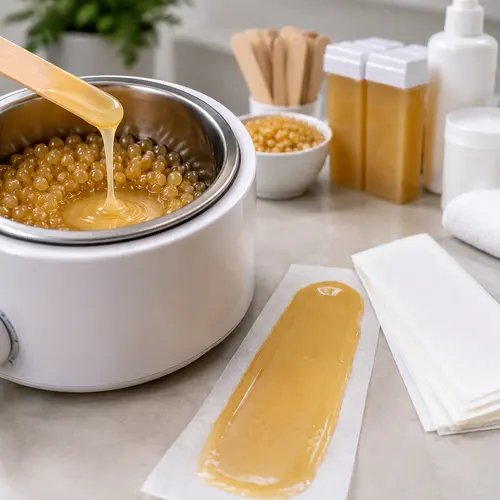
For private-label buyers comparing hard wax vs soft wax, the right choice depends on the treatment area, service speed, removal method, packaging format, and the visual experience promised by the brand. Hard wax is applied in a thicker layer, sets on the skin, and is removed without a strip. It is usually positioned for smaller or more sensitive areas. Soft wax is spread thinly and removed with a fabric or nonwoven strip, making it efficient for larger areas such as legs, arms, chest, and back. ([healthline.com](https://www.healthline.com/health/soft-wax-vs-hard-wax))
The sourcing decision should not end with wax type. Buyers must approve the heated texture, spreading control, hair pickup, setting time, residue, fragrance, color, and packaging performance before production. The best sample is not simply attractive in a jar. It must behave consistently during heating, application, removal, storage, filming, and shipment.
Key Takeaways for Private Label Buyers
- Choose by use case: hard wax suits precision areas and strip-free application; soft wax supports fast coverage across larger surfaces.
- Review the working texture: test the wax cold, fully heated, and during the cooling window instead of approving appearance alone.
- Lock the complete system: formula, warmer instructions, spatula, strips, jar, lid, cartridge, label, and aftercare should be reviewed together.
- Test shipment conditions: check heat softening, cold brittleness, oil migration, seal integrity, cartridge leakage, and label adhesion.
- Approve production references: retain signed samples for color, fragrance, viscosity, finish, removal behavior, and pack presentation.
- Plan the launch backward: connect sampling, artwork, documentation, pilot manufacturing, content creation, and freight to one launch calendar.
Buyer Context
For a creator-led beauty brand, wax is both a functional hair-removal product and a visual content asset. The pull, stretch, bead color, melt, and clean finish may become the central shot in a TikTok demonstration. A formula that performs well but looks dull on camera can weaken the launch. A highly stylized wax that strings, snaps, overheats, or leaves heavy residue can create an even larger customer-service problem.
This is why the first sample brief should define the target audience and content moment. A salon-focused hard wax may prioritize flexible removal, a strong hold on coarse hair, and low residue. A DTC kit may need simple heating directions, beginner-friendly setting time, compact accessories, and packaging that survives parcel delivery. Soft wax may fit a full-leg kit, while hard wax beans can create a more distinctive melting visual for social content.
The comparison also affects the commercial bundle. Hard wax typically needs a warmer and applicators but no removal strips. Soft wax requires compatible strips and may need a post-wax oil to address residue. An aftercare extension can increase perceived value, but it should be developed as part of the system through a post-depilation care OEM program rather than added after packaging is finalized.
Buyers comparing formats can begin with private label waxing products, then review broader waxing product solutions. Brands considering wax alongside cream formats should separately assess a custom depilatory cream formulation, because application timing, pack compatibility, labeling, and irritation-risk review differ materially.

Technical and Packaging Factors
Approve Performance, Not Just Appearance
A useful wax sample review starts with a defined working window. Record how long the wax takes to melt, how easily it spreads, whether it drips from the applicator, how quickly an edge can be lifted, and whether the removed wax stays intact. Some consumer guidance references approximately 130°F, or 54°C, for warming hard wax, but the final operating range must be set for the specific SKU, pack, and warmer. ([healthline.com](https://www.healthline.com/health/soft-wax-vs-hard-wax))
For hard wax, examine flexibility after setting. A formula that becomes brittle may crack during removal or in cold storage. A formula that remains too soft may stretch excessively and leave material behind. For soft wax, evaluate thin-film spread, strip grip, residue, and whether performance changes as the pot cools during use. The ODM should provide comparison samples with controlled differences rather than asking the buyer to choose from unrelated waxes.
Review Skin Contact and Claims
Waxing removes hair from the root and may also affect the skin surface, particularly with soft wax. Hard wax is generally described as gripping hair more selectively, while soft wax adheres to both hair and skin and should not be repeatedly applied to the same area during one session. ([healthline.com](https://www.healthline.com/health/soft-wax-vs-hard-wax))
Ask the supplier for ingredient lists, fragrance and color disclosures, warning text, directions, batch records, and the planned safety support file. The FDA cosmetics guidance states that companies marketing cosmetics are responsible for product safety and provides resources on labeling, registration, product listing, and adverse-event reporting. ([fda.gov](https://www.fda.gov/cosmetics)) If the brand intends to make certified natural or organic positioning part of the offer, review ingredient eligibility and labeling against the COSMOS organic and natural cosmetics standard before the formula is locked. ([cosmos-standard.org](https://cosmos-standard.org/))
Test the Pack as a System
Packaging compatibility is especially important for oil-rich waxes. Jars should be checked for lid fit, liner interaction, heat distortion, oil seepage, and label movement. Roll-on wax cartridges require leakage review at the roller head, cap, seams, and base after warm storage and inverted handling. Wax strips need adhesion-aging checks because coating transfer, strip curl, or reduced grip may appear after storage rather than during the first sample review.
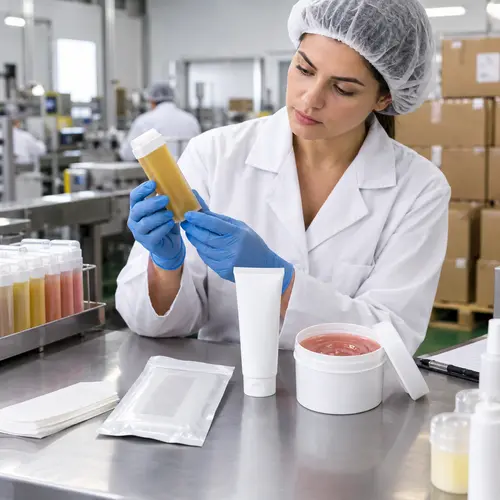
Request the intended primary pack during sampling whenever possible. A formula approved in a laboratory cup may behave differently in a retail jar or cartridge because the heating profile and exposed surface area change. The hair removal manufacturing process should connect compatibility review, filling temperature, coding, assembly, inspection, and shipment conditions before the pilot run.
Lock the Production Reference
Once the preferred sample is approved, create a signed specification covering color, fragrance, texture, working range, fill weight, pack components, label placement, and acceptable appearance limits. Keep retained samples from the approved batch and the first production batch. This prevents silent changes between sample and scale-up.
For a creator launch, speed should come from parallel work rather than skipped checks. Artwork, documentation, pack sourcing, stability review, and content planning can move together. A 7-day first-sample target, a pilot order from 1,000 units, and an under-30-day formulation-to-shelf goal are useful planning anchors when the selected components are available. Buyers should confirm the exact scope through hair removal OEM ODM services and request a transparent BOM, sample schedule, MOQ, freight assumptions, and scale-up plan through the hair removal product RFQ.

Decision Framework
| Factor | What to Check | Why It Matters | ODM Buyer Note |
|---|---|---|---|
| Application area | Body zone, hair type, surface size, sensitivity positioning | Determines whether strip-free precision or fast thin-film coverage is more practical | Request area-specific demonstrations, not only jar samples |
| Working texture | Melt consistency, spread, drip, setting time, flexibility, residue | Controls user experience, removal success, and camera-ready visuals | Approve a defined temperature and timing window |
| Packaging | Jar liner, lid seal, cartridge roller, label stock, accessory fit | Reduces leakage, oil migration, distortion, and assembly errors | Test the final retail components before production |
| Storage and freight | Warm storage, cold storage, inversion, vibration, carton protection | Waxes may soften, separate, crack, or leak in transit | Align tests with destination market and shipping lane |
| Safety and labeling | Ingredients, warnings, directions, patch-test language, traceability | Protects the customer and supports market access | Review sensitive skin hair removal products when mild positioning is central |
| Scale-up | Approved reference, fill temperature, batch tolerance, retained samples | Prevents performance drift between sample and mass production | Use a hair removal OEM manufacturer with pilot-to-scale continuity |
For additional buyer education before briefing suppliers, review waxing and depilatory guides. Independent comparisons from Healthline and Wax Bare can also help teams align on basic service differences before evaluating custom samples. ([healthline.com](https://www.healthline.com/health/soft-wax-vs-hard-wax))
ODM Manufacturing Considerations
At the production stage, the hard wax vs soft wax comparison becomes a specification-management task. The buyer and manufacturer should confirm one reference sample, one packaging configuration, and one written acceptance standard before purchasing bulk materials. Approval should cover color, fragrance strength, working consistency, hair-removal performance, residue, skin feel, and the final finish after use. A sample that looks attractive but behaves differently between batches is not ready for scale.
Formula customization should start with the intended use case. Hard wax beans for facial or body waxing may need different setting speed, elasticity, bead size, color opacity, and fragrance level. Soft wax may require adjustments to viscosity, spread control, strip release, and residue. For sugar wax or depilatory cream, the supplier should document the target texture, application method, contact instructions, and removal method. Buyers should avoid changing color, scent, texture, and performance targets simultaneously because it becomes difficult to identify the cause of a failed revision.
Packaging compatibility must be confirmed with the final product rather than an empty component. Evaluate whether the wax, cream, or aftercare formula changes the container, closure, printing, adhesive, or dispensing performance over time. A roll-on pack must maintain a controlled flow without staining the cap or losing its seal. Depilatory cream tubes should retain their shape and close cleanly after repeated use. Wax bean pouches must resist puncture and protect the intended fragrance and finish.
Stability review should track appearance, odor, color, viscosity, separation, dispensing, closure fit, and net-weight consistency at defined checkpoints. The review plan should also include retained samples from the actual filled batch. If the brand requests organic or natural positioning, confirm early whether ingredients, processing choices, claims, and documents can support the COSMOS organic and natural cosmetics standard, which sets criteria for certified products and raw materials. ([cosmos-standard.org](https://cosmos-standard.org/))
MOQ discussions should separate the finished-product minimum from component minimums. A custom pouch, printed cartridge, specialty color, or uncommon fragrance may require more units than the filling run itself. Ask for quantity tiers, excess-component ownership, reorder lead assumptions, and the shelf life of unused materials. Review available formats through the hair-removal product categories and confirm whether an existing component can reduce unnecessary custom tooling.
Before release, request the ingredient list, product specifications, batch identification format, label copy file, usage directions, warnings, country-of-origin wording, and any market-specific documents assigned to the brand or responsible party. For products entering the United States, the FDA states that companies marketing cosmetics are responsible for product safety and provides guidance on ingredients, claims, labeling, registration, and product listing. ([fda.gov](https://www.fda.gov/cosmetics)) Shipment instructions should define case count, pallet pattern when applicable, acceptable transit range, lot traceability, carton markings, and the action process for damaged or nonconforming goods.

Common Problems or Failure Cases
Hard wax becomes brittle. A slab or bead formula may look correct in the container but snap during removal after its working window changes. Possible contributors include raw-material variation, an unapproved adjustment, excessive fragrance loading, or a mismatch between application thickness and setting speed. The corrective action is to compare the failed batch with the signed reference and review measured batch records, not simply add more fragrance or color.
Soft wax loses strip hold. The wax may spread with an attractive glossy look but fail to transfer hair effectively to the strip. This can result from viscosity drift, excess application, surface contamination, or a strip material change. Supplier approval should therefore cover the wax and specified strip as one usage system.
Depilatory cream separates. Visible liquid release, graininess, or uneven texture can make dosing unreliable and undermine consumer confidence. Review whether the issue appears before filling, after filling, or only after extended storage. Also confirm that the production batch followed the approved mixing sequence and that the tube or bottle material remains compatible.
Roll-on cartridges leak or dispense unevenly. Leakage may begin at the roller fit, neck seal, or cap, while poor flow may appear as skipping or excessive output. Component tolerances and fill conditions should be reviewed together. Replacing only the cap may not solve a roller or product-viscosity problem.
Fragrance causes complaints. A scent that performs well on blotter paper may feel overpowering during heated waxing or on freshly waxed skin. The brand should approve fragrance at its actual use level and keep an unscented or lower-fragrance option available when the target market prioritizes sensitivity.
Packaging deforms. Pouches may crease, tubs may distort, and labels may lift during storage or transport. These failures can affect presentation even when the wax itself remains usable. Define cosmetic defect limits with photographs and measurable criteria before mass production.
Supplier Checklist
- Confirm experience with hard wax, soft wax, sugar wax, depilatory cream, strips, roll-on formats, and aftercare relevant to your project.
- Request signed specifications for texture, color, fragrance, viscosity or working behavior, fill weight, and packaging components.
- Verify that sample revisions are coded so the approved version cannot be confused with earlier prototypes.
- Ask how ingredient, component, or process changes are disclosed and approved before production.
- Review compatibility and stability records for the final formula-and-pack combination.
- Confirm available MOQ tiers, component minimums, capacity allocation, reorder planning, and handling of unused custom materials.
- Check batch traceability, incoming-material checks, in-process controls, finished-product inspection, and complaint investigation records.
- Request label and shipment documents before printing or booking transportation.
- Evaluate whether the contact person can translate brand goals such as dramatic color, matte finish, clean removal, or camera-visible texture into testable manufacturing criteria.
- Review relevant OEM/ODM services and ask for anonymized examples of overseas creator or private-label hair-removal launches with similar complexity.
FAQ
How can I reduce the risk of a factory copying my idea or formula?
Use a mutual confidentiality agreement, define ownership of custom work, restrict subcontracting, and specify who owns artwork, molds, component files, and approved formulas. Keep dated sample records and require written approval before any material substitution. No document removes all risk, so also assess the supplier’s export history, customer references, access controls, and willingness to provide clear ownership terms.
Can the sample deliver an exaggerated texture or color on camera?
Possibly, but visual styling must be converted into measurable targets. Send reference footage showing lighting, application thickness, viewing distance, and desired movement. Ask the supplier to record the wax beans, heated product, spread, removal, and cooled finish under repeatable conditions. Approve both the live appearance and the real waxing performance; a dramatic color should not hide weak hair removal or excessive residue.
Can quality controls guarantee that no customer will experience irritation?
No responsible supplier can promise zero reactions. Risk can be reduced through ingredient review, fragrance-level control, defined manufacturing checks, suitable warnings, traceability, and documented complaint handling. The brand should approve intended-use directions and avoid unsupported safety claims. The FDA also notes that cosmetic marketers have a legal responsibility to ensure product safety. ([fda.gov](https://www.fda.gov/cosmetics))
What if I do not understand technical ingredient language?
Ask the project manager to translate each request into buyer-facing criteria: target body area, hair type, spread, hold, removal method, residue, scent strength, finish, and content-creation appearance. A suitable ODM partner should explain tradeoffs in plain English and document decisions without expecting the buyer to act as a chemist.
What happens if a social video creates a sudden sales spike?
Discuss surge scenarios before launch. Confirm reserved capacity, component availability, reorder minimums, alternate approved components, and how the factory prioritizes scheduled orders. Forecasts are not guarantees, but a rolling update shared before content releases gives the manufacturer a better chance to secure materials and production time.
Should I choose hard wax or soft wax for my private-label line?
Choose based on the user, body area, service method, and kit design. Hard wax is commonly removed without a strip and is often selected for smaller or more sensitive areas, while soft wax uses a strip and is commonly used across larger areas. This practical distinction is also summarized in Healthline’s hard wax and soft wax comparison. ([healthline.com](https://www.healthline.com/health/soft-wax-vs-hard-wax)) A complete market line may use both waxes rather than forcing one format into every hair-removal use case.