Direct Answer
The best hair removal products for sensitive skin are not defined by a soothing ingredient alone. They are products whose removal method, active system, exposure time, package, instructions, and evidence are designed together to reduce avoidable irritation. For a private-label buyer, that usually means a lower-odor depilatory cream with controlled spread and rinse-off, a wax or sugar wax with predictable melting behavior and clean lift, or a roll-on system that delivers a thin, even layer without excess heat or friction. Aftercare should support comfort without turning the product into a medical promise.
Start with the intended body area, hair type, and use environment. Then ask an ODM partner to compare a mild formula against a standard benchmark, review irritation risk, age the formula in the final pack, and document storage and shipment conditions. A sensitive-skin position is credible when performance remains consistent, the label gives clear limits, and the same sample-to-mass-production specification is controlled. This is the basis of defensible sensitive skin hair removal products.
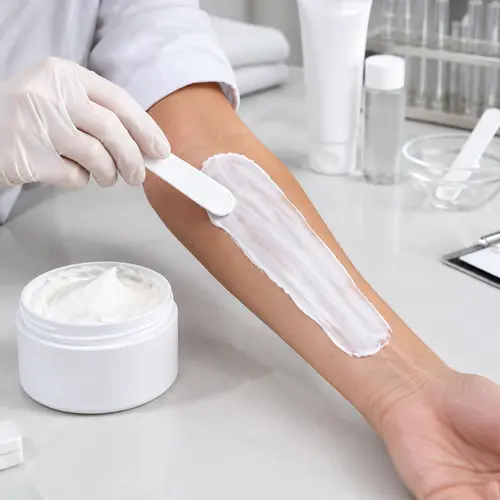
Key Takeaways for Private Label Buyers
- Sourcing: Work with a specialist hair removal OEM manufacturer or contract manufacturing facility that can connect the formula, pack, batch specification, and shipment record for the exact SKU.
- Formulation: Judge mildness together with removal time, rinseability, odor, residue, and hair capture. A gentle-feeling mousse that leaves hair behind is not a successful product.
- Packaging: Test the final tube, jar, strip pouch, or roll-on cartridge, not a lab beaker. Check seal integrity, squeeze force, leakage, and label adhesion after heat and cold exposure.
- Testing: Request stability, irritation-risk, and compatibility reviews with written acceptance criteria. Ask what changes between sample, pilot, and mass production.
- Launch: Confirm claims, label files, market documents, sample timing, and a pilot path from 1,000 units before booking creator content. A seven-day sample target is useful only when the sample represents the intended production formula.
Buyer Context
For a creator-led brand, sensitive-skin positioning is a risk-control decision as much as a marketing decision. The audience sees texture, spread, pull, foam, or rinse-off moments on video, but experiences heat, sting, drag, odor, residue, and regrowth after purchase. That gap can turn a visually strong launch into returns and negative comments. A buyer evaluating private label hair removal products should review the complete user journey, not only the ingredient list.
Each removal format creates a different irritation profile. Depilatory cream depends on controlled contact time and even coverage. Wax and sugar wax add heat, adhesion, and pulling force. Wax strips need consistent tack and clean release; a strip that requires repeated passes can increase friction. Roll-on wax needs predictable flow and a cartridge that does not leak during storage or transport. Aftercare can improve post-removal feel, but it cannot compensate for an aggressive removal step. Relevant hair removal product solutions should map the product to body area, hair type, application skill, and shipping environment.
For a social-first launch, texture is part of the product brief. A visible cream or mousse transition may create content value, but it must still spread evenly and rinse cleanly. A depilatory cream OEM partner or wax strips OEM specialist should show real samples, not only rendered packaging. A post-depilation care OEM option can support an aftercare kit. Home face and body directions are not interchangeable, and salon buyers may need a different working window or pack size.

Technical or Packaging Factors
Formula and Removal Performance
For creams, review the active system, pH control, dwell-time window, odor, rinseability, and finish after water removal. The product should spread into an even layer without vigorous rubbing. Ask the supplier to show performance at the minimum, midpoint, and maximum stated use time, with clear body-area directions. A custom mild hair removal formula brief can define sensitive-skin positioning as lower fragrance, controlled exposure, lower residue, or a more forgiving application method. It should not rely on the word gentle alone.
Wax and sugar wax require a different review. Check melting point or working temperature, viscosity, stringing, pull strength, residue, and hair capture after storage. A lower-melting formula may feel more comfortable but can lose body in transit; a firmer formula may lift strongly but need more pressure. For hot wax, confirm warm-up instructions and jar compatibility. For strips, check tack and release after aging. For roll-on cartridges, check ball movement, flow consistency, cap fit, and leakage after orientation changes and heat exposure.
Aftercare should be treated as part of the system. Review slip, absorption, fragrance level, and whether the product leaves clothing-staining residue. Do not use a soothing claim to cover an unresolved removal problem. A hair inhibitor serum OEM or recovery SKU may be appropriate for a bundle, but its claims and directions still need their own market review.
Package, Storage, and Documentation
The final package is a performance component. For cream, review tube wall compatibility, nozzle opening, seal, cap torque, squeeze force, and residual product in the shoulder. For wax jars, review liner integrity, lid seal, label adhesion, and resistance to warm storage. For strip pouches, check seal, film compatibility, tack retention, and opening without tearing. A roll-on pack needs shipment handling review because a small leak can contaminate the carton and undermine salon use.
Build a stability testing plan around realistic heat and cold storage, freeze-thaw where relevant, light exposure when needed, and orientation during shipment. Record viscosity, color, odor, phase separation, removal performance, package deformation, leakage, and label condition. The facility should define acceptance criteria before testing and repeat the review on pilot material.
Documentation should include the full ingredient list, product specification, usage directions, warnings, batch coding, package details, and market-specific label review. The EU cosmetics requirements and MoCRA requirements for U.S. cosmetics are useful starting points for export compliance, but the supplier should translate requirements into files for the exact SKU. For U.S. claims and safety questions, dermatologist guidance on hair-removal cream safety provides consumer context; it does not replace product-specific review. Keep claims precise: suitable for sensitive skin is a positioning statement that still needs support, not a guarantee for every user. A documented hair removal manufacturing process and hair removal product quality control record should show how sample, pilot, and mass production stay aligned.
Decision Framework
Use this screen before signing a contract with an ODM or approving creator content. The core question is whether the product stays comfortable in use while retaining the strong removal performance that drives repurchase.
| Factor | What to Check | Why It Matters | ODM Buyer Note |
|---|---|---|---|
| Depilatory cream | Active system, pH control, dwell-time window, odor, and rinseability. | Even coverage and controlled contact support comfort and consistent removal. | Set body-area directions and approve the production target. |
| Wax or sugar wax | Melting point, working temperature, viscosity, pull strength, and residue. | Heat and pulling force affect comfort, lift, and salon repeatability. | Compare warm-up behavior after storage and shipment. |
| Strips and roll-on | Tack, release, flow, ball movement, cap fit, and leakage. | Repeated passes or leaks create friction, waste, and returns. | Test aged pouches and cartridges in final packaging. |
| Final pack and storage | Seal, torque, compatibility, heat and cold, freeze-thaw, and orientation. | A stable formula can still fail through leakage or deformation. | Repeat checks on pilot material and record acceptance criteria. |
| Claims and documents | Ingredient list, directions, warnings, batch code, and label review. | Precise claims reduce misuse and market delays. | Align files with target-market compliance requirements before content lock. |
Before a fast launch, send the ODM a short brief covering body area, hair type, user skill, target texture, acceptable odor, package format, storage route, market, and claim language. Use a request a hair removal product quote brief to ask for sample scope, pilot quantity, component assumptions, and labeling documents together. That keeps the creative idea visible while giving the manufacturing facility a reproducible core specification.
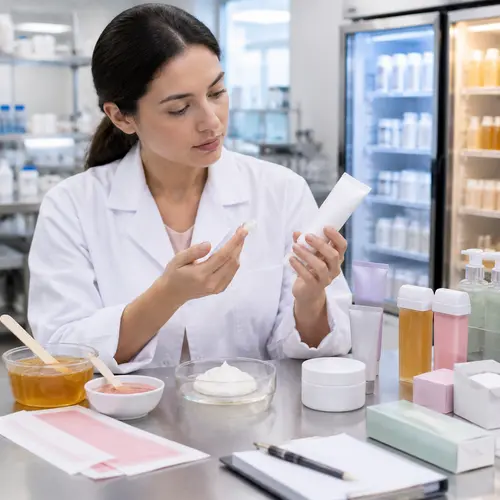
ODM Manufacturing Considerations
For buyers developing the best hair removal products for sensitive skin positioning, the approved sample must become a measurable production standard rather than a general visual reference. Record its color, odor, texture, application behavior, removal result, net weight, and appearance on camera. Keep sealed control samples with both the buyer and manufacturer, and define which changes require written approval.
Formula customization should begin with intended body area, target hair type, consumer routine, and market climate. A face depilatory cream may need different use instructions and fragrance decisions than a body product. Wax for salon use may prioritize working time, while a home sugar wax may need easier hand application. Sensitive-skin positioning does not mean risk-free use, so the supplier should review likely irritation drivers, exposure instructions, warnings, and a consumer patch-test statement where appropriate.
Package compatibility must be checked with the actual bulk product and decoration. Buyers should verify fill behavior, closure torque, liner contact, dispensing consistency, print resistance, and whether container walls soften or deform. For roll-on wax cartridges, inspect the roller assembly, neck, seal, and cap after storage in multiple orientations. Cream packages should be examined for swelling, paneling, seam stress, staining, or product buildup around the opening.
A stability review should document changes at room, elevated, and low temperatures over agreed intervals. Acceptance criteria can cover separation, grain formation, odor drift, color movement, weight loss, pack deformation, and dispensing performance. Transit evaluation should reflect likely shipment duration, carton stacking, container orientation, and seasonal temperatures rather than relying only on a shelf sample.
MOQ discussions should separate bulk-manufacturing minimums from printed-component minimums. A factory may accept a modest finished-product run while a decorated tube or pouch requires a larger purchase. Request an itemized BOM showing bulk, primary package, decoration, assembly, testing, cartons, and estimated freight assumptions. This makes hidden cost changes easier to identify.
Before production, confirm the labeling and batch documents supplied for the destination market. These may include ingredient nomenclature, specifications, batch records, certificates of analysis, safety data where relevant, use directions, warnings, shelf-life support, and traceability coding. US buyers should assess applicable obligations under MoCRA, while EU buyers should plan for the responsible person, product safety documentation, notification, and required label information. Buyers can also compare the supplier’s OEM and ODM service scope with its documented manufacturing process.
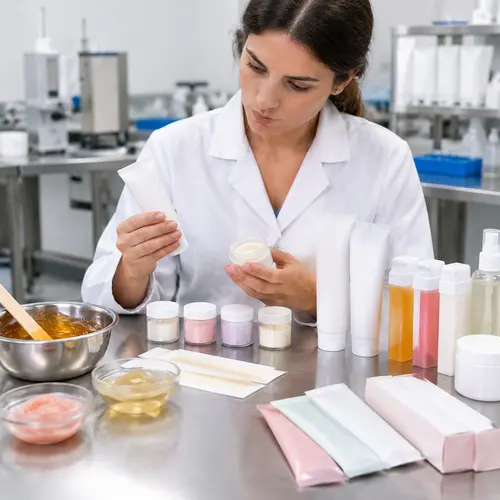
Common Problems or Failure Cases
Wax becomes brittle: A wax that looks smooth when freshly poured may crack during storage or snap during application. Common contributors include an unsuitable working-temperature range, raw-material variation, or prolonged cold exposure. Confirm flexibility and removal behavior after conditioning samples under expected market conditions.
Wax strips lose adhesion: Poor sealing, backing interaction, heat exposure, or oil migration can reduce tack. Inspect strip separation, coating uniformity, grip-tab usability, and hair pickup after storage. Also verify that adhesive does not transfer excessively to skin or the pouch.
Depilatory cream separates: Watery discharge, graininess, or uneven extrusion may indicate that the sample is not robust enough for its package or distribution environment. Evaluate the first and last portions dispensed, because a tube can conceal internal separation.
Cartridges leak: Leakage may appear only when filled cartridges are warm, inverted, or compressed in transit cartons. Examine the roller fit, seal area, cap retention, fill level, and residue inside the secondary pack.
Fragrance undermines sensitive positioning: A strong fragrance may improve initial shelf appeal but conflict with consumer expectations or increase complaint risk. Offer fragrance-free and lower-fragrance comparisons, then evaluate base odor after storage before choosing.
Packaging deforms: Warm filling, product contact, warehouse heat, or carton pressure can distort tubes, jars, and cartridges. Cosmetic appearance matters for DTC content, so review scuffing, label lift, color consistency, and pack geometry as well as basic function.
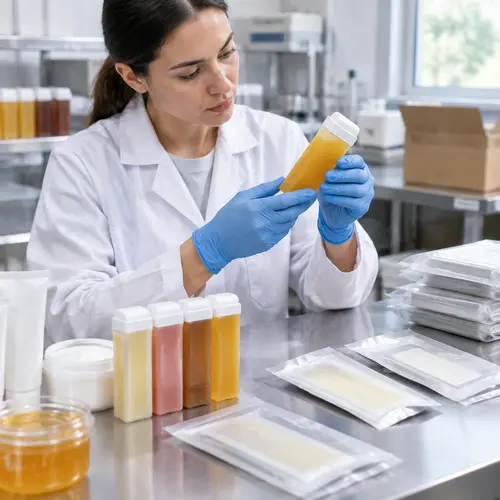
Supplier Checklist
- Confirm experience with the specific category: depilatory cream, wax, wax strips, sugar wax, roll-on cartridges, or aftercare.
- Request samples that match the proposed formula, fragrance, color, package, and intended application area.
- Define written acceptance limits for appearance, texture, viscosity where relevant, net content, dispensing, and removal performance.
- Ask how irritation-risk concerns, restricted ingredients, warnings, and sensitive-skin claims are reviewed for each target market.
- Verify that retained samples and batch traceability records are maintained by the manufacturing facility.
- Review compatibility and stability results generated with the intended production package, not only generic laboratory containers.
- Check component specifications for closures, liners, rollers, strip backing, pouches, and decoration.
- Separate bulk MOQ, component MOQ, and decoration MOQ in the quotation.
- Request a transparent BOM, tooling charges, testing fees, freight assumptions, and payment milestones.
- Confirm available labeling documents and clarify whether the buyer or supplier controls final artwork approval.
- Document shipment temperature expectations, carton configuration, pallet requirements, and leak-handling procedures.
- Ask for redacted examples of comparable overseas launches, including how the supplier handled fast content-driven demand without exposing another brand’s confidential information.
FAQ
How can I reduce the risk of a factory copying my idea or formula?
Use a mutual confidentiality agreement, identify buyer-owned materials in the development contract, and specify restrictions on sample sharing, photography, subcontracting, and reuse. Ask who can access project files and how versions are controlled. Absolute secrecy cannot be guaranteed, but clear ownership terms and controlled access materially reduce ambiguity.
Can a sample look dramatic enough for social media without compromising function?
Yes, within practical limits. Give the supplier reference videos and measurable goals for color intensity, spread, stringiness, wax pull, or cream body. Review the product under your actual lighting and application method. Visual impact should not override safe directions, stable packaging, or reliable removal.
Can quality control guarantee that no follower will have a severe reaction?
No responsible supplier can promise zero reactions. Risk can be reduced through raw-material controls, batch testing, stability work, clear warnings, appropriate use areas, traceability, and complaint procedures. Buyers should avoid absolute sensitive-skin claims and provide instructions that discourage excessive exposure or use on irritated skin.
What if I do not understand technical terminology?
A capable account manager should translate marketing goals into testable specifications. Ask for plain-language comparison tables, physical samples, short application videos, and written decisions after meetings. The strongest partner can discuss both manufacturing limits and how texture, removal, and packaging will appear in consumer content.
Which package is most suitable for a sensitive-positioned depilatory cream?
The answer depends on viscosity, fill process, use area, dose control, and market expectations. Tubes are common because they limit repeated product exposure, but closure cleanliness and controlled dispensing still need evaluation. Select the package only after testing it with the intended bulk.
Should I launch fragrance-free or lightly fragranced?
Fragrance-free may align more clearly with sensitive positioning, although the base odor can become more noticeable. A light fragrance can improve the use experience but may narrow the target audience. Compare both versions after storage and assess consumer messaging before approval.