Direct Answer
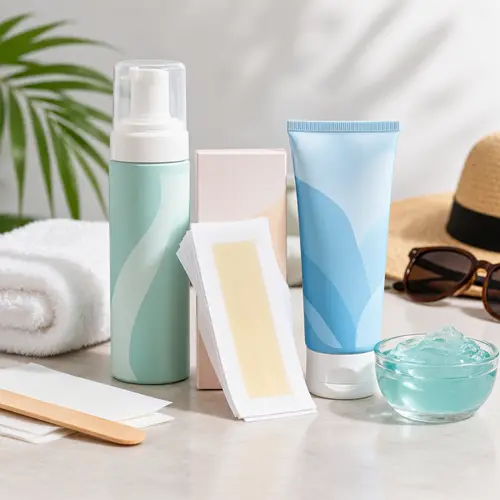
The strongest approach to summer hair removal products private label is a focused three-SKU system: one primary removal product, one convenience format, and one post-removal care product. For creator-led DTC launches, that could mean a visually rich depilatory mousse, travel-ready wax strips, and a cooling aftercare gel. For retail, replace novelty with shelf clarity: proven cream texture, leak-resistant packaging, simple use steps, and distinct claims for body areas or skin preferences.
Do not select products independently. The bundle must work as one routine across formula performance, packaging size, price ladder, shipping conditions, and on-camera demonstration. Start with a supplier that can show working textures in seven days, support a 1,000-unit pilot, and move from sample to production without changing the approved formula. Review the supplier’s private label hair removal products and hair removal OEM ODM services before requesting custom development.
Key Takeaways for Private Label Buyers
- Build around one hero format. Choose cream, mousse, sugar wax, wax strips, or roll-on wax based on the audience’s skill level and preferred content format.
- Add utility, not duplicate removal. A second SKU should solve portability, touch-ups, or smaller-area use rather than repeat the hero product.
- Treat aftercare as part of performance. A soothing gel or lotion completes the routine and increases bundle value without adding another complex removal step.
- Approve texture and packaging together. Viscosity, dispensing force, cap design, wipe cleanliness, and leakage risk must be evaluated as one system.
- Test for the actual summer route. Heat exposure, cold storage, parcel vibration, carton compression, and repeated opening can reveal failures that a desk sample will not.
- Separate DTC and retail execution. DTC can lead with transformation content; retail needs immediate shelf navigation, concise directions, and scannable labeling.
Buyer Context
Summer compresses the launch window. Consumer demand rises around vacations, festivals, weddings, swimwear, and travel, but buyer expectations also become less forgiving. A sticky wax, leaking cartridge, separated cream, or unclear use instruction can turn a high-visibility launch into a returns problem within hours.
The first decision is therefore not which products look most impressive in a catalog. It is which removal behavior your audience will realistically adopt. Depilatory cream offers broad accessibility and easy before-and-after content, but odor, spreadability, removal time, and residue require disciplined review. Buyers considering this route should examine the scope of a specialist depilatory cream OEM, including sample sizes, fragrance options, body-area positioning, and packaging compatibility.
Wax strips are portable and easy to merchandise as kits, yet adhesion may change after warm storage or aging. Hot wax and sugar wax create stronger visual content, but they introduce handling, temperature, and user-technique variables. A supplier offering private label waxing products should be able to demonstrate pull behavior, residue level, strip separation, wax flexibility, and packaging performance after storage.
Roll-on cartridges are attractive for creator tutorials and salon-adjacent positioning. Their weak point is often the interface between formula, roller head, cap, and transport conditions. Test whether the roller starts evenly, remains controlled after warming, and stays sealed when stored sideways. For sensitive-positioned products, evaluate a dedicated mild hair removal formula rather than simply adding soft colors or a botanical story to a standard base.
Aftercare is the logical third step. A lightweight gel or fast-absorbing lotion can improve the perceived completeness of the kit and provide a cooler sensory finish for summer content. Review options through a post-depilation care OEM. If the concept includes ongoing post-removal use, a clearly positioned after hair removal serum may be considered, but claims must match the available support and target-market labeling requirements.
Technical and Packaging Factors
Formula Texture and Use Experience
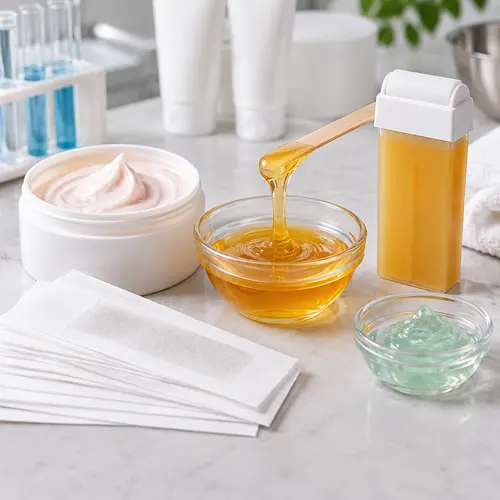
Review samples as a consumer would use them, not as static lab jars. For cream or mousse, check spread, coverage visibility, odor development, contact consistency, rinse or wipe removal, and residue. The ideal texture should remain in place without becoming difficult to distribute. A dramatic mousse expansion can improve short-form video, but the dispensing system must produce repeatable volume and avoid sputtering.
For wax and sugar wax, request a documented working-temperature or texture window specific to the chosen formula. Check whether the product spreads evenly, grips hair without becoming brittle, and releases from skin with manageable residue. For wax strips, compare fresh samples with stored samples for adhesion, clean separation, backing strength, and pull consistency.
Pack Compatibility and Summer Storage
Packaging must be tested with the final bulk formula, decoration, liner, closure, and secondary carton. Similar-looking plastics can respond differently to fragrance, oils, or repeated heat exposure. Ask for upright, inverted, and sideways storage checks where leakage is possible. For pumps, tubes, and roll-ons, inspect dose consistency from first use through near-empty use.
The outer pack should also survive the intended channel. DTC parcels face vibration, drops, pressure, and temperature swings. Retail packs face shelf handling, tampering, label scuffing, and barcode visibility requirements. Review the supplier’s hair removal manufacturing process to confirm when compatibility, filling, sealing, coding, and shipment checks occur.
Safety, Labels, and Launch Readiness
Hair removal products require clear directions, contact times where relevant, body-area restrictions, warnings, batch identification, and responsible-party details appropriate to the destination. Use the FDA cosmetics labeling guide as a baseline for United States pack review. Broader category direction can be checked against Mintel beauty and personal care market reporting, while an FDA cosmetics warning-letter example can help buyers understand why labeling and product records should be reviewed before launch.
For a creator-led launch, request a visual prototype round before final approval. Film the formula under the same lighting, camera distance, and application method planned for launch content. At the same time, request a transparent BOM, packaging cost, sample scope, estimated freight volume, and production timeline. The goal is not only an attractive sample. It is a repeatable SKU that can move from a 1,000-unit pilot to a larger order without losing the approved texture, color, scent, or pack behavior.
Decision Framework
| Factor | What to Check | Why It Matters | ODM Buyer Note |
|---|---|---|---|
| Hero product | Audience skill, body area, content potential, use steps | Defines the bundle promise and creative concept | Compare cream, mousse, strips, sugar wax, and roll-on samples before selecting |
| Texture | Spread, grip, residue, wipe or rinse behavior, odor | Shapes both consumer satisfaction and video performance | Approve a physical standard sample for production matching |
| Primary pack | Dispensing, closure fit, leakage, compatibility, near-empty use | Prevents waste, returns, and inconsistent application | Test the final decorated pack with the final formula |
| Summer storage | Heat, cold, vibration, inversion, carton pressure | Reveals separation, softening, leakage, and label damage | Match testing conditions to the planned shipment route |
| Aftercare | Absorption, cooling feel, residue, routine fit | Completes the system and raises perceived value | Avoid claims that exceed the available product support |
| Launch model | MOQ, sample scope, BOM, lead time, scale plan | Protects the content calendar and cash position | Use OEM solutions for beauty brands to define the bundle, then request a hair removal product quote |

ODM Manufacturing Considerations
An ODM brief should turn a creative idea into acceptance criteria checked before production. Give the supplier the product type, target area, including face or body, hair length, expected removal time, fragrance position, color, use steps, target pack, sales market, and shipping season. Review the supplier’s hair-removal product range and OEM/ODM service scope, then put project requirements in writing.
Sample Confirmation and Formula Customization
Sample confirmation should use a retained reference and a change log. Record appearance, odor, texture, viscosity for cream or aftercare, wax softening behavior and working temperature, spread, pull, residue, and expected removal time. Ask which variables are fixed and which may move within batch tolerance. Do not approve from a photo alone. Confirm the filled pack, label copy, and directions before sign-off. For a custom formula, request the ingredient declaration, fragrance and allergen details, relevant pH, and an irritation-risk review. Any change to fragrance, color, preservative, wax blend, or hair-removal active level should trigger a new sample and updated documents.
Packaging Compatibility and Stability Review
Compatibility belongs to the filled product, not just the empty container. For depilatory cream or mousse, check the tube, pump, valve, cap, seal, and actuator. For wax, sugar wax, strips, and roll-on cartridges, inspect the jar, sachet, backing, roller assembly, cap, and coating interface. Hold filled samples at defined hot and cold conditions, then inspect them after several hours and at scheduled checkpoints. Look for separation, viscosity change, odor or color shift, wax crystallization or softening, label lift, seal failure, leakage, and deformation. Record the acceptable storage range and maximum transit exposure. The supplier’s manufacturing process description should be supported by product-specific records.
MOQ, Labeling Documents, and Shipment Conditions
Clarify MOQ by formula, SKU, and packaging component. Request a line-item BOM, sample scope, sample and tooling fees, payment milestones, and a freight estimate under the planned Incoterm. Ask whether stock packaging can serve an initial release and which changes trigger setup fees. Collect the ingredient declaration, net contents, lot or batch coding, shelf-life support, directions, warnings, country of origin, and available release or transport documents. For US sales, compare the final label with the FDA Cosmetics Labeling Guide. Review organic, natural, sensitive-skin, and performance claims before artwork is released. Confirm permitted shipment temperatures, carton protection, pallet pattern, seal protection, and arrival inspection. Put component reservation, capacity, and customer-allocation terms in the contract. Submit the same specification through the RFQ and contact page so the commercial response can be compared with the technical brief. Use Mintel global beauty market reports only as planning context, not as a substitute for product-specific evidence.
Common Problems or Failure Cases
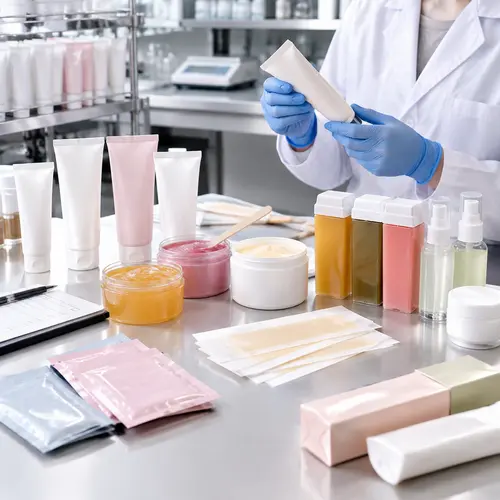
Wax brittleness often appears after temperature swings, an unsuitable wax blend, or an uncontrolled working range. Hard wax or sugar wax may crack instead of flexing, while overheated material may become stringy or too fluid. Compare melting or softening behavior, spread, pull, and residue at the intended use temperature and after storage exposure.
Strip adhesion can decline when coating weight, backing moisture, release liner, or aging is inconsistent. A strip that performs well at packing may lose grip after heat or cold storage. Check adhesion and clean removal on a consistent hair sample, inspect the strip surface for transfer, and compare pre-shipment and post-transit results.
Depilatory cream separation may show as watery liquid, graininess, thinning, or an odor or color shift. Check viscosity at a controlled temperature, fill-weight consistency, and compatibility with the tube or pump. A supplier should define lot limits and traceability rather than correcting an out-of-limit batch after filling.
Roll-on cartridge leakage can come from the roller assembly, cap seal, fill volume, dimensional fit, or heat exposure. Inspect cartridges after storage and transport, including the carton and label, because a small leak can contaminate a full case. Packaging deformation may also appear as a warped tube, softened jar, lifted label, or cracked sachet.
Fragrance sensitivity is another avoidable source of complaints. A strong scent can overshadow acceptable removal performance, especially in a face or underarm product. Offer a low-fragrance option when appropriate, disclose fragrance ingredients, review odor after storage, and keep directions and patch-test language clear.

Supplier Checklist
- Can document current capabilities for depilatory cream, mousse, wax, wax strips, sugar wax, roll-on cartridges, and aftercare.
- Uses written sample criteria for texture, color, viscosity, working or softening range, removal time, residue, and odor.
- Explains formula customization, ingredient disclosure, fragrance review, irritation-risk review, and change control.
- Checks filled-pack compatibility, heat and cold behavior, seal integrity, leakage, deformation, and label adhesion.
- States MOQ by SKU and component, sample scope, stock-pack options, tooling, and all setup or change fees.
- Provides label documents, batch coding details, shelf-life support, warnings, country-of-origin information, and available transport records.
- Defines shipment temperature limits, carton protection, arrival inspection, capacity allocation, and surge planning.
- Accepts written confidentiality and IP terms covering custom formula, artwork, samples, packaging files, and improvements.
FAQ
Can a Chinese OEM/ODM factory take my concept or formula?
Treat this as a contract risk to control, not a promise to trust. Sign confidentiality and IP ownership terms before sharing the full formula or artwork. Specify who owns the custom formula, samples, molds, packaging files, and improvements, and prohibit reuse for other customers. Limit access to project files and cover termination and dispute handling in the agreement.
Can the sample texture and color meet a dramatic on-camera brief?
Yes, if the creative brief becomes measurable targets. Define foam volume, sheen, color contrast, stringing, spread, visible residue, and the desired result after removal. Review several filled samples under the brand’s actual phone or camera setup, and keep the selected reference with written color and texture limits. A lab photo alone is not enough.
What if customers report a serious skin reaction?
No supplier can honestly promise zero reactions. Require raw-material identity checks, in-process records, fill and label checks, finished-lot release criteria, retained samples, traceability, and a stop-ship process. Review fragrance, pH or hair-removal active range, directions, warnings, and patch-test language with qualified local advisers before launch, then document how complaints are investigated.
I do not understand ingredients. Can the supplier understand social marketing needs?
Use a one-page brief that connects the content hook to measurable product requirements. Ask for an account lead who can discuss the market, content schedule, visual effect, and consumer objections, plus a technical contact who can explain tradeoffs in plain English. Require the supplier to restate the brief and record every approved change.
If a video suddenly goes viral, can the factory keep up?
Ask for monthly capacity by product and pack, component lead times, reservation rules, and the customer-allocation policy used during peak demand. Identify a qualified backup package or formula path where possible, and agree on reorder triggers, forecast updates, and the point at which the supplier must disclose a schedule risk. Do not rely on a verbal priority promise.
References
- FDA Cosmetics Labeling Guide, for US cosmetic label elements and related instructions.
- Mintel global beauty market reports, for broader category planning context.