Direct Answer
Sourcing men’s hair removal products private label requires more than changing the color, fragrance, or package size of a standard depilatory SKU. The buyer must match the product to larger treatment areas, denser or coarser hair, faster application habits, and higher expectations for clean removal without an overly cosmetic feel. That changes the brief for the formula, the applicator, the pack, the safety review, and the launch claims.
For a private-label brand, the practical difference is product architecture. A body cream may need a controlled contact window and a tube that dispenses a thick layer evenly. Wax strips may need enough adhesive grip for short, dense hair while remaining easy to separate and store. Roll-on wax needs cartridge compatibility, heat control, and leak resistance. The right ODM partner should prove these points with samples, aging checks, packaging trials, and clear documents before a market launch. Speed matters, but repeatable performance across the full batch matters more.
private label hair removal products are best sourced through a partner that can connect formulation, packaging, sampling, testing, and shipment planning in one operating brief.
Key Takeaways for Private Label Buyers
- Define the use case first. Specify body area, hair density, wet or dry use, application time, and whether the product is intended for home grooming, salon use, or travel retail.
- Test performance on realistic hair conditions. Review removal completeness, residue, odor, spread, pull strength, and comfort on representative coarse-hair samples rather than judging a formula on appearance alone.
- Make packaging part of the formula decision. Tube walls, caps, liners, wax cartridges, strip films, and seals can change dispensing, adhesion, leakage, and shelf behavior.
- Ask for evidence before approving scale-up. Request stability observations, heat and cold storage checks, compatibility records, batch specifications, and label-supporting documents.
- Protect launch speed with a controlled sample path. Confirm what can be customized at sample stage, what requires a new mold or filling trial, and whether the approved sample can move to mass production without re-engineering.
For a broader product map, review hair removal product solutions and compare the format against the brand’s intended channel.
Buyer Context
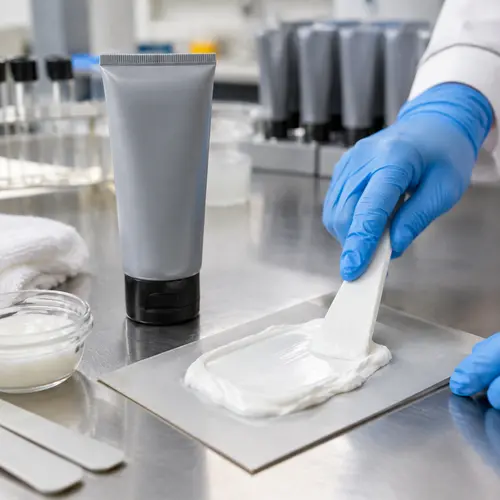
Men’s removal products are often purchased around a specific grooming moment: preparing the chest or back for an event, cleaning up shoulders and arms, maintaining legs, shaping the intimate area, or reducing visible body hair between professional appointments. That context creates different sourcing demands from a general unisex brief. The customer may apply more product over a larger area, work quickly, and expect the result to look consistent under strong lighting or on camera. A product that performs acceptably on fine leg hair can underperform on dense chest hair, leaving patches, excess residue, or repeat-application irritation.
The format also affects the commercial promise. A depilatory cream can support a simple at-home routine, but its viscosity must allow an even layer without running. Sugar wax can appeal to users who want a familiar salon-style ritual, yet its working temperature, pull behavior, and recovery after heating must be controlled. Wax strips reduce equipment needs, but the strip substrate and adhesive layer must remain stable during transport and still separate cleanly from its backing. Roll-on wax cartridges offer visual simplicity and efficient coverage, but the roller head, cartridge neck, and seal need to work together.
Aftercare is part of the same purchase decision. A soothing gel or lightweight lotion can help the brand present a complete routine, but it must not make unsupported claims or arrive in a pack that leaks after shipment. This is why an hair removal OEM ODM services brief should describe the grooming scenario, not only the ingredient list. The intended customer, body area, content angle, and retail channel should be translated into measurable product requirements.
Technical or Packaging Factors
Formula behavior. For cream, the main checks are spreadability, layer thickness, contact-time instructions, odor profile, residue, and performance after storage. Ask the supplier to record viscosity using the same test method at a stated temperature; an unexplained number is not a useful comparison. Review the irritation-risk assessment for the intended use area and confirm whether the directions, warnings, and patch-test language match the actual formula. A depilatory cream OEM partner should be able to show how the approved sample is matched to the production specification.
Wax behavior. For hot wax, sugar wax, and roll-on formats, check melting or working temperature, flow, pull strength, stringing, set time, and residue. The relevant range depends on the formula and equipment, so the buyer should request the supplier’s target range and method rather than impose a generic number. Test the product after repeated warming and cooling cycles. A wax that looks smooth in a fresh jar may become brittle, grainy, overly fluid, or difficult to remove after transport exposure.
Packaging compatibility. Evaluate the complete pack, including tube material, shoulder, cap, inner seal, label adhesive, cartridge body, roller head, strip film, and backing paper. Fill the intended pack and observe seepage, swelling, odor transfer, cap torque, dispensing force, and label lift. For roll-on products, run an upside-down and side-storage leakage review. For cream, check whether the formula separates at the shoulder or clogs the opening. For wax strips, review backing release, adhesive migration, and performance after heat exposure.
Storage and shipment. Agree on heat and cold conditions, observation points, sample size, and acceptance criteria before the pilot run. Include freeze-thaw or cold exposure when the destination climate requires it, and include elevated-temperature storage for containers likely to sit in hot delivery vehicles. The supplier should explain whether the product needs upright shipment, secondary sealing, insulation, or a maximum transport duration. These checks belong in the hair removal manufacturing process, alongside filling, packaging, and quality review.
Label and market readiness. Confirm the ingredient declaration, directions, warnings, net contents, batch identification, responsible-party information, and claim support for each destination. The FDA Cosmetics Labeling Guide is a useful reference for United States label review. For advertising language, compare proposed claims against the FTC’s advertising substantiation guidelines. Independent testing providers such as SGS cosmetic compliance and stability testing services can also help define suitable evidence and test scope. These references do not replace a market-specific review by the brand’s responsible regulatory adviser.
For customers concerned about discomfort, compare sensitive skin hair removal products using the same application and observation protocol. If the launch includes a recovery step, assess post-depilation care OEM options as a coordinated kit rather than an unrelated add-on. A buyer planning a broader routine can also evaluate hair inhibitor serum OEM positioning, provided the claims are reviewed for the destination market.
Decision Framework Table
| Factor | What to Check | Why It Matters | ODM Buyer Note |
|---|---|---|---|
| Target hair and body area | Coarse-hair removal, coverage area, wet or dry routine, contact time | Determines spread, grip, comfort, and repeat-use risk | Send a one-page use brief with photos or representative test conditions |
| Formula performance | Viscosity, working temperature, set time, residue, odor, removal completeness | Controls user experience and visible result | Approve a written specification with the sample, not a sample judged by feel alone |
| Pack compatibility | Dispensing, seal integrity, cap torque, roller movement, backing release | Prevents leakage, clogging, contamination, and poor shelf presentation | Test the filled production-intent pack under upright, side, heat, and cold conditions |
| Safety and label file | Warnings, directions, ingredient declaration, batch coding, claim support | Reduces avoidable market and customer-service risk | Request the document list before artwork approval |
| Scale and launch timing | Sample scope, pilot quantity, lead time, capacity reservation, shipment terms | Protects a content-led launch from late changes or missed demand | Clarify what stays fixed from sample to mass production |
For wax-led assortments, compare wax strips OEM options against the same performance and pack criteria. Before approving a supplier, use the request a hair removal product quote page to submit the target format, body area, pack, destination market, sample requirements, and expected launch window. That brief gives the ODM team enough context to return a useful scope, rather than a generic catalog response.

ODM Manufacturing Considerations
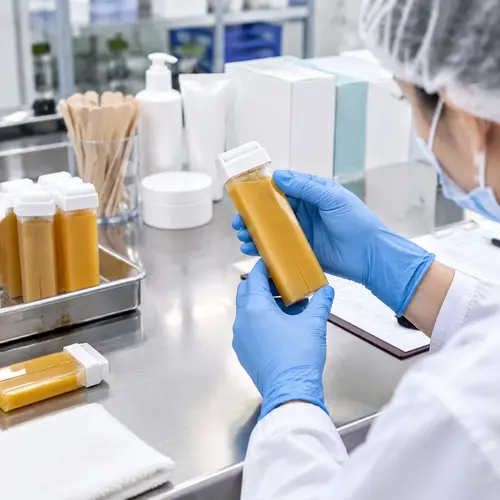
An ODM sample should be treated as a controlled approval record. Confirm the intended body area, application thickness, dwell time, removal method, scent, color, and acceptable residue. For cream, request a target viscosity or flow range and note its appearance after application. For sugar wax or roll-on wax, record softening or working temperature, set behavior, stringing, and pull performance. For strips, define adhesion strength, removal feel, and pouch condition. Keep a retained reference sample and written approval so later batches have a physical comparison.
Formula customization should be divided into fixed performance requirements and optional styling changes. Ask what can change without reopening the sample, including fragrance level, color, texture, and aftercare feel. Each change should trigger an irritation-risk review and a check of viscosity, scent, color, and removal performance. A supplier that can show a relevant depilatory prototype or camera-ready wax and cream sample can translate a visual concept into measurable acceptance criteria.
Packaging compatibility and the stability review should cover the filled product, not only an empty container. Confirm tube, jar, cartridge, strip pouch, closure, liner, and label materials against the product temperature range and oil or water exposure. Request filled-unit observations after warm and cool storage, transport vibration, seal inspection, and leakage checks. Check whether a cream thins, a wax migrates, or a pouch loses its barrier. For an aftercare set, verify that every component remains legible and clean in the same carton.
Review the supplier’s hair-removal product categories, OEM/ODM services, and stated manufacturing process before requesting an RFQ. Get MOQ in writing by formula, fill size, fragrance, color, and artwork. Separate sample quantities from commercial minimums, and ask whether custom print, a special closure, or a small color run changes the threshold. Labeling documents should cover ingredient naming, net contents, batch or lot coding, directions, warnings, claim support, and shipping paperwork.
Agree on shipment conditions before release: carton strength, pallet or parcel handling, temperature limits, transit exposure, and arrival inspection. Wax can soften, cream can separate, and adhesive strips can age during long transit. Ask the supplier to state how damaged or temperature-exposed deliveries are handled. A line-item BOM and freight estimate also make a sudden market response easier to cost and schedule.

Common Problems or Failure Cases
Most failures appear when a product leaves the sample room and meets real use, storage, or transport conditions. Ask for failure limits and corrective actions before approving the formula or packaging.
- Wax brittleness: A hard wax may crack, break, or lose a clean pull after cooling. Check the workable temperature range, set time, flexibility, and performance on the intended hair type.
- Strip adhesion loss: Adhesive may weaken with age, moisture, or inconsistent coating. Compare peel performance across retained lots and inspect pouch sealing and substrate consistency.
- Cream separation: A depilatory cream may show oiling, thinning, or visible phase change after storage. Record appearance, viscosity, fill weight, and odor before and after the review period.
- Cartridge leakage: Seepage can come from the nozzle, crimp, closure, or an overfilled unit. Inspect filled weight, seal integrity, and leakage after handling and shipment simulation.
- Fragrance sensitivity: A strong scent can increase complaints even when removal performance is acceptable. Request a lower-fragrance or fragrance-free option and confirm warnings and intended-use limits.
- Packaging deformation: Tubes can panel, pouches can shrink, and jar lids can distort. Match the material and liner to the fill, then inspect finished units after storage and transit handling.
Supplier Checklist
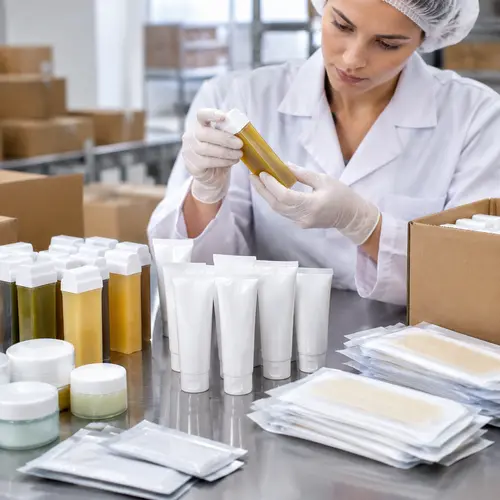
- Confirm a sample dossier with formula code, target texture, viscosity or working temperature, removal time, color, scent, and retained reference.
- Define customization limits, revision approval rules, formula ownership, artwork ownership, and restrictions on reuse.
- Request compatibility and stability evidence for filled units, including seals, leakage, adhesion, appearance, viscosity, and deformation.
- Verify release checks for cream pH and viscosity, wax behavior, strip adhesion, fill weight, lot coding, and retained samples.
- Obtain written sample quantities, MOQ by SKU, custom-component thresholds, revision charges, and expected manufacturing dates.
- Collect ingredient, net-content, direction, warning, claim-support, carton-mark, and carrier documents before artwork approval.
- Require a line-item BOM, packing cost, freight estimate, and a clear policy for damaged or rejected units.
- Ask about relevant depilatory launches, content-aware communication, available capacity, allocation rules, and backup dates for a demand spike.
FAQ
How can I protect my idea and formula when working with a China-based factory?
Use a signed NDA, written ownership terms for custom formula and artwork, restrictions on reuse, and a clear sample or formula code. Ask how access is logged and whether another customer may receive the same base. No factory promise replaces contract language and practical due diligence on the company, files, revisions, and unused stock.
Can the sample look dramatic enough on camera?
Request a physical prototype under the planned lighting, macro distance, background, and packaging. Approve the cream spread, wax stretch or pull, gloss, and color tolerance using an actual retained sample. Raw material lots can shift shade or viscosity, so the supplier should state acceptable ranges rather than promise an identical result from a digital rendering.
How do I reduce the risk of customers having a bad reaction?
No supplier can guarantee zero reactions. Require an ingredient review, intended-use limits, warnings, patch-test language where appropriate, batch release checks, and a defined complaint process. Keep fragrance, color, and removal claims within the approved sample performance, especially for products marketed for the face or other sensitive areas.
Will the factory understand social-media requirements if I do not know chemistry?
Translate marketing language into measurable tests: thick cream becomes a viscosity range, clean pull becomes residue and removal criteria, and camera-ready color becomes shade tolerance under defined light. Use one approval sheet with photos and measurements, and require the account lead to flag unsuitable claims or timing.
What happens if a video creates a sudden order spike?
Ask for current capacity, open slots, component dependencies, reserve or priority rules, and a response plan for increased demand. Put allocation and date assumptions in the contract terms. Confirm whether production can be divided into batches without changing the approved sample, packaging, or labeling documents.
References
These sources support the labeling, advertising, and product-review points above:
- FDA Cosmetics Labeling Guide for ingredient, net quantity, directions, and warning-label considerations.
- FTC advertising guidance for substantiation of performance and safety claims before publication.
- SGS cosmetics and personal care services for product review, stability, and testing support.