Direct Answer
A successful depilatory cream formulation starts with buyer decisions, not ingredient selection. Before development, define the application area, target user, expected hair-removal time, skin-positioning claim, sensory profile, package format, sales market, and acceptable cost per unit. These inputs determine the alkaline system, hair-removal performance, cream viscosity, fragrance strategy, package compatibility, and required testing.
Do not approve a sample based only on whether it removes hair. Review how evenly it spreads, whether it stays in place during use, how it looks on camera, how easily it rinses away, and how the skin feels afterward. The final formula must also remain compatible with its tube, pump, sachet, or jar through storage and shipment. For buyers seeking a structured starting point, a custom depilatory cream formulation program should connect these commercial choices directly to sampling, testing, packaging, and production.
Key Takeaways for Private Label Buyers
- Fix the product brief first. Specify body area, user profile, hair type, removal window, fragrance direction, color, texture, and market position.
- Evaluate more than speed. Removal performance must be balanced with spreadability, rinse behavior, odor control, and irritation-risk review.
- Test the final package. A stable bulk cream can still fail through panel distortion, seal damage, leakage, clogging, or formula discoloration.
- Approve camera behavior. Review the formula under the lighting, application style, and close-up views planned for launch content.
- Plan the full testing path. Stability, heat and cold storage, package compatibility, microbial quality, and shipment checks should be agreed before the purchase order.
- Keep pilot and scale production aligned. Confirm that the approved sample can move into a 1,000-unit pilot without changing raw materials, equipment assumptions, or texture targets.
Buyer Context
Hair-removal products create an unusually visible promise: the audience expects to see a clear before-and-after result within one piece of content. That makes performance, texture, and presentation inseparable. A cream that works but looks thin, drips during application, or rinses unevenly can weaken a creator-led launch. A visually rich cream that underperforms creates a more serious trust problem.
The first decision is product scope. A body cream, underarm product, leg formula, and face-positioned product should not be treated as interchangeable. Application area affects the expected dwell window, fragrance level, spread thickness, rinse method, and irritation-risk review. Buyers developing a sensitive-positioned SKU should compare their brief with established mild hair removal formula options rather than simply reducing fragrance and calling the product gentle.
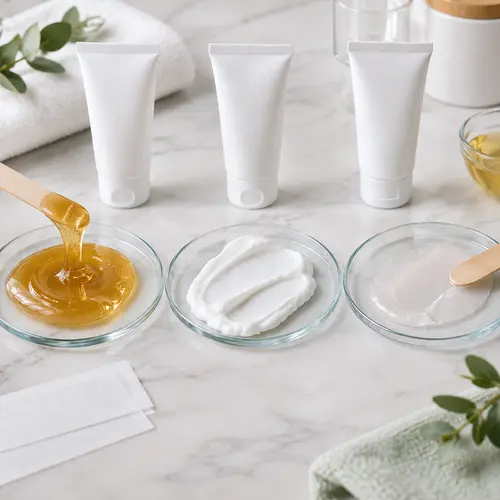
Format also changes the development path. Depilatory creams depend on controlled viscosity and package resistance. Sugar wax requires different temperature and handling checks. Wax strips depend on adhesion consistency and aging behavior. Roll-on wax cartridges require flow and leakage review. Aftercare may be built as a separate soothing step through a post-depilation care OEM program. Buyers comparing formats can map these differences through broader depilatory product development solutions.
Market destination must be declared at briefing, not after artwork approval. Ingredient acceptability, required label content, responsible-party information, and claims language vary by market. Buyers can verify ingredient functions through the European Commission’s CosIng ingredient database. For the United States, the FDA explains how personal care products are categorized and clarifies how cosmetics are regulated without premarket FDA approval.

Technical and Packaging Factors
Performance Window
Depilatory products break down hair through a reducing active system supported by an alkaline environment. The buyer does not need to select every ingredient, but must define the intended use conditions. The ODM then translates those conditions into a formula target and verifies performance across relevant hair types.
Sample review should record application weight, coverage area, dwell time, percentage of visible hair removed, rinse effort, residual odor, and post-use skin observations. Avoid approving a sample from one informal test. Ask how the supplier controls variation and how the approved benchmark will be retained for comparison during the depilatory product production process.
Texture and Camera Readiness
Viscosity affects dosing, coverage, vertical hold, and package choice. A low-viscosity cream may spread fast but run on legs or underarms. A very dense cream can look premium while becoming difficult to dispense or rinse. Ask for application videos under realistic lighting, plus a physical sample for tactile review. A seven-day first-sample target can support a content calendar, but speed should not replace documented approval criteria.
Color and fragrance need the same discipline. Depilatory bases can have a noticeable inherent odor, and heavy fragrance does not automatically solve it. The fragrance must remain acceptable during application, removal, and storage. Custom color should be reviewed for batch consistency and discoloration risk rather than approved from a digital rendering.
Package Compatibility
The package is part of the product system. Tubes are common because they support controlled dosing and limit repeated exposure. Pumps may create a premium experience but require testing for priming, clogging, output consistency, and formula contact with internal components. Sachets suit travel or trial formats but require seal-integrity and fill-weight control. Jars offer broad access but introduce repeated opening and direct contact.
Request tests using the final decorated package, not an unprinted substitute. Check upright and inverted storage, closure security, seal condition, panel deformation, leakage, discoloration, odor migration, and label adhesion. Heat and cold storage should reflect likely warehouse and delivery conditions. The shipment plan should also identify carton orientation, dividers, and protection against compression.
Testing and Documentation
Testing scope should be written into the quotation and timeline. At minimum, discuss stability, package compatibility, microbial quality, irritation-risk assessment, production specifications, batch records, ingredient listing, and market-specific label support. Ask which checks are completed before pilot filling and which continue after launch.
A fast path works best when formula development, packaging selection, and documentation run in parallel. Buyers can compare available support under hair removal OEM ODM services and use a hair removal product RFQ to request sample scope, itemized BOM assumptions, packaging options, MOQ, and estimated shipment conditions.
Decision Framework
| Factor | What to Check | Why It Matters | ODM Buyer Note |
|---|---|---|---|
| Application | Body area, hair type, user profile | Sets performance and risk-review targets | Do not extend a body formula to the face without a separate review |
| Removal window | Minimum and maximum use time | Shapes efficacy instructions and consumer experience | Test across representative hair conditions |
| Texture | Spread, vertical hold, rinse, residue | Affects results, dosing, and content quality | Approve physical samples and application videos |
| Package | Tube, pump, sachet, or jar compatibility | Prevents leakage, clogging, and material damage | Test the final decorated components |
| Storage | Heat, cold, orientation, and transport exposure | Reveals separation, swelling, or seal failure | Match conditions to destination and shipping route |
| Commercial plan | MOQ, sample rounds, BOM, launch quantity | Controls cash exposure and launch timing | Confirm scale-up uses the approved formula and process |
| Documentation | Ingredient list, specifications, label support, batch files | Supports market entry and traceability | Confirm deliverables before artwork is locked |
The strongest brief is concise: one user, one application area, one removal promise, one visual direction, one package, and one launch market. Once these choices are fixed, a qualified hair removal OEM manufacturer can move faster without turning the production sample into a different product.
ODM Manufacturing Considerations
ODM development should convert a buyer concept into measurable specifications rather than relying on subjective descriptions such as ‘strong,’ ‘gentle,’ or ‘premium.’ Before manufacturing begins, the buyer and supplier should agree on the intended body area, hair type, removal time, fragrance level, cream color, texture, package format, net weight, target market, and acceptable cost range. Facial-use and body-use creams should not be treated as interchangeable because directions, exposure expectations, and irritation considerations can differ.
Sample Confirmation and Formula Customization
Ask the supplier to document each sample with a code, preparation date, ingredient list, and revision notes. Feedback should identify one variable at a time, such as spreadability, odor, rinse feel, removal performance, or visible color. Comparing coded samples against an agreed benchmark helps prevent the project from drifting during repeated revisions.
Once approved, retain sealed reference units from the same confirmed batch and create a signed specification covering appearance, odor, pH target, viscosity range, fill weight, and package components. The approved reference becomes the standard for bulk production. If the formula is custom, the manufacturing agreement should also state who owns the final specification and whether the factory may offer the same formula to other private-label customers.
Packaging and Product Fit
A package that works for a lotion may not work for a depilatory cream. The filled product can interact with liners, seals, color coatings, printing, or closure materials. Buyers should examine dispensing force, cap fit, odor migration, panel distortion, print rubbing, and product residue around the opening. Airless pumps or spray-style dispensers should only be selected when the cream can dispense consistently through the chosen mechanism.
Evaluation should use production-intent components rather than undecorated substitutes. Store filled samples in several orientations and under realistic warehouse conditions, then inspect them at defined intervals. For wax, sugar wax, and roll-on cartridges, also confirm that changes in ambient temperature do not make application impractical or cause the package to lose its shape.

Stability, MOQ, Documents, and Freight
A stability plan should define checkpoints for odor, color, pH, viscosity, separation, package appearance, and dispensing behavior. It cannot prove that every unit will remain perfect in every environment, but it can reveal foreseeable weaknesses before a commercial order is released.
MOQ discussions should separate the formula batch minimum from the minimums for tubes, caps, cartons, labels, and printing. A low filling MOQ may still require the buyer to purchase excess custom packaging. Request a transparent BOM showing formula, primary packaging, decoration, cartons, testing, assembly, and expected material overage. Freight estimates should identify carton dimensions, gross weight, pallet assumptions, shipment method, trade terms, and any temperature exposure concerns.
For labeling, request the ingredient declaration, product specifications, batch coding format, net-content details, directions, warnings, fragrance documentation where applicable, and available quality records. Market-specific wording should be checked before artwork approval. The European Commission CosIng ingredient database can help buyers research ingredient names, functions, and listed restrictions when planning EU products. Related planning information may also be organized through the supplier’s OEM/ODM services and documented manufacturing process.
Common Problems or Failure Cases
Wax becomes brittle: Hard wax may crack instead of flexing when its resin balance, application thickness, or use temperature is unsuitable. Compare performance across the intended working range and confirm whether breakage appears only after storage or immediately after cooling.
Strips lose gripping performance: Premade wax strips can become difficult to separate, transfer wax unevenly, or remove less hair after warm storage. Causes may include wax migration, backing interaction, or an unsuitable storage period. Evaluate unopened retail packs as well as loose development samples.
Depilatory cream separates: Water release, graininess, thinning, or uneven color can indicate that the formula is not robust enough for the intended package and distribution conditions. Do not solve separation by simply increasing thickness; that may reduce spreadability or make the product difficult to empty from a tube.
Roll-on cartridges leak: Leakage can originate at the roller housing, cap, or cartridge seam. Wax behavior changes with temperature, so a cartridge that appears clean at room temperature may soil cartons during warm transport. Component tolerances and actual filled-product behavior both matter.
Fragrance creates avoidable sensitivity: A strong scent may mask raw-material odor but can increase consumer complaints. Consider an unscented or lower-fragrance option, review fragrance declarations, and ensure instructions clearly limit use to the intended area.
Packaging deforms: Tubes can soften, labels can wrinkle, and cartons can bow when product contact, humidity, or freight conditions were not represented during development. Confirm decorated components before approving the commercial run.

Supplier Checklist
- Can the supplier show relevant experience with depilatory creams, wax, strips, cartridges, or aftercare rather than unrelated products?
- Does the sample brief define use area, hair type, texture, fragrance, removal expectations, package, target price, and destination market?
- Are sample codes, revision records, acceptance criteria, and retained reference units maintained?
- Will the supplier disclose practical specification ranges for pH, viscosity, appearance, odor, and fill weight?
- Are irritation risks, directions, warnings, and intended application areas reviewed before artwork is finalized?
- Are production-intent packages filled and evaluated for dispensing, deformation, staining, odor transfer, and closure performance?
- Does the quotation separate formula, packaging, decoration, testing, cartons, overage, and freight assumptions?
- Are formula, packaging, and print MOQs stated separately?
- Can the supplier provide ingredient, fragrance, label, batch, and shipment documents required for the destination?
- Are change controls in place so ingredients or packaging components cannot be substituted without buyer approval?
- Does the quality agreement define batch release checks, nonconforming-product handling, and complaint investigation responsibilities?
- Are carton size, gross weight, pallet pattern, shipment orientation, and expected transit conditions documented?
FAQ
Can a factory reuse my idea or custom formula?
No supplier can remove all commercial risk. Use a mutual confidentiality agreement, define formula and artwork ownership, restrict unapproved subcontracting, and include non-use terms in the manufacturing contract. Keep dated briefs and approved sample records. Ask whether the base is exclusive, semi-custom, or a standard private-label formula before paying development fees.
Can quality control guarantee that nobody will have a bad reaction?
No. Quality controls reduce preventable variation but cannot guarantee universal tolerance. Require ingredient review, controlled manufacturing records, batch checks, clear warnings, traceable lot codes, and complaint procedures. Depilatory cream should only be marketed for the body areas supported by its formula and directions.
How can a nontechnical buyer communicate a strong social-media concept?
Provide reference videos, texture examples, application quantity, desired visual payoff, removal timing, and unacceptable outcomes. A capable account manager should translate marketing language into sample criteria and explain tradeoffs without expecting the buyer to use technical terminology.
How many sample revisions should be included?
There is no universal number. The quotation should state included rounds, sample quantity, packaging scope, freight charges, and fees for major changes. A new fragrance or color is usually simpler than changing removal strength, use area, or package system.
What is the difference between formula MOQ and packaging MOQ?
The formula MOQ is the smallest practical manufacturing batch. Packaging suppliers may require larger orders for printed tubes, cartons, or custom colors. Buyers should confirm who owns and stores unused components and whether those materials have a defined usable period.
Are cosmetics approved by the FDA before sale in the United States?
Generally, cosmetics are not preapproved by the FDA, although color additives have separate requirements. The responsible company remains accountable for product safety and labeling. The FDA explains this distinction in its overview of FDA authority over cosmetics.