Direct Answer
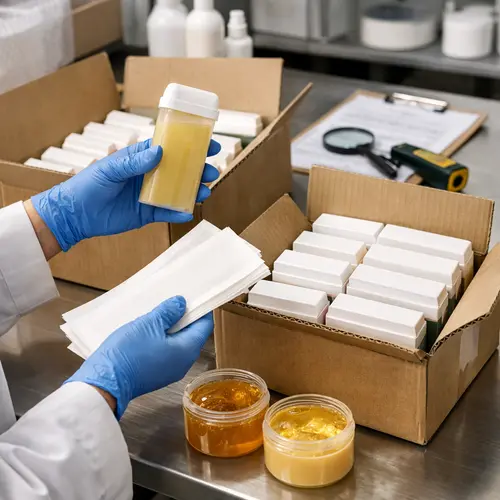
For most early-stage brands, a DTC hair removal brand launch should begin with one hero product and a deliberately small routine bundle, not a wide catalog. The hero SKU gives paid media, creator content, and product education a clear subject. The routine bundle then raises perceived value and average order value without forcing the brand to validate several unrelated formulas at once. In practice, this could mean a depilatory cream paired with a soothing gel, wax strips paired with post-depilation care, or a sugar wax kit with a simple aftercare lotion.
The right decision depends on repeat-use behavior, skin sensitivity, packaging risk, and the evidence available for each formula. A private-label buyer should approve the hero formula first, then add only products that share the same use occasion, compliance file, and shipment profile. This approach preserves launch speed while leaving room to expand after customer feedback, return data, and demand by body area are visible.
Key Takeaways for Private Label Buyers
- Choose the hero SKU around one clear consumer job, such as fast leg depilation, sensitive-skin use, or an at-home waxing routine.
- Build the first bundle from compatible steps: hair removal, removal of residue where relevant, and post-depilation comfort. Avoid adding a second formula merely to fill a box.
- Review texture, odor, irritation risk, and performance against a written specification before approving a sample. A visually appealing cream or wax is not enough.
- Test packaging with the actual formula, including leakage, closure torque, label adhesion, heat exposure, and cold storage conditions.
- Request labeling documents, ingredient nomenclature, stability records, batch specifications, and market-specific compliance support before artwork is finalized.
- Use a pilot run to validate conversion, complaints, and repeat purchase. PZIK supports pilot quantities from 1,000 units under ISO 22716, which can reduce the risk of overcommitting to an untested bundle.
Hair removal product solutions can be organized around a hero SKU, a complementary routine, or a staged assortment depending on the brand positioning and launch channel.
Buyer Context
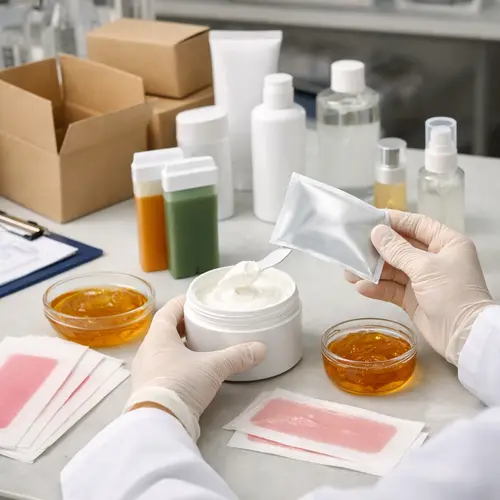
The hero-versus-bundle decision is especially important in hair removal because the products are used in a sequence, but not every sequence needs to become a full assortment. A depilatory cream may need a post-use soothing gel because chemical depilation can create a different comfort expectation from waxing. Wax strips may benefit from an aftercare product that addresses residue and the feeling of temporary sensitivity. Roll-on wax cartridges may be highly convenient, but they introduce cartridge fit, flow, and leakage questions that do not apply to a jar of sugar wax.
For a new Shopify or TikTok Shop brand, this distinction affects more than product count. Each SKU adds a formula review, ingredient list, packaging component, stability plan, artwork file, inventory position, and customer-support script. It also creates another possible failure point during a short trend window. A single hero product concentrates social proof and makes it easier for creators to demonstrate a visible use step. A routine bundle improves the economic model only when the second item feels necessary rather than decorative.
Compliance is another reason to keep the first launch coherent. US products require a documented approach to MoCRA obligations, while products placed on the European market require the appropriate safety and notification pathway, including CPNP notification where applicable. Ingredient review should use recognized resources such as the European Commission's CosIng ingredient database and Health Canada's cosmetic ingredient hotlist. If the launch includes the Gulf region, the brand should also clarify whether the shipment requires review through the Dubai Municipality Montaji registration system. These checks should be built into the formulation and labeling workflow, not added after packaging has been printed.
A vertically specialized partner can make this decision more practical. PZIK's hair removal formulation library, modular active selection, and parallelized documentation workflow are designed for brands testing a market hypothesis without re-engineering the product between sample and scale-up. The relevant question is not whether a supplier can list many SKUs. It is whether the same approved formula, filling method, and quality controls can support the brand after demand increases.
Technical or Packaging Factors
Formula behavior
Start by defining the performance window for the hero product. For depilatory cream, document spreadability, contact time, odor profile, hair removal performance, rinse behavior, and post-wash skin feel. The formula should be reviewed for irritation risk using the intended directions and body area, not only through a laboratory ingredient screen. Face and bikini-area positioning require especially careful claim boundaries and consumer instructions.
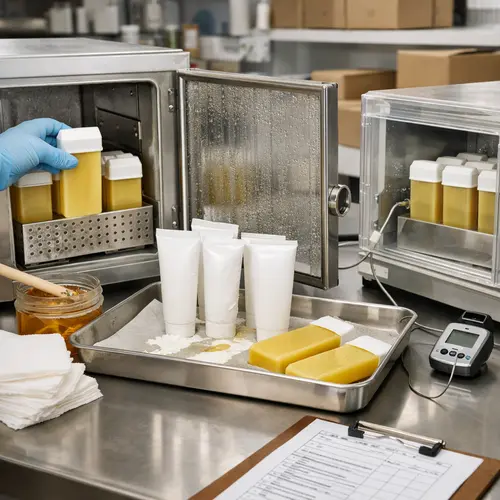
For soft wax, sugar wax, and hot wax, record melting behavior, working temperature, pull strength, stringing, and recovery after repeated heating. A formula that performs well in a controlled room may become too fluid during summer shipment or too rigid in a cool warehouse. Wax strips require a separate review of wax coverage, strip substrate, adhesion aging, release behavior, and residue. The adhesive relationship between wax and strip must remain consistent after storage.
Roll-on wax cartridges add mechanical compatibility. Check the roller head, neck seal, fill level, cap, and dispensing rate with the final viscosity. Run upside-down and side-position leakage checks, then inspect the label and carton after heat and cold exposure. A cartridge that looks stable during upright storage can still leak in a parcel network.
Packaging and storage
Packaging selection should follow the formula rather than lead it. Depilatory cream may require a tube or airless-style format that limits contamination and supports controlled dosing. Wax may need a heat-resistant jar, liner, or cartridge with a closure that tolerates temperature changes. Aftercare gel or lotion should be assessed for pump priming, compatibility with the formula's viscosity, and the risk of separation or crystallization.
Ask for compatibility testing using the actual packaging components: container, cap, liner, actuator, label stock, adhesive, and carton. Review color change, odor transfer, swelling, stress cracking, leakage, closure integrity, and label lift. Include heat and cold storage conditions that reflect the intended markets and transport lanes. Shipment conditions should be agreed in writing, including palletization, carton orientation, protective dividers, and whether temperature-sensitive wax requires seasonal handling.
Evidence and documentation
A launch file should connect the formula to the label and the finished pack. Request the ingredient list using accepted nomenclature, product specifications, manufacturing batch records, stability observations, packaging compatibility results, microbiological controls where relevant, and claim-support documents. For sensitive-skin positioning, retain the irritation-risk review and make sure the directions do not imply medical treatment. Claims such as vegan, cruelty-free, or clean should be supported by a defined standard and supplier documentation, rather than broad marketing language.
The hair removal manufacturing process should show how sampling, filling, packaging, quality control, and shipment review connect. This is particularly important when a brand plans to move from a hero SKU into a bundle. Every additional product should have its own acceptance criteria, but the customer-facing routine should still feel coherent.
Decision Framework Table
| Factor | What to Check | Why It Matters | ODM Buyer Note |
|---|---|---|---|
| Consumer job | Primary body area, use frequency, removal method, and expected result | Creates focused positioning and clearer creator content | Approve one hero promise before adding routine steps |
| Formula performance | Texture, viscosity or melting behavior, odor, contact time, residue, and skin-feel result | Reduces complaints and inconsistent user outcomes | Use a written specification and retained sample for batch comparison |
| Skin and claim risk | Irritation review, directions, warnings, body-area limitations, and claim evidence | Supports responsible labeling and market compliance | Keep cosmetic claims distinct from medical or therapeutic claims |
| Packaging compatibility | Leakage, closure integrity, label adhesion, heat exposure, cold storage, and transport orientation | Protects product quality through fulfillment and parcel delivery | Test the final component set, not an approximate container |
| Bundle logic | Whether the second product solves a clear adjacent problem | Improves order value without confusing the routine | Pair cream, wax, or strips with relevant post-depilation care only |
| Launch economics | Pilot MOQ, unit cost, packaging cost, sampling scope, and replenishment lead time | Protects cash flow while demand is still uncertain | Confirm scale-up uses the validated formula and process |
| Compliance file | Ingredient documents, labeling review, stability data, and market notification responsibilities | Reduces customs, listing, and withdrawal risk | Assign document ownership in the contract before artwork approval |
ODM Manufacturing Considerations
The most useful launch model is usually staged. First, sample the hero product in the proposed pack and evaluate texture, use directions, and storage behavior. Next, test the complementary item as a separate formula while checking whether both products can share carton dimensions, shipping conditions, and visual language. Then run a controlled pilot and monitor conversion, refunds, irritation complaints, leakage reports, and repeat purchase by product combination.
Brands should also clarify what is custom and what is modular. A pre-validated base can shorten development, but differentiation may come from wax working properties, cream sensory profile, aftercare texture, packaging geometry, or a documented active story. The custom hair removal product development workflow should state which elements are fixed, which can be adjusted, and which changes trigger renewed stability or compatibility testing.
Before signing, define confidentiality, sample ownership, formula change control, approval gates, batch release criteria, and escalation procedures for deviations. Ask how the supplier manages the transition from pilot to larger volume, including raw-material continuity and packaging availability. PZIK's micro-batch architecture is intended to scale from pilot production to 500,000 or more units per SKU without a formulation handoff, but the buyer should still request a documented validation and replenishment plan.

Next-Step Checklist
- Write the hero product brief with body area, formula format, target texture, claims, packaging, and launch market.
- Request samples with the relevant technical documents and a defined revision schedule.
- Test the finished product through heat, cold, leakage, closure, label, and shipment-condition checks.
- Review MoCRA, CPNP, labeling, ingredient, and claim responsibilities before artwork approval.
- Choose one routine companion only after confirming its use-case logic and margin contribution.
- Use the hair removal product RFQ process to align sample scope, pilot quantity, packaging, documentation, and scale-up assumptions in one project brief.
For further technical context, the depilatory product development articles and post-depilation care OEM resources can help buyers compare a focused hero launch with a more complete aftercare routine.
ODM Manufacturing Considerations
For a DTC hair removal brand launch, ODM planning should begin with a controlled sample process rather than a broad product brief. Confirm the exact product type first: depilatory cream, soft wax, sugar wax, wax strips, roll-on wax cartridges, or an aftercare lotion or serum. Each format has different acceptance criteria for texture, heating, application, removal, residue, fragrance, and storage.
Sample confirmation should record the approved formula code, batch sample date, container size, fill weight, color, scent, application feel, removal behavior, and intended use area. For cream, review spreadability, wash-off behavior, visible separation, and the irritation-risk assessment. For wax, document melting behavior, working temperature, stringiness, brittleness, and residual tack. For strips, check whether the strip removes hair consistently without excessive adhesive transfer. The approved sample should be retained as the reference for later production batches.
Formula customization can range from a fragrance adjustment to a meaningful change in wax hardness, cream viscosity, skin-feel profile, or aftercare texture. The buyer should ask which changes are cosmetic and which require a new stability review, compatibility review, or updated labeling documents. A custom formula may support stronger positioning, but it can also increase development time, testing requirements, and unit cost. A practical brief should identify the target market, hair-removal area, consumer sensitivity concerns, desired shelf life, acceptable scent profile, and planned retail price.
Packaging compatibility must be assessed with the actual formula and final pack. Cream can interact with certain plastics, seals, or nozzle components. Wax may soften, deform, or leak when exposed to elevated temperatures. Roll-on cartridges require particular attention to ball movement, closure fit, wiper function, and leakage after transport. Aftercare lotion or gel should be tested for pump priming, cap closure, and residue around the dispenser. Ask for written results covering appearance, odor, container deformation, seal integrity, and net content after the planned storage period.
Stability review should reflect the sales route. A parcel shipped across summer climates needs a different risk assessment from a salon product stored in a controlled room. Request heat and cold exposure results, freeze-thaw observations where relevant, and a shipment-condition recommendation. Confirm whether cartons require dividers, upright loading, secondary sealing, or temperature restrictions. These details affect landed cost and should be settled before the purchase order.
MOQ should be evaluated by SKU, color, fragrance, container, and printed component. A lower quantity may still carry a higher unit cost because tooling, component setup, testing, and printed packaging are spread over fewer units. Ask for a cost model that separates formula development, packaging, labeling, testing, and freight assumptions. This helps determine whether a hero product or a compact routine bundle can support the brand’s CAC and expected return rate.
Labeling documents should match the destination market and product claims. Review the ingredient list, responsible-party information, warnings, directions, net contents, batch coding, shelf-life or period-after-opening approach, and language requirements. For European distribution, compare ingredient naming against the European Commission’s CosIng ingredient database. For Canada, screen restricted or prohibited ingredients against Health Canada’s cosmetic ingredient hotlist. The supplier should identify which documents it prepares and which remain the buyer’s legal responsibility.
Related internal resources such as WXMO’s OEM and ODM development overview and the hair removal manufacturing process can help structure the specification, but the buyer should still obtain product-specific records before approval.
Common Problems or Failure Cases
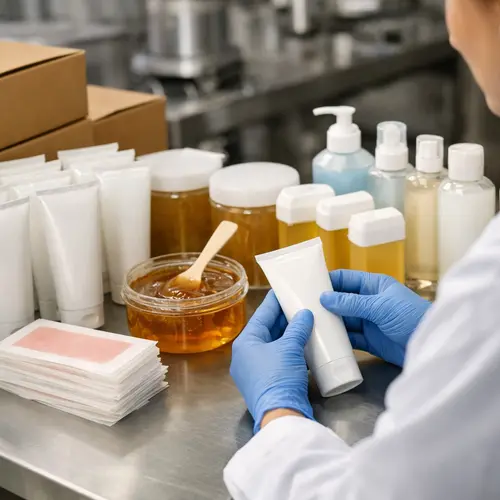
Wax brittleness: A wax that performs well in a warm sample room may crack during colder storage or transport. Review hardness at the intended application temperature, cooling behavior on a test surface, and whether the formula pulls cleanly without excessive breakage. A change in resin, oil, or fragrance level can alter the result.
Strip adhesion loss: Wax strips can lose pickup strength when the adhesive layer is uneven, the backing absorbs oil, or cartons are exposed to heat. Compare hair-removal performance after storage, not only immediately after packing. Check the release liner, adhesive coverage, strip alignment, and residue left on skin.
Cream separation: Separation, thinning, swelling, or odor change can indicate formula instability or interaction with the tube, jar, seal, or cap. Samples should be inspected after heat and cold exposure, with attention to viscosity, color, odor, pH where applicable, and ease of application. Do not approve a sample based only on its first-day appearance.
Cartridge leakage: Roll-on wax cartridges may leak through the ball assembly, closure, seam, or cap during shipment. Test filled cartridges in the intended shipping orientation and after vibration or handling simulation. Inspect the outer carton for oil marks and confirm whether the pack remains functional after storage.
Fragrance sensitivity: A strong scent can create complaints even when the depilatory performance is acceptable. Ask for fragrance allergen information, an unscented option where feasible, and clear use-area warnings. The product claim should not imply suitability for every consumer or body area without supporting evidence.
Packaging deformation: Tubes, trays, lids, and cartons can warp under heat or compression. A deformed pack can affect labeling, shelf presentation, closure integrity, and consumer trust. Include filled-pack inspection in the approval process and define acceptable cosmetic defects before scaling the run.
Supplier Checklist
- Can the supplier provide a retained approved sample and a formula or batch reference for each SKU?
- Does the technical file explain cream viscosity, wax working behavior, strip adhesion, or cartridge leakage criteria as relevant?
- Are formula changes controlled through written approval, with updated stability and compatibility records when needed?
- Has the final filled pack been tested for heat, cold, deformation, seal integrity, leakage, and label adhesion?
- Are MOQ and unit-cost assumptions separated by formula, fragrance, package, printed component, testing, and shipment conditions?
- Can the supplier provide ingredient, allergen, safety, labeling, batch, and destination-market documentation?
- Are cruelty-free, clean-beauty, and environmental claims supported by traceable evidence rather than marketing language alone?
- Does the contract define confidentiality, sample ownership, change notification, rejected goods handling, and responsibility for regulatory review?
- Can the supplier explain carton configuration, pallet limits, orientation, temperature exposure, and transport restrictions?
- Will the production sample, final pack, and shipment inspection criteria be signed off before release?
FAQ
Can an Asian supplier meet European or North American clean-beauty and cruelty-free requirements?
Location alone does not answer the question. Ask for the ingredient policy, restricted-substance screening, fragrance documentation, animal-testing statement, supplier declarations, and claim substantiation. Review the final formula and label against the destination market instead of accepting a general clean-beauty claim.
Will a low MOQ make the unit cost too high for a DTC launch?
It can, especially when several fragrances, package sizes, or printed components are treated as separate SKUs. Request a scenario comparison for one hero SKU, a hero product with one aftercare item, and a larger routine bundle. Include testing, packaging setup, freight, damaged units, and expected return costs when calculating contribution margin.
Will a turnkey base formula make my brand look the same as competing products?
It may if the same scent, pack, claims, and texture are used without a defined positioning brief. Differentiation can come from a controlled change in wax behavior, cream application feel, fragrance profile, aftercare step, pack format, or consumer-use instructions. Ask which elements are genuinely custom and which remain standard across customers.
What should be confirmed before approving a depilatory cream sample?
Confirm application thickness, contact time, rinse behavior, odor, visible separation, viscosity after storage, irritation-risk review, tube or jar compatibility, warnings, and intended use area. The approved sample should represent the final formula and final pack, not a laboratory container.
What shipment conditions matter for wax strips and roll-on cartridges?
Confirm temperature limits, carton orientation, pallet configuration, protective dividers, sealing requirements, and whether the product can withstand vibration and compression. Inspect for strip adhesion loss, cartridge leakage, oil marks, softened wax, and deformed packaging after transport simulation.
Which records should be included in the supply contract?
Define the approved formula and pack, change-control process, confidentiality terms, testing responsibilities, labeling deliverables, acceptance criteria, defect handling, shipment conditions, and documentation supplied with each batch. Clear ownership prevents disagreements when a sample and delivered goods do not match.
References
Health Canada’s cosmetic ingredient hotlist supports ingredient screening for products distributed in Canada.
The European Commission’s CosIng ingredient database provides a reference for cosmetic ingredient names and related European regulatory information.
The Dubai Municipality Montaji registration system is relevant when preparing cosmetic product registration for the Dubai market.