Direct Answer
Yes. A new brand can launch with one hair-removal SKU, and in many cases that is the more disciplined way to enter the market. Starting with one of the right private label hair removal products lets a founder validate demand, creative positioning, repeat purchase behavior, and customer acquisition cost without spreading working capital across an unproven range.
The important distinction is that a one-SKU launch should not be treated as a shortcut. A depilatory cream, wax strip kit, sugar wax, or roll-on wax cartridge still needs formula review, packaging compatibility, stability work, labeling documentation, and shipment testing. The launch also needs a clear use case: for example, a sensitive-skin body cream, a travel-friendly wax strip kit, or a post-removal routine centered on reduced discomfort.
For a brand working on a short social-commerce cycle, the strongest first SKU is usually the one that is easy to demonstrate, simple to explain, and operationally realistic at a pilot run of approximately 1,000 units.
Key Takeaways for Private Label Buyers
- Choose for operational simplicity, not novelty alone. A visually compelling texture helps, but the product must also remain stable, fill consistently, and survive shipping.
- Define one narrow user and body area. A face product, body cream, and intimate-area product require different irritation-risk reviews and directions.
- Evaluate formula and packaging together. Tubes, jars, sachets, wax strip pouches, and roll-on cartridges interact differently with heat, pressure, and product chemistry.
- Request samples from the intended production baseline. The approved sample should not be quietly re-engineered when the first commercial run begins.
- Treat claims and labeling as launch inputs. MoCRA support, EU CPNP data, ingredient naming, warnings, batch coding, and responsible-party details should not wait until artwork is finished.
- Build the second SKU from customer evidence. Aftercare, replacement wax cartridges, or a hair inhibitor serum can follow once reviews reveal the real unmet need.
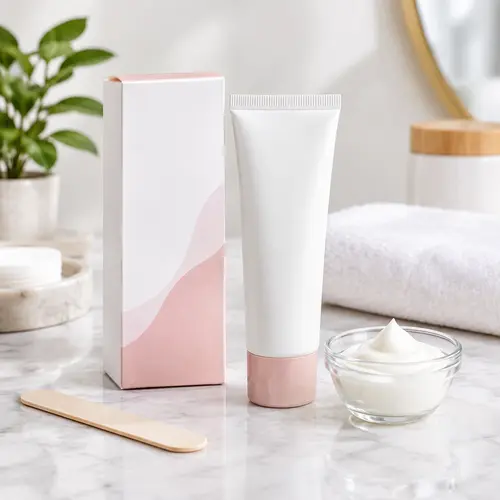
Buyer Context: Why One SKU Can Be an Advantage
Hair removal is unusually suitable for a focused launch because the consumer problem is immediately legible. A short video can show cream spreadability, wax pull, strip flexibility, or sugar wax texture without requiring an abstract ingredient lecture. That makes the category compatible with Shopify, TikTok Shop, and creator-led demand testing.
But the same visual clarity can amplify failure. If a wax strip leaves excessive residue, a cream dries before the stated removal time, or a roll-on cartridge leaks in transit, the defect is easy to film and difficult to contextualize. A concentrated launch reduces the number of variables the team must control. It also allows more of the initial budget to go toward qualified stability work, packaging trials, creative assets, and inventory monitoring.
The choice of format should follow the brand’s audience and operating model. Depilatory cream offers an accessible, no-pull experience, but its alkaline formulation and contact-time instructions demand careful safety review. Wax strips are portable and simple to merchandise, although adhesion aging and pouch integrity can alter performance. Sugar wax supports a naturally derived or organic-leaning story, yet temperature sensitivity and technique can create inconsistent consumer results. Roll-on wax is highly demonstrable but adds cartridge, cap, roller, and leakage variables.
Buyers comparing these formats can review broader hair removal product solutions, assess a dedicated custom depilatory cream formulation, or study private label waxing products before fixing the first brief. Market direction can inform the positioning, but reports such as Mintel global beauty market reports should support rather than replace direct testing with the intended buyer.
Technical and Packaging Factors
Formula Performance Must Be Measurable
A sample should be evaluated against a written target profile, not simply whether the founder likes it. For cream, document appearance, odor, spreadability, removal efficiency at the labeled contact time, rinse behavior, and skin feel. Viscosity should sit within a supplier-defined range that supports both dispensing and even coverage. For hot wax or sugar wax, record softening or melting behavior, pickup, stringing, pull characteristics, residue, and performance across the intended ambient-temperature range.
Sensitive-skin positioning requires additional restraint. Fragrance level, contact time, intended body area, directions, warnings, and compatibility with soothing ingredients should be reviewed together. A claim such as gentle does not replace an irritation-risk assessment. Buyers can use the mild hair removal formula pathway to frame this discussion. Published work in the Journal of Cosmetic Dermatology can provide useful scientific context, but evidence must still match the finished formulation and its actual use conditions.
Packaging Is Part of the Formula System
Depilatory cream can challenge certain closures, liners, inks, and tube structures. The review should include paneling, swelling, staining, odor transfer, seal integrity, dispensing force, and print durability. Wax strips need pouch barrier performance and protection against adhesive migration. Roll-on cartridges require fit checks across the bottle, roller head, cap, and heating method, followed by upright, inverted, and side-storage leakage review.
Ask to see the proposed hair removal product quality control sequence before approving decoration. A practical screening plan may include room-temperature controls, accelerated storage at 40°C for 12 weeks, cold storage at 4°C, three freeze-thaw cycles, and shipping simulation. These are example development conditions, not universal pass criteria. The protocol should reflect the formula, pack, destination climate, and expected shelf life.

Compliance Begins Before Artwork
In the United States, cosmetic products are regulated even though they are not generally preapproved by FDA, as explained in the agency’s guidance on FDA authority over cosmetics. The buyer should confirm who handles facility and product obligations where applicable, safety substantiation, adverse-event procedures, ingredient records, and label review. For the EU, the responsible person, product information file inputs, safety assessment, notification data, and artwork must be coordinated before launch.
A capable hair removal OEM ODM services partner should be able to explain which documents are supplied, which remain the brand’s responsibility, and what changes would trigger another review. This is particularly important when speed targets are under 30 days: compliance, formula confirmation, packaging procurement, and artwork should run in parallel rather than becoming last-minute gates.
Decision Framework for a One-SKU Launch
| Factor | What to Check | Why It Matters | ODM Buyer Note |
|---|---|---|---|
| Consumer use case | Body area, hair type, skin profile, experience level, and desired routine | Prevents a vague formula from being positioned for incompatible users | Approve one primary claim hierarchy before sample development |
| Formula baseline | Texture, viscosity or melting range, odor, contact time, residue, and rinse behavior | Creates objective approval criteria and reduces subjective revisions | Confirm that the approved sample is the commercial baseline |
| Packaging compatibility | Tube or jar interaction, pouch seal, cartridge leakage, label adhesion, and decoration durability | Many launch failures emerge from formula-pack interaction rather than the formula alone | Test the final pack components, not generic lab containers |
| Stability and transit | Heat, cold, freeze-thaw, orientation, vibration, leakage, odor, and appearance changes | Protects performance across storage and cross-border shipment conditions | Agree on protocol, acceptance criteria, and escalation steps in writing |
| Safety and labeling | Ingredient list, warnings, directions, body-area restrictions, batch code, and market-specific files | Reduces customs, marketplace, and consumer-use risk | Lock regulatory text before final artwork approval |
| Launch economics | MOQ, sample scope, component tooling, landed cost, fulfillment dimensions, and reorder lead time | A low unit count alone does not guarantee a viable contribution margin | Model the first run and the replenishment run separately |
The cleanest launch brief fits on one page: target user, removal format, use area, formula requirements, exclusions, pack format, target market, claim boundaries, quantity, and launch date. If the first product needs a calming companion later, review soothing gel after hair removal as a second-stage extension rather than forcing a kit into the opening run.
Before committing, request samples, component specifications, test scope, labeling deliverables, lead-time assumptions, and shipment conditions through a structured hair removal product RFQ. One SKU is enough to start. It is also enough to reveal whether the manufacturing system behind it is ready to scale.

ODM Manufacturing Considerations
For private label hair removal products, development should move from an approved sample to documented production specifications rather than relying on a visual comparison alone. The confirmation sample should represent the intended formula, fragrance level, color, fill weight, applicator, primary container, and use instructions. Both parties should retain signed reference samples, supported by a specification sheet that defines acceptable ranges for appearance, odor, viscosity or melting point, net content, and relevant microbiological limits.
Formula customization needs controlled boundaries. Changing a wax resin ratio, oil phase, fragrance, depilatory active system, or soothing ingredient can affect texture, removal performance, irritation risk, and stability. A formula based on an existing platform can still be differentiated through a defined sensory profile, target body area, fragrance strategy, removal format, or documented specialty ingredient. For example, a traceable imported botanical oil may support an aftercare story, but its origin, grade, supplier documentation, and actual inclusion level should be verified before claims are written. Market positioning can also be informed by resources such as Mintel global beauty market reports without copying another brand’s concept.
Packaging compatibility should be assessed with the actual commercial components, not generic lab jars. Buyers should confirm whether product contact changes the container wall, seal, liner, print, adhesive, or dispensing behavior. For wax products, specifications may include the acceptable melting-point window and flow at the intended use temperature. For a depilatory cream, viscosity limits should support controlled application without excessive dripping or incomplete dispensing. A face-use cream may also need different directions and a more conservative irritation-risk review than a body-use formula.
A stability plan should reflect the expected shelf life and distribution route. Review checkpoints should cover color, odor, phase consistency, viscosity, wax hardness, dispensing, seal condition, and package appearance under long-term and elevated-temperature conditions. Any significant formula or component change should trigger a documented assessment rather than being treated as an artwork-only revision. Peer-reviewed sources such as the Journal of Cosmetic Dermatology can inform an ingredient-risk review, although literature does not replace safety substantiation for the finished product.
MOQ discussions should separate formula batch minimums, printed component minimums, filling minimums, and reorder requirements. A seemingly low filling commitment may still require excess printed cartons or custom applicators. Ask for a costed material balance showing finished units, retained samples, expected process loss, and unused components. The sample scope should also state how many revisions are included and whether pilot filling uses commercial equipment.
Before artwork approval, request the ingredient declaration, product specifications, safety support, batch coding format, directions, warnings, responsible-party details, and available test summaries. For the United States, the buyer and supplier should allocate MoCRA-related information responsibilities clearly. For the European Union, confirm who prepares the information required for the safety assessment, product file, and CPNP notification. The FDA explains that cosmetics are regulated but are generally not preapproved in the same manner as drugs, making accurate safety and labeling work essential.
Shipment terms should define case quantity, carton strength, pallet configuration, acceptable warehouse conditions, route-temperature expectations, batch documentation, and receiving inspection. If a brand is replacing a failed supplier during a capacity disruption, it should not skip sample approval or component verification merely to recover schedule. Buyers can review related hair-removal product categories, OEM/ODM capabilities, and the manufacturing process when mapping these responsibilities.
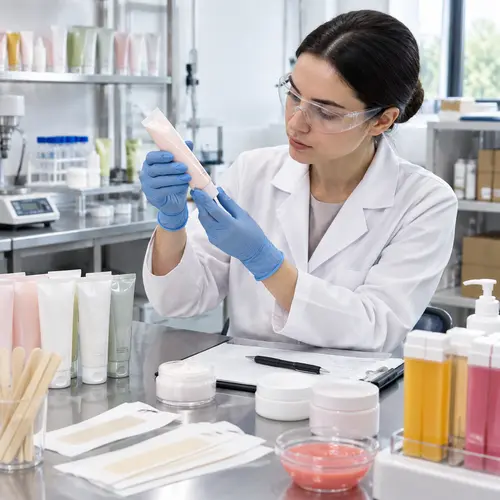
Common Problems or Failure Cases
Wax becomes brittle: A hard wax may crack instead of flexing when the resin, oil, and cooling profile are poorly balanced. Confirm hardness and removal behavior across the stated working-temperature range, and establish measurable acceptance limits rather than approving texture by appearance.
Wax strips lose adhesion: Performance can decline when the wax coating, nonwoven substrate, release liner, or storage environment is inconsistent. Compare peel behavior, hair pickup, residue, and strip separation using units from representative batches.
Depilatory cream separates: Oiling-out, watery discharge, or viscosity drift may indicate an unstable emulsion, unsuitable processing conditions, or interaction with the container. Investigate pH, viscosity, fill conditions, ingredient order, and component contact before changing only the thickener.
Roll-on cartridges leak: Leakage can originate from dimensional variation, poor roller fit, seal damage, or wax expansion during distribution. Check filled-unit weight loss, closure fit, roller rotation, and case cleanliness after exposure to the expected logistics profile.
Fragrance increases sensitivity: Fragrance can create avoidable risk in products used on recently depilated skin. Review the fragrance documentation, declared allergens where applicable, dosage, and target market. Consider an unfragranced or low-fragrance option when the brand position prioritizes sensitive-skin use.
Packaging deforms: Panels may soften, swell, shrink, or lose decoration because of product contact, filling conditions, or warehouse exposure. A packaging change must therefore be assessed as a technical change, even when the formula remains unchanged.

Supplier Checklist
- Confirm the legal manufacturing entity, production location, and scope of any ISO 22716, GMPC, BSCI, or other cited audit certificate.
- Request batch records, raw-material controls, traceability procedures, change-control rules, and complaint handling workflows.
- Define sample stages, revision limits, approval criteria, retained samples, and the process for transferring an approved sample into routine production.
- Set numerical ranges for viscosity, melting point, pH, fill weight, or wax hardness wherever relevant.
- Review irritation risk, fragrance documentation, ingredient restrictions, and safety substantiation for the intended market and body area.
- Test the commercial formula with the actual container, liner, applicator, strip substrate, pouch, label, and decoration.
- Separate formula, packaging, filling, and artwork MOQs; identify ownership and disposition of unused branded materials.
- Request ingredient lists, specifications, test summaries, batch coding details, label inputs, and market-specific notification support.
- Confirm shipment configuration, storage limits, release documents, receiving criteria, and the process for reporting leakage or damage.
- Document confidentiality, formula ownership, exclusivity boundaries, approved subcontractors, and notification requirements for material changes.
FAQ
Can an Asian manufacturer genuinely meet Western Clean Beauty and cruelty-free expectations?
Yes, but location is not proof of compliance. Clean Beauty has no single universal definition, so provide a written restricted-substance standard. For cruelty-free positioning, verify raw-material declarations, supplier statements, the finished-product testing policy, market-specific animal-testing restrictions, and a traceable approval record. Audit evidence matters more than broad marketing claims.
Will a low MOQ make the unit cost too high to cover customer acquisition cost?
Usually, a lower run has a higher unit cost because testing, setup, artwork, and component costs are spread across fewer units. Model contribution margin after product cost, freight, fulfillment, payment fees, returns, and CAC. A one-SKU launch remains viable when packaging is controlled, the retail price is realistic, and expensive custom components are deferred.
Will a turnkey or stock formula make the brand indistinguishable from competitors?
Not necessarily. Differentiation can come from measurable use performance, target area, fragrance level, aftercare pairing, instructions, packaging format, verified ingredient sourcing, and brand education. Ask which formula elements are shared, which can be customized, and whether any exclusivity is contractual. Avoid superficial changes that compromise stability without improving the consumer experience.
What should be approved before the first production run?
Approve the final formula sample, measurable specifications, commercial components, decoration, fill weight, batch code position, label copy, carton configuration, and release criteria. Record approvals in writing and retain matching reference samples.
Which compliance documents should the supplier provide?
The exact file depends on the destination market, but buyers commonly need an ingredient declaration, formula and product specifications, safety-supporting data, available test reports, manufacturing details, batch coding information, and label inputs. Responsibility for U.S. and EU submissions should be assigned in the contract rather than assumed.
How should an urgent supplier replacement be handled?
Start with a gap assessment covering formula ownership, available test data, component tooling, artwork, inventory, and regulatory files. Use parallel workstreams for sampling, document review, and component qualification, but do not accept unverified substitutions simply to shorten the schedule.